VAF 10of10 feature Interview – Hitesh Vaidya
Celebrating 10 Years of the Visual Artist Fellowship
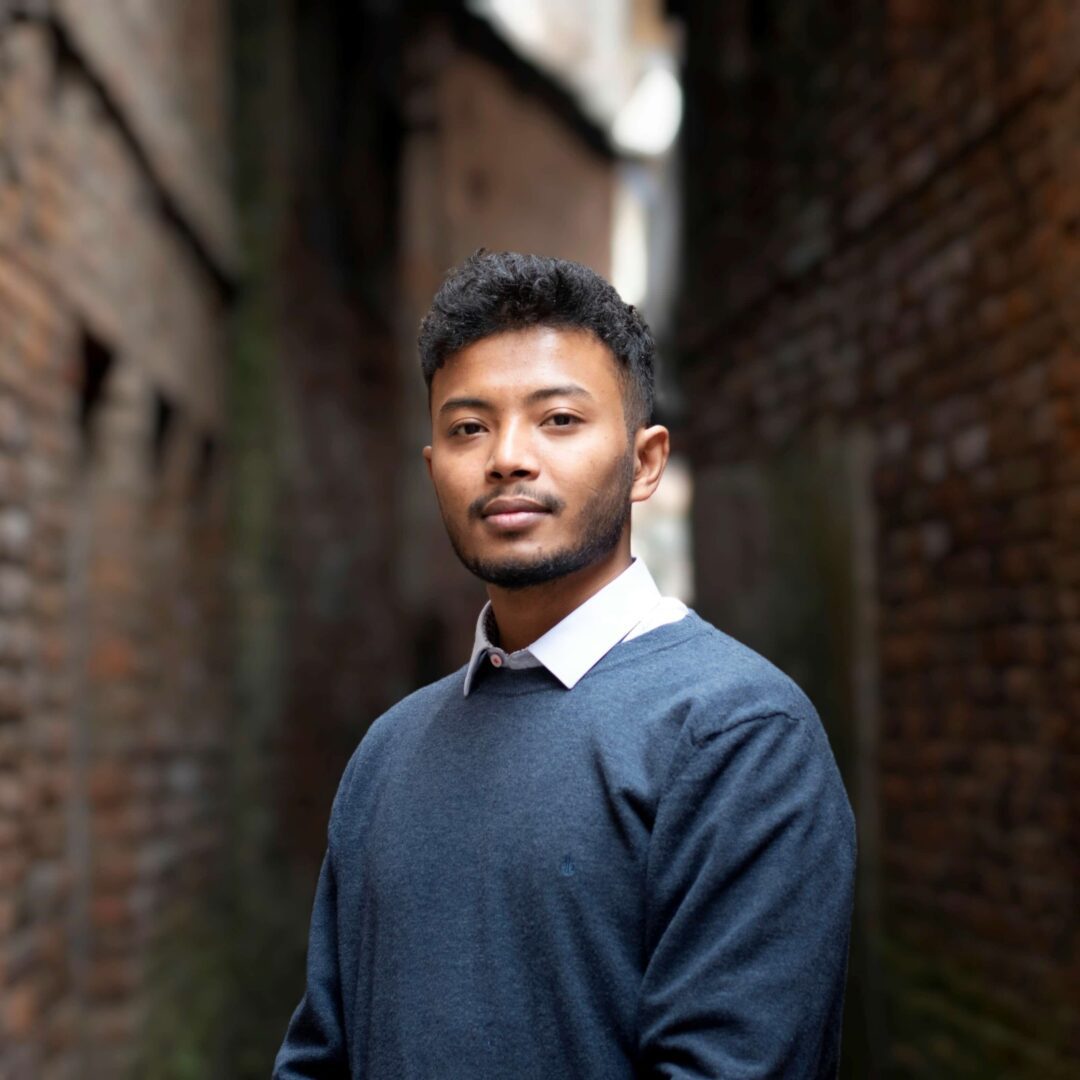 Hitesh Vaidya
Looking back, how did your time as a Visiting Artist Fellow shape your artistic practice or career?
The Visiting Artist fellowship at Mittal Institute has been a transformative journey to reflect on the research approaches, artistic production, and communal intervention in local communities. It further strengthened my practice beyond studio work into the realms of scholarship, community engagement, and cultural advocacy. Presentations and exhibitions at Harvard allowed me to share my work and receive feedback, strengthening my voice as a Nepali artist in global contexts. It also allowed me to invite and connect with the relevant individuals, such as Harvard professors, students, and researchers of South Asian arts, Visual arts, and Anthropology, with the possibility of future collaborations.
Interactions with fellows, curators, and scholars fostered meaningful exchanges on identity, heritage, and representation. It provided me with the strategies on team building and programming structure to run the community-based Niva Art Space. The multiple visits to museums and galleries such as MFA Boston, Harvard Art Museums, ICA Boston, among others, as well as conversations with its members, illuminated the ideas of conservation, exhibition design, and programming around arts and artifacts to inform perspectives. The fellowship at Mittal Institute affirmed my commitment to community-centered artmaking. It expanded my toolkit—intellectually, materially, and spiritually—and reinforced my belief that artists must take ownership of their narratives, especially when representing marginalized, grassroots histories.
Were there any specific experiences, people, or opportunities during the fellowship that had a lasting impact on you?
The experiences from the fellowship deepened my artistic practice through immersive academic, curatorial, and community engagements. To mention a few, conversations with Professor Jinah Kim, George P. Bickford Professor of Indian and South Asian Art in the Department of History of Art & Architecture, shaped my understanding of heritage preservation, leading to the idea of an interdisciplinary, accessible art space that I want to build as an adaptable model for documenting, conserving, and sharing cultural materials in under-resourced communities. These dialogues, along with the opportunity for in-person, private viewings of South Asian art within Harvard’s collections and reflections on traditional South Asian practices, helped me reframe my work as a contemporary translation of ancestral visual languages.
Equally impactful were my exchanges with community arts leaders like Jasmine Perez, Manager of Community Arts Initiative at MFA Boston, where we discussed strategies for evaluating the impact of arts initiatives, sustaining patron relationships, and fostering creative growth in youth. These insights reinforced my commitment to community-centered artmaking and the responsibilities that come with representing collective narratives.
Through classes, exhibitions, and panel discussions, I explored how voice, tradition, and storytelling shape identity and cultural continuity. One such meaningful lecture was ‘Tradition in Everyday Life’ with professor Sarah Craycraft, where we discussed ancestral and contemporary rituals in medicine, music, myths, and beliefs across various cultures. This experience not only expanded my intellectual and creative horizons but also affirmed my role as an artist deeply rooted in community, heritage, and the pursuit of cultural agency. It also offered critical tools for mapping belief systems, rituals, and oral histories—enabling me to reclaim emic perspectives and embed them meaningfully into my art.
How has your work evolved since your fellowship at Harvard? What are you currently working on or excited about in your practice?
Since my fellowship at Harvard, my work has evolved into a more research-driven and culturally reflective practice. I intend to deepen my engagement with traditional art practices, not just as aesthetic references but also as vehicles for contemporary storytelling. Exposure to museum ethics, archival systems, and academic discourse has sharpened my ability to frame local narratives within global conversations— bridging native, ancestral knowledge with modern techniques and themes.
In my practice today, I actively incorporate community collaboration, oral history, and the lived experiences of the people of the localities I work with. At present, I am planning to do a community-centric project in Thimi municipality in Bhaktapur, Nepal. Thimi is a historic city with a legacy as a center for pottery, clay works, and farming traditions. Through Niva Arts Space, I intend to collect visual and written archives of Thimi to map belief systems, rituals, oral histories, and local artistic practices. The outcome of the research and engagement will be visualized through community murals and a public exhibition, inviting local people, local stakeholders, the local government, and audiences from the Nepalese artistic community to share reflections.
Whose work is inspiring you right now, and why?
As I am exploring community-rooted practices in my hometown of Bhaktapur, the traditional Chitrakar artists, who have generationally continued the legacy of native Paubha painting art form, are a source of inspiration for me. Niva Art Space is in the Thalachen locality, Bhaktapur, a space housing many Chitrakar artists and their studios. Their works include murals in temples, masks for ritual dances, and ceremonial paintings on ceramics and woodblocks, integrating arts into everyday community spaces. Observations and conversations with the devoted local artists about the knowledge, experiences, and stories that form the crux of their art form inspire me to weave Paubha painting more meaningfully into my art practice.
Share one image that captures something meaningful about your practice today. This could be a recent artwork, a studio moment, or you at work.
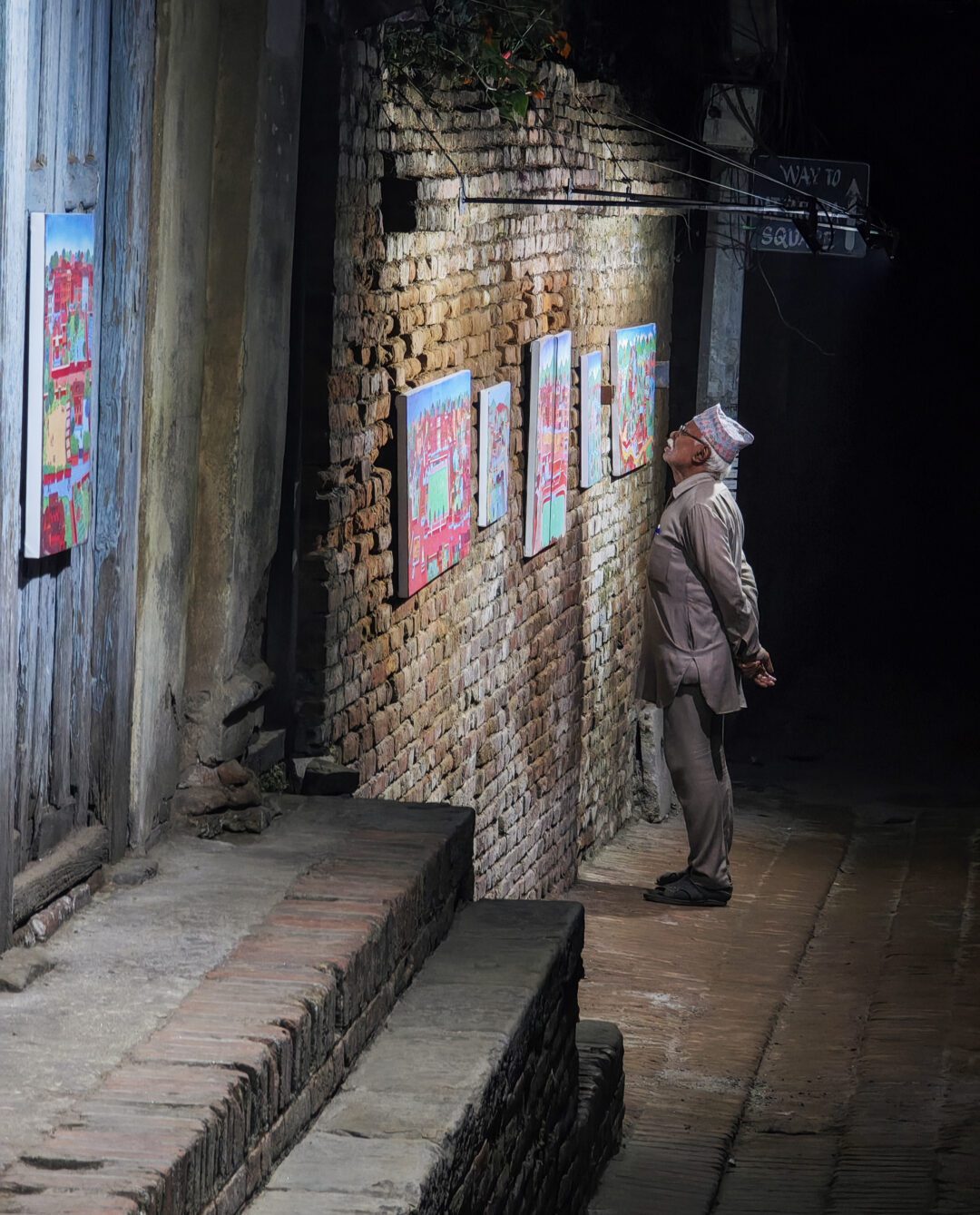
The image captures a heartfelt moment from the communal exhibition of my works, ‘Narrating the City,’ held in Bhaktapur in 2024. The works are my paintings of localities around Bhaktapur, which I have retold in a contemporary style through the traditional Paubha painting technique. The elderly person attentively observing the paintings is Krishna Ram Chitrakar, one of the revered Paubha artists of the locality, who belongs to the traditional Paubha painting families himself. This image represents the synthesis of traditional and contemporary arts within community spaces to honor native artistic heritage, grassroots experiences, and the living spirit of the city.
Explore more of the artist’s work here
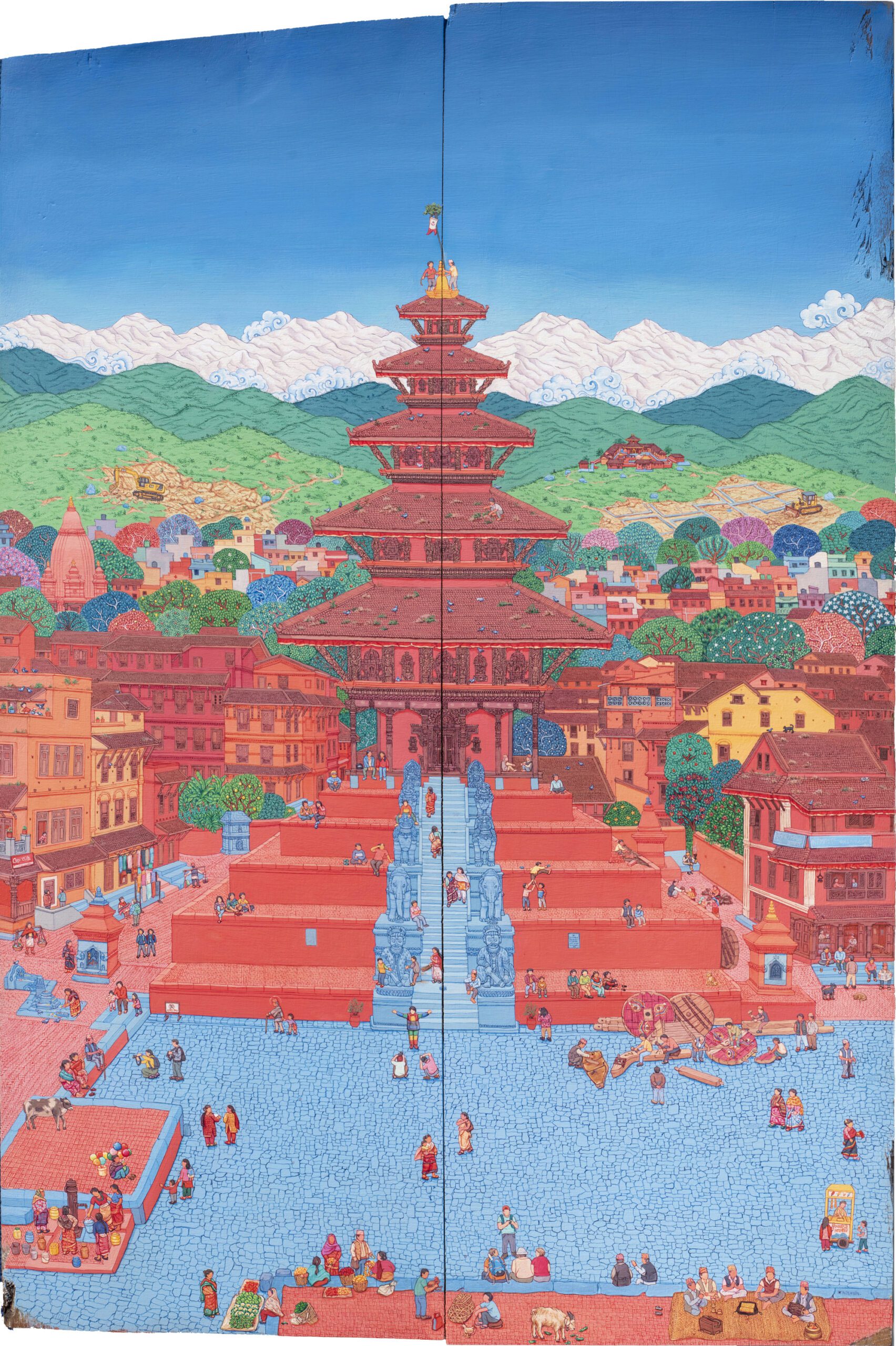
Narrating The City l Nyatapola l Acrylic on reclaimed Agrath l 2023 l 59cm x 91.5cm x 2cm
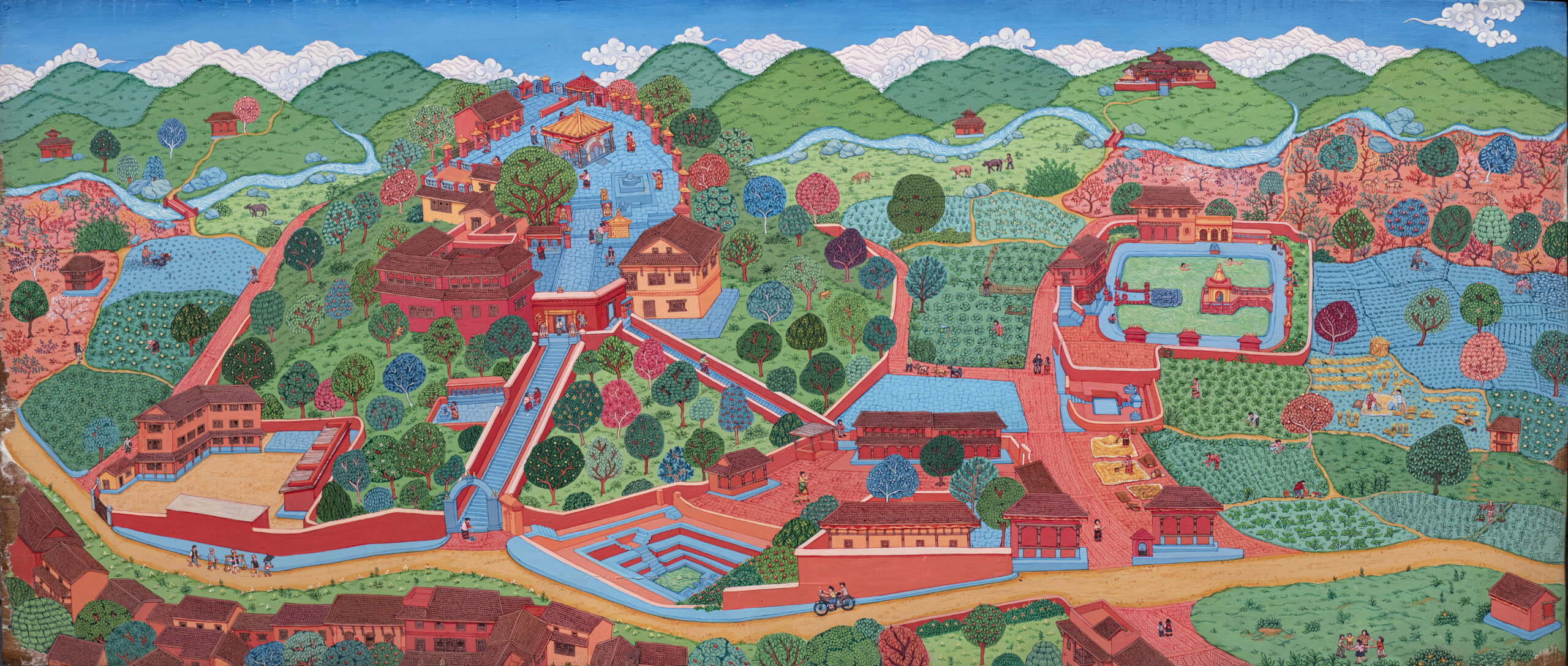
Narrating The City l Acrylic on reclaimed Agrath l Mahakali l 2023 l 39cm x 91cm x 2.5 cm
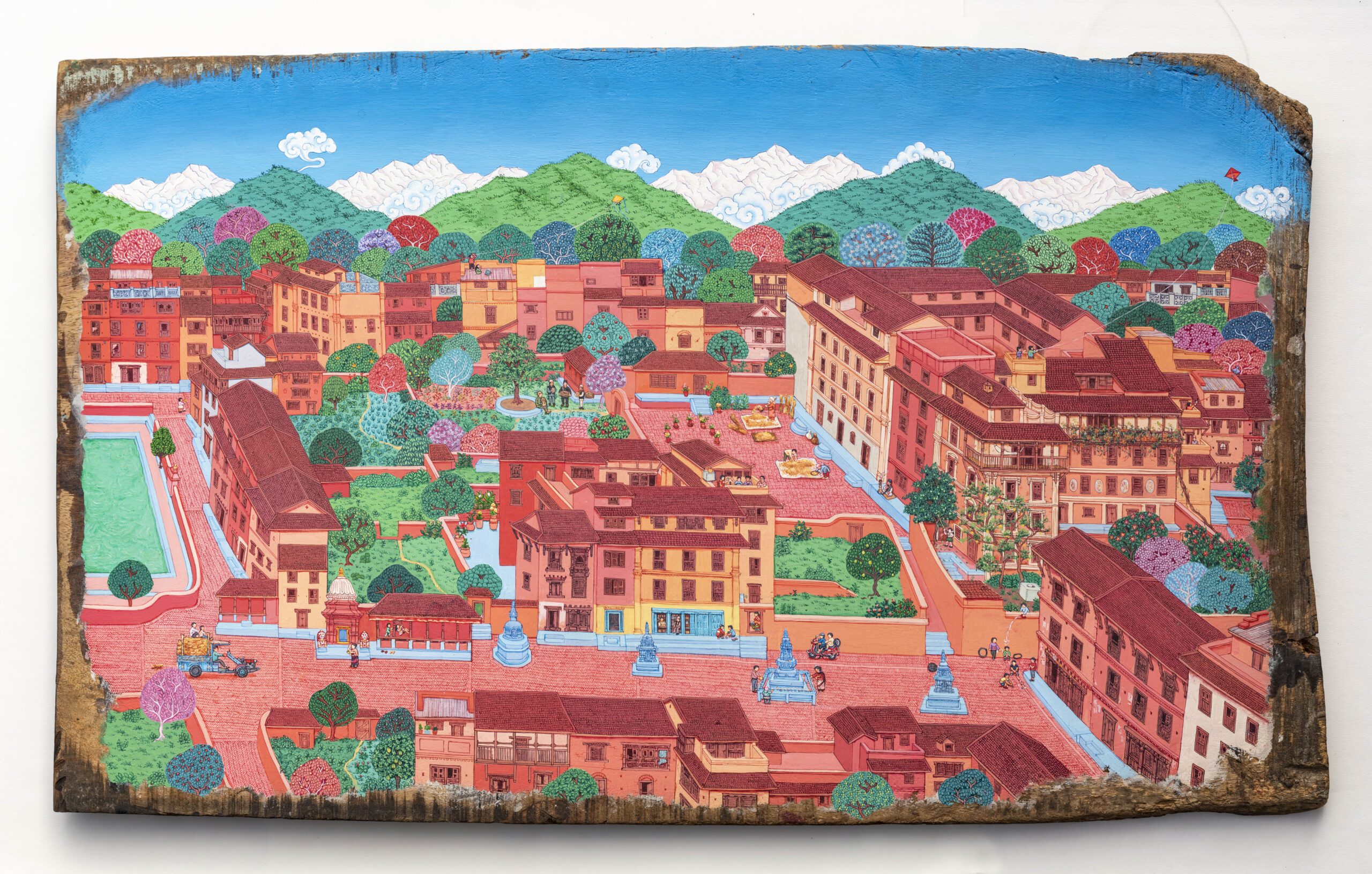
Narrating The City_Thalachen_2024_Acrylic on reclaimed Agrath wood panel_43.5 cm x 30 cm x 2 cm
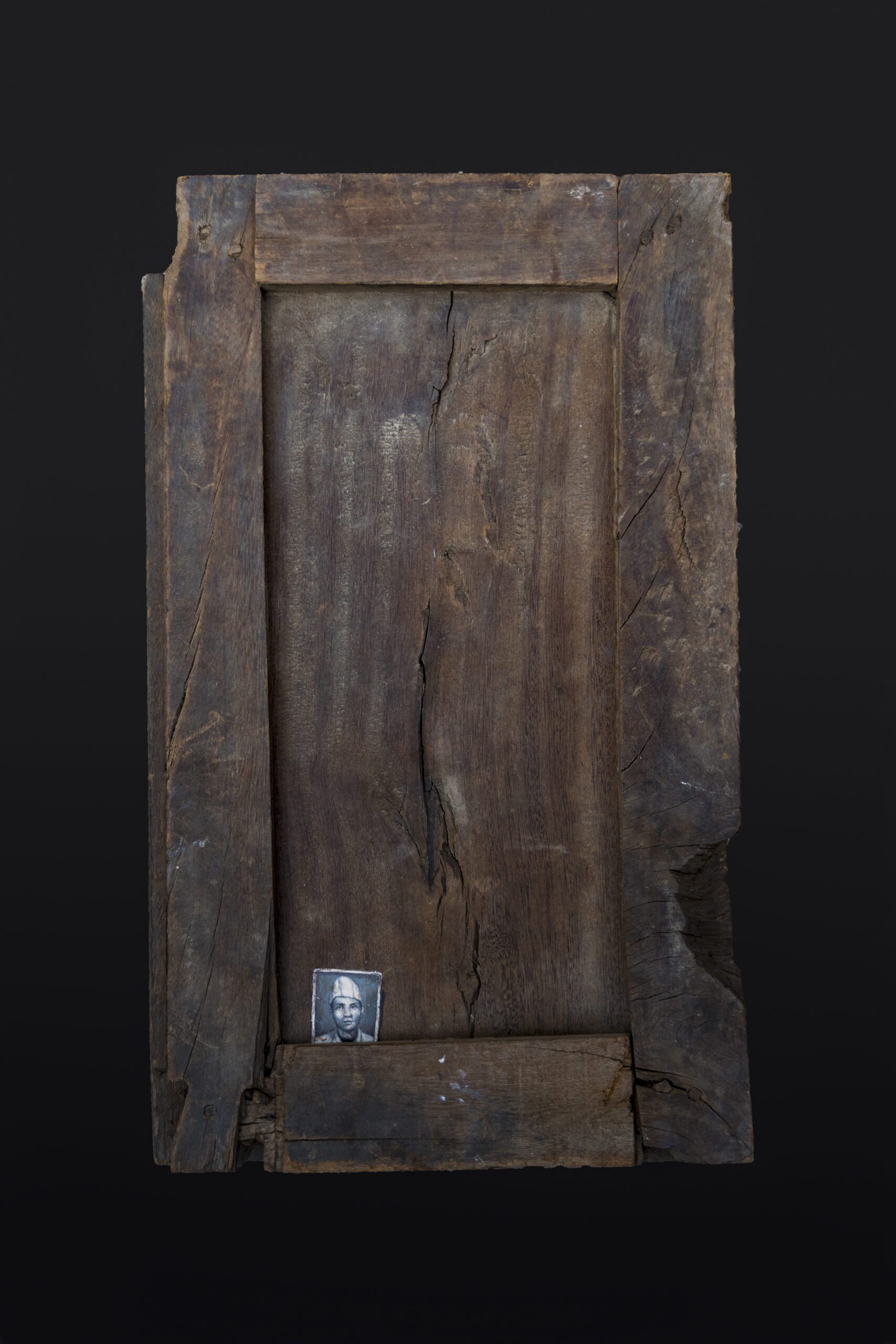
Recollecting Memories_Hitesh Vaidya_baje ko photo_50cm x 31 cm x3.5 cm_2019