Select Page

Category : In Region


The Mittal Institute Presents the 2025-26 Year in Review Report
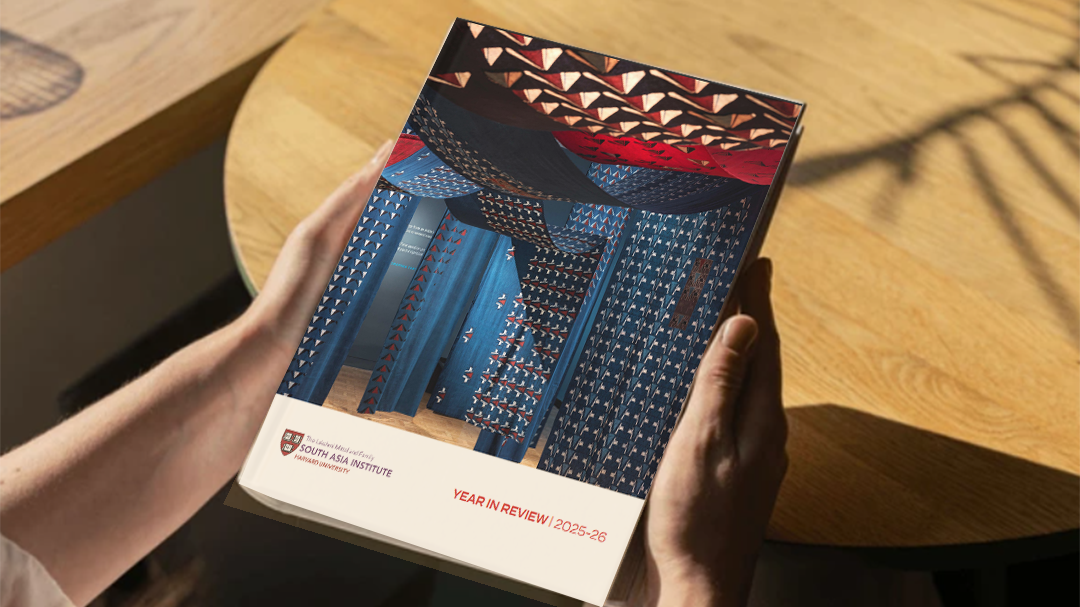
The Mittal Institute Presents the 2025-26 Year in Review Report

The Mittal Institute is excited to announce the release of the 2025–26 Year in Review report. As every year, the comprehensive Year in Review Report includes updates on all major faculty-led programs, lists awards and fellowships, highlights the work of students, student organizations, and scholars, and summarizes events and other achievements. The report offers valuable insights into the institute’s mission of connecting Harvard and South Asia. 
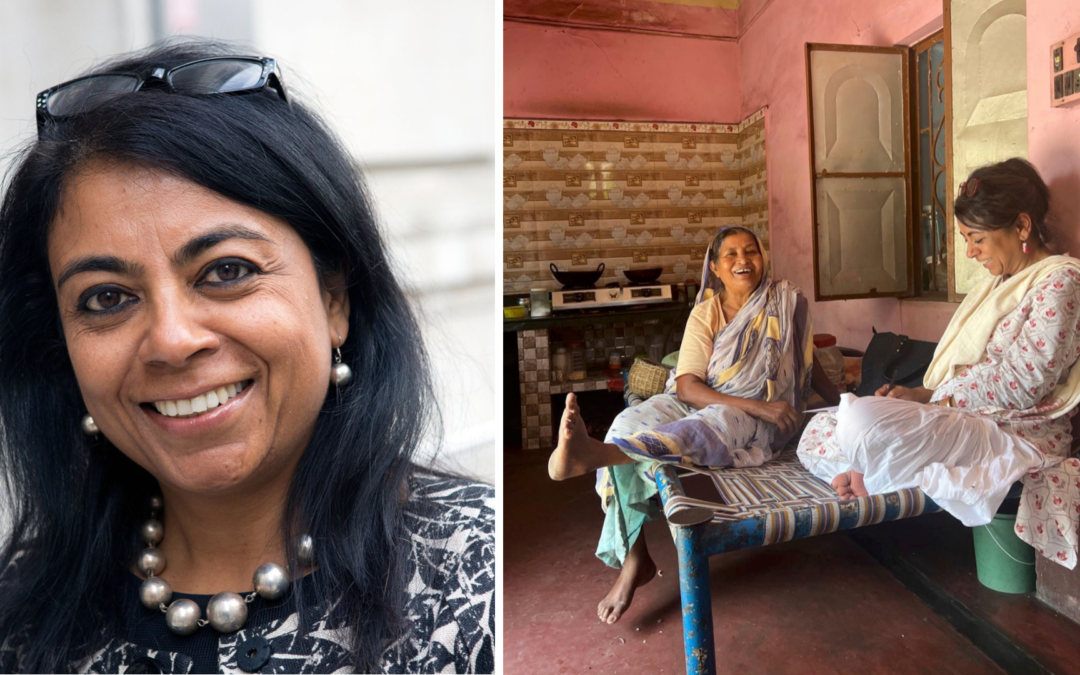
Mukulika Banerjee: Lessons in Democracy from an Indian Village

Mukulika Banerjee: Lessons in Democracy from an Indian Village

What can life in an Indian village teach us about democracy? In the upcoming Oct 14 talk, “Why Democracy Needs Cultivation: Lessons from an Indian Village”, Professor Mukulika Banerjee of the London School of Economics and Political Science draws on more than 20 years of ethnographic research to explore the connections between democracy, citizenship, farming, and everyday village life. Professor Banerjee’s research focuses on democracy, elections, citizenship, and political life in South Asia. She is the author of Cultivating Democracy: Politics and Citizenship in Agrarian India and Why India Votes?, and her work offers a close look at how democratic practices take shape in the everyday lives of citizens. We spoke with her about her research ahead of the talk, which is co-sponsored by the Mittal Institute and the Asia Center at Harvard University.

Reclaiming Indigenous Histories Through Art: Artree Nepal at the Mittal Institute

Reclaiming Indigenous Histories Through Art: Artree Nepal at the Mittal Institute

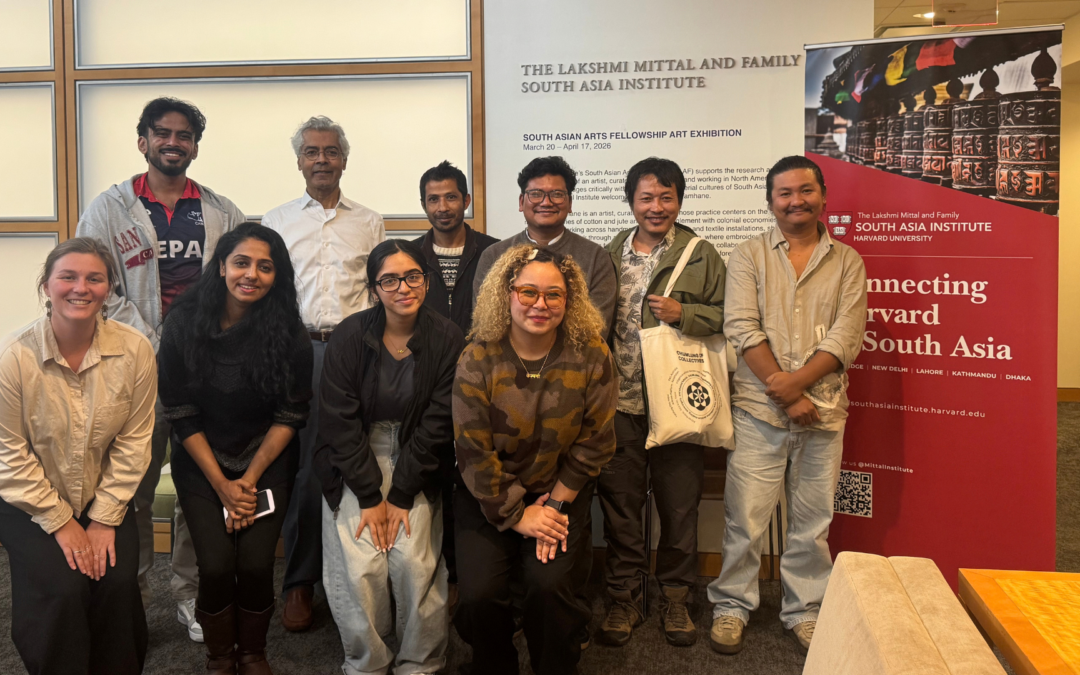
This week, we welcomed Artree Nepal, an Indigenous artists’ collective, to the Mittal Institute for a conversation about art, identity, and Indigenous cultures in Nepal. The collective brings together five artists from different Indigenous communities: Lavkant Chaudhary (Tharu), Mekh Limbu (Limbu), Subas Tamang (Tamang), Hit Man Gurung (Gurung), and Sheelasha Rajbhandari (Newa). The artists spoke about what motivates their work and their efforts to explore and reclaim Indigenous histories, knowledge, and cultural practices through contemporary art. They also shared their work on Tikā Chedna Angana, or “A Garden of Body Markings,” which explores traditional body-marking practices, including tikā, leela, and godana, and their significance for Indigenous communities, particularly women. The conversation offered a fascinating glimpse into Nepal’s rich cultural diversity and the ways artists are using creative practice to keep cultural knowledge and traditions alive while reimagining them for new generations. 

Union Health Secretary of India at Harvard

Union Health Secretary of India at Harvard

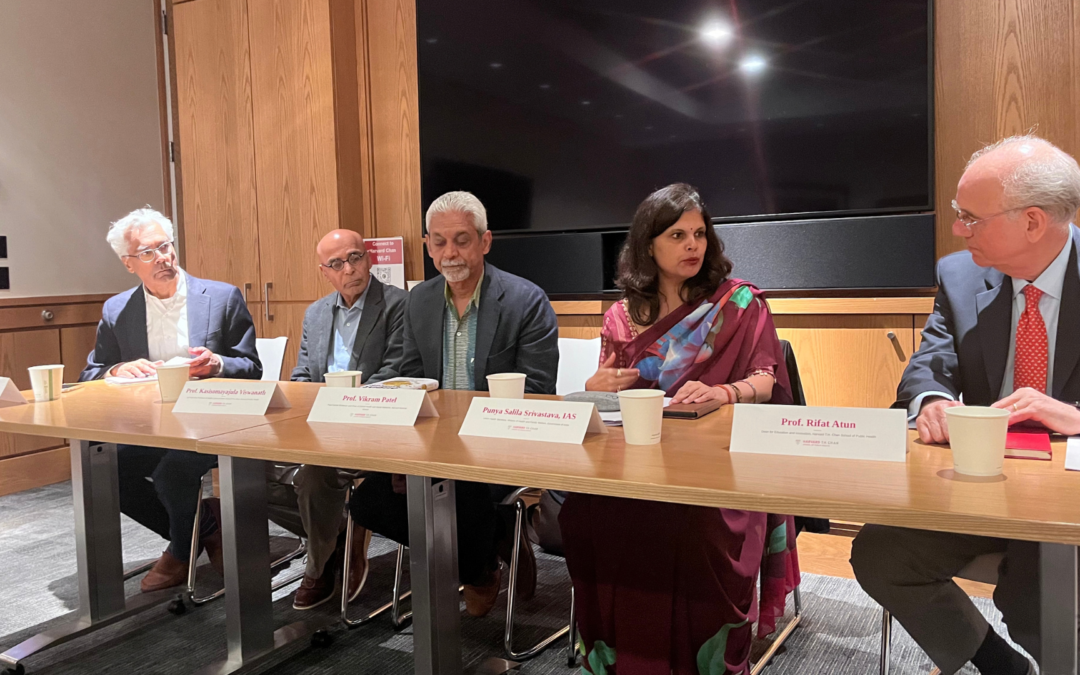
The Mittal Institute co-hosted a conversation with Punya Salila Srivastava, IAS, Union Health Secretary, Ministry of Health and Family Welfare, Government of India, hosted by the Harvard T.H. Chan School of Public Health, on major developments in public health in India. Secretary Srivastava provided an overview of India’s healthcare landscape and recent progress, including reductions in maternal mortality and progress toward Universal Health Coverage. Drawing on examples from across India’s health system, she highlighted efforts to leverage technology to improve health outcomes, strengthen pandemic preparedness, expand access to affordable care, and engage communities in advancing health programs.

Dr. Animesh Bag, Raghunathan Fellow, on Race, Migration, and the Power of Print

Dr. Animesh Bag, Raghunathan Fellow, on Race, Migration, and the Power of Print

Dr. Animesh Bag, the Mittal Institute’s Raghunathan Family Fellow, is exploring how American print culture shaped perceptions of India and Indian immigrants in the early twentieth century. He is working with Prof. Sugata Bose, Gardiner Professor of Oceanic History and Affairs, Harvard University Department of History. Dr. Bag’s research examines newspapers, magazines, missionary publications, and revolutionary writings to trace how ideas about race, immigration, and belonging were produced and challenged across borders. We spoke with Bag about what brought him to this research, what he is uncovering in the archives, and what these histories can tell us about race, migration, and representation today.

From Chile to Kerala: Exploring Fragmented Citizenship

From Chile to Kerala: Exploring Fragmented Citizenship

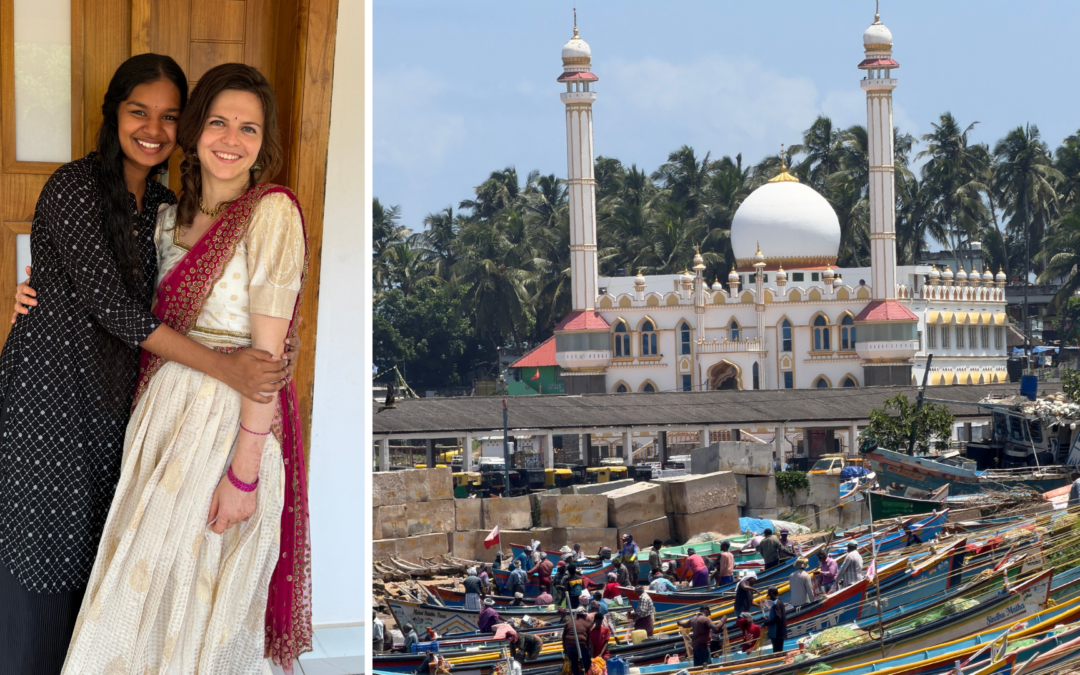
As a Mittal Institute student grant recipient, Tara Hein, a PhD student at Harvard, spent summer 2026 in Kerala, India, conducting research for her project, “Seeing like a Citizen: Fragmented Citizenship in Santiago, Chile and Kerala, India.” Her research explores how people’s experiences with the state—particularly when government services and institutions are highly visible but unevenly delivered—shape how they understand and engage with citizenship. Building on interviews conducted in Santiago, Chile, she traveled to Kochi and Thiruvananthapuram to further develop her research through interviews with residents in Kerala. She shares more about her summer in her grant report. 

Dr. Md Mafizur Rahman, Mittal Family Climate Fellow, on Exploring Climate Governance in Bangladesh

Dr. Md Mafizur Rahman, Mittal Family Climate Fellow, on Exploring Climate Governance in Bangladesh

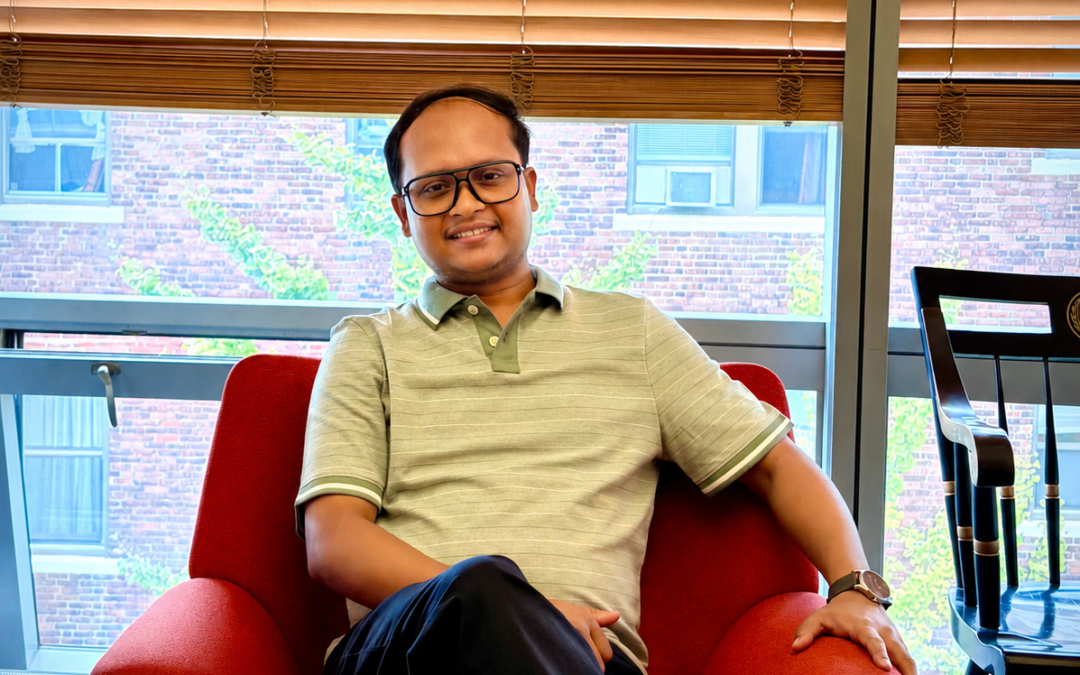
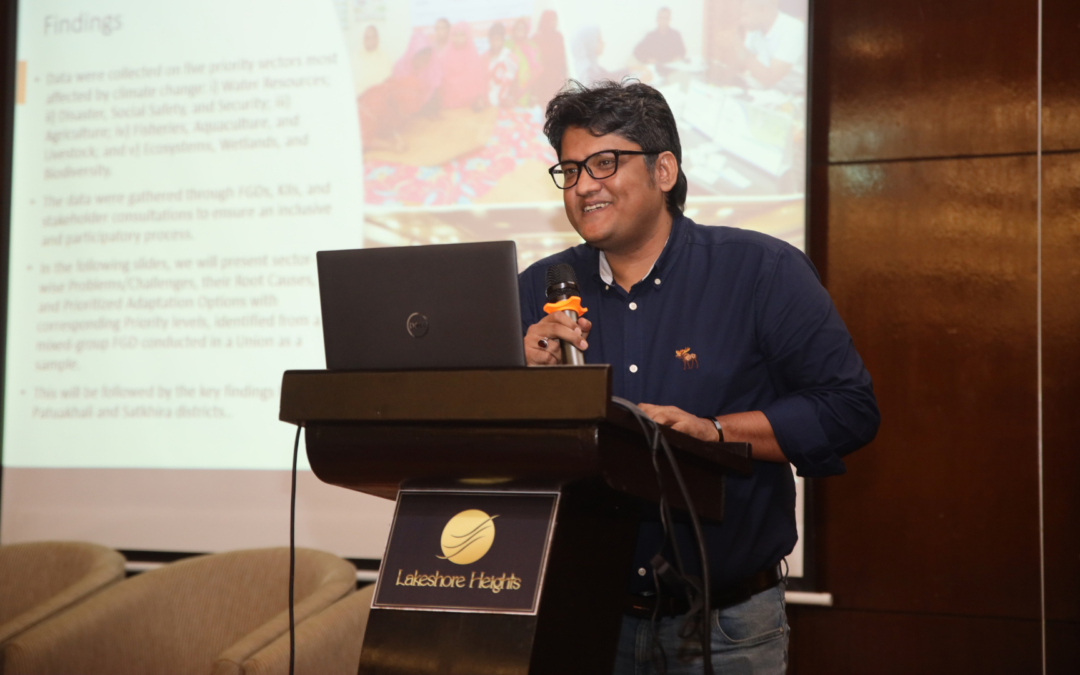
With a background in Public Administration and climate governance, Dr. Md Mafizur Rahman is examining how policies and institutions shape responses to climate change in Bangladesh. As a Mittal Family Climate Fellow at the Mittal Institute, he is working with Prof. Dustin Tingley, Thomas D. Cabot Professor of Public Policy at Harvard Kennedy School and Harvard Government, to explore these questions. Dr. Rahman brings together perspectives from political ecology and environmental justice to better understand how climate policies affect different communities and connect questions of governance to the lived realities of people experiencing environmental change. We spoke with him about his work and his hopes for his Harvard fellowship. 

Prof. Rahul Mehrotra’s Work on View in Mumbai and Kabul

Prof. Rahul Mehrotra’s Work on View in Mumbai and Kabul

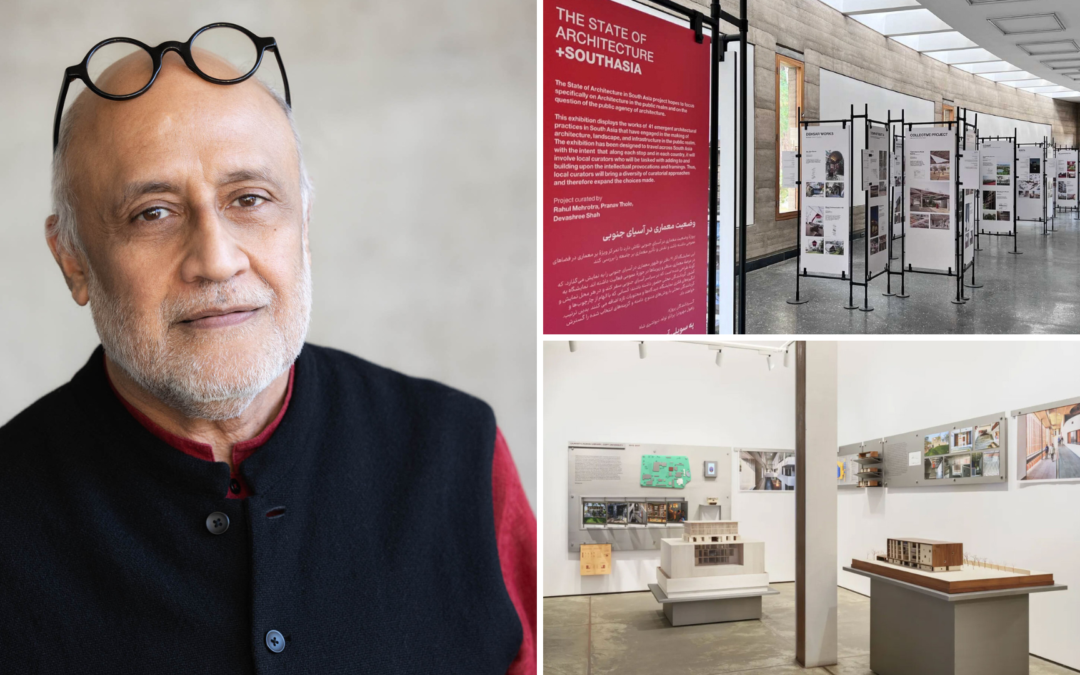
From Mumbai to Kabul, Rahul Mehrotra, Mittal Institute steering committee member and the John T. Dunlop Professor in Housing and Urbanization at Harvard GSD, showcased two sides of his work this summer. “Contextures” at TARQ in Mumbai explores the work of RMA Architects, while “The Architectures of Transition” in Kabul highlights 41 emerging architecture practices across South Asia and asks how architecture can respond to a region in transition.

The Lost River: Water as Memory in Bangalore

The Lost River: Water as Memory in Bangalore

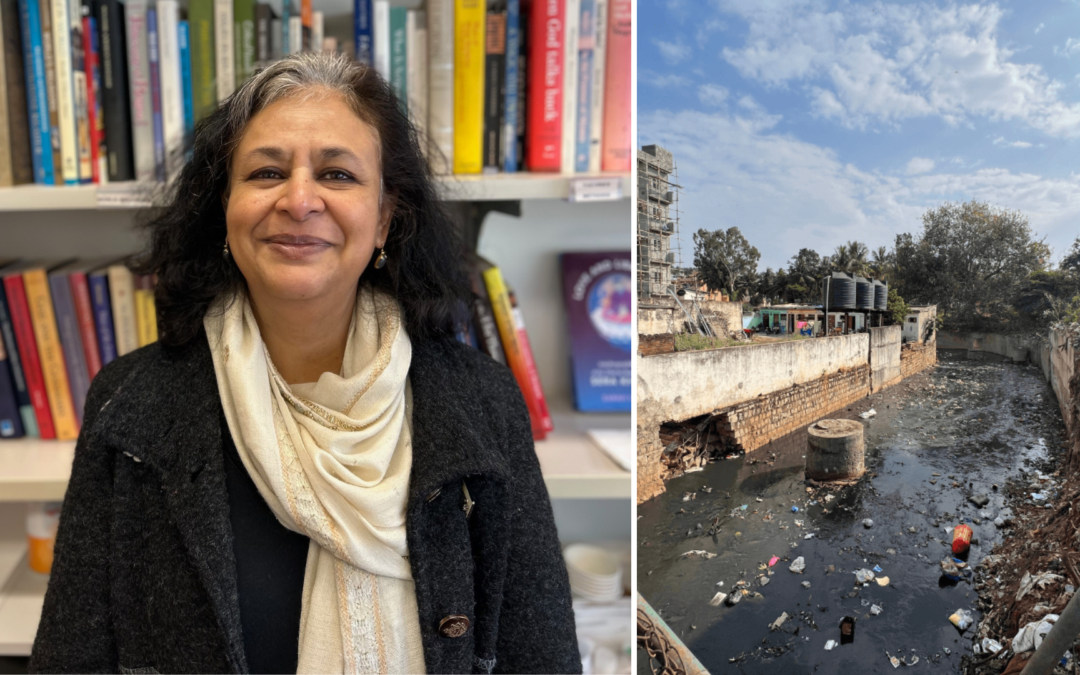
Dr. Tulasi Srinivas, Professor of Anthropology, Religion and Transnational Studies at Emerson College and a Centenary Guggenheim Fellow, was a panelist at the Mittal Institute’s Annual Symposium, Living with Rivers, where she explored the relationship between rivers, design, and urban development. Drawing on her childhood in Bangalore, Srinivas reflects on how a waterway she knew only as a polluted drain was, in fact, a sacred river with deep historical and cultural significance. In the essay below, she traces her journey to uncover the lost Vrishabhavathi River—and reflects on how Bangalore’s transformation has turned a source of life and memory into a conduit for pollution.

Dr. Thiyagaraj Gurunathan, Bajaj Fellow, on Exploring Caste, Contagion, and Medicine in India

Dr. Thiyagaraj Gurunathan, Bajaj Fellow, on Exploring Caste, Contagion, and Medicine in India

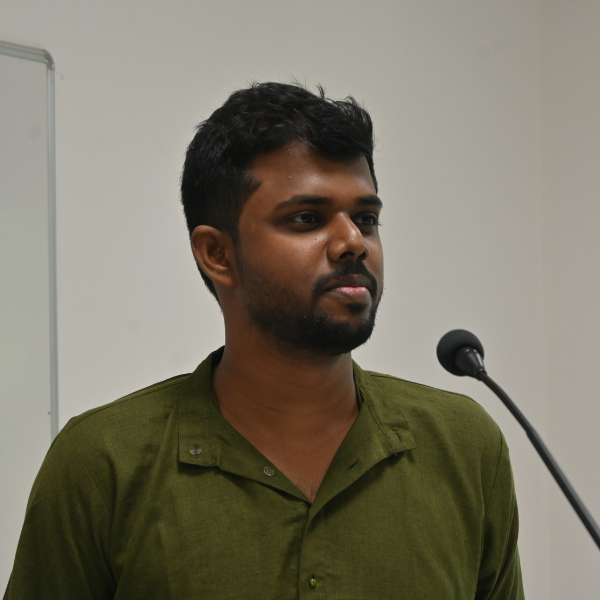
Dr. Thiyagaraj Gurunathan is the Jamnalal Kaniram Bajaj Fellow for Fall 2026, working with Prof. David Jones, A. Bernard Ackerman Professor of the Culture of Medicine and Chair of the Department of the History of Science at Harvard University. An early-career researcher at the intersection of health humanities and cultural studies, his work examines the cultural meanings of contagion in South Asia, particularly in India, with a focus on caste, disease, and outbreak narratives. During his fellowship at Harvard, he is drawing on his background in literature and cultural studies to advance his research toward the history of medicine. We spoke with Dr. Gurunathan about his research and his hopes for his fellowship.