VAF 10of10 feature Interview – Manjot Kaur
Celebrating 10 Years of the Visual Artist Fellowship
Manjot Kaur
Looking back, how did your time as a Visiting Artist Fellow shape your artistic practice or career?
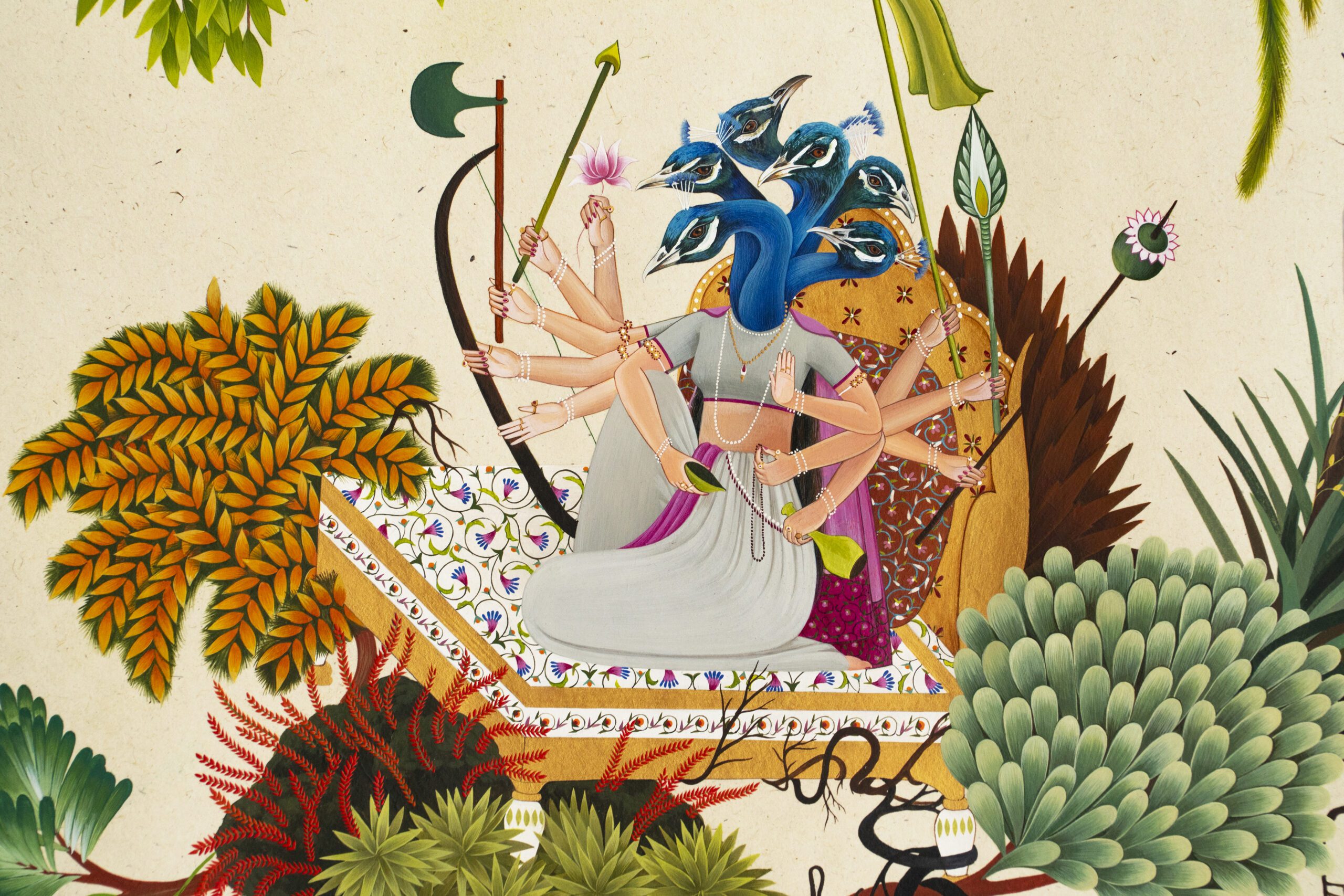
Looking back, my time as a Visiting Artist Fellow was pivotal in shaping both my artistic practice and the trajectory of my career. The fellowship provided the intellectual and creative space necessary to begin the research that ultimately developed into Chthonic Beings. At Harvard, I was able to immerse myself in cross disciplinary conversations—drawing from environmental humanities, post humanist theory, mythology, and feminist ecological thought—which became foundational to the project’s conceptual framework. Engaging with scholars rethinking human–nonhuman relations helped refine my interest in multispecies entanglements and ecological custodianship, directly informing the hybrid mythic figures of Chthonic Beings, rooted in animist traditions, Yoginis, and Yakshinis.
Beyond this grounding, access to archives and rare materials profoundly shaped my technique. Being able to study rare books in Harvard’s libraries and request viewings of Indian and Mughal miniatures in person had a lasting impact on my approach to texture, detail, and symbolic composition. The fellowship encouraged me to think expansively about research-driven art and strengthened my commitment to bridging mythology with contemporary ecological concerns. It marked a turning point, giving me the confidence to situate my practice within broader conversations on ecological justice, multispecies kinship, and post humanist imagination.
Were there any specific experiences, people, or opportunities during the fellowship that had a lasting impact on you?
Yes, several experiences during the fellowship had a lasting impact on me. Meeting Vaishnavi Patil—whose research on the origins and development of the mother goddess in South and Southeast Asia enriched my understanding of regional goddess traditions—was especially influential. We remain in touch and continue to exchange resources that inform each other’s work. Her insights helped shape the mythic and ecological layers of Chthonic Beings. More broadly, the interdisciplinary environment at Harvard, from environmental humanities seminars to conversations on posthumanism and animist knowledge systems, expanded my perspective and continues to guide my artistic and research practice today.
How has your work evolved since your fellowship at Harvard? What are you currently working on or excited about in your practice?
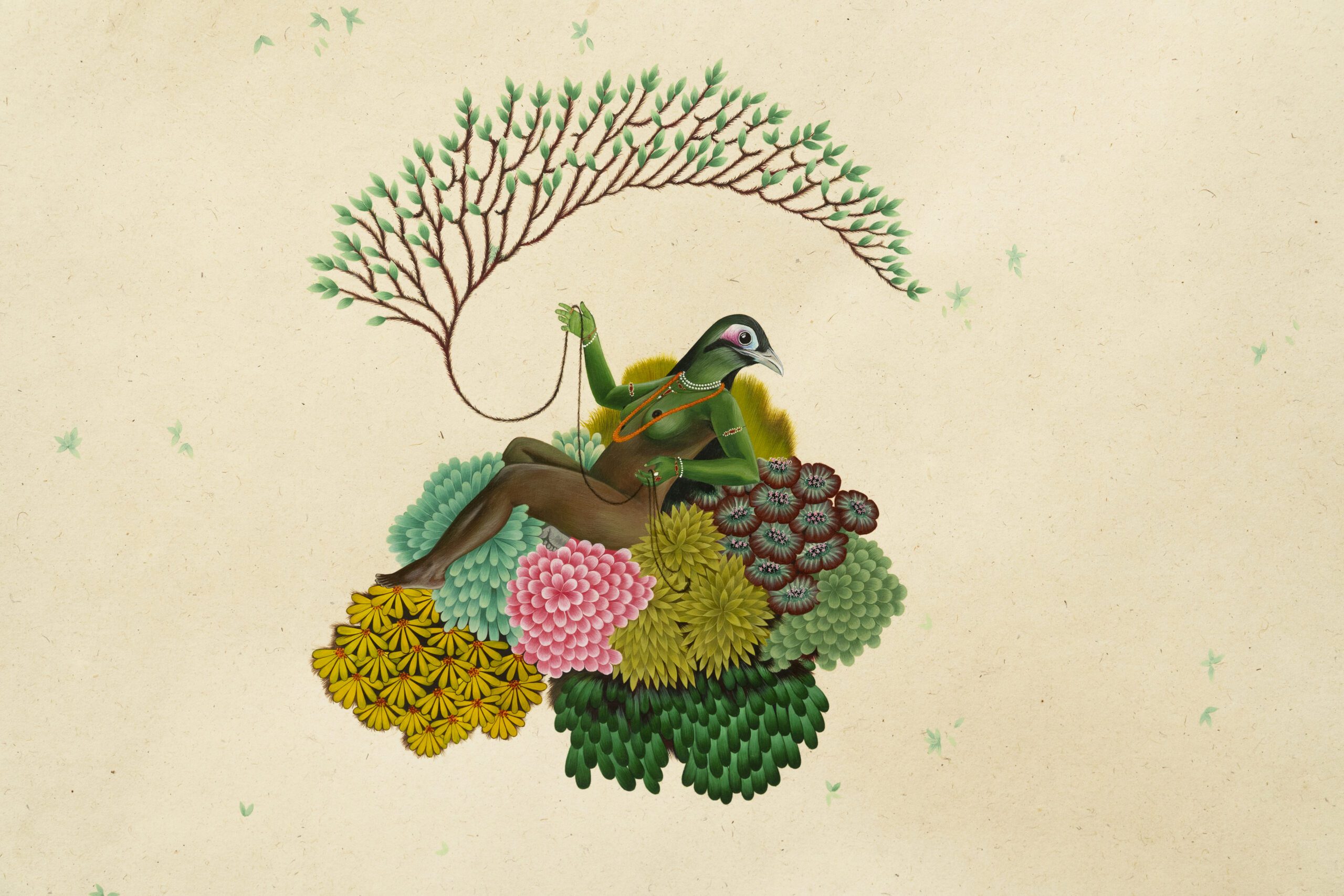
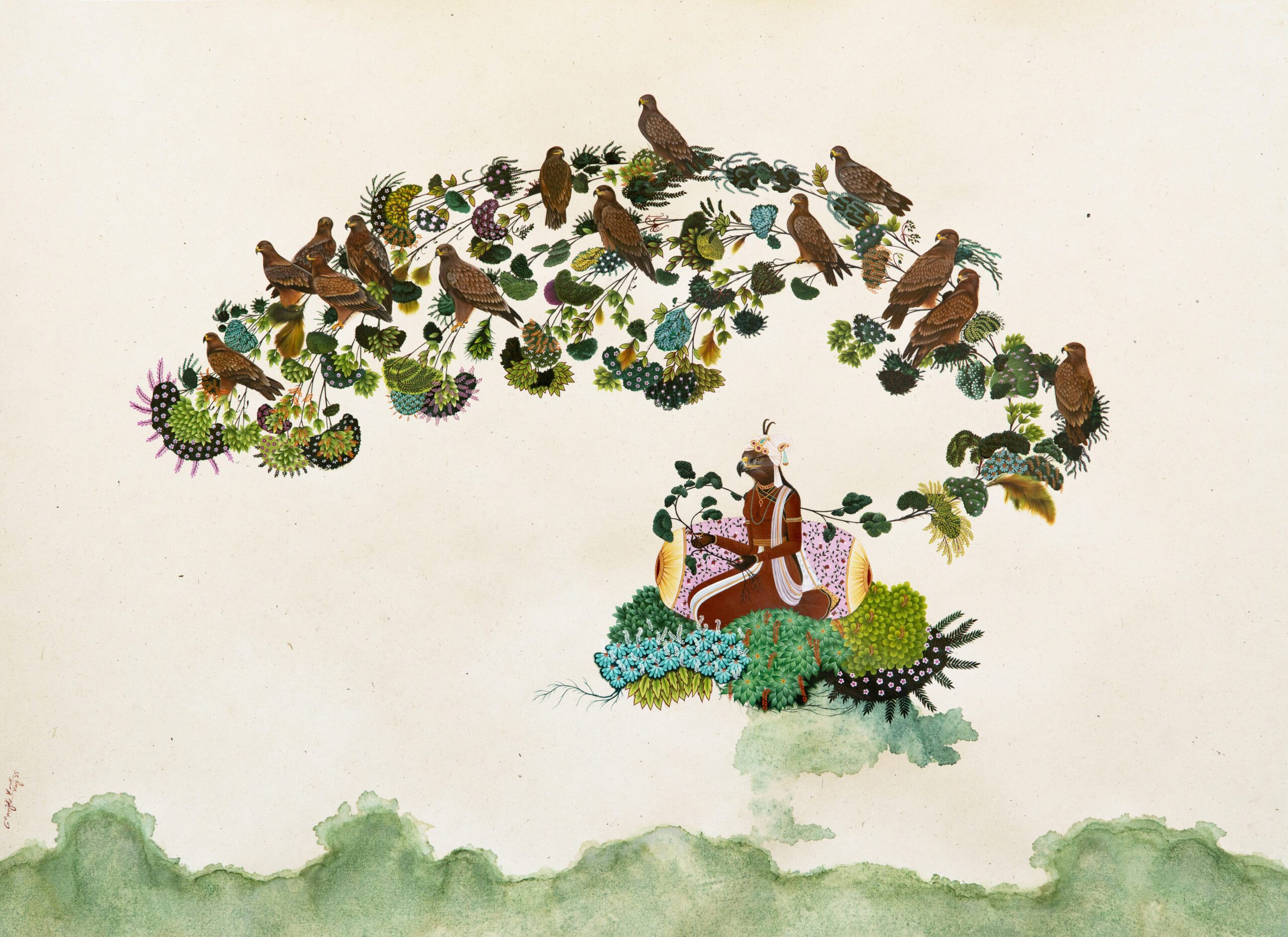
Since my fellowship at Harvard, my work has evolved toward a more research-intensive, ecologically engaged, and mythologically grounded practice. The ideas I began developing during the fellowship crystallized into my ongoing project Chthonic Beings, which has become a central focus of my artistic trajectory. This body of work imagines hybrid mythic entities—drawing from Yoginis, Yakshinis, animist deities, and other indigenous cosmologies—as guardians of endangered ecosystems. These beings embody multispecies entanglements, ecological memory, and the blurred boundaries between human, nonhuman, and elemental worlds.
Chthonic Beings extends the research I initiated at Harvard, deepening my inquiry into post humanist ethics, ecological custodianship, and feminist reimaginings of power. The project combines painting, field research, and theoretical study to explore how myth and fiction can serve as tools for ecological attunement. The hybrid figures function as speculative custodians who converse with threatened flora and fauna, proposing new forms of reciprocity, rewilding, and multispecies governance.
Currently, I am expanding the project into larger-scale paintings and site-responsive installations that situate these beings within contemporary ecological crises. I am also excited about integrating archival research, environmental data, and local mythologies from the geographies where I work, allowing Chthonic Beings to evolve as a living, interconnected ecosystem of images, narratives, and ecological imaginaries.
Whose work is inspiring you right now, and why?
Right now, I am deeply inspired by the mythic lineages of Yoginis and Yakshinis, which continue to shape the visual and conceptual language of my Chthonic Beings project. Yoginis—powerful female deities associated with the divine mother goddess—captivate me for their fluid, hybrid forms and their embodiment of feminine power, natural forces, and transformation. Their ability to shift between women, birds, snakes, and other beings challenges passive representations of femininity and opens space for imagining sovereignty, ferocity, and ecological attunement.
I am also inspired by Yakshinis, the female nature spirits who guard forests, rivers, caves, and sacred groves. Their role as protectors of natural resources, offering wisdom, abundance, and prosperity, resonates strongly with my interest in multispecies guardianship and ecological reciprocity.
In addition to these mythic figures, Vidya Dehejia’s book Yogini Cult and Temples: A Tantric Tradition (often referenced through its reprint by Dahlia Books) has been especially influential. Her research provides historical, iconographic, and philosophical grounding that continues to inform the symbolic structures and imaginative possibilities within my current work.
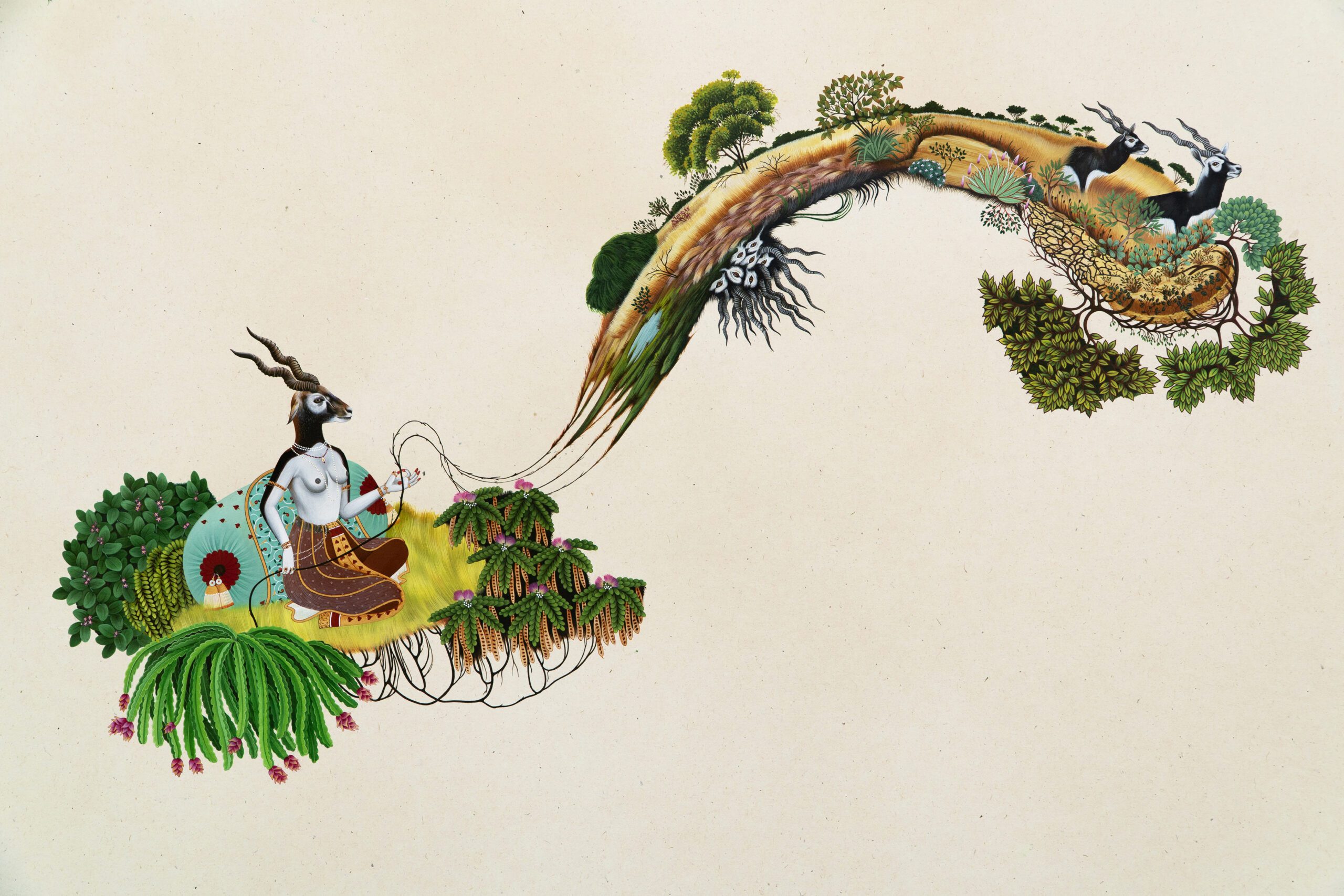
Share one image that captures something meaningful about your practice today. This could be a recent artwork, a studio moment, or you at work.
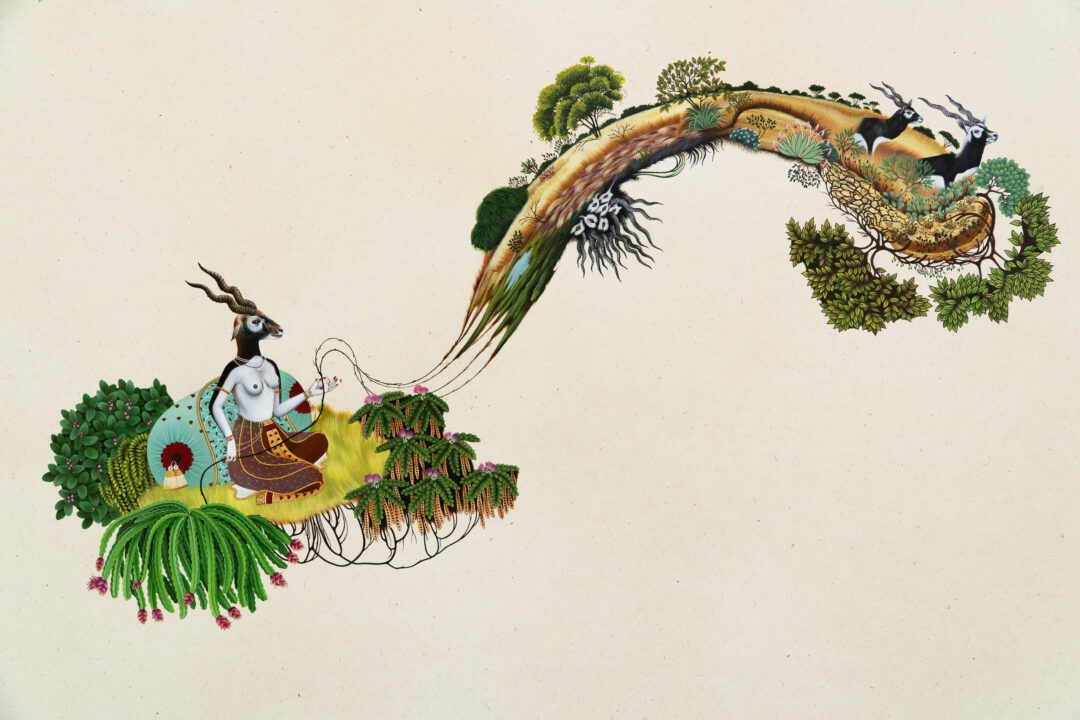
In this painting, a Chthonic Being emerges through the hybrid form of a Yogini embodying the spirit of the endangered blackbuck – a graceful and endangered antelope, embodying both vulnerability and strength.
She rides a chariot not made of metal or stone, but of living plants, which takes reference from calotropis gigantea, acacia, and wild grasses. These are plants rooted in resilience, survival, and connection to arid landscapes.
Held in her hands are the exposed roots of a vast and fragile ecosystem. From these roots unfold scenes of cracked desert soil, a blackbuck pair, a waterbody, grasslands, mangrove trees and acacia trees amongst others—echoing the diverse and fragile ecologies of Kutch, one of the regions inhabited by Blackbucks.
Rather than presiding over nature from above, this Chthonic Being carries the land with her, nurturing and protecting it as an extension of herself.This work reimagines myth as a living force for ecological justice. It challenges human-centered hierarchies and imagines a world where plants, animals, and landscapes are active participants in their own futures. The painting becomes a call to listen—to the roots, to the soil, and to the forgotten voices of the wild.
Explore more of the artist’s work here
DSC00025a – Manjot Kaur
DSC01004 copy – Manjot Kaur
DSC01049 copya – Manjot Kaur