
VAF Program: A Decade of Art, Reflection, and Community
Celebrating 10 Years of the Visual Artist Fellowship
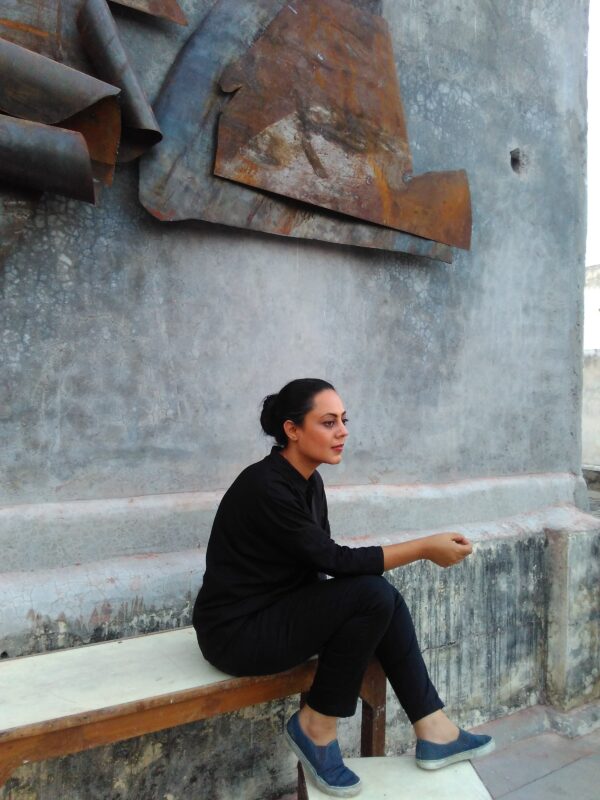
Sakshi Gupta
Sakshi Gupta
“My time at Harvard made me aware of the boundaries I had unconsciously set for myself—particularly around what I considered a “studio.” Although I had long been gathering scrap and discarded materials from the city, observing my practice from a distance shifted my understanding fundamentally. The studio no longer felt like a single room; the city itself became a porous, ever-changing workspace.
When the urban landscape becomes the studio, everything transforms—scale, material, context, and even intention. I began engaging with my surroundings more directly, creating with and through the environment rather than separate from it. I arrived hoping to refine my methods, but I left with something more expansive: a redefined sense of materiality and an enlarged terrain for making.” “My time at Harvard became a period of realignment and renewal — a chance to step back and reconsider my ways of thinking and working as an artist, and more specifically, as a sculptor. Nora Schultz’s class played a particularly transformative role. Her approach encouraged me to stretch my understanding of what sculpture could be, moving beyond the idea of giving form and solidity to an abstract thought.
Through her provocations, I began to explore other sensory dimensions — sound, scent, atmosphere — as equally potent materials capable of carrying meaning and presence. Her guidance nudged me to question ingrained cultural assumptions around sculpture and the tendency to treat it as a fixed, object-based practice.
This process often took me out of my familiar terrain; at times it felt disorienting. Yet, that very discomfort opened up a fertile territory — a space where new questions could surface and new ideas could take root.” “Since my fellowship at Harvard, my practice has opened up in quite a natural yet significant way. While I have always engaged with industrial scrap and discarded materials, my time there sharpened my sensitivity to the quieter, often overlooked things that accumulate around us — objects that most people consider waste or residue. I’ve begun to pay closer attention to these materials, to listen to the small stories they carry, and to allow them to initiate conversations that gradually evolve into works.
This shift has expanded my understanding of materiality and deepened the relational aspect of my process — it’s less about transforming a found object and more about responding to what it already holds.
At the moment, I’m working toward my upcoming solo exhibition, which I’m truly excited about. It’s giving me an opportunity to bring these new approaches together and see how they unfold within a larger, cohesive body of work.” “I’ve been deeply inspired by Eva Hesse and Cornelia Parker, each of whom resonates with different facets of my current explorations. Hesse’s work, with its fragility, irregularity, and emotional permeability, has been especially moving. The way she allowed materials to sag, droop, age, and behave on their own terms mirrors my growing interest in surrendering control and listening to what discarded or overlooked materials want to become. Her ability to hold tension—between order and entropy, tenderness and unease—feels very close to the existential questioning that runs through my practice.
Cornelia Parker, on the other hand, inspires me through her nuanced engagement with transformation and the poetics of recontextualization. I’m drawn to her ability to take acts of compression, rupture, or destruction and reframe them as moments of suspension and meditation. Her approach affirms my own instinct to treat found and “waste” materials not as static objects but as carriers of histories, possibilities, and quiet narratives. Together, Hesse and Parker remind me that materiality is never just physical—it’s emotional, temporal, and conceptual—and this understanding continues to shape the direction of my work.” https://drive.google.com/open?id=1GlyI_hcB7q-8Orpk5LNEIjuvVMYRXXA8