
The Lancet Commission on a Citizen-Centred Health System for India
The Lancet Commission on a Citizen-Centred Health System for India is an ambitious, cross-sectoral endeavor to lay out the roadmap to achieving universal health coverage for the people of India.
Its guiding principle is that such a path can only be defined and attained through consultative and participatory engagement with the diverse sectors involved in healthcare and, most importantly, with India’s citizenry.
The Lancet is a leading international medical journal that has paved the way for medical reforms and global health discussions around the world. The Commission on a Citizen-Centred Health System for India launched the first participatory report of its kind to be published by the journal, and the first Commission devoted to India.
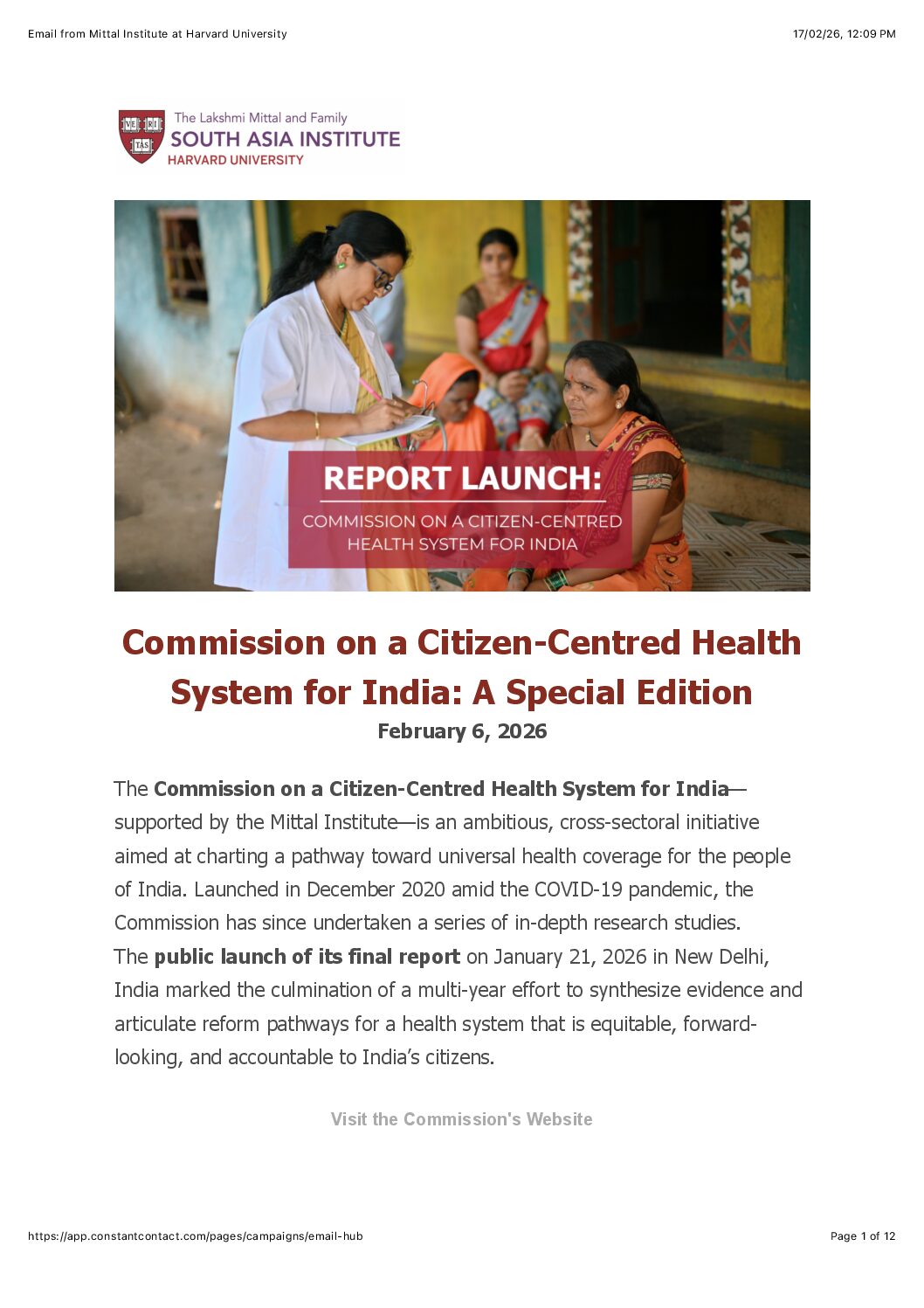
There is an urgent need for a resilient healthcare system that offers comprehensive, accountable, accessible, inclusive, and affordable quality healthcare to all citizens in India.
About the Project
The Lancet Commission on a Citizen-Centred Health System for India was founded in December 2020, amid the COVID-19 pandemic, to identify health system reforms needed to achieve Universal Health Coverage (UHC) in India within a decade.
The analyses and reform options of the commission are rooted in the lived experiences, expectations, and preferences of the Indian people. The commission is guided by the principle that all of India has a right to high-quality healthcare and that the government must finance, steward, and operate the health system.
The commission consists of members from a broad spectrum of expertise and viewpoints and is structured across five workstreams: citizens’ engagement, financing, governance, human resources for health, and technology. It actively engages with diverse audiences through its website, a monthly newsletter, and webinars. The Mittal Institute’s India office is serving as the secretariat.
To systematically assess India’s UHC achievements and challenges, and to present recommendations, the commission has conducted several research studies. This includes a representative survey of 50,000 households on their experiences, preferences, and expectations of the healthcare system, a mixed-methods study across six districts in India, and the design of a new index that relies on routinely collected data to assess the achievement of UHC at the district level.
The final report has been published in The Lancet in 2026 | Watch the launch event here
The single most important call to action of the Commission’s analysis is a high-performing, publicly financed and publicly provided, integrated healthcare delivery system as the primary vehicle for UHC as only the public sector has historically had the mandate and mission to achieve health equity and only the public sector has the architecture of care delivery, from community health workers to tertiary care in every corner of the country, while shaping the private sector to leverage its strengths and align with UHC objectives of access, affordability, and quality.