Speaker: Tresa Abraham, Raghunathan Family Fellow, Mittal Institute
Moderator: Ian J. Miller, Reischauer Institute Professor of Environmental History
Faculty Dean of Cabot House
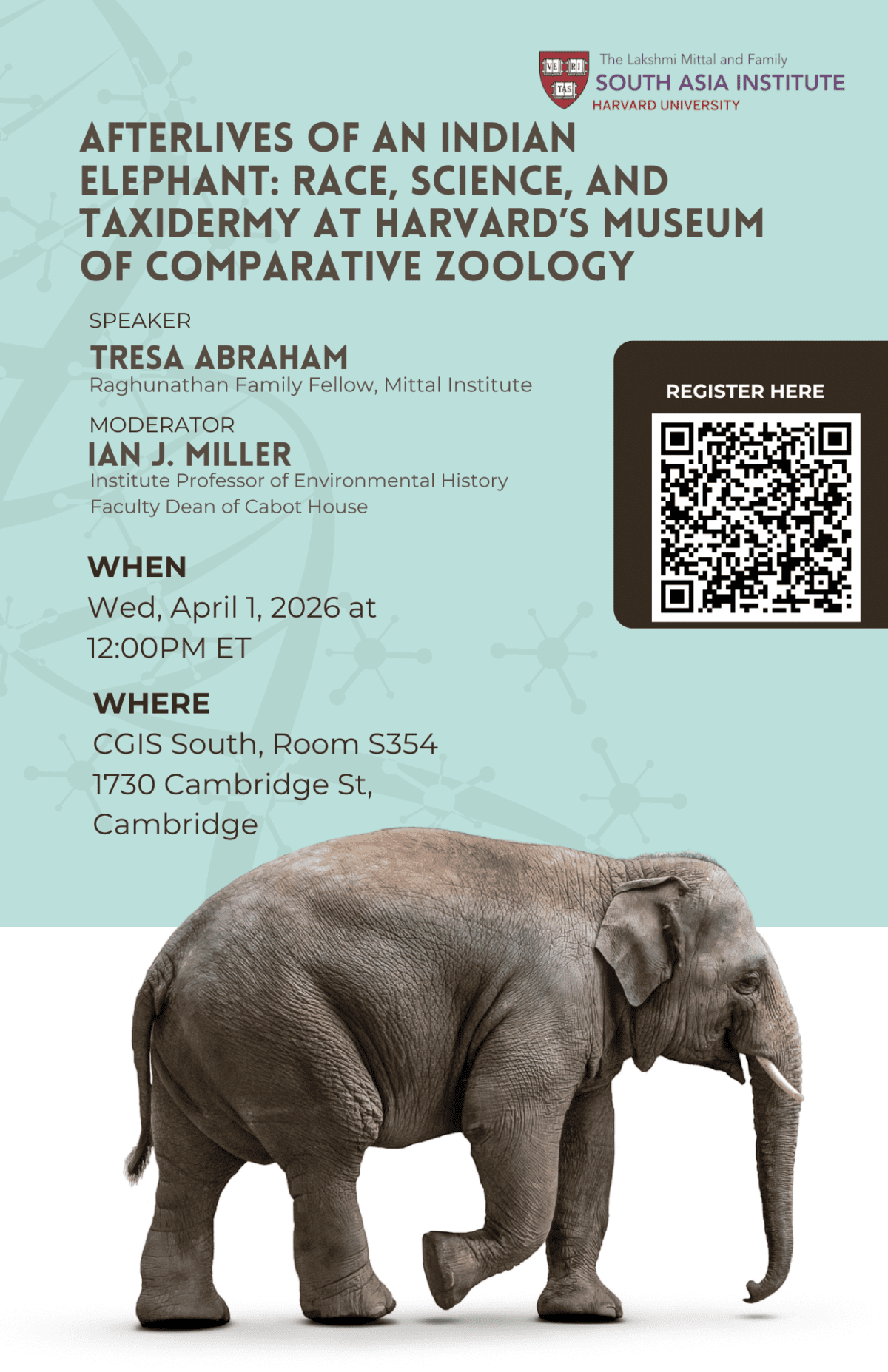
Tresa Abraham’s postdoctoral project is on the cultural history of taxidermy in India, examining how wild animals and their preserved bodies shaped negotiations of power, science, and sovereignty in colonial and postcolonial contexts. It traces multi-imperial and transnational networks of hunters, museum professionals, artisans, and rulers to show how taxidermy functioned as a site where race, caste, class, and scientific authority were produced and contested.
This seminar will focus on the “afterlives” of an Indian elephant mount, collected by William T. Hornaday, following its transformation from an illegally hunted animal in colonial South India into a composite taxidermy mount at Harvard’s Museum of Comparative Zoology. It argues that the specimen operated simultaneously as a scientific object and imperial trophy, obscuring poaching, racialised and caste-marked labour, and institutional misrepresentation under the legitimising language of science, sportsmanship, and later conservation.