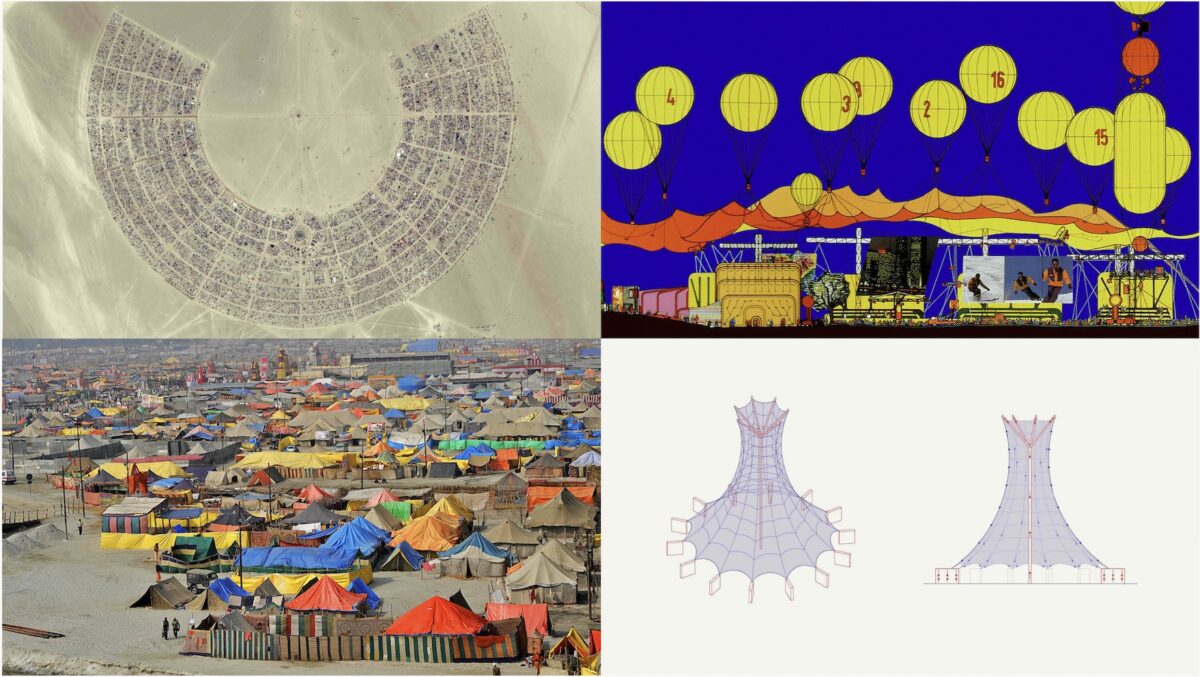
Infrastructure in a Time of Flux: Methods, Conditions, and Situations Symposium
WHEN
Thu, Nov 12, 2026 at 06:30pm, ET — Fri, Nov 13, 2026 at 05:30pm, ET
VENUE
Piper Auditorium
ORGANIZER
Harvard Graduate School of Design
WHEN
Thu, Nov 12, 2026 at 06:30pm, ET — Fri, Nov 13, 2026 at 05:30pm, ET
VENUE
Piper Auditorium
ORGANIZER
Harvard Graduate School of Design
WHEN
Wed, Oct 14, 2026 from 03:00pm — 05:00pm, ET
VENUE
CGIS South, S 250
ORGANIZER
Harvard Asia Center, Mittal Institute Cambridge Office
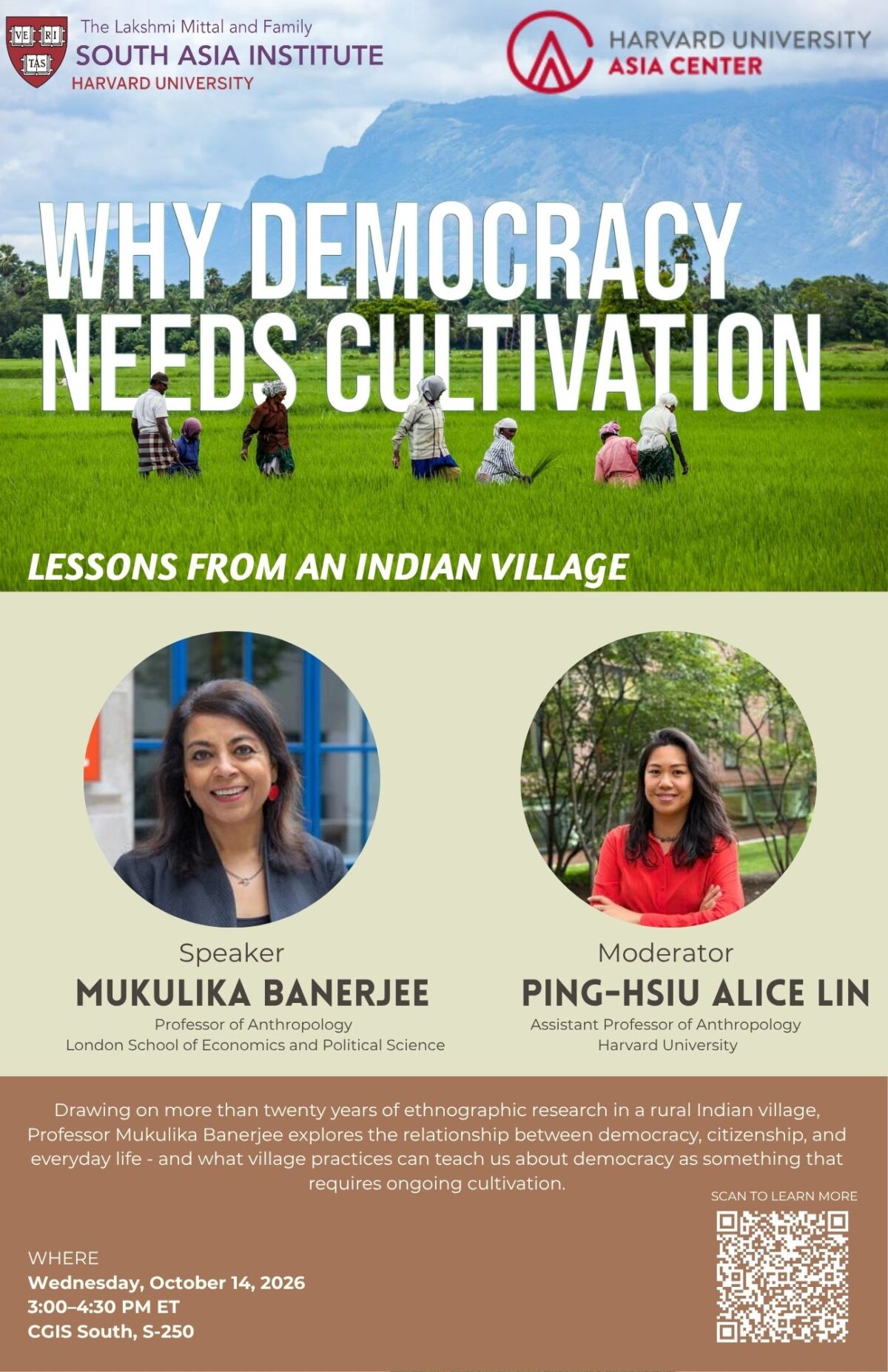
Please join us for a talk by Professor Mukulika Banerjee of the London School of Economics and Political Science, exploring the relationship between democracy, citizenship and everyday life in an Indian village.
More InfoWHEN
Tue, Sep 22, 2026 from 05:00pm — 06:30pm, ET
VENUE
The Dean’s Meeting Room, Kresge 110, Harvard T.H. Chan School of Public Health
677 Huntington Avenue, Boston, MA 02115
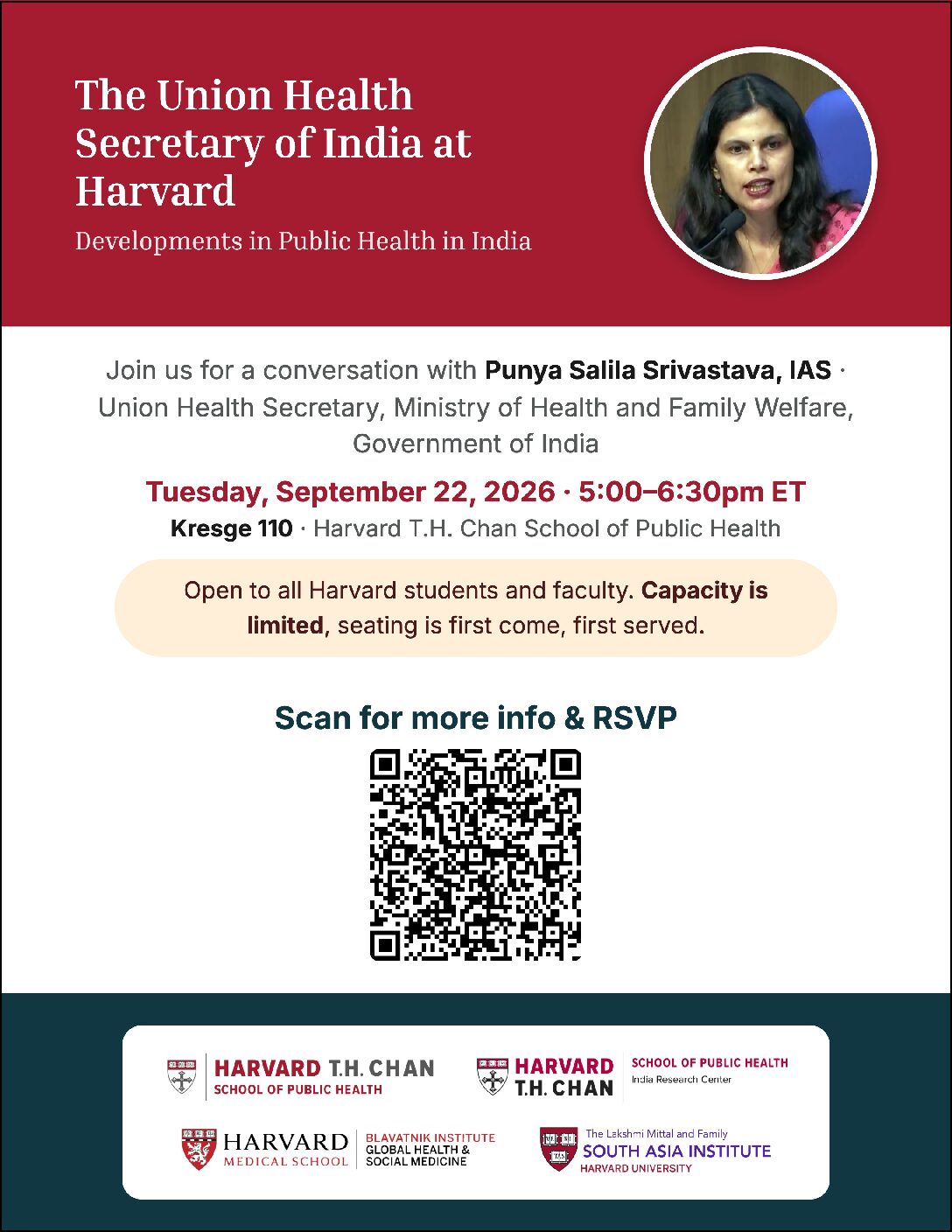
Please join us for a conversation with Punya Salila Srivastava, IAS, Union Health Secretary, Ministry of Health and Family Welfare, Government of India, on major developments in public health in India.
More InfoWHEN
Tue, Sep 8, 2026 from 04:15pm — 07:30pm, ET
VENUE
CGIS South, Tsai Auditorium and Concourse,
1730 Cambridge Street, Cambridge
ORGANIZER
Mittal Institute Cambridge Office
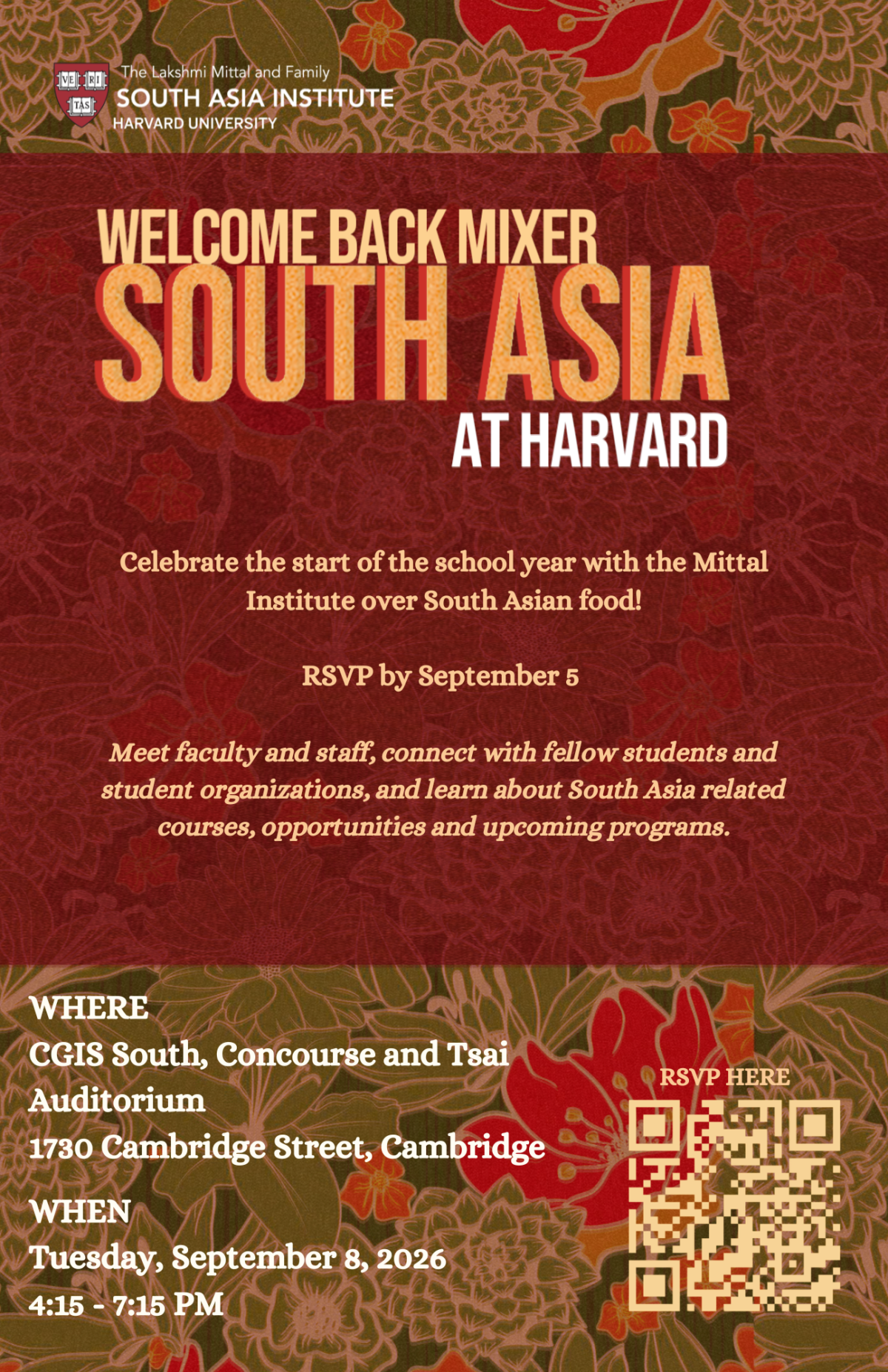
Join us for a Welcome Back Mixer for South Asia @ Harvard. Celebrate the start of the school year with the Mittal Institute over a South Asian dinner! Meet Mittal Institute faculty and staff, connect with South Asian student organizations on campus, and learn about opportunities and upcoming programs.
More InfoWHEN
Thu, May 14, 2026 at 12:30pm, ET
VENUE
CGIS South, S450
ORGANIZER
Mittal Institute Cambridge Office
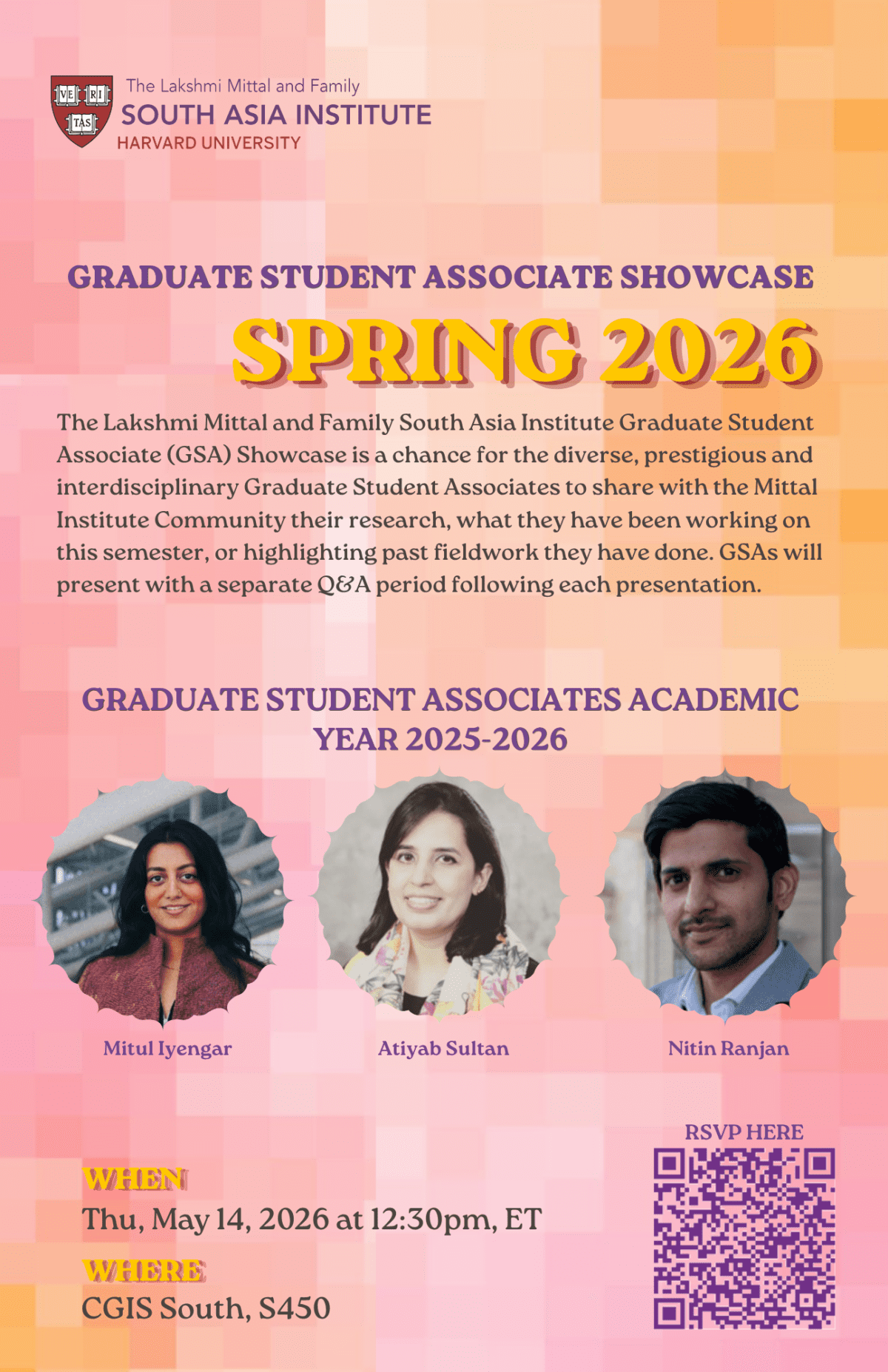
The Lakshmi Mittal and Family South Asia Institute Graduate Student Associate (GSA) Showcase is a chance for the diverse, prestigious and interdisciplinary Graduate Student Associates to share with the Mittal Institute Community their research, what they have been working on this semester, or highlighting past fieldwork they have done. GSAs will present with a separate Q&A period following each presentation.
More InfoWHEN
Wed, Apr 29, 2026 at 05:00pm, ET
VENUE
CGIS South, S153
ORGANIZER
Mittal Institute Cambridge Office
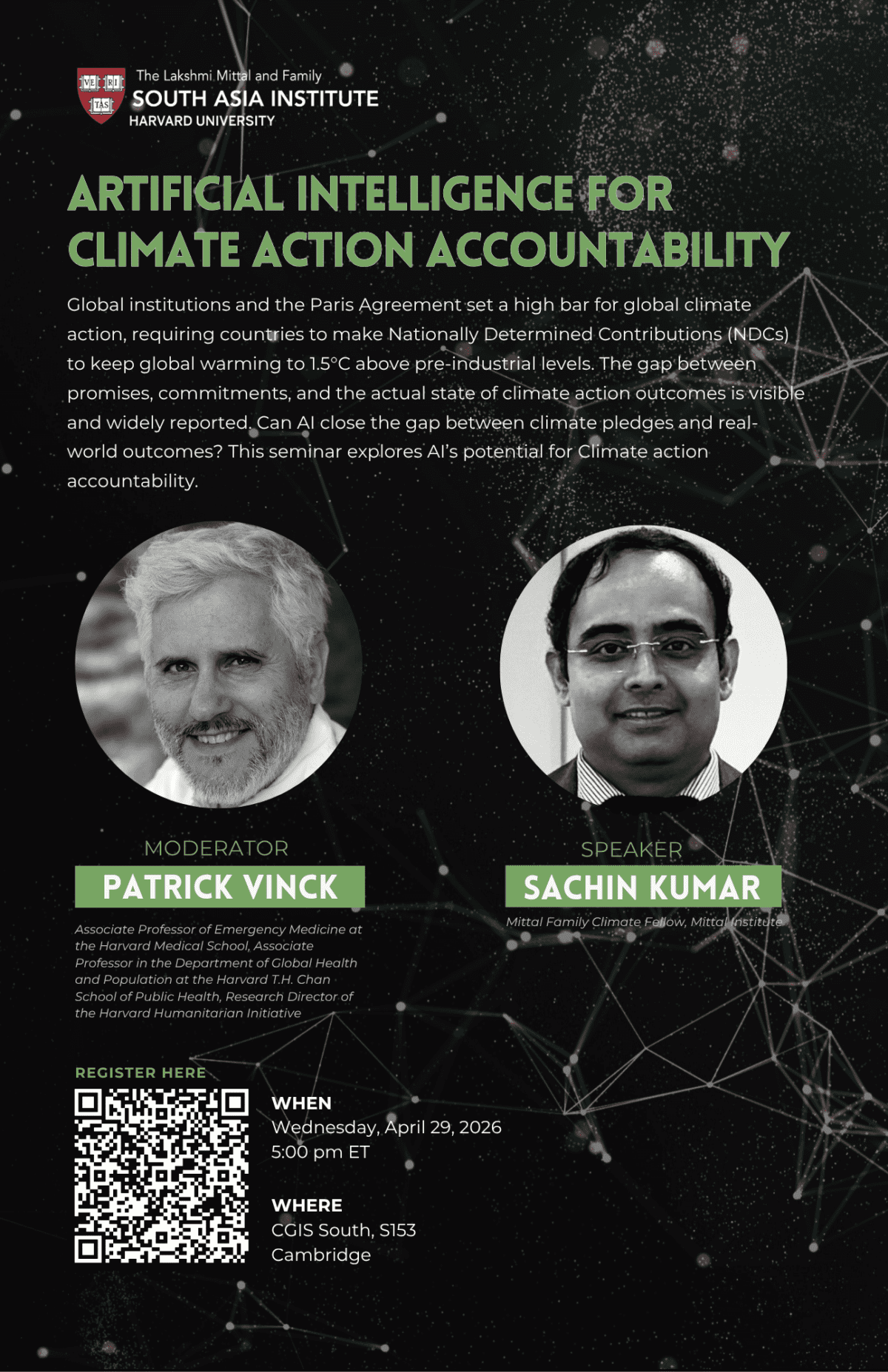
Global institutions and the Paris Agreement set a high bar for global climate action, requiring countries to make Nationally Determined Contributions (NDCs) to keep global warming to 1.5°C above pre-industrial levels. The gap between promises, commitments, and the actual state of climate action outcomes is visible and widely reported. Can AI close the gap between climate pledges and real-world outcomes? This seminar explores AI’s potential for Climate action accountability.
More InfoWHEN
Mon, Apr 27, 2026 from 03:00pm — 05:00pm, ET
VENUE
CGIS South, S153
ORGANIZER
Mittal Institute Cambridge Office
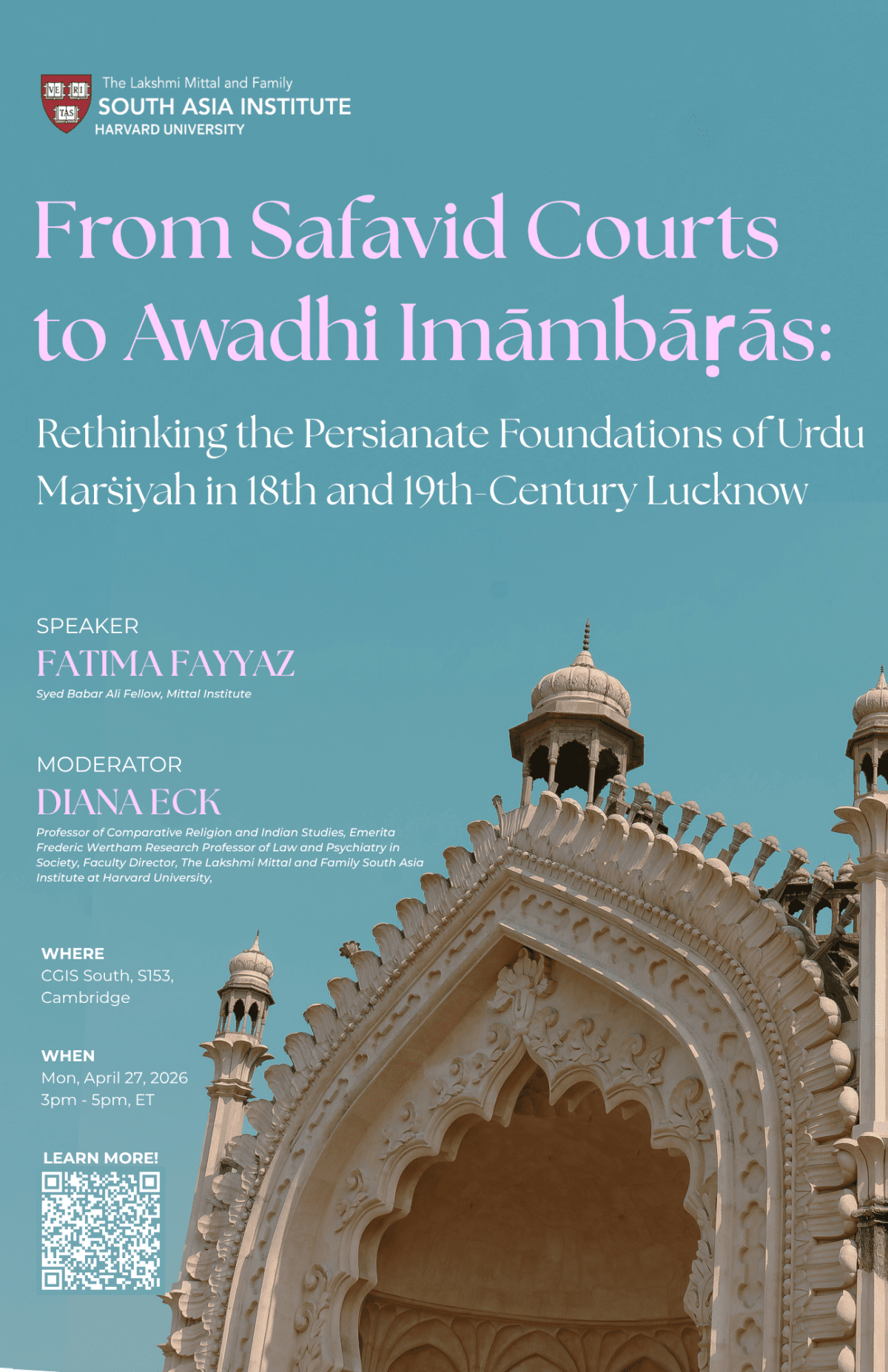
This talk explores the transregional journey of the marṡiyah (elegy) from Safavid Iran to Mughal India through the lens of Iranian émigré poets. It examines why, despite the reorientation of royal patronage under Shah Ṭahmāsp—which prioritized the composition of marṡiyah over qaṣīdah (panegyric) —the genre reached its fullest expression beyond Iran’s borders, specifically within the Shiʿi court of Awadh. Central to this discussion is the Persian dīwān of Mullah Ḳhat̤ā Shūshtarī, an eighteenth-century émigré who served as a formal roẓah-ḳhwān (reciter of Karbala elegies) at Nawāb Āṣif-ud-Dawlah’s court and imāmbāṛā in Lucknow. The talk argues that Ḳhat̤ā’s work represents both the final efflorescence of Persian marṡiyah in Lucknow and a crucial transitional moment in the vernacularization of the genre from Persian to Urdu. Ultimately, this identifies the Persianate foundations of a literary tradition in Lucknow that Mīr Anīs would later carry to its zenith in the nineteenth century
More InfoWHEN
Fri, Apr 17, 2026 from 09:00am — 03:00pm, ET
VENUE
Harvard Faculty Club, 20 Quincy St, Cambridge, MA 02138
ORGANIZER
Mittal Institute Cambridge Office
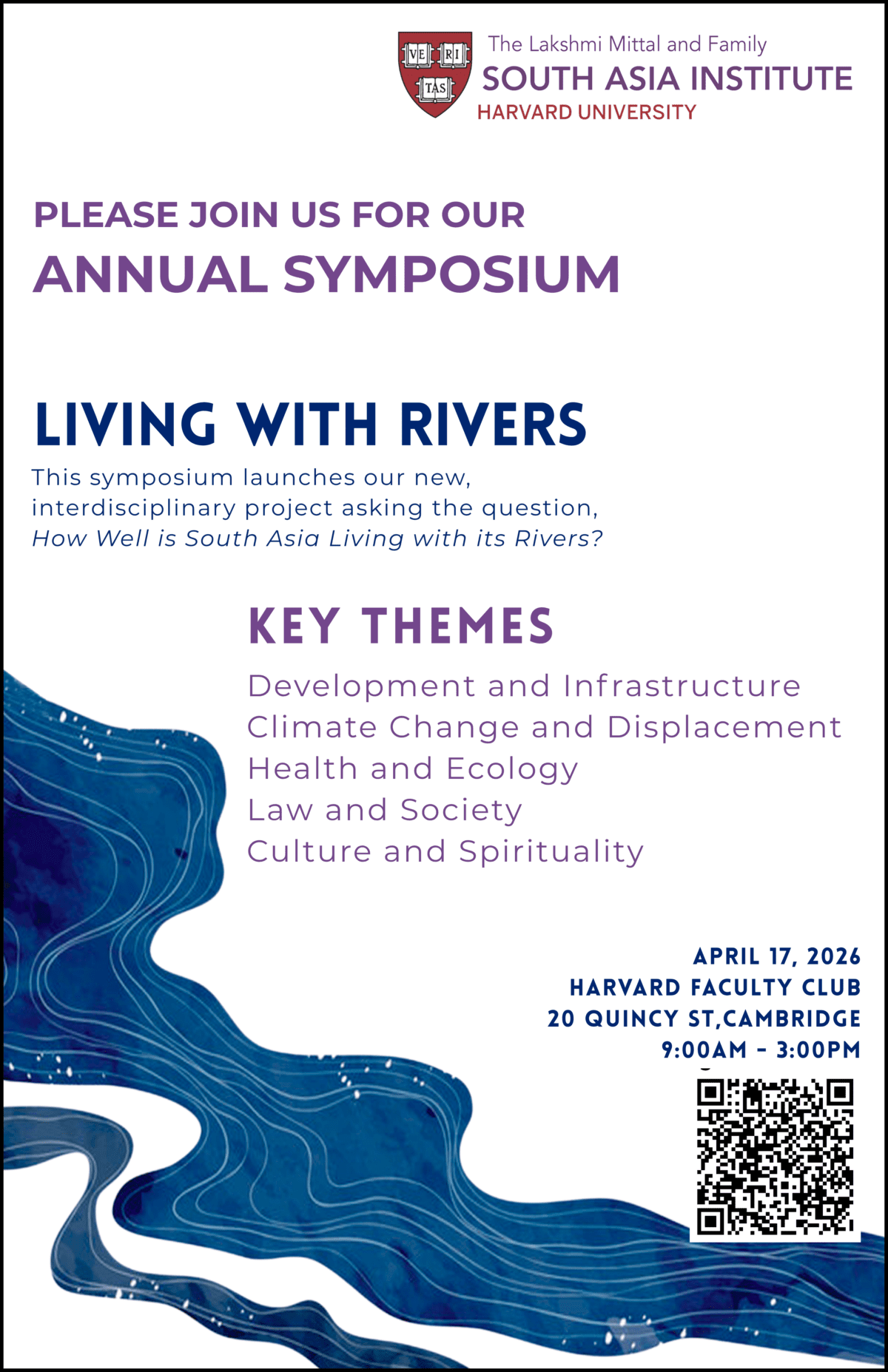
Please join us for the Mittal Institute Annual Symposium 2026. This event is free and open to the public.
More InfoWHEN
Wed, Apr 1, 2026 at 12:00pm, ET
VENUE
CGIS South, S354
ORGANIZER
Mittal Institute Cambridge Office
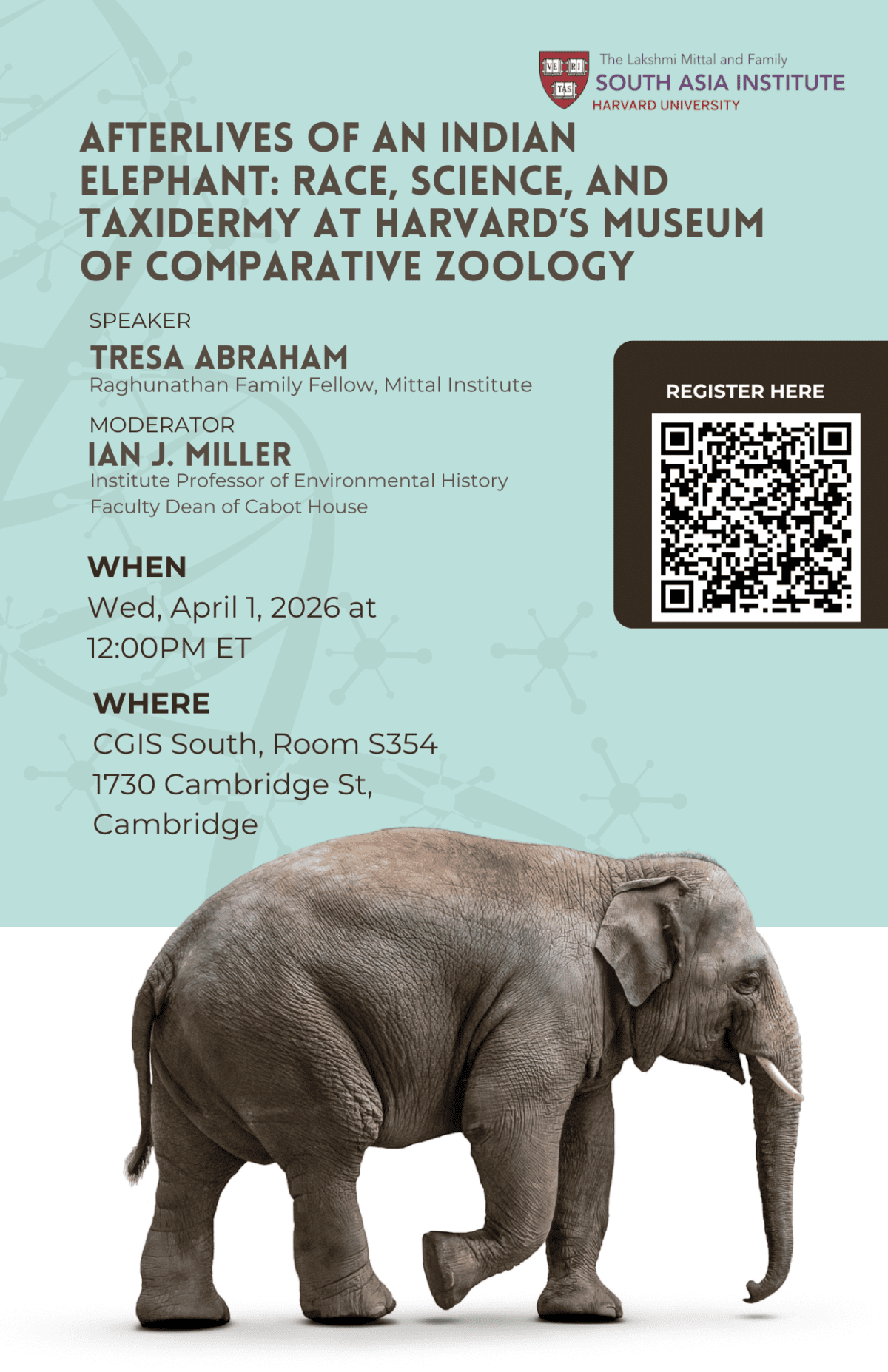
Tresa Abraham’s postdoctoral project is on the cultural history of taxidermy in India, examining how wild animals and their preserved bodies shaped negotiations of power, science, and sovereignty in colonial and postcolonial contexts. This seminar will focus on the “afterlives” of an Indian elephant mount, collected by William T. Hornaday, following its transformation from an illegally hunted animal in colonial South India into a composite taxidermy mount at Harvard’s Museum of Comparative Zoology.
More InfoWHEN
Mon, Mar 30, 2026 from 04:00pm — 06:00pm, ET
VENUE
CGIS South Concourse
ORGANIZER
Mittal Institute Cambridge Office

Join us for a low-key chai and book swap social at CGIS South!
More InfoWHEN
Tue, Dec 2, 2025 at 05:30pm, ET
VENUE
CGIS South, S250
ORGANIZER
Mittal Institute Cambridge Office
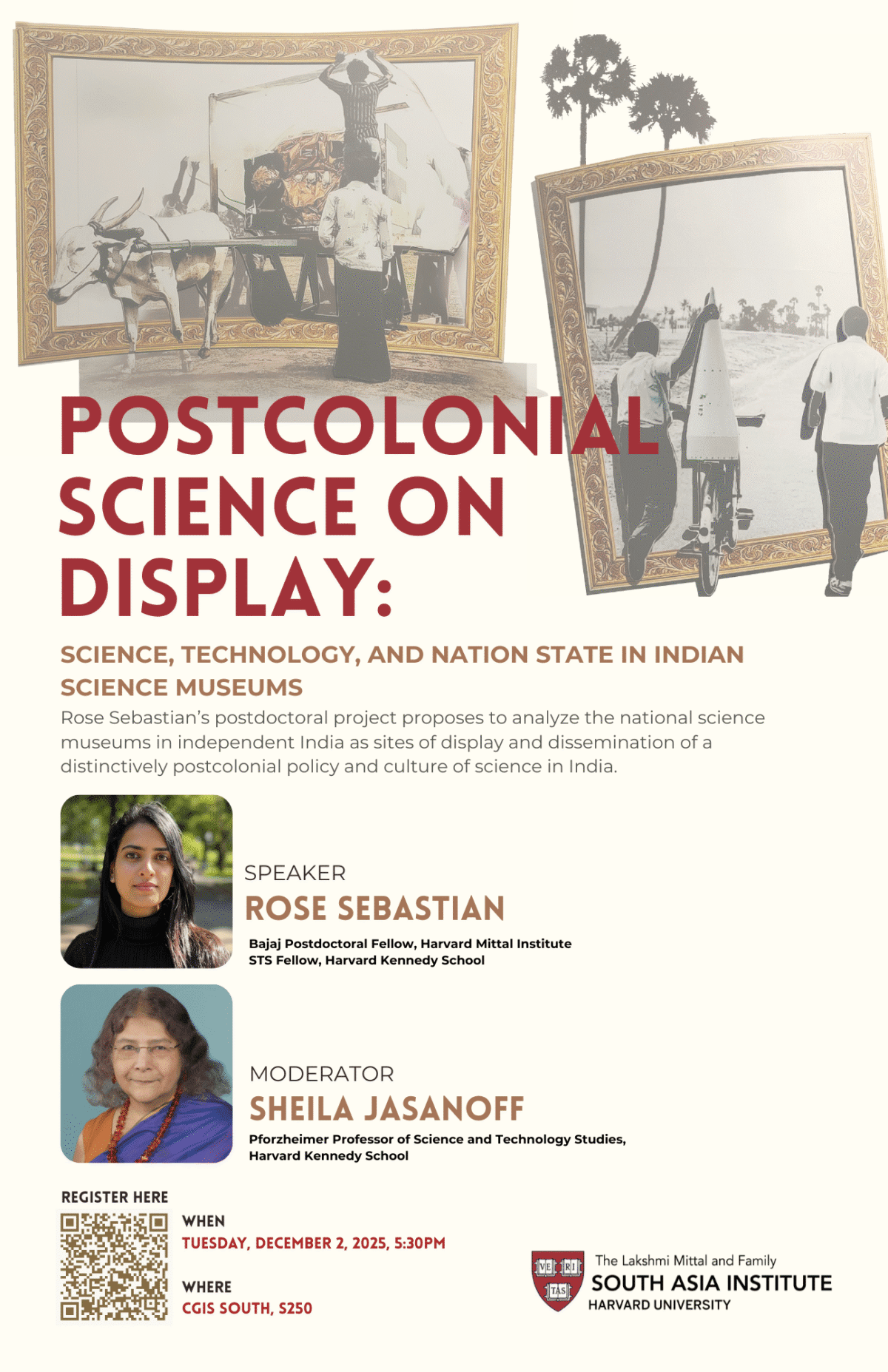
Dr. Rose Sebastian’s postdoctoral project proposes to analyze the national science museums in independent India as sites of display and dissemination of a distinctively postcolonial policy and culture of science. This interdisciplinary project aspires to bring together the analytical approaches of Cultural Studies and Science and Technology Studies (STS). It extends the concepts of postcolonial hybridity and ambivalence to cultures of science, and analyzes the co-production of the technoscientific and the political in postcolonial India from an STS framework.
More InfoWHEN
Wed, Nov 5, 2025 at 05:30pm, ET
VENUE
CGIS South, Room S050 and online via Zoom
ORGANIZER
Mittal Institute Cambridge Office
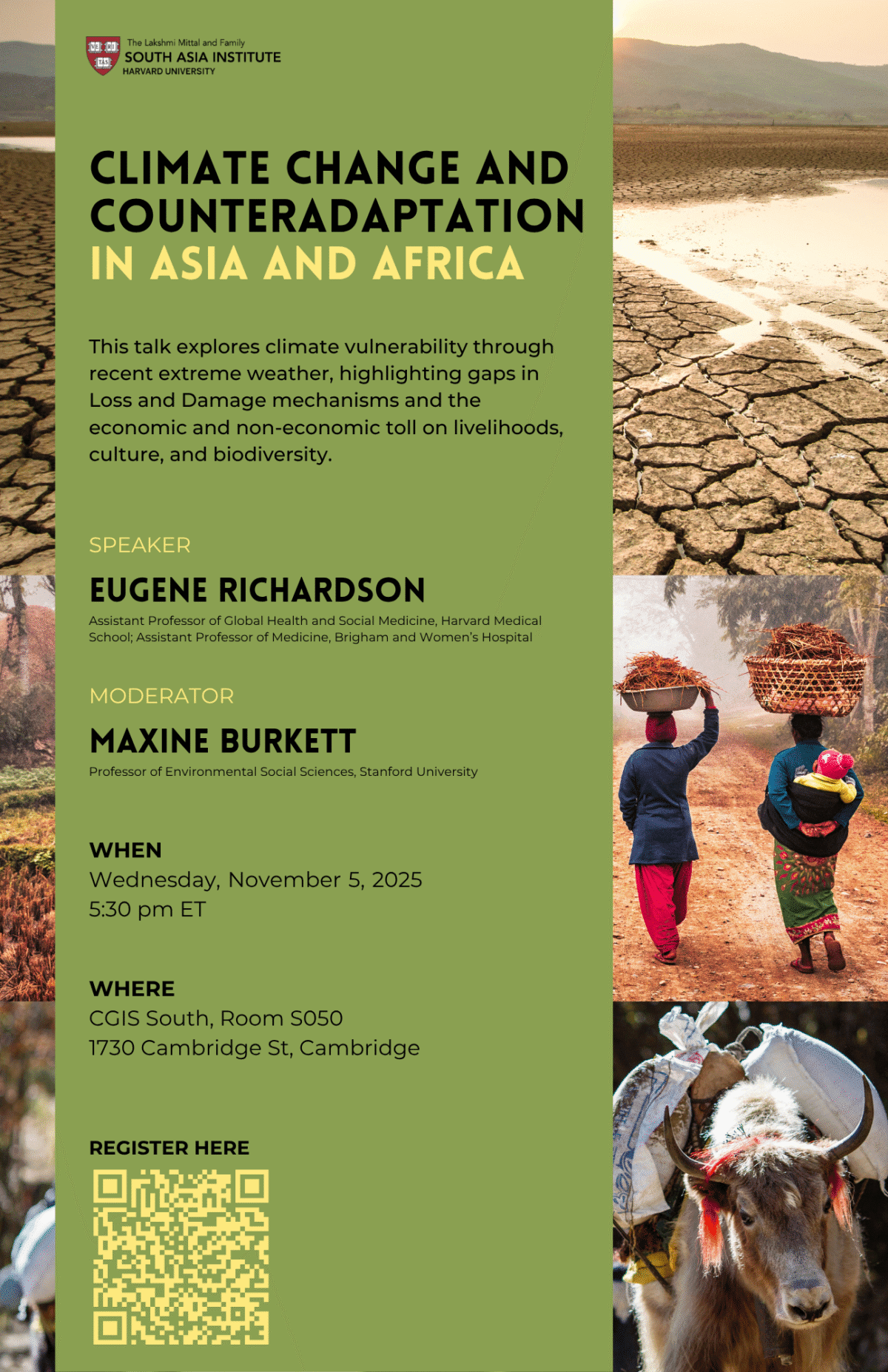
Join Eugene Richardson, M.D., Ph.D., Assistant Professor of Global Health and Social Medicine, Harvard Medical School; Assistant Professor of Medicine, Brigham and Women’s Hospital for a discussion on his Mittal Institute faculty climate grant project.
More Info