
As the days grow colder this winter season, it’s the perfect time to settle in with a great read. Explore our latest reading recommendations—there’s something here for every kind of reader. We hope they spark inspiration for your own winter reading. Enjoy!
Tarun Khanna
Founding Director of Mittal Institute’s Climate Platform and the Jorge Paulo Lemann Professor at the Harvard Business School
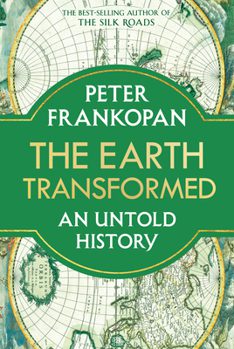
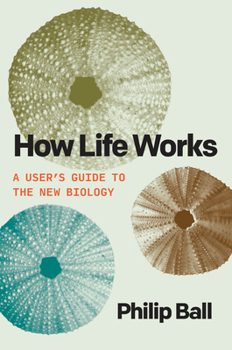
“I am currently reading The Earth Transformed: The Untold Story. It is thoroughly researched and anchors today’s climate change discussions in the longue durée. I am also reading How Life Works: A User’s Guide to the New Biology, where title says it all, though it is not about South Asia in particular.”

Sachin Kumar
Mittal Family Climate Fellow
“There are so many books which I can recommend, but presently my mind takes me to recommend Chitralekha by Bhagwati Charan Verma. Chitralekha is a timeless Hindi classic that delves into the moral and philosophical dilemmas at the heart of human existence. Set in ancient India, the novel follows a king, a young monk, and the captivating dancer Chitralekha as they confront the nature of sin, virtue, love, and desire. What makes the book remarkable is Verma’s ability to show that morality is rarely absolute; rather, it emerges from the interplay of personal circumstances, intentions, and societal expectations.
I was particularly drawn to how the novel portrays human character with empathy and nuance—no one is wholly virtuous or sinful. Through elegant storytelling, Chitralekha encourages readers to question their assumptions and see the world with greater compassion. For anyone interested in South Asia’s literary heritage, philosophical reflections, or a deeply engaging narrative, this novel is a meaningful and enriching read for the winter months.”
Rose Sebastian
Jamnalal Kaniram Bajaj Fellow, Mittal Institute; Postdoctoral Fellow, Harvard Kennedy School’s Program on Science, Technology, and Society
“I recommend The Third and Final Continent, a piece of short fiction by Jhumpa Lahiri, originally published in The New Yorker. Co-incidentally, I happened on this heart-warming story shortly before I left India for my first trip to the US to join my postdoctoral position in Harvard. It narrates the emotional migration of a young Bengali man, whose arrival in Boston coincides with American astronauts’ landing on the moon in 1969. As an aspiring short fiction writer, I marveled at Lahiri’s craft of turning the Moon-landing into a metaphor to articulate the poignancy and enduring strength of uncelebrated migrations undertaken by countless anonymous individuals around the world.”
Tresa Abraham
Raghunathan Family Fellow, Mittal Institute
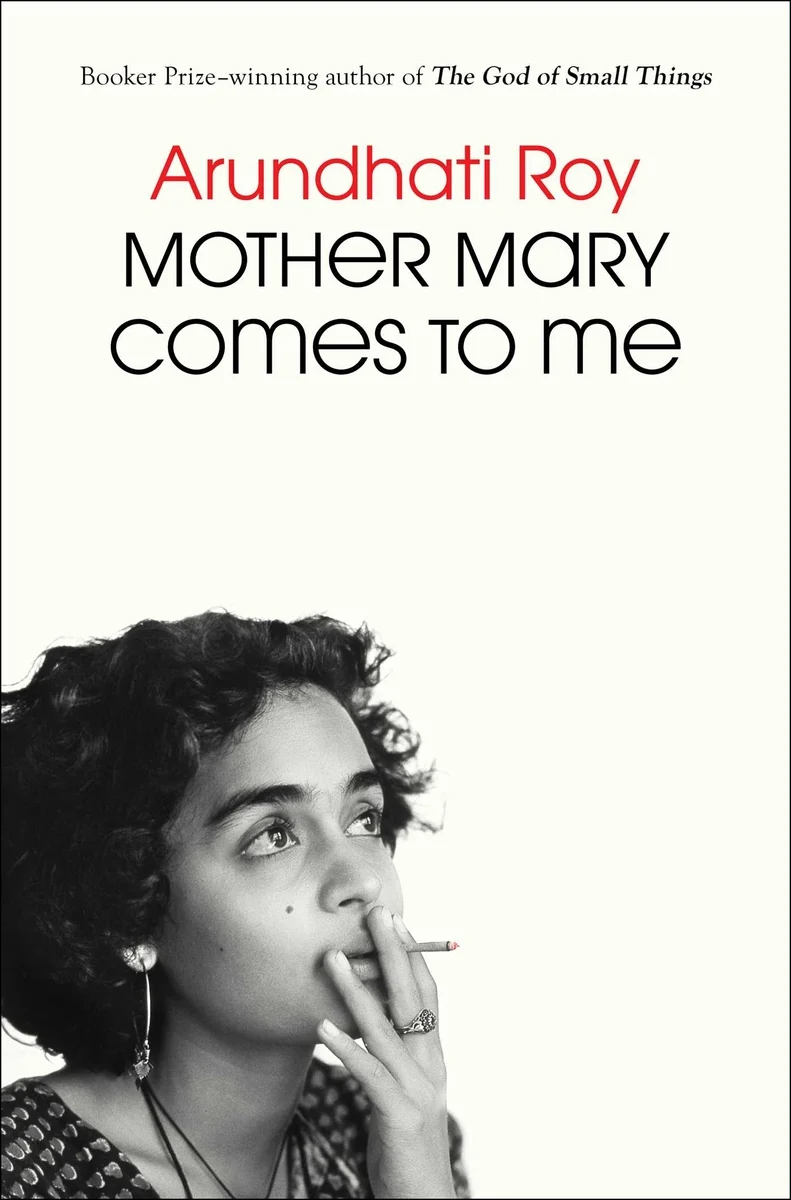
“I recommend Arundhati Roy’s Mother Mary Comes to Me (2025). In this book, Roy offers a vivid, unflinching portrait of her mother—Mary Roy, a pioneering feminist and a woman of fierce intelligence and courage. This is no hagiography; she does not appear as a softened, gentle icon, but as a powerful and complex force. “She was harsh, she was bitter, she was beautiful, and she was tender.” Lyrical, precise, and quietly fierce, Roy’s trademark craft turns even the smallest memory luminous, capturing not only a layered mother‑daughter relationship but also the activism that changed laws and lives.
It is not easy to write about her craft. Frankly, the only way I could capture it was through the image of the river Meenachil (mentioned in God of Small Things). For me, Mary Roy, in Arundhati Roy’s writing, is the Meenachilar river in its elemental form: the one that swells with little or no warning, tears at its own banks, and sweeps aside whatever and whoever stands in its way. She did not push against the boundaries but carved into them and tore them down so that something beautiful could grow. This work was not gentle, but it gave the women of my community a new life and gave the world a brilliant writer and a courageous activist.
It is beautifully written memoir of love, conflict, and legacy, I believe this will be a standout choice for the winter break.”
Hitesh Vaidya
Visiting Artist Fellow, Mittal Institute
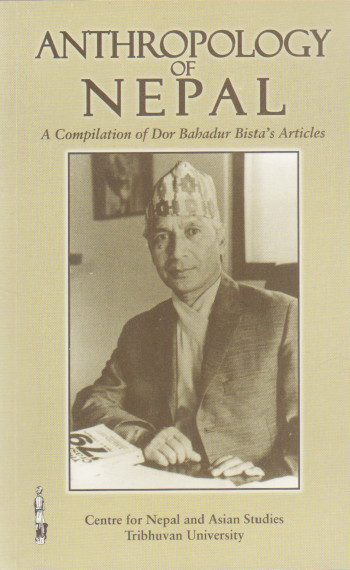
“I would like to recommend the book Anthropology of Nepal by Dor Bahadur Bista. The book is a compilation of various articles by Dor Bahadur Bista, one of the earliest and most prominent anthropologists of Nepal. The book is a wonderful entry into Nepali society, ranging from the socio-political dynamics within the Kali Gandaki region, the way of life of the Raute ethnic group, to the exploration of a cohesive Nepali identity with its varied ethnic groups and cultures. The book, informed by his extensive research and openness towards various perspectives and ways of life in Nepali society and beyond, is surprisingly readable and humane. I highly recommend it to broader audiences interested to learn about Nepali society.”
Masuma Halai Khwaja
Mittal Institute Associate; Former Visiting Artist Fellow
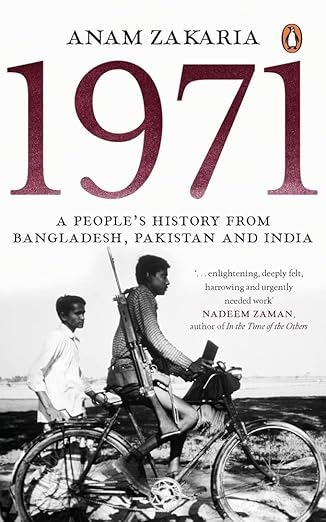
“The book I would like to recommend is 1971: A Peoples History From Bangladesh, Pakistan and India by Anam Zakaria. Having only read briefly about 1971 in school text books, the first time I realised there was much that needed researching was when I read The book ‘Sips From A Broken Teacup’ by Raihana Hasan, which is an account of the authors life as a young bride from Karachi, living in the tea gardens of Sylhet. The events in the latter part of the book prompted me to read more books about 1971. This book plugged in all the gaps in my understanding of the liberation of Bangladesh to the point that it reshaped my art practice. I found the book very informative and interesting as it elaborated in great detail the happenings that led to the souring of relationships between East and West Pakistan and the events of 1971 itself.
Zakaria has conducted her research from three angles, Bangladesh, India and Pakistan. She has interviewed survivors, activists, visited museums, looked at school curricula and presented the role of all three countries. What interested me most is how one event has three different versions of official state fed memory. In Bangladesh 1971 is seen everywhere, on billboards, in curriculum and museums. In India it is viewed as an act of heroism where they helped free a subjugated population and also establish themselves as the most powerful nation in South Asia. In Pakistan it is seen as the fall of Dhaka and there is an uncomfortable silence surrounding it.”
Todd Lewis
Mittal Institute Associate; Distinguished Professor of Arts and Humanities, College of the Holy Cross
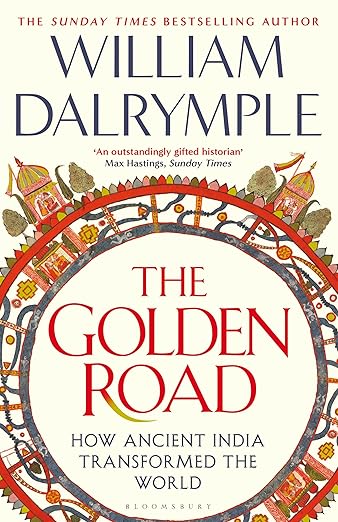
“I recommend The Golden Road: How Ancient India Transformed the World, by William Dalrymple (Bloomsbury, 2024). Although this is a history for the general public, the creative assembly of information is compelling and many of the case studies will be new to non-specialists. This is a book that causes one to upscale the contributions of South Asian cultures and peoples to world history.”
Saravanan Thangarajan
Mittal Institute Associate; Visiting Scientist (Academic Appointment), Harvard T.H. Chan School of Public Health and Ariadne Labs, Brigham and Women’s Hospital; Former Graduate Student Associate (2024–25)
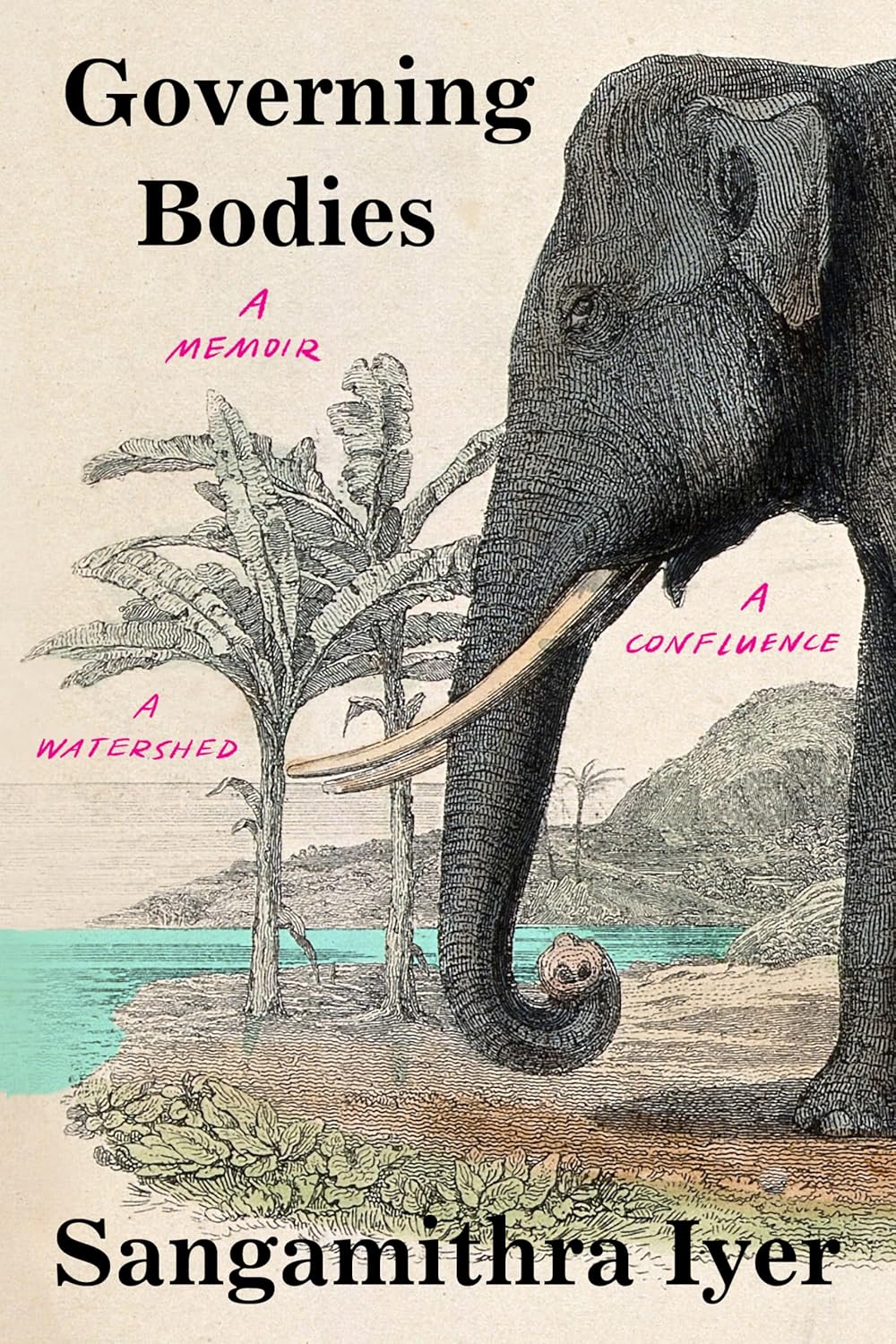
“I recommend Governing Bodies: A Memoir, A Confluence, A Watershed by Sangamithra Iyer. This memoir resonates on historical, ecological, and deeply human frequencies. Iyer writes at the intersection of ethics, ecology, and ancestry, and what emerges is not simply a book but a living organism of narrative. Her portrayal of her grandfather’s well-building work in Tamil Nadu transforms water into moral infrastructure — a conduit of service, resistance, and intergenerational duty.
Her transition from engineering to compassionate activism mirrors that lineage, showing how ethical commitments migrate across time and place. The reflections on nonviolence and inter-species of kinship invite us to rethink how humans relate to animals, land, and each other. Memory, in her hands, moves like groundwater — quiet, persistent, sub-terranean, shaping the unseen architecture of conscience.
As someone working in climate-linked health and community resilience, I found the book posing a question with real urgency: what does ethical resilience look like when translated into lived practice, not just aspiration?
This memoir nourishes and unsettles with gentle precision. It invites us toward a citizenship of care one that honors the human, the animal, and the earth as part of a continuous moral ecosystem.”
Vidya Subramanian
Mittal Institute Associate; Former Mittal Institute Raghunathan Fellow
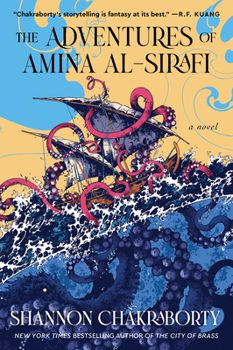
“My recommendation for a fun read this winter is a historical fantasy novel by Shannon Chakraborty called The Adventures of Amina al-Sirafi. It’s the first book of a possible trilogy; an adventure caper pirate fantasy story set in the Indian Ocean. Amina al-Sirafi is a mother and one of the most notorious pirates of the Indian Ocean, who has hung up her boots. The book is about how and why she comes out of retirement; and the amazing adventures that happen after that.
I could not put it down; and I recommend it highly to everyone who likes fantasy, mythology, adventure, strong women characters, and stories that take place in (for lack of a better term) the non-west. It takes from myths and cultures around South Asia, the Arab world, and Africa; and creates a rip-roaring adventure fantasy that should go perfectly with a cup of hot chocolate in the cold winter.”
Dinyar Patel
Mittal Institute Associate; Associate Professor of History, S.P. Jain Institute of Management and Research
“I am picking three works which speak to some of the biggest issues in contemporary politics worldwide, issues which have had particular salience in the U.S since 2024 (and in South Asia for far longer): debates about capitalism, the politics of education, and democracy and authoritarianism.
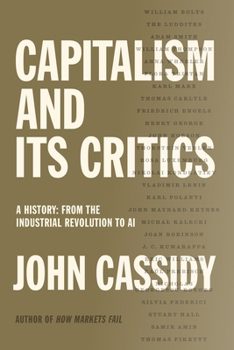
John Cassidy’s Capitalism And Its Critics is a highly engaging work which takes us through the ideas of some of the most important economic thinkers of the past three centuries — both supporters and fierce critics of modern capitalism. South Asia features prominently in this account. Cassidy begins with William Bolts, the eighteenth-century critic of the East India Company; discusses how British imperialism in India featured in the thought of figures such as Adam Smith, Karl Marx, and Rosa Luxemburg; and dedicates a chapter to J. C. Kumarappa, who espoused a Gandhian alternative to India’s post-independence development trajectory. Cassidy’s particular skill is explaining complex economic concepts in a manner legible to the non-specialist.
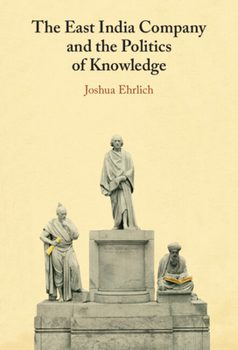
Joshua Ehrlich’s The East India Company and the Politics of Knowledge provides us with a new perspective on the Company: how the Company legitimized itself through the promotion of knowledge and education. Ehrlich is careful to draw a distinction between rhetoric and reality — noting the Company’s lackluster record on educating its Indian subjects — but nevertheless demonstrates how Company authorities sought to disarm their critics by styling themselves as patrons of scholarship, both by Europeans and Indians. By arguing that the Company was not just a commercial concern, and that it served the much broader and nobler objective of promoting knowledge, Company officials justified themselves in a manner that is not dissimilar to modern-day corporations like Google.
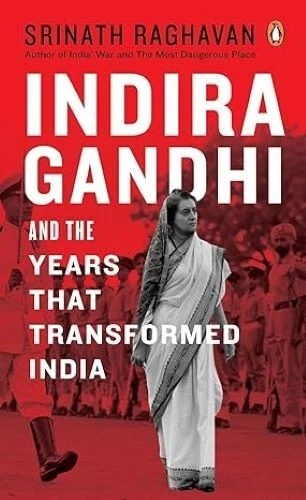
Srinath Raghavan’s Indira Gandhi and the Years that Transformed India is a sobering account of how Indian democracy transformed — and briefly disappeared — during the rule of India’s first and only female prime minister. Gandhi emerges as a complex figure, both paranoid and pragmatic, but, above all, concerned with the consolidation of power. Raghavan provides an important revisionist account of Gandhi’s economic policy. Rejecting ideas of Gandhi as a socialist (no matter her rhetoric), he instead shows how she ultimately recognized the flaws of India’s state-centered development trajectory and ushered in some of India’s earliest economic reforms.”
Sri Sathvik Rayala
Mittal Institute Graduate Student Associate; Harvard Divinity School
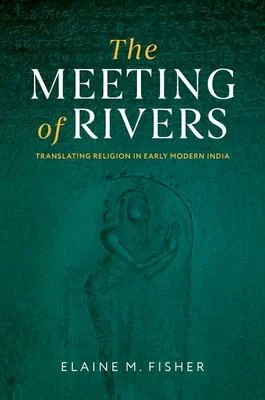
“I recommend The Meeting of Rivers: Translating Religion in Early Modern India by Elaine Fisher. By reframing, revising, and retelling the history of Vīraśaivism, a Hindu religion particularly popular in peninsular India, The Meeting of Rivers problematizes reductive yet extremely rife conceptions of language, religion, and sociality in premodern South Asia. Featuring the study of a diverse—but hitherto understudied—archive of Vīraśaiva texts through first-rate philological analysis, The Meeting of Rivers speaks to the commonplace usage of Sanskrit as a vital language of anti-caste thought in premodern Śaiva Hindu spaces, the importance of multilingualism in Hindu traditions, and the pervasive circulation of ideas and texts across languages, cultural regions, and time in precolonial India. This monograph offers the latest cutting-edge scholarship in Hindu studies and South Asian studies, and I would highly recommend reading it for specialists and non-specialists alike.”

Lauren Rice
Mittal Institute Graduate Student Associate; Harvard Business School
“My recommendation is The Phantom Plague: How Tuberculosis Shaped History by Vidya Krishnan. The Phantom Plague gives a rich and compelling description of the social history of tuberculosis. It illustrates how the original cure was not available to many nations, allowing the disease to adapt, and the many social and economic forces that aided its reemergence.”
Priyanka Chahal
Mittal Institute Graduate Student Associate; Harvard Medical School
“I am sharing a few South Asia-related winter reading recommendations:
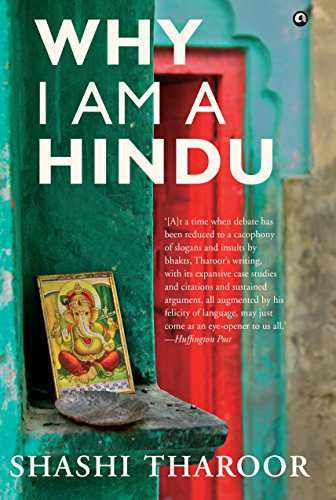
Why I Am a Hindu by Shashi Tharoor is a thoughtful and accessible exploration of Hindu philosophy, identity, and pluralism. Tharoor traces the spiritual and cultural foundations of Hinduism while also engaging critically with its modern political appropriations. It’s an excellent read for anyone interested in India’s religious diversity and public discourse.
A Life Less Ordinary: A Memoir by Baby Halder, originally written in Hindi (Aalo Andhari), is a powerful autobiography of a domestic worker whose life spans Haryana, West Bengal, and Delhi. Her narrative of resilience, gendered labor, and survival is one of the most important contemporary testimonies from South Asia. It is raw, honest, and human.
The Girl in the Room and Other Stories by Amandeep Sandhu is a beautifully crafted short story collection that explores everyday life, relationships, and emotional landscapes across North India, including Punjab and Haryana. Sandhu’s writing is grounded and full of cultural texture, making it a perfect winter companion.
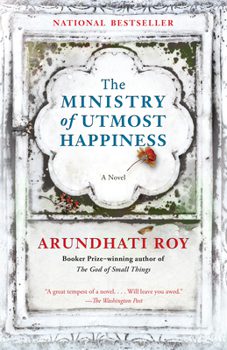
The Ministry of Utmost Happiness by Arundhati Roy is a widely acclaimed novel set across Delhi, Kashmir, and various corners of contemporary India, Roy’s storytelling brings together themes of identity, belonging, politics, and social struggle. It weaves together marginalized voices with extraordinary sensitivity and poetic depth. A great read for anyone interested in South Asia’s complexities.”
☆ The views represented herein are those of the interview subjects and do not necessarily reflect the views of the Mittal Institute, its staff, or its Steering Committee.