
How is heat actually experienced in everyday life across homes, workplaces, and cities?
At a February 3 Mittal Institute event, Between Comfort and Heat Stress: The Hidden Burden of Everyday Heat, scholars from building science, urban design, and environmental health will come together to examine the growing disconnect between how heat is measured and how it is lived. Ahead of the event, we spoke with panelist Rajan Rawal, Professor at CEPT University and Senior Advisor at the Center for Advanced Research in Building Science and Energy (CARBSE), to gather his perspective on how everyday environments shape thermal exposure, behavior, and health.
Prof. Rawal will be joined in conversation by panelist Gary Adamkiewicz, Associate Professor of Environmental Health and Exposure Disparities at Harvard T.H. Chan School of Public Health. The discussion will be moderated by Rahul Mehrotra, Professor of Urban Design and Planning and the John T. Dunlop Professor in Housing and Urbanization.

Rajan Rawal, Professor at CEPT University and a senior advisor at the Center for Advanced Research in Building Science and Energy (CARBSE)
Mittal Institute: Prof. Rawal, when you think about “thermal exposure,” what are the most overlooked environments—homes, workplaces, transit, public space—where heat has the greatest impact?
Rajan Rawal: Built environments frequently overlook the integration of thermal comfort during design and construction phases, leading to variable provision levels. While the significant growth of the service sector in India over the past 30 years has led employers to prioritize occupant thermal comfort due to established links between conducive environments and employee productivity, this emphasis is largely absent in residential buildings.
Specifically, urban Indian housing—typically developed speculatively by real estate firms rather than with end use in focus—consistently underprioritizes thermal comfort. This critical building typology is often the most susceptible to substantial “thermal exposure.” Consequently, occupants must independently implement solutions during the operational stage, often involving the installation of mechanical systems that present both environmental sustainability challenges and significant economic burdens for a large segment of the population. Prolonged periods of high “thermal exposure” negatively impact occupant health and well-being.
Historically, a primary function of buildings was to offer protection from harsh external conditions; however, contemporary building production practices frequently fail to meet this fundamental objective.
Built environments frequently overlook the integration of thermal comfort during design and construction phases, leading to variable provision levels.
Mittal Institute: Buildings are often seen as shelters from heat, yet many actually intensify exposure. What design choices most strongly shape indoor heat stress, especially in low-resource settings?
Rajan Rawal: A fundamental expectation of a building is that it should not exacerbate physiological heat stress, even when desired thermal comfort levels are unattainable. The intensifying Urban Heat Island Effect (UHIE)—characterized by elevated diurnal–nocturnal temperatures and humidity—significantly constrains available heat mitigation strategies at the building scale. While systemic interventions are necessary to address UHIE at the macro scale, building-level design must prioritize heat dissipation to prevent heat trapping. Natural ventilation remains the most cost-effective strategy for nocturnal cooling, which is essential for discharging accumulated daytime heat. Although extreme summer temperatures or external factors such as poor air quality and noise pollution may restrict window operation for natural ventilation, maintaining the capacity for ventilation must remain a primary design objective.
Furthermore, building design must move beyond the “silver bullet” fallacy—the erroneous assumption that one or a few design and technological solutions are universally applicable. Building design and construction, whether professionally led or self-led, must be rigorously grounded in specific climatic, sociocultural, and economic contexts. Optimal thermal performance is achieved through the synergistic integration of passive spatial design decisions and appropriate material selection. This dual approach is vital for ensuring that contemporary construction meets the basic functional requirements of habitability and occupant well-being.
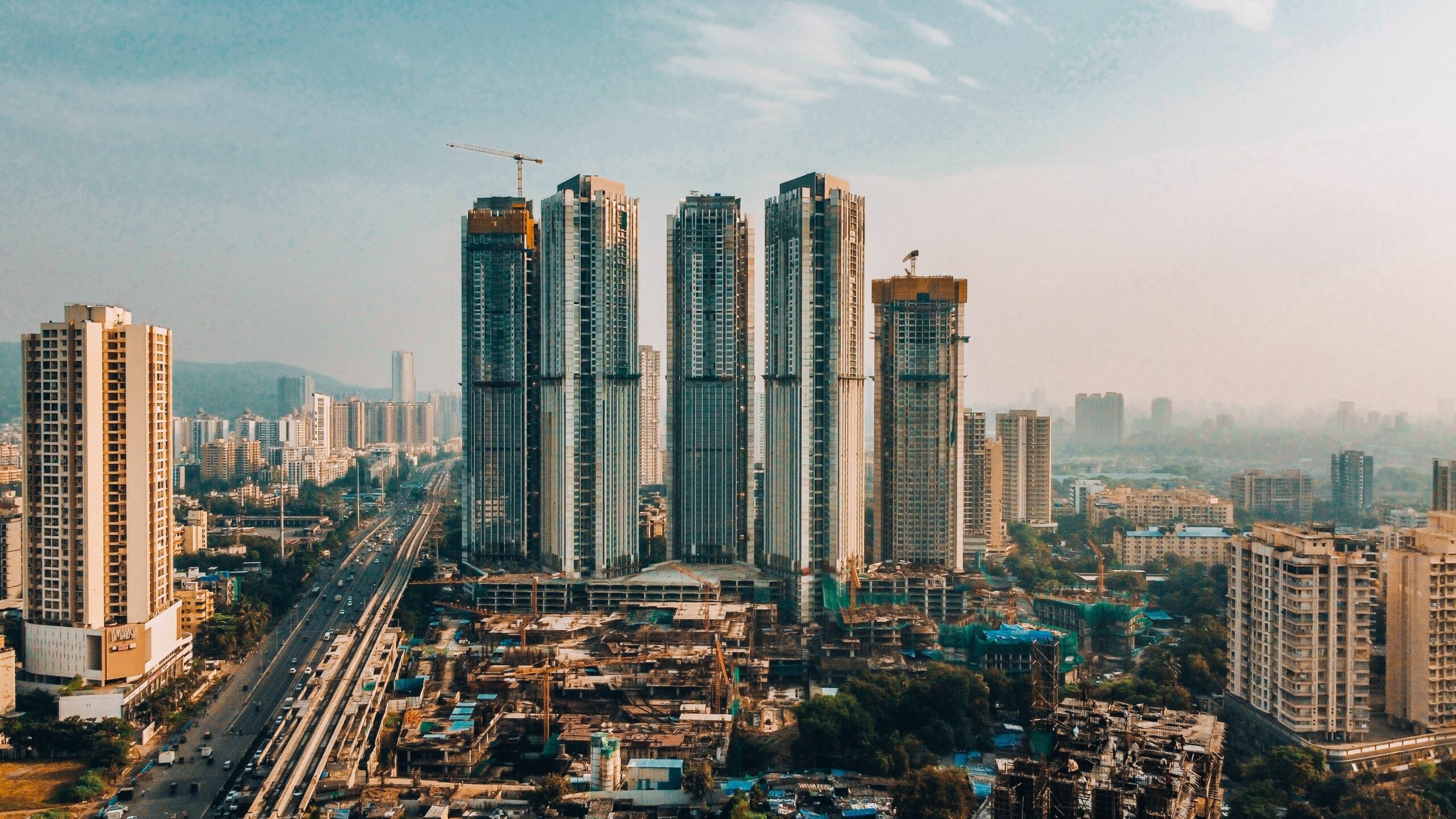
An example of building construction in Mumbai | Adobe Stock
Mittal Institute: What gaps exist between building performance as modeled or regulated and how buildings truly perform during extreme heat events?
Rajan Rawal: The gap between the anticipated performance of building models—including code-regulated designs—and actual performance during operation is commonly referred to as the “performance gap.” This gap, while inevitable, is generally considered acceptable provided it remains within a nonsignificant range, in my opinion. Building energy codes typically establish minimum performance standards under specific, often idealized, conditions for a “typical” building. Building performance modeling and simulation serve a critical function in informing design decisions and advising stakeholders on the appropriateness of measures throughout the design, construction, operation, and maintenance phases of a building’s life cycle.
A common methodology for evaluating the future energy performance of buildings uses the “Typical Meteorological Year” (TMY) scenario, which represents outdoor weather conditions at a given location over an extended period. However, simulations inherently rely on fixed assumptions regarding both a building’s thermal behavior and the operational behavior of its occupants. These variations in actual operation, among other factors, contribute to the observed performance gap between modeled predictions and real-world outcomes.
Potential strategies for minimizing this performance gap include advancements in predictive modeling for future weather conditions under various climate change scenarios and the development of more robust models for occupant behavior. Ultimately, performance modeling is recognized as an effective tool for envisioning building performance across different scenarios. Its outputs should be used to facilitate informed decision-making under comparable conditions, rather than being treated as an absolute prediction of actual building performance.
Mittal Institute: Much of the Global South lives and works in informal or semi-formal buildings. What does building science miss when it focuses primarily on code-compliant or formally designed structures?
Rajan Rawal: Building codes establish baseline energy performance standards designed to maintain indoor environmental conditions conducive to human health and well-being. These regulations primarily target formal commercial and residential sectors, which represent significant energy consumers. Conversely, informal and semiformal structures often remain outside this regulatory purview. From a narrow economic perspective, this exclusion avoids the financial burdens of compliance, including construction, operational, and administrative costs. However, the absence of regulatory oversight often results in substandard living conditions and construction practices that are decoupled from climatic realities. Such gaps lead to systemic energy inefficiencies and increased occupant vulnerability to environmental stressors, such as heat stress and poor indoor air quality.
While the physical sciences offer a robust understanding of thermodynamics and the physiological requirements of humans at both the building and urban scales, a significant challenge remains in translating this scientific and technical knowledge into enforceable policy instruments such as building codes. Scientific inquiry often prioritizes domain specificity, whereas effective policy must address broad diversity and operate at a larger scale. A transition from prescriptive requirements to a performance-based regulatory framework may facilitate broader compliance. Realizing this shift requires integrating a specialized cadre of professionals into the design and operational phases to ensure performance targets are met throughout a building’s life cycle.

An informal worker | Adobe Stock
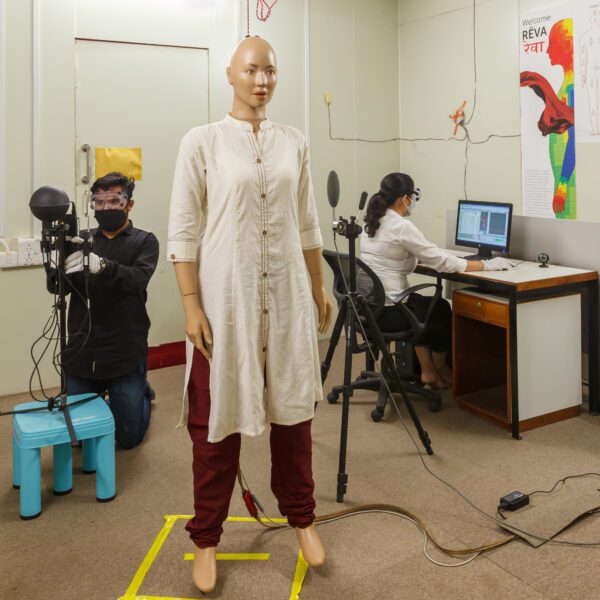
A mannequin is used to detect thermal temperatures in the Centre for Advanced Research in Building Science and Energy (CARBSE) | By Samir Pathak
Mittal Institute: You established a Centre for Advanced Research in Building Science and Energy at CEPT University. Could you describe your activities and explain how they help to change the status quo?
Rajan Rawal: In my academic capacity, I maintain a dual focus on pedagogical involvement within the Master of Building Energy Performance program and the advancement of diverse research initiatives at the Center for Advanced Research in Building Science and Energy (CARBSE). My earlier contributions were rooted in passive design strategies, the thermal and optical characterization of building materials, and advanced energy performance modeling. However, as the national discourse has shifted toward India’s “Thermal Comfort for All” and the broader “Cooling Agenda,” my recent work has transitioned toward supporting industry-led market transformations through the development of affordable active cooling systems.
This current trajectory is an extension of my involvement with the Global Cooling Prize, now broadened to include the implementation of India-specific thermal comfort standards grounded in adaptive comfort theory. This research encompasses a social and urban dimension, ranging from improving the habitability of marginalized urban housing via low-cost cooling solutions to collaborating with state and municipal authorities to mitigate the urban heat island effect. Our research methods and approach integrate high-fidelity laboratory experimentation with multiscale fieldwork and sophisticated digital simulations. By fostering a research culture aligned with rigorous international protocols, we aim to generate empirical data that facilitates the building sector’s market evolution and provides a robust scientific foundation for evidence-based government policy.
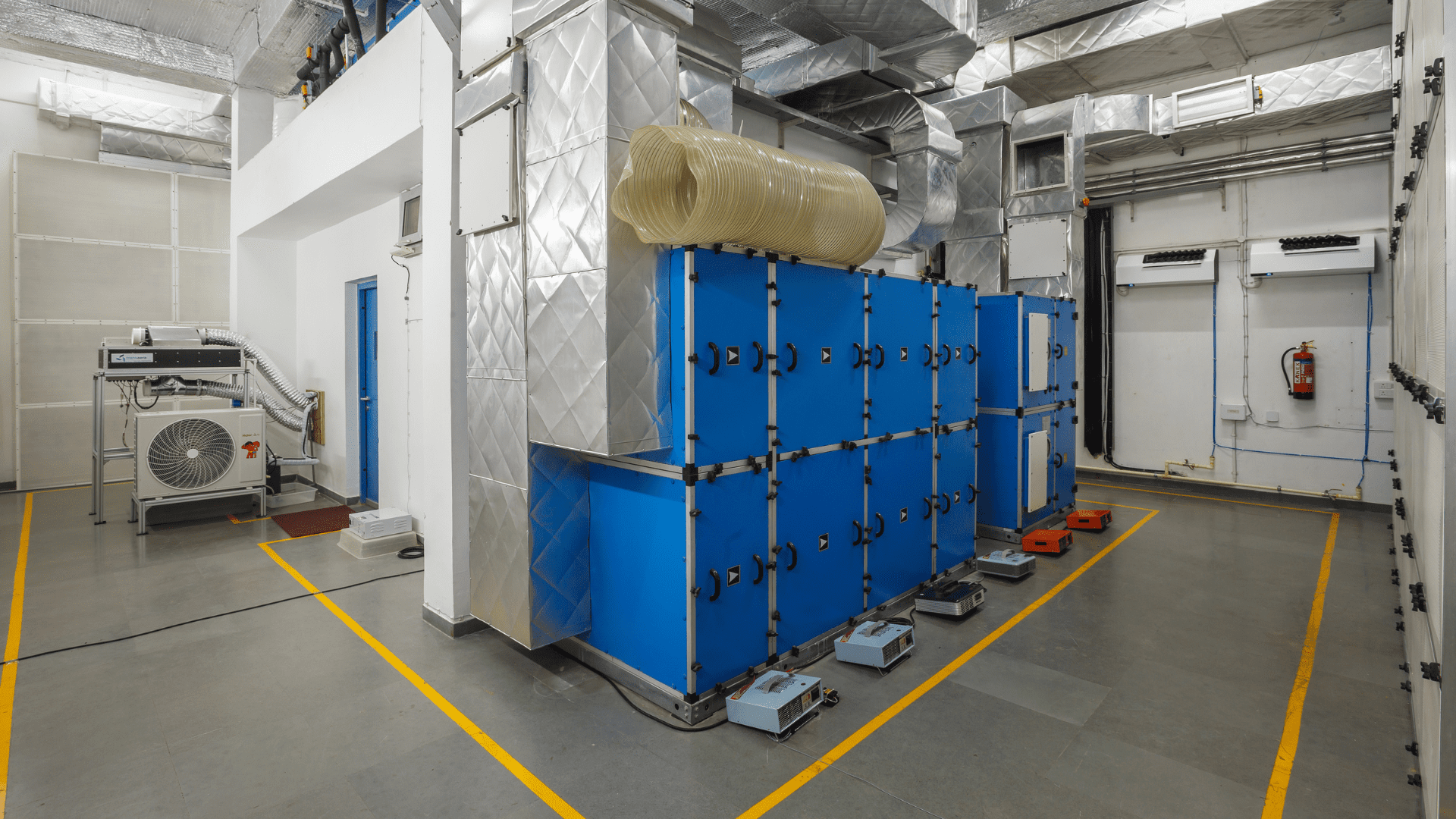
The Centre for Advanced Research in Building Science and Energy combines high-fidelity laboratory experimentation—such as the setup pictured above—with multiscale fieldwork and sophisticated digital simulations to generate robust data on the impacts of heat | By Samir Pathak
Mittal Institute: From your own research perspective, what is one change that could most immediately reduce harmful heat exposure where people live and work?
Rajan Rawal: My architectural education taught me to work constantly with “whole-to-part-to-whole,” emphasizing that interventions at the building scale are intrinsically linked to urban-scale dynamics. However, currently, in January 2026, I believe that reducing the Urban Heat Island Effect (UHIE) may open up numerous opportunities to operate buildings with passive design features for a longer period of the year, reduce mechanical cooling loads on buildings, and thus result in less anthropogenic heat rejection from buildings, greater potential to reduce heat stress in public spaces and transit nodes, and improved conditions for people without access to active cooling or residences incapable of providing higher levels of thermal comfort. Reduced UHIE could also lower emissions.
While scientific inquiry often requires weighing competing variables, my current position is that prioritizing the mitigation of the UHIE is essential to protecting vulnerable populations from escalating heat stress.
☆ The views represented herein are those of the interview subjects and do not necessarily reflect the views of the Mittal Institute, its staff, or its steering committee.