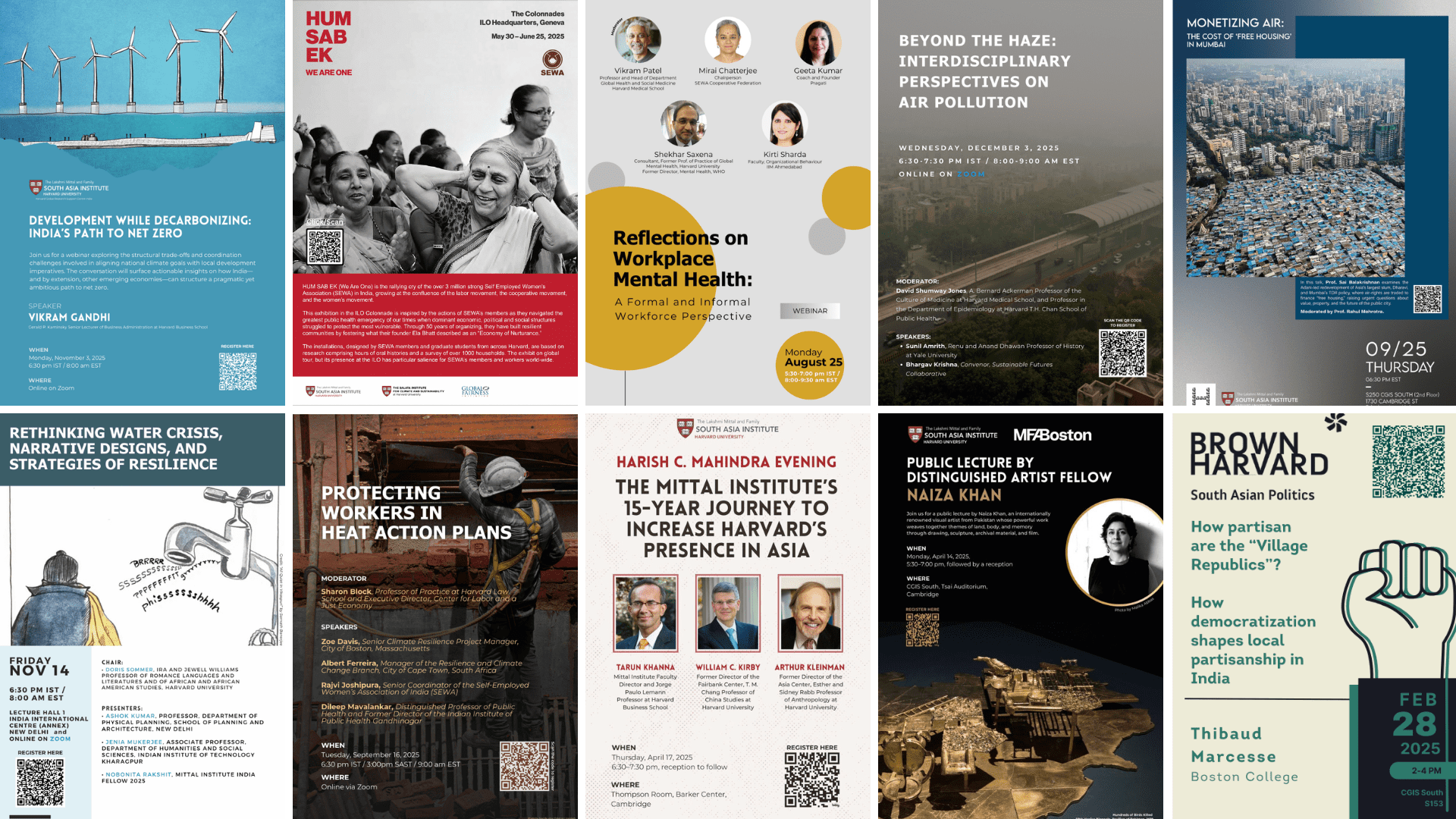
In 2025, the Mittal Institute community gathered—both virtually and in person—in Cambridge, New Delhi, and beyond to engage with a wide-ranging set of topics. From exploring India’s climate-resilient future, to examining the impacts of extreme heat, to tracing the Mittal Institute’s 15-year journey to increase Harvard’s presence in South Asia, these events sparked meaningful conversation and connection. Explore our curated selection of must-see events, and visit our YouTube page for more.
TOP EVENT VIDEOS FROM 2025
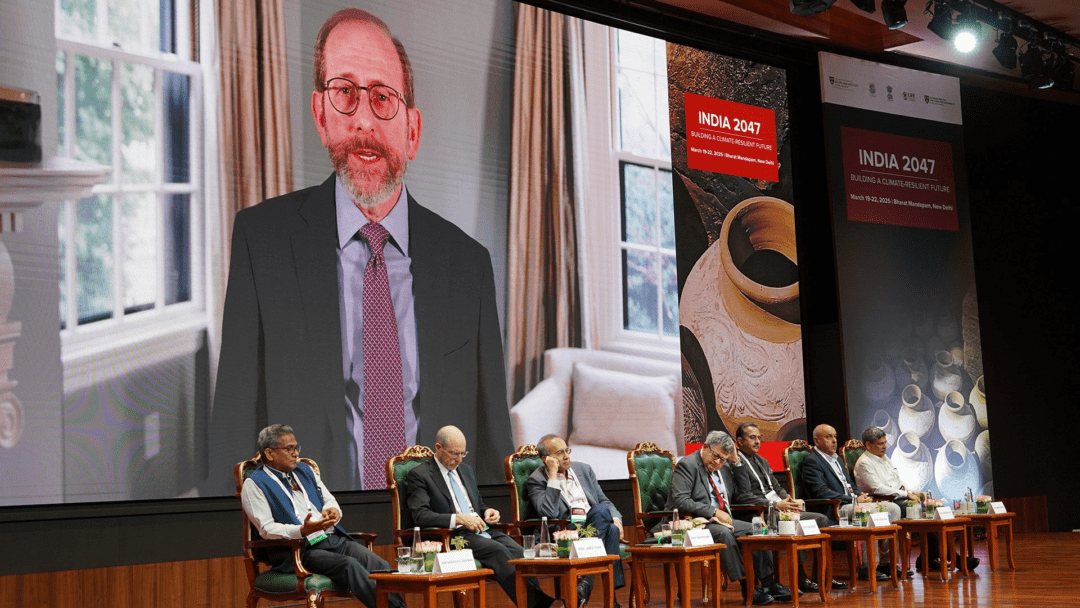 India 2047: Building a Climate-Resilient Future
“India 2047: Building a Climate-Resilient Future” brought together leading experts in climate science, public health, medicine, labor, business, agriculture, and urban planning for a series of interdisciplinary dialogues on advancing climate resilience. An invite-only, closed-door event, it aimed to address the effects of extreme climatic events such as extreme heat intensifying across the Global South—particularly in India—with far-reaching impacts on the environment, economy, and society demanding urgent, evidence-based solutions.
 Public Lecture by Naiza Khan, Distinguished Artist Fellow at the Mittal Institute
Naiza Khan, an internationally renowned visual artist from Pakistan, is the Mittal Institute’s second Distinguished Artist Fellow. Khan’s powerful work weaves together themes of land, body, and memory through drawing, sculpture, archival material, and film. Her work is rooted in critical research, documentation, and mapping-based exploration, raising significant questions about colonial history, collective memory, and the impact of old and new infrastructures. With respondent Sonal Khullar, Harvard Radcliffe Institute and University of Pennsylvania, and chaired by Prof. Jinah Kim, Harvard University.
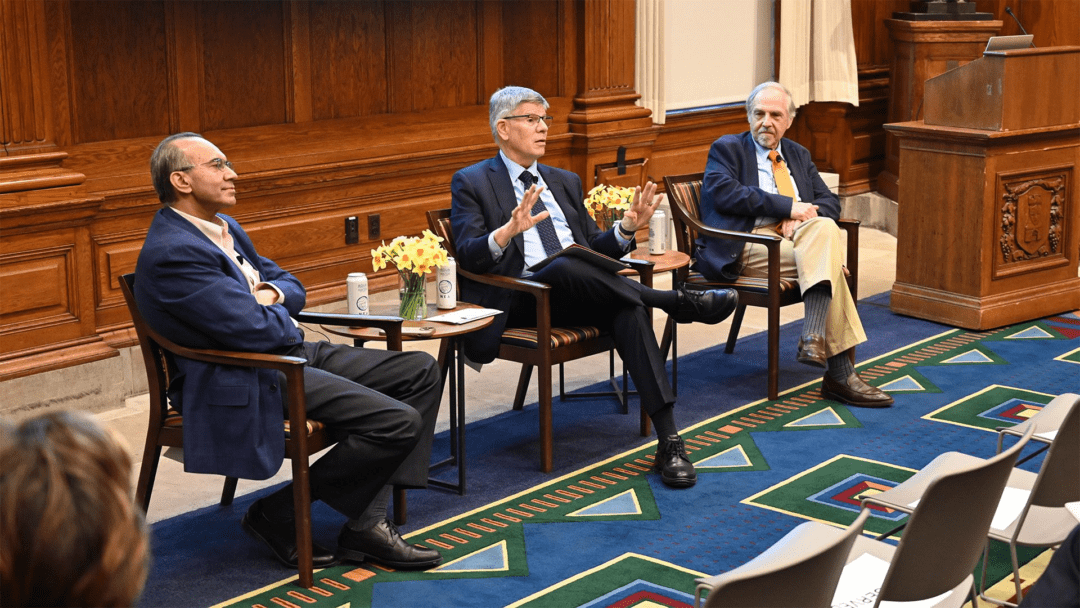 Harish C. Mahindra: The Mittal Institute’s 15-Year Journey to Increase Harvard’s Presence in Asia
To kick off the Mittal Institute Annual Symposium 2025, the Mittal Institute hosted a special Harish C. Mahindra evening. The discussion featured Tarun Khanna, Mittal Institute Faculty Director; William C. Kirby, former Fairbank Center Director; and Arthur Kleinman, former Asia Center director. They discussed the Mittal Institute’s 15-year journey to increase Harvard’s presence in Asia.
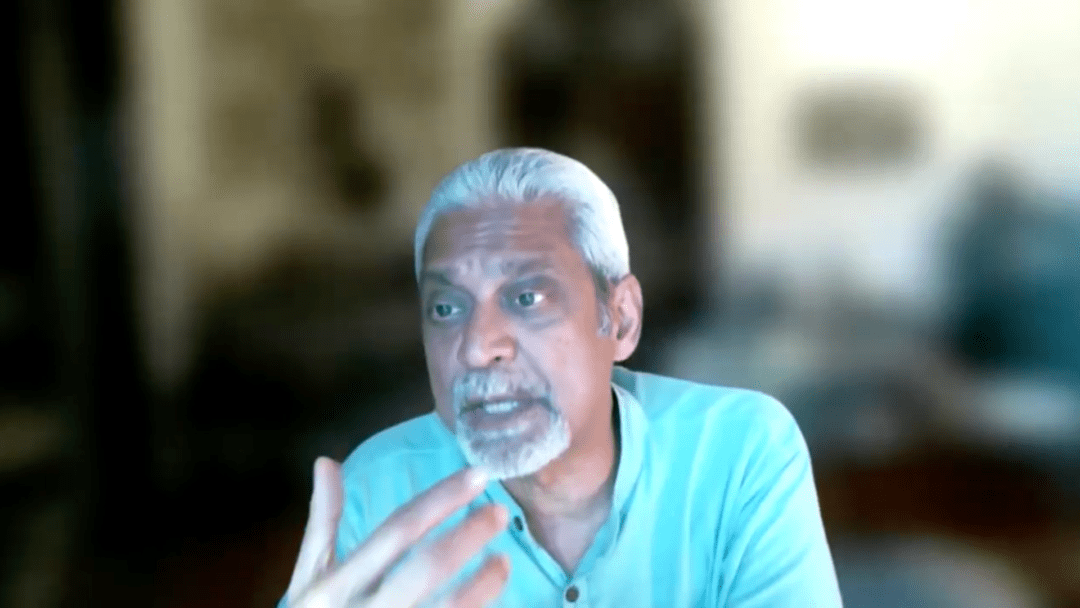 Reflections on Workplace Mental Health: A Formal and Informal Workforce Perspective
This webinar explored how work environments affect mental health in both formal and informal sectors, highlighted practical ways to support wellbeing, and encouraged dialogue between research, practice, and lived experience, for inclusive mental health approaches for all workers. With moderator Prof. Vikram Patel, Harvard Medical School and speakers Mirai Chatterjee, SEWA Cooperative Federation; Geeta Kumar, Pragati; Shekhar Saxena, Harvard Chan School of Public Health and World Health Organization; and Kirti Sharda, IIM Ahmedabad.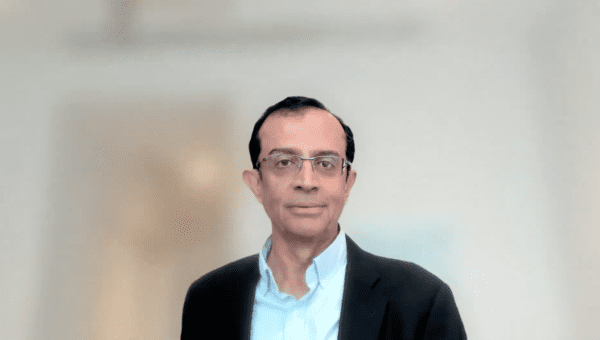
Vikram Gandhi on Development While Decarbonizing: India’s Path to Net Zero
Vikram Gandhi, Gerald P. Kaminsky Senior Lecturer of Business Administration at Harvard Business School, explored the structural trade-offs and coordination challenges involved in aligning India’s national climate goals with local development imperatives. It examined how policy frameworks, financial innovation, and entrepreneurial ecosystems can work together to support transitions that are both equitable and executable. Drawing on cross-sector experience and past fieldwork, the conversation presented actionable insights on how India—and by extension, other emerging economies—that can structure a pragmatic yet ambitious path to net zero.
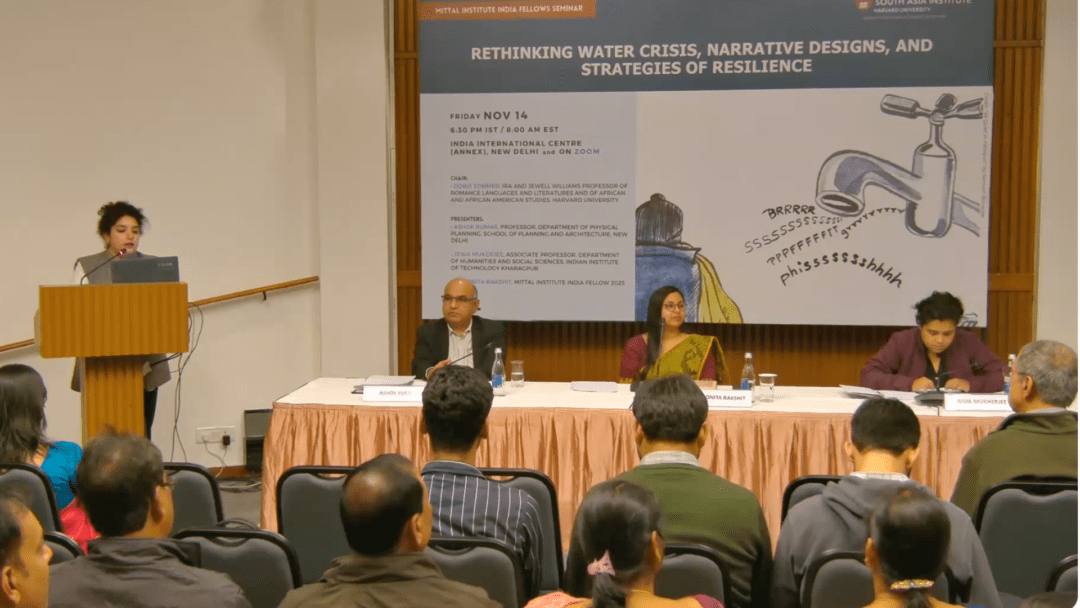 Rethinking Water Crisis, Narrative Designs, and Strategies of Resilience
Nobonita Rakshit’s end-of-fellowship seminar on “Rethinking Water Crisis, Narrative Designs, and Strategies of Resilience,” explored the multifaceted ontologies of anthropogenic water crisis through the lenses of environmental humanities. It was chaired and moderated by Doris Sommer, Harvard University, with panelists Ashok Kumar, School of Planning and Architecture, New Delhi, Jenia Mukerjee, Indian Institute of Technology Kharagpur, and Nobonita Rakshit, Mittal Institute India Fellow 2025.
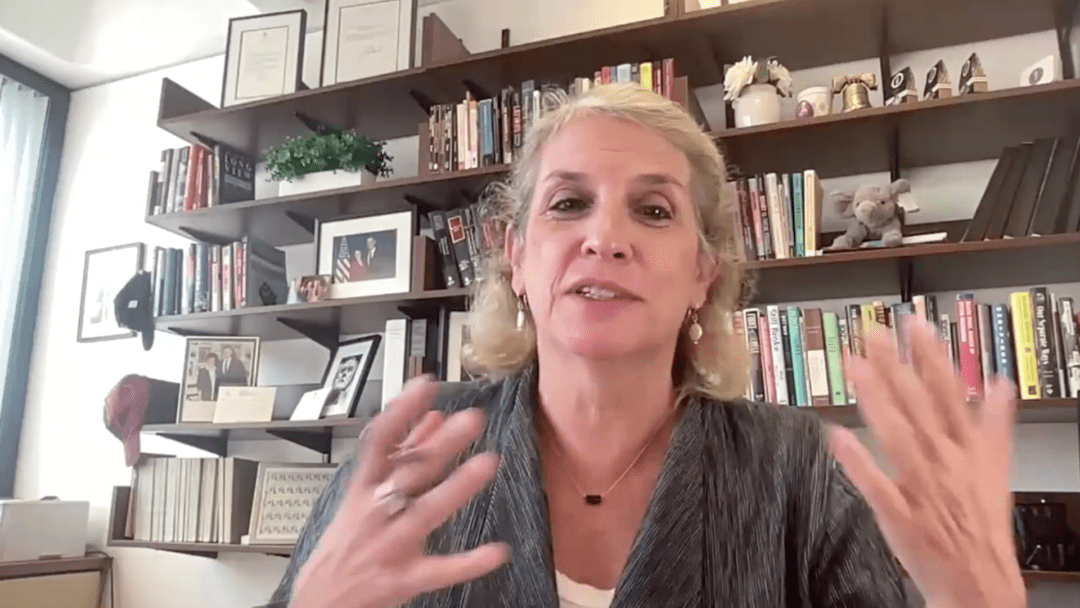 Workers in Heat Action Plans
This webinar explored how Ahmedabad, Boston, and Cape Town have developed and implemented Heat Action Plans, and why engaging with workers and their representatives is central to their success. It was moderated by Sharon Block, Harvard Law School, with speakers Zoe Davis, City of Boston, Massachusetts, Albert Ferreira, City of Cape Town, South Africa, Rajvi Joshipura, Self-Employed Women’s Association of India (SEWA), and Dileep Mavalankar, Former Director of the Indian Institute of Public Health Gandhinagar.
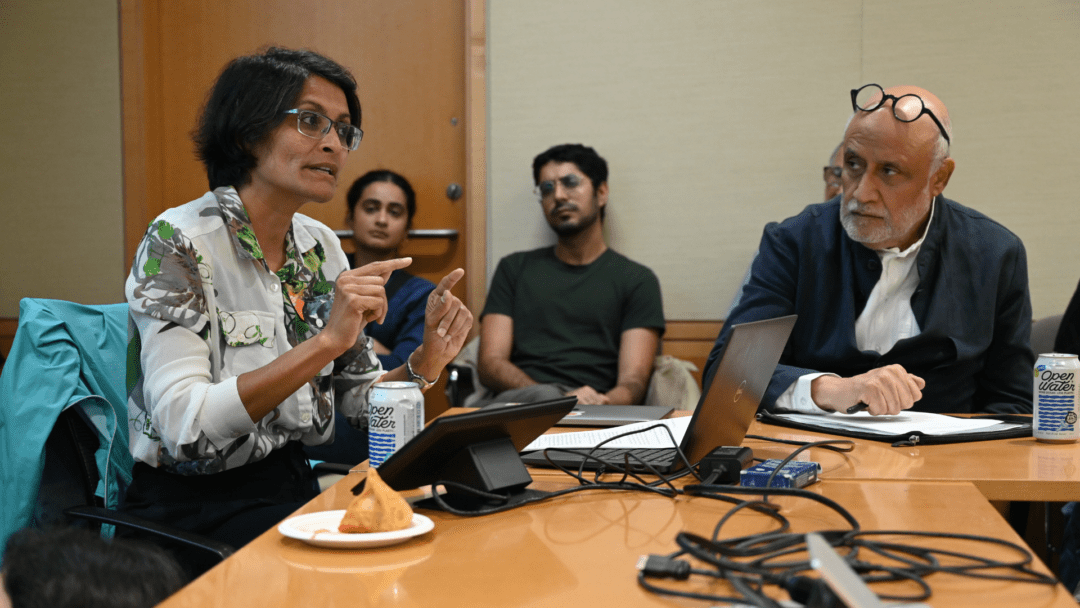 Monetizing Air: The Cost of ‘Free Housing’ in Mumbai – The State of Architecture in South Asia
In 2023, one of India’s most powerful conglomerates, the Adani Group, secured the contract to redevelop Dharavi, often referred to as ‘Asia’s largest slum.’ The prized asset in the Dharavi redevelopment is that of air: the state is offering air-rights as incentives for rehabilitating Dharavi’s ‘slum dwellers.’ In this webinar, Sai Balakrishnan, Associate Professor of City and Regional Planning at the University of California, Berkeley, mapped out the conceptual contours of transforming air into property that can be monetized. The talk was moderated by Rahul Mehrotra, John T. Dunlop Professor in Housing and Urbanization, Harvard Graduate School of Design.
 Beyond the Haze: Interdisciplinary Perspectives on Air Pollution
This webinar, moderated by Prof. David Shumway Jones, Harvard T.H. Chan School of Public Health, aimed to reframe air pollution not only as a scientific and regulatory concern but also as a question of historical trajectory, governance structures, and human experience. With speakers Sunil Amrith, Yale University and Bhargav Krishna, Sustainable Futures Collaborative.
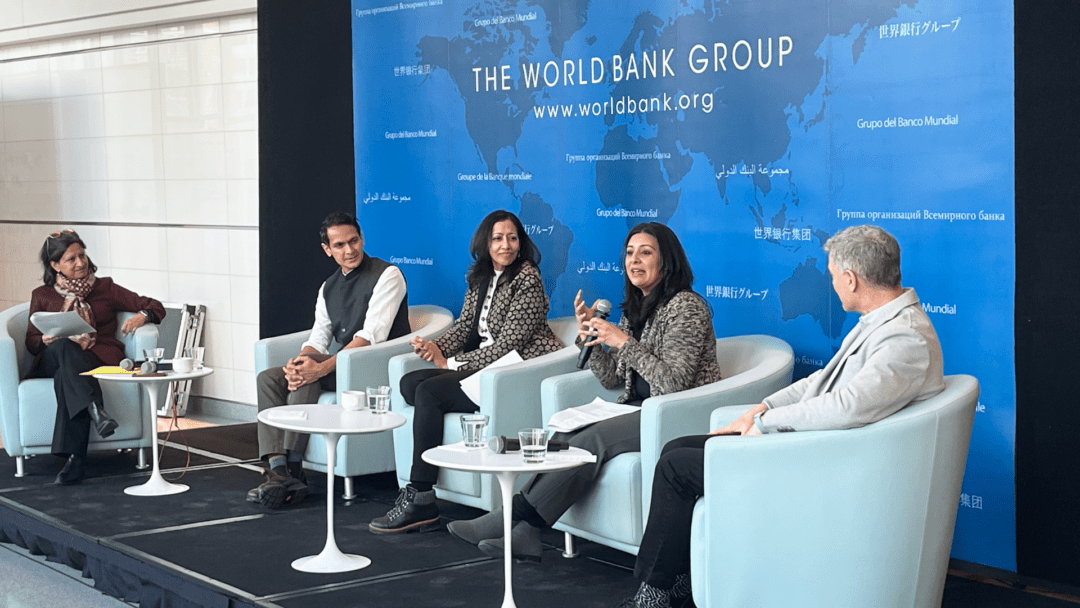 HUM SAB EK (We Are One) Panel at The World Bank in Washington, DC
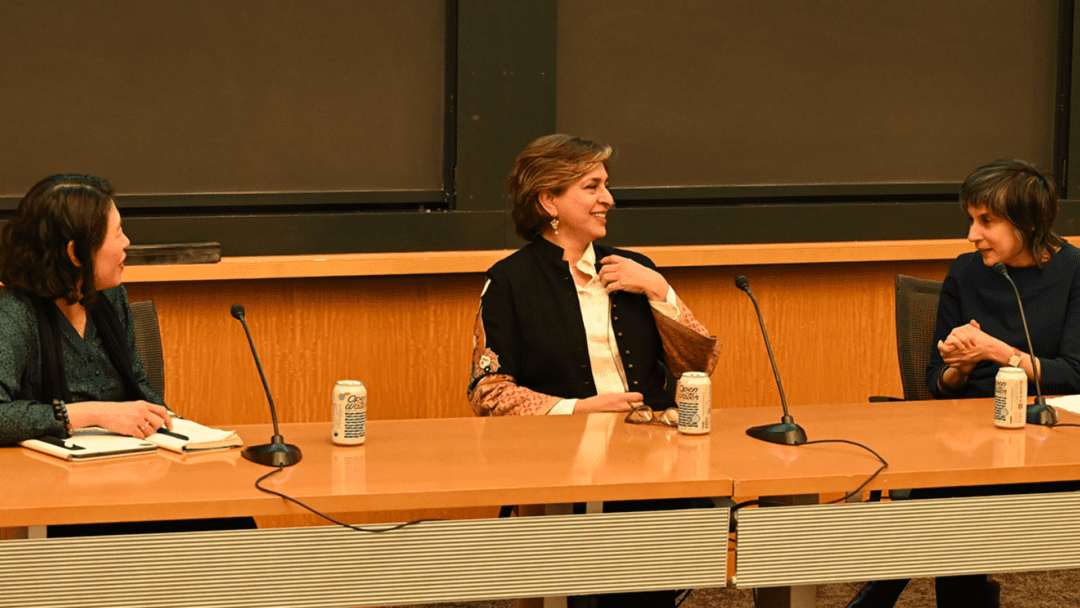
The traveling exhibition HUM SAB EK (We Are One), co-sponsored by the Mittal Institute, was on display at The World Bank in Washington, DC. The exhibition highlights the experiences and response strategies of women in India’s informal sector during the COVID-19 pandemic. An opening panel discussion featured Fatema Z. Sumar, Harvard Center for International Development; Rina Agarwala, The Johns Hopkins University; Caleb Shreve, Global Fairness Initiative; and curator Prof. Satchit Balsari, Harvard Medical School. It was moderated by Mamta Murthi, The World Bank, with closing remarks by Martin Raiser, The World Bank.
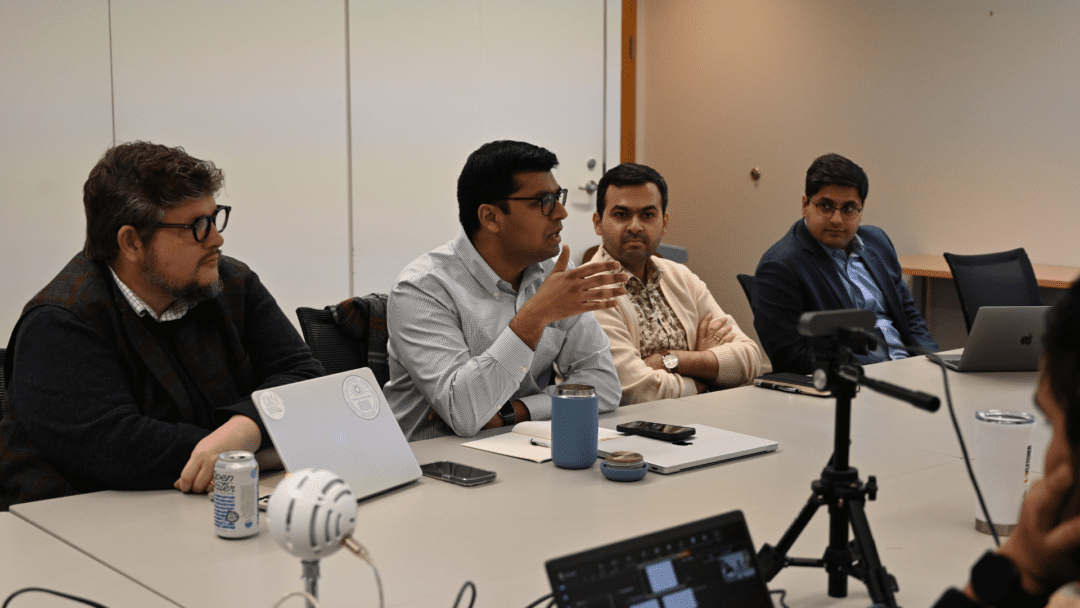 How Partisan are the ‘Village Republics’? How Democratization Shapes Local Partisanship in India
The Joint Seminar in South Asian Politics series welcomed Thibaud Marcesse, Assistant Professor of Comparative and South Asian Politics at Boston College, for a discussion on the relationship between local elected officials—such as Gram Pradhans (Village Council Presidents)—and state-level representatives (Members of the Legislative Assembly, or MLAs).