
Josh Mysore ’26, a Harvard College dual concentrator in Computer Science and Social Studies, spent his summer conducting thesis research in Kerala, Bangalore, and Auroville, India through a Mittal Institute student grant. His project examined the history and frameworks of Ayurvedic medicine, in contrast with Western medicine, to understand how culture and scientific method shape concepts of the mind and psyche. We spoke with Josh for more on his project.
Harvard students, apply for summer 2026 funding to explore South Asia. Grants are available to support independent research, internships, and intensive language study. Apply here by February 27.
Mittal Institute: Josh, what were your goals with your student grant, and why did you pursue this project/location?
Josh Mysore: I originally set out to look into diaspora movements from India and track how digital forums connect cultures across physical landscapes, but a month before traveling, my thesis project shifted to a study of Ayurvedic medicine, its history, and comparing the frameworks with Western ideals to glean an understanding of mind and psyche as informed by culture and scientific method.
I went to three different sites in India: Kerala, Bangalore, and Auroville. Kerala represents both the traditional and market perspective of Ayurvedic practice. It is the historical heart of the tradition, allowing me to observe how centuries-old lineages of healing cohabitate with a modern, burgeoning wellness industry. Bangalore, by contrast, offers a window into the institutionalization and scientific validation of Ayurveda. Visiting research centers and hospitals there showed me how practitioners translate holistic concepts into the language of modern clinical trials. Finally, Auroville provides a unique, experimental context—a place where spirituality and medicine converge, often resulting in a hybrid understanding of the psyche that transcends traditional boundaries.
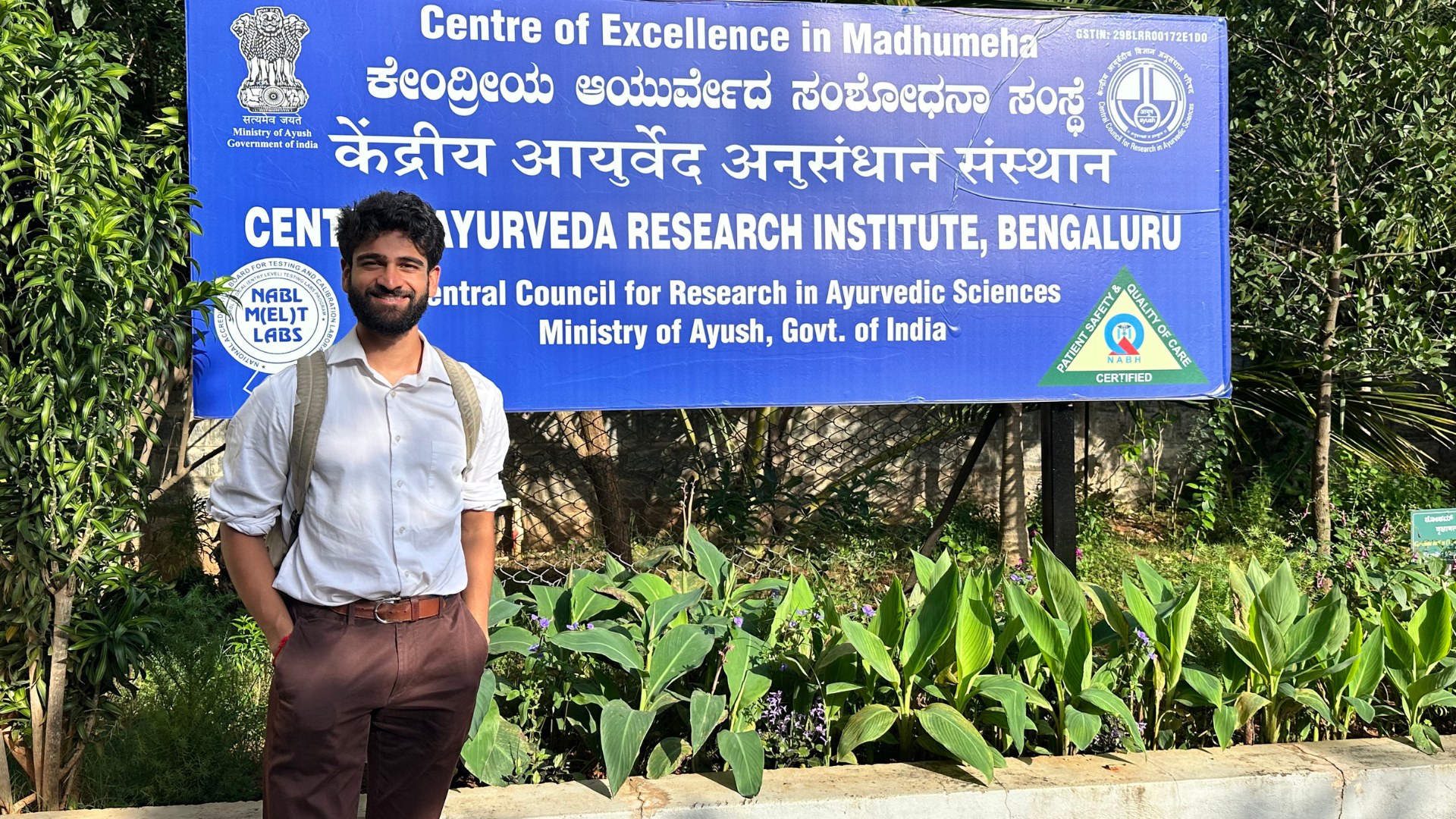
Josh visits the Central Ayurveda Research Institute in Bangalore to learn about federal government initiatives in India to promote Ayurveda alongside Western medicine.
As for the shift in topic, while I am fascinated by digital connectivity, I realized that the connection I wanted to explore was less so via fiber-optic cables but, rather, in the friction between two different conceptualizations of the human mind. My background in Computer Science and Social Studies naturally draws me toward systems and theories of logic. Western medicine often treats the mind as a byproduct of biological hardware (the brain), whereas Ayurveda views the psyche as an integrated element of a much broader system. I shifted because I wanted to investigate whether our scientific method is a universal lens or a cultural one, and India provided the perfect landscape to test those epistemological boundaries.
Mittal Institute: Bring us into your daily life during your grant – what was it like, and who were you meeting?
Josh Mysore: The daily life during the grant was intense. I had a robust plan charted out on Google Sheets with multiple meetings per day across various institutes. I visited both private and public health facilities to learn from Ayurvedic and allopathic doctors about the history of their medicinal practices, the current state of medicine in India, and how patients are properly treated. The two dimensions of learnings were information of indigenous systems and current geopolitics of medicine.
To understand the current state of medicine in India, one must recognize it as a deeply pluralistic landscape where Ayurveda, a three-thousand-year-old science of life, exists alongside modern medicine. Ayurveda operates on a framework of balance, viewing health as an equilibrium between life forces—Vata, Pitta, and Kapha—rather than just the absence of disease. In contemporary India, this system is now a formally institutionalized one, regulated by the Ministry of AYUSH, which oversees standardized education and research. This creates a unique environment where, in hubs like Bangalore, holistic concepts are increasingly translated into the language of modern medicine. My research focuses on this interplay.
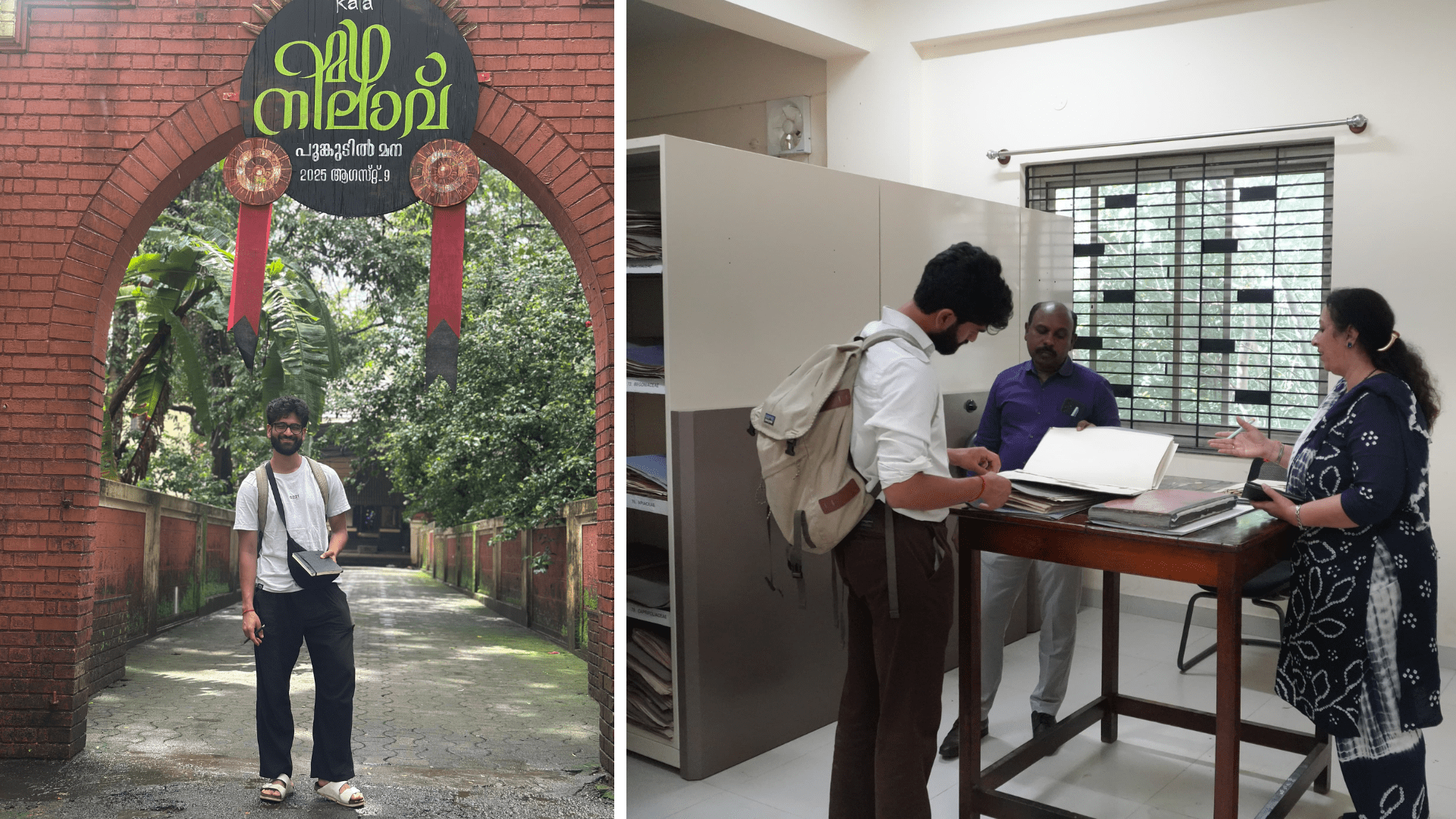
Left image: Josh visits a center in Thrissur, Kerala, to discuss practices of Ayurveda on a theoretical level; Right image: Josh tours a pharmacology and herb center in Bangalore to learn about Ayurvedic medicine production.
Mittal Institute: What was the most impactful part of this research project?
Josh Mysore: I was blown away by the wisdom, kindness, and open-mindedness of the doctors in India. One of the most impactful experiences of my summer was meeting with Dr. Hemant Bhargav at the National Institute of Mental Health and Neurosciences (NIMHANS) in Bangalore. As a psychiatrist who uses neuroimaging to study how yoga modulates brain endorphins and dopaminergic circuits in addiction, he provided a rigorous clinical grounding for ancient practices. Our discussion moved from the systematic organization of the Yogasūtra to the metaphysical idea of self-dissolution, where the collapse of the “I” is stabilized into a state of infinite expansion. This perspective on yoga as a science of the mind—a method for realigning the spirit to the principle of intelligent life—yielded great insight for my thesis.
Mittal Institute: What was the most memorable moment for you?
Josh Mysore: I recall visiting the National Institute for Mental Health and Neuroscience (NIMHANS) In Bangalore, talking with amazing doctors, and then being treated to a wonderful lunch and welcomed with open arms into the city. This experience opened my mind to the broader picture of professional work within academic settings.
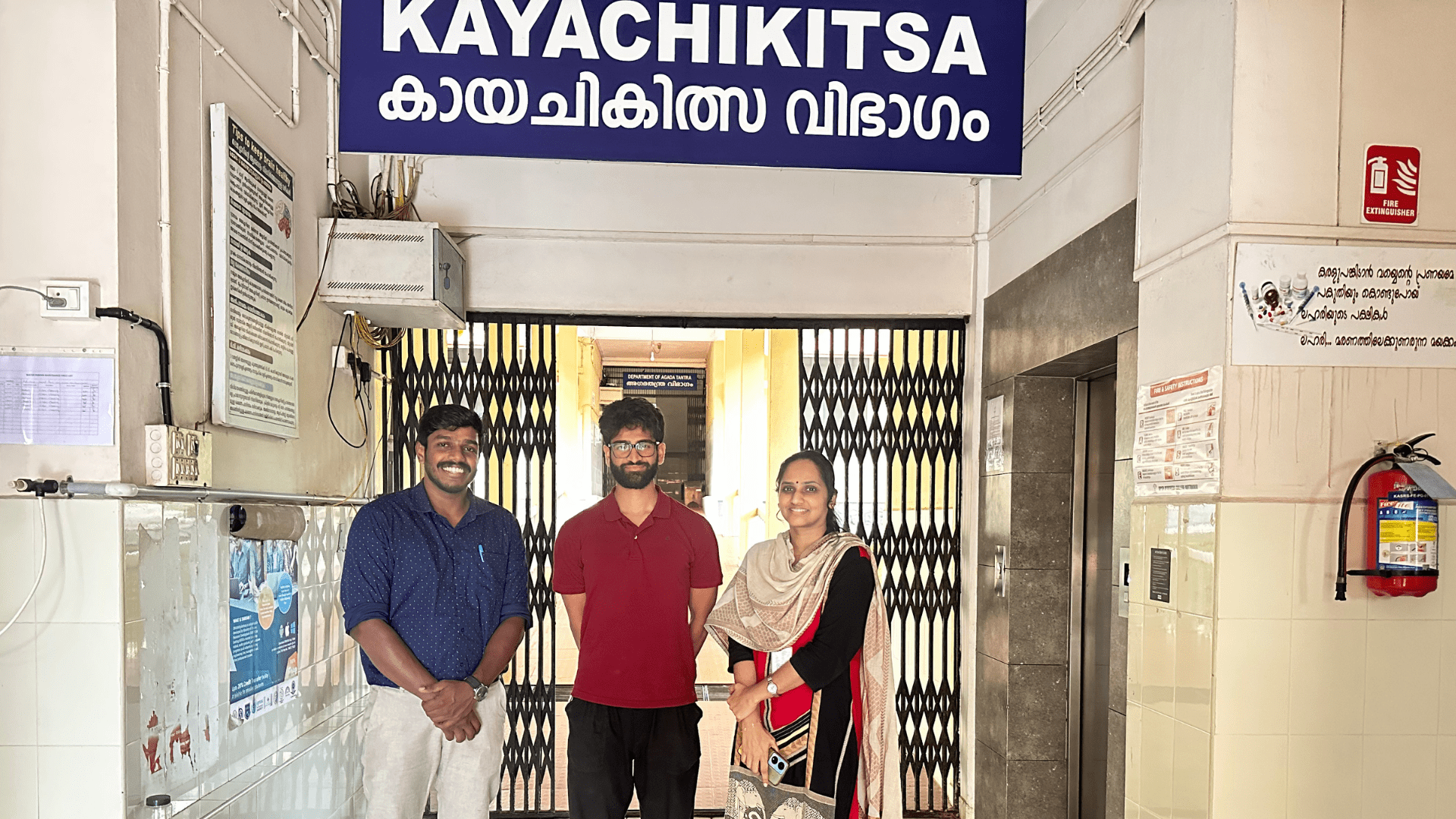
Josh stands next to Dr. Joyal (left) and Dr. Pratibha (right) to discuss Ayurveda treatment for mental health concerns, in-patient facilities, and current research directions at the Government Ayurveda Research Institute for Mental Health and Hygiene in Kottakkal, Kerala.
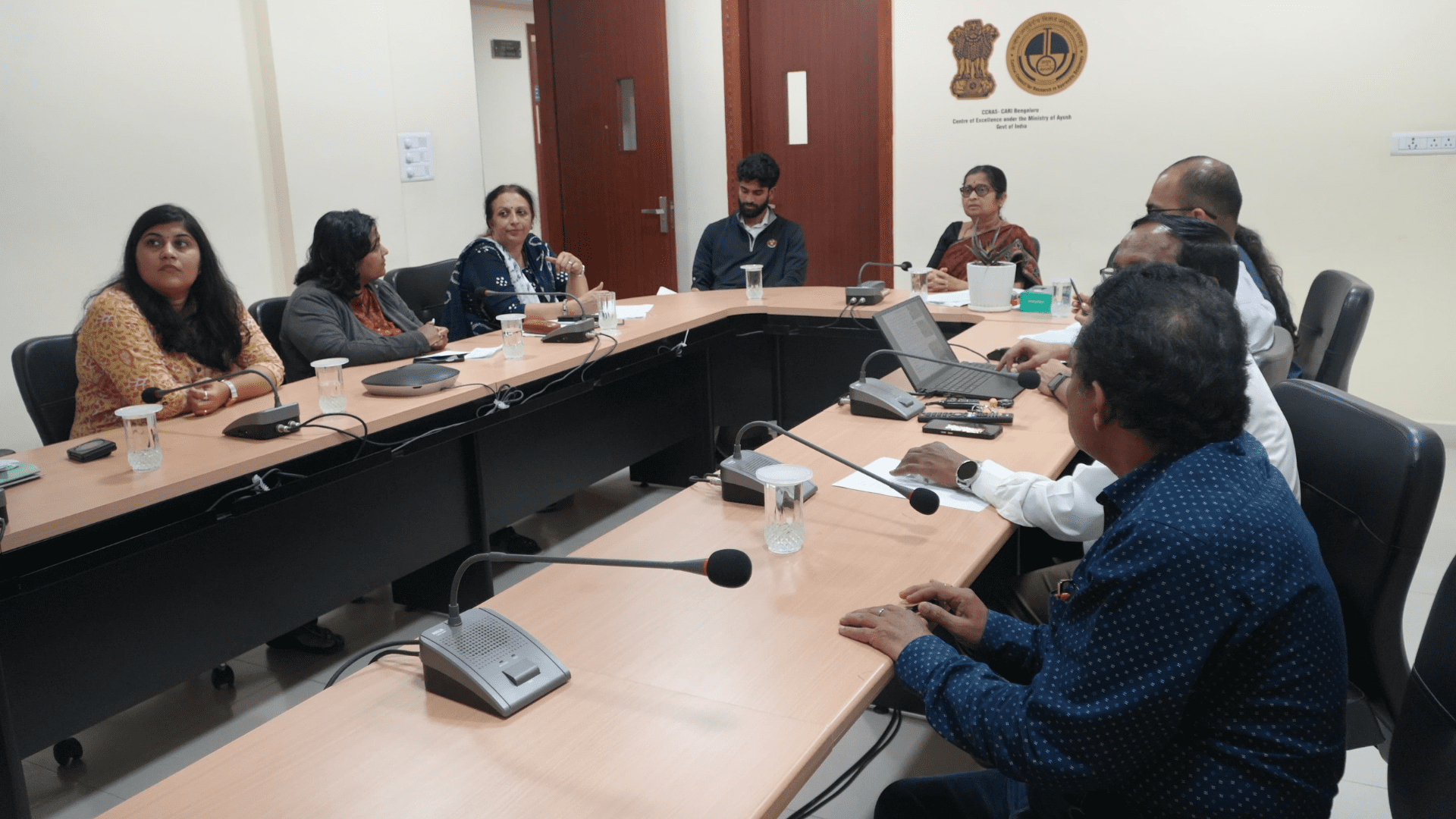
Josh in a meeting room at the Central Ayurveda Research Institute in Bangalore, where he discussed future partnerships in research.
Mittal Institute: How will this experience help you to reach your academic goals?
Josh Mysore: This experience will greatly inform my burgeoning interest in the History of Science, Tech, and Medicine, as well as Science and Technology Studies (STS). I am debating between going to graduate school or working after undergrad, but I would like to focus on sharpening my academic acumen before leaving Harvard.
☆ The views represented herein are those of the panelists and do not necessarily reflect the views of the Mittal Institute, its staff, or its steering committee.