Select Page

Category : News


When Heat Doesn’t End: Robert Meade on New Insights from the Front Lines

When Heat Doesn’t End: Robert Meade on New Insights from the Front Lines

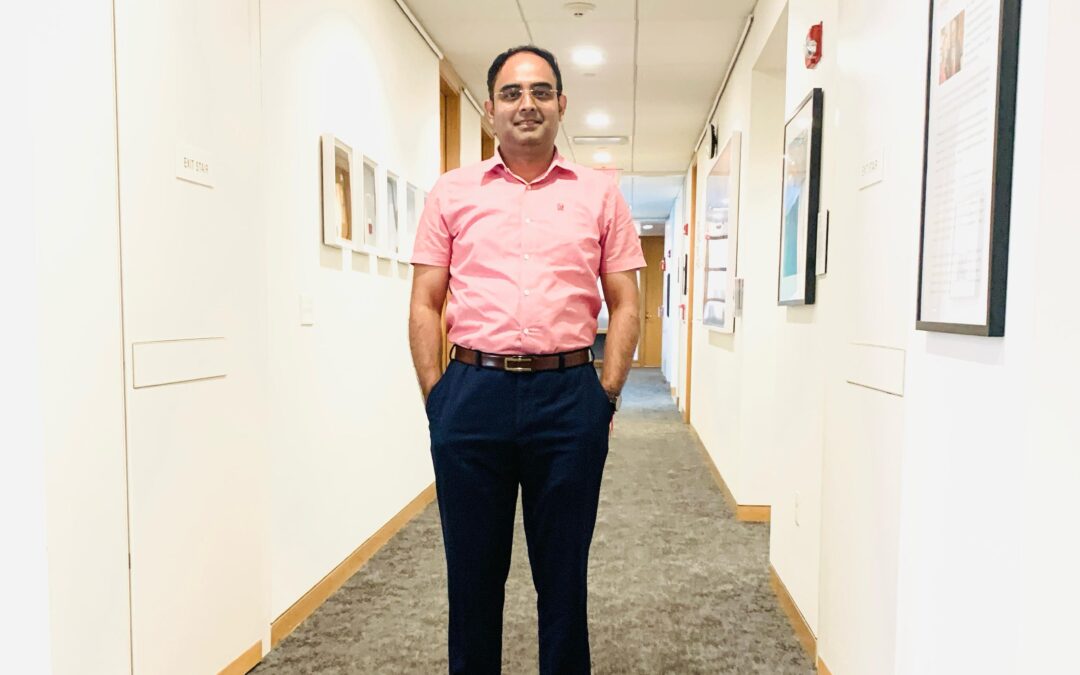
Robert Meade, a postdoctoral researcher at Harvard, is studying how prolonged heat exposure affects human health by bridging controlled lab experiments with real-world conditions. His work moves beyond short-term heat stress to examine cumulative impacts on the body. Through the Mittal Institute’s Community HATS project in India, Meade collaborates with local partners to track how extreme heat affects informal women workers’ health, sleep, and livelihoods. The research reflects a broader shift toward community-led, real-world approaches to understanding and addressing the growing health risks of climate-driven heat.

Previewing the Annual Cambridge Symposium: Journalist Victor Mallet on Why Water Stories Matter

Previewing the Annual Cambridge Symposium: Journalist Victor Mallet on Why Water Stories Matter

The Mittal Institute’s Annual Symposium: Living with Rivers on April 17 marks the launch of Living with Rivers, our new interdisciplinary initiative. Bringing together leading scholars and policy experts, the symposium will explore a central question: How well is South Asia living with its rivers? This year’s plenary speaker is Victor Mallet, author of River of Life, River of Death: The Ganges and India’s Future and Senior Editor of The Financial Times. We spoke with Victor about reporting on water as a journalist, and the importance of translating climate complexities into human experience.

Previewing the Annual Cambridge Symposium: Prof. Naveeda Khan on Rethinking Our Relationship to Water

Previewing the Annual Cambridge Symposium: Prof. Naveeda Khan on Rethinking Our Relationship to Water

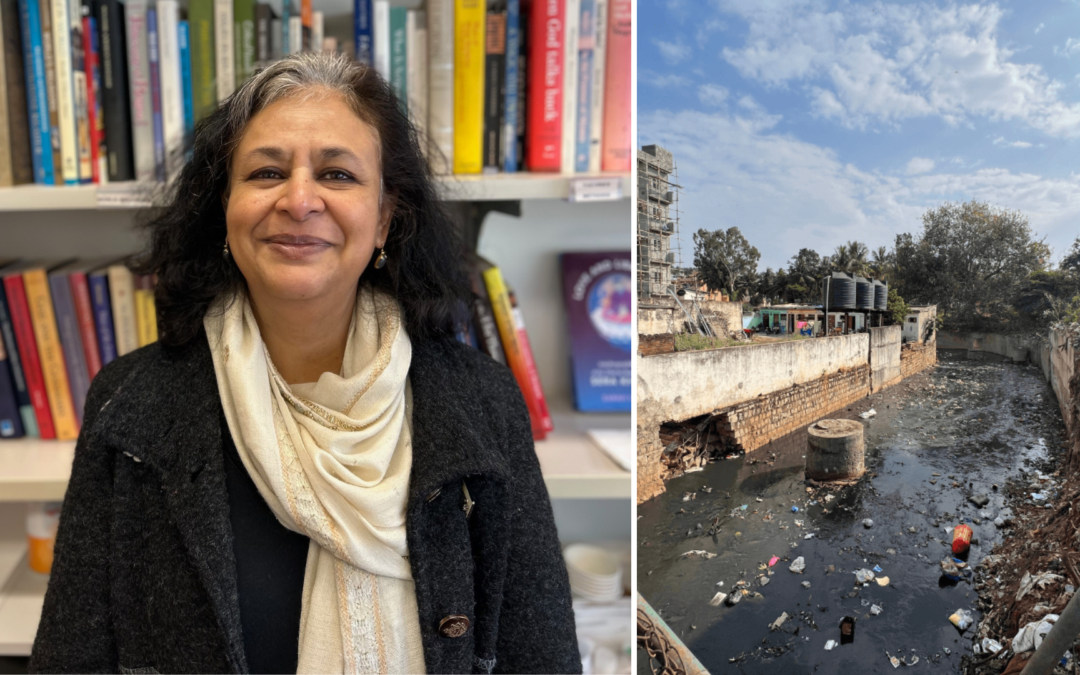
The Mittal Institute’s Annual Symposium: Living with Rivers on April 17 marks the launch of Living with Rivers, our new interdisciplinary initiative. Bringing together leading scholars and policy experts, the symposium will explore a central question: How well is South Asia living with its rivers? Among this year’s speakers is Naveeda Khan, Associate Professor of Anthropology and Director of Graduate Studies, Johns Hopkins University. We spoke with Naveeda about her research in Bangladesh, which explores how people live with, adapt to, and understand water.

Previewing the Annual Cambridge Symposium: Nagaraja Rao Harshadeep of the World Bank on Rethinking Water Through Data and Systems

Previewing the Annual Cambridge Symposium: Nagaraja Rao Harshadeep of the World Bank on Rethinking Water Through Data and Systems

The Mittal Institute’s Annual Symposium: Living with Rivers on April 17 marks the launch of Living with Rivers, our new interdisciplinary initiative. Bringing together leading scholars and policy experts, the symposium will explore a central question: How well is South Asia living with its rivers? Among this year’s speakers is Nagaraja Rao Harshadeep, Global Lead for Disruptive Technology in the Sustainable Development Practice Group, World Bank. We spoke with Harsh about bridging the gap between water data and decision-making.

PSIL in Goa: From Program to Practice

PSIL in Goa: From Program to Practice

Every January, Dominic Mao, Assistant Director of Undergraduate Studies in Harvard’s Department of Molecular and Cellular Biology, and Andrea Wright, Assistant Dean of Harvard College, train and accompany a group of Harvard undergraduates to India in what’s known as the Program for Scientifically-Inspired Leadership (PSIL). There, they collaborate with local college students to deliver a comprehensive liberal arts and sciences curriculum to high school students. This immersive camp provides intense, hands-on learning experiences, exposing high school participants to diverse academic disciplines, extracurricular activities, and meaningful cultural exchanges. By fostering interactions across these three groups, the program creates a vibrant environment for intellectual growth and cross-cultural understanding.

Contrasts, Mirrors, and Gradients: A Mumbai Design Studio Experience

Contrasts, Mirrors, and Gradients: A Mumbai Design Studio Experience

This February, design and real estate students embarked on an academic journey to Mumbai as part of a joint Development Project and Option Travel Studio at the GSD. Led by Professors Rahul Mehrotra, David Hamilton, and Jerold S. Kayden, the field trip allowed students to translate many of the questions that naturally emerged from their research to the site, particularly those regarding the Elphinstone Estate, an old industrial site serving as the studio’s focal point.

Art, Poetry, and the Feminine Divine: Seema Kohli in Conversation with Diana Eck at the Mittal Institute

Art, Poetry, and the Feminine Divine: Seema Kohli in Conversation with Diana Eck at the Mittal Institute

The Mittal Institute recently welcomed multidisciplinary artist Seema Kohli for a special event exploring the relationship between art, poetry, and the feminine divine in her practice. In conversation with Diana L. Eck, Kohli offered reflections on the deeply interconnected nature of her creative work, where visual art and poetry emerge in tandem.

Reimagining Healthcare in India: Insights from the Jaipur Literature Festival

Reimagining Healthcare in India: Insights from the Jaipur Literature Festival

A panel discussion at this year’s Jaipur Literature Festival discussed a Lancet Citizens’ Commission on Reimagining India’s Health System report on reimagining health care in India, bringing together experts in global health, civil society, business, and medicine including Vikram Patel, Mittal Institute Steering Committee Member, Lancet Commission Co-Chair, and The Pershing Square Professor of Global Health, Harvard Medical School; Tarun Khanna, former Mittal Institute Faculty Director and the Jorge Paulo Lemann Professor at Harvard Business School; Richard Horton, Editor-in-Chief of The Lancet; and Poonam Muttreja, Executive Director of the Population Foundation of India; with introductions by Hitesh Hathi, Executive Director of the Mittal Institute.

Afghan-American Writer/Illustrator Fowzia Karimi on Storytelling, Memory, and Harvard

Afghan-American Writer/Illustrator Fowzia Karimi on Storytelling, Memory, and Harvard

Fowzia Karimi, a writer and illustrator from Afghanistan, joined Harvard University this academic year as a Radcliffe Fellow. Fowzia’s work weaves fable, dream, memory, biology, and war while exploiting the interplay between text and image on the page. At Radcliffe she is working on The Age of Flowers, a collection of Afghan fairy tales illuminated with her watercolor paintings. We spoke to Fowzia to learn more about her work at Harvard.  

Designing for Extreme Heat in a Warming World

Designing for Extreme Heat in a Warming World

Last month the Mittal Institute hosted the event, Between Comfort and Heat Stress: The Hidden Burden of Everyday Heat, bringing scholars together from building science, urban design, and environmental health to discuss one of climate change’s most pressing yet often overlooked challenges: extreme heat. Moderated by architect and urbanist Rahul Mehrotra,  Professor of Urban Design and Planning and the John T. Dunlop Professor in Housing and Urbanization, the event featured a presentation by building science expert Rajan Rawal, Professor at CEPT University and Senior Advisor at the Center for Advanced Research in Building Science and Energy (CARBSE), on how cities, buildings, and policies must evolve to address rising temperatures. Prof. Rawal was joined in conversation by Gary Adamkiewicz, Associate Professor of Environmental Health and Exposure Disparities at Harvard T.H. Chan School of Public Health.