Select Page

Category : News


From Harvard to Goa: Graduating Harvard Seniors Reflect on Teaching, Leadership, and Learning Through PSIL

From Harvard to Goa: Graduating Harvard Seniors Reflect on Teaching, Leadership, and Learning Through PSIL

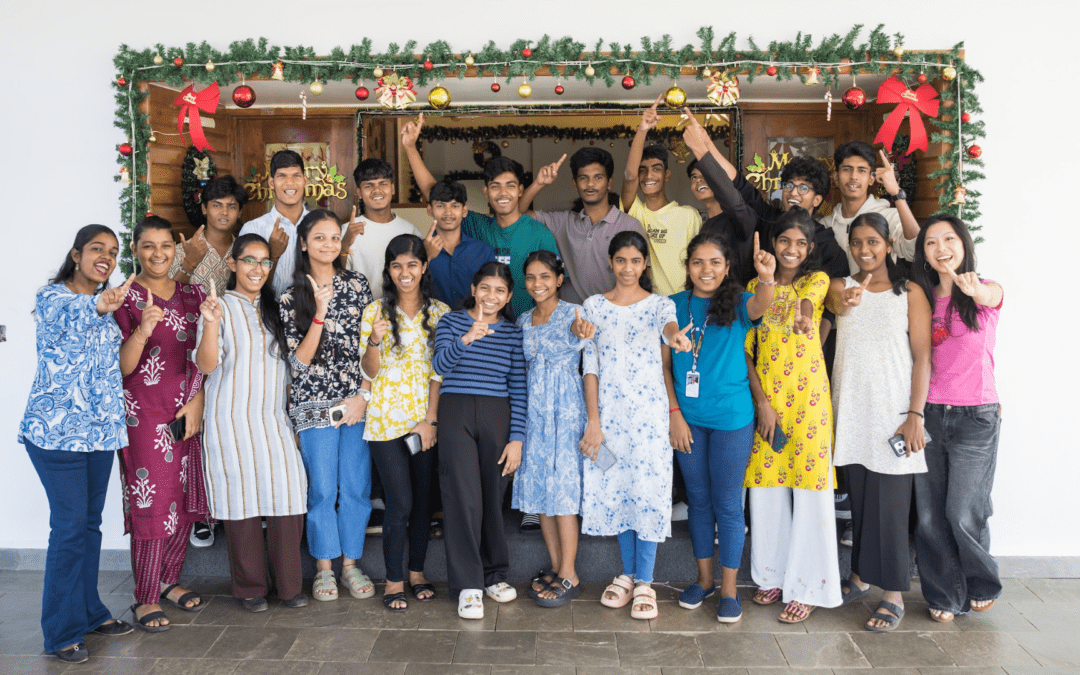
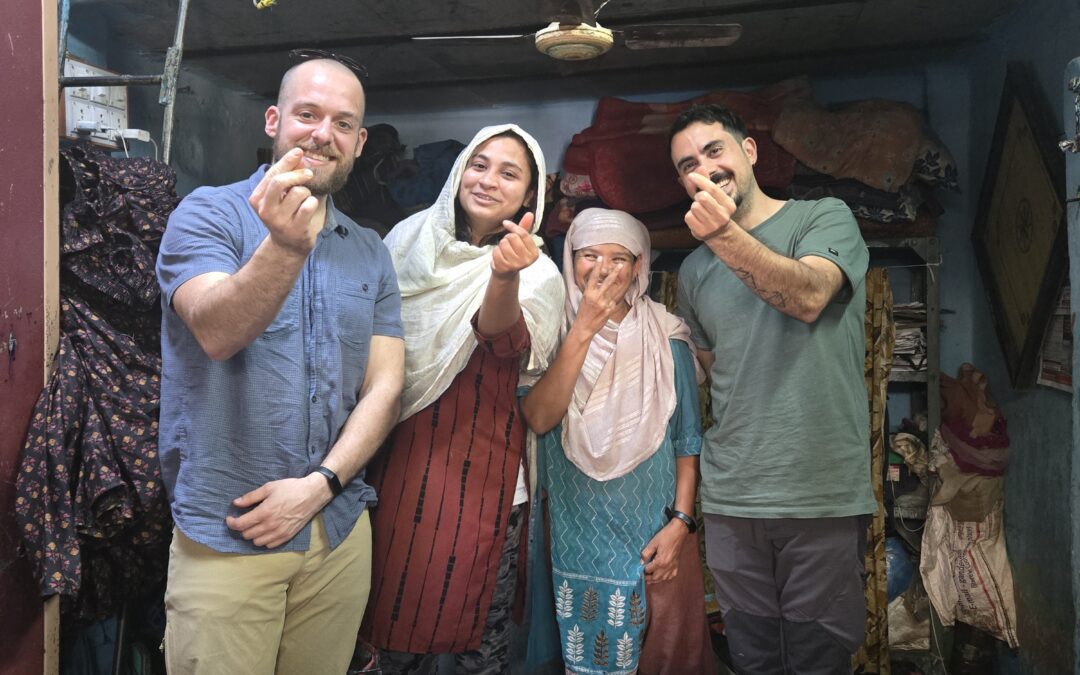
As Harvard seniors prepare to graduate this May, three students are reflecting on an experience that took them far beyond the classroom. Liz Zheng, an applied mathematics concentrator; Kat Ravichandran, who is pursuing a double concentration in computer science and philosophy; and Brooke Decho, who is studying engineering sciences, participated in this year’s Program for Scientifically-Inspired Leadership (PSIL) in Goa, India — an immersive educational initiative supported in part by the Mittal Institute.

More Than a Meal: Sarthak Agarwal ’27 on School Meals, Equity, and Access in India

More Than a Meal: Sarthak Agarwal ’27 on School Meals, Equity, and Access in India

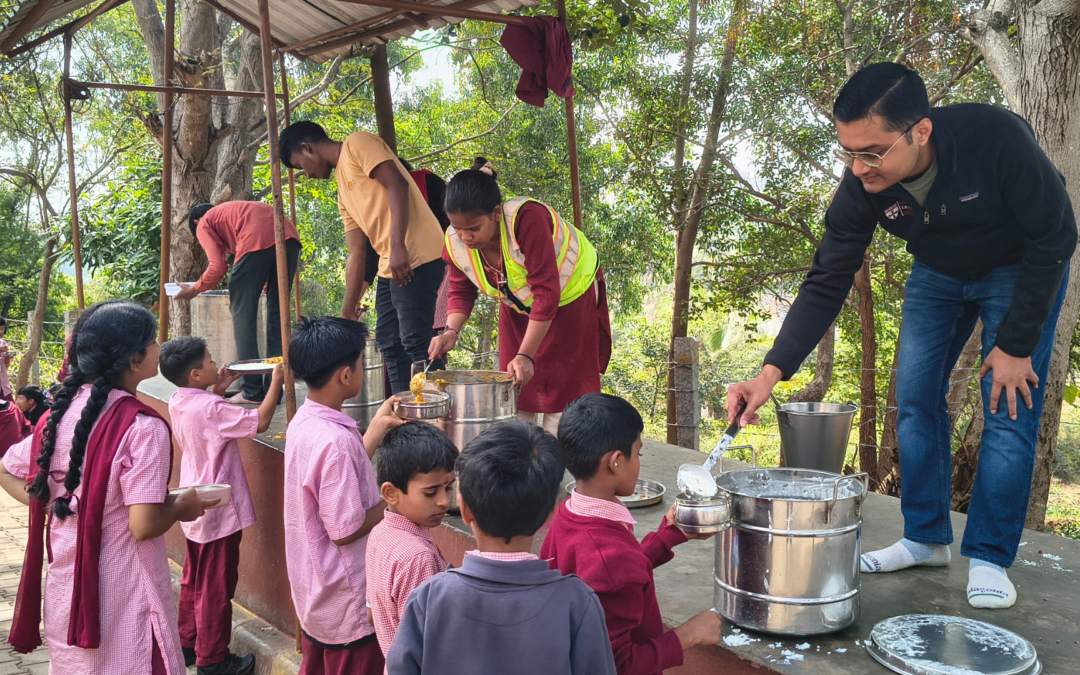
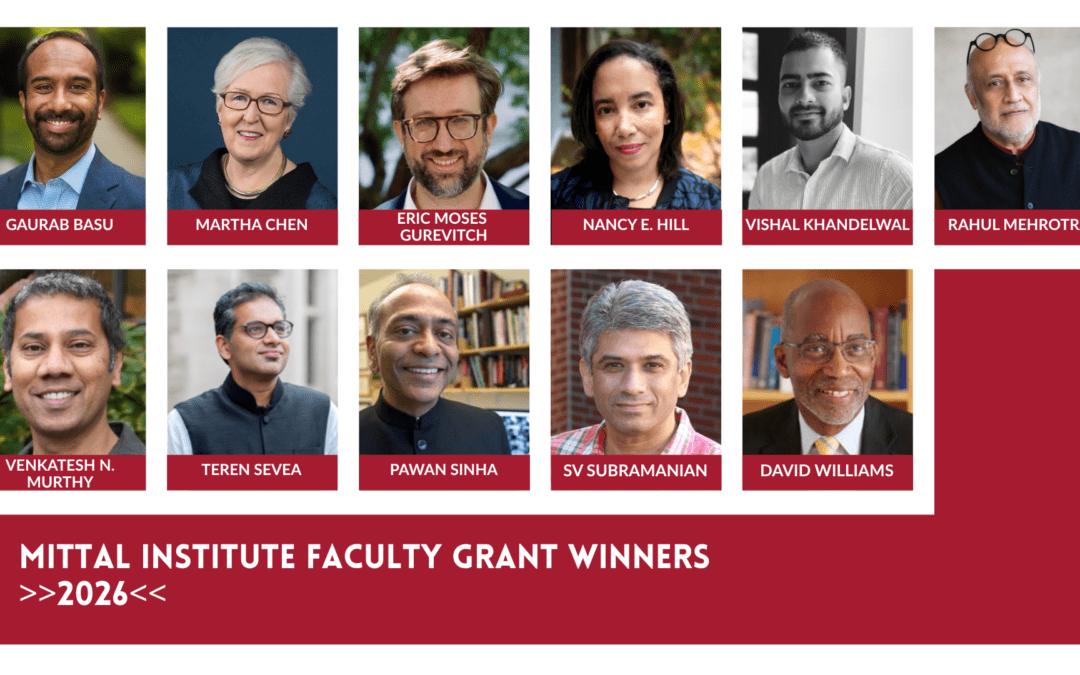
Sarthak Agarwal ’28, a doctoral candidate in Population Health Sciences at Harvard University, received a Mittal Institute grant to study India’s school feeding program, the largest of its kind in the world. While its benefits are widely recognized, understanding the operational, financial, and governance systems that sustain it is critical to its continued success. His research, which he details in the below Q&A, examines these enablers and challenges to identify practical lessons for policymakers.

Climateverse: Data-Driven Responses to Climate Change in South Asia

Climateverse: Data-Driven Responses to Climate Change in South Asia

Climateverse has evolved from a research prototype into a live public platform, now hosting over 100 climate and disaster datasets. It is jointly supported by the Lakshmi Mittal and Family South Asia Institute and the Salata Institute for Climate and Sustainability at Harvard University, along with the Harvard Data Science Initiative.

Rethinking How India Adapts to Extreme Heat

Rethinking How India Adapts to Extreme Heat

A new white paper from the Mittal Institute and the Salata Institute’s Climate Adaptation in South Asia research cluster brings together interdisciplinary insights to examine how extreme heat is reshaping life and livelihoods across India. Authored by former Mittal Institute Faculty Director Tarun Khanna, Climate Fellow Kartikeya Bhatotia, Steering Committee members Satchit Balsari and Caroline Buckee, and a broader group of interdisciplinary researchers, the report emphasizes the need for cross-sector approaches to heat adaptation.

Living with Rivers: A Recap of the Mittal Institute Annual Symposium

Living with Rivers: A Recap of the Mittal Institute Annual Symposium

On April 17, the Mittal Institute held its Annual Symposium at the Harvard Faculty Club, convening scholars, practitioners, and community members for the launch of Living with Rivers, a new interdisciplinary initiative exploring how South Asia is living with its rivers. Bringing together perspectives across ecology, climate science, public health, design, and the humanities, the symposium examined the complex interdependence between people and river systems in a rapidly changing world. 

Remembering Raghu Rai, Acclaimed Indian Photojournalist

Remembering Raghu Rai, Acclaimed Indian Photojournalist

The Mittal Institute community remembers acclaimed Indian photojournalist Raghu Rai, whose work captured the depth, complexity, and humanity of India for more than five decades. Widely regarded as one of the country’s most influential photographers, Rai brought global attention to everyday life across the subcontinent, transforming ordinary moments into powerful reflections. In October 2013, Rai visited Harvard as the featured speaker for the annual Harish C. Mahindra lecture. Over two days, he engaged the campus community through a photo exhibition, gallery talk, and keynote lecture, offering a window into his artistic process and extraordinary career.

When Heat Doesn’t End: Robert Meade on New Insights from the Front Lines

When Heat Doesn’t End: Robert Meade on New Insights from the Front Lines

Robert Meade, a postdoctoral researcher at Harvard, is studying how prolonged heat exposure affects human health by bridging controlled lab experiments with real-world conditions. His work moves beyond short-term heat stress to examine cumulative impacts on the body. Through the Mittal Institute’s Community HATS project in India, Meade collaborates with local partners to track how extreme heat affects informal women workers’ health, sleep, and livelihoods. The research reflects a broader shift toward community-led, real-world approaches to understanding and addressing the growing health risks of climate-driven heat.

Previewing the Annual Cambridge Symposium: Journalist Victor Mallet on Why Water Stories Matter

Previewing the Annual Cambridge Symposium: Journalist Victor Mallet on Why Water Stories Matter

The Mittal Institute’s Annual Symposium: Living with Rivers on April 17 marks the launch of Living with Rivers, our new interdisciplinary initiative. Bringing together leading scholars and policy experts, the symposium will explore a central question: How well is South Asia living with its rivers? This year’s plenary speaker is Victor Mallet, author of River of Life, River of Death: The Ganges and India’s Future and Senior Editor of The Financial Times. We spoke with Victor about reporting on water as a journalist, and the importance of translating climate complexities into human experience.

Previewing the Annual Cambridge Symposium: Prof. Naveeda Khan on Rethinking Our Relationship to Water

Previewing the Annual Cambridge Symposium: Prof. Naveeda Khan on Rethinking Our Relationship to Water

The Mittal Institute’s Annual Symposium: Living with Rivers on April 17 marks the launch of Living with Rivers, our new interdisciplinary initiative. Bringing together leading scholars and policy experts, the symposium will explore a central question: How well is South Asia living with its rivers? Among this year’s speakers is Naveeda Khan, Associate Professor of Anthropology and Director of Graduate Studies, Johns Hopkins University. We spoke with Naveeda about her research in Bangladesh, which explores how people live with, adapt to, and understand water.