Select Page

Category : India


Tresa Abraham, Mittal Institute Raghunathan Family Fellow, on How Wild Animals Shaped Power in Colonial India

Tresa Abraham, Mittal Institute Raghunathan Family Fellow, on How Wild Animals Shaped Power in Colonial India

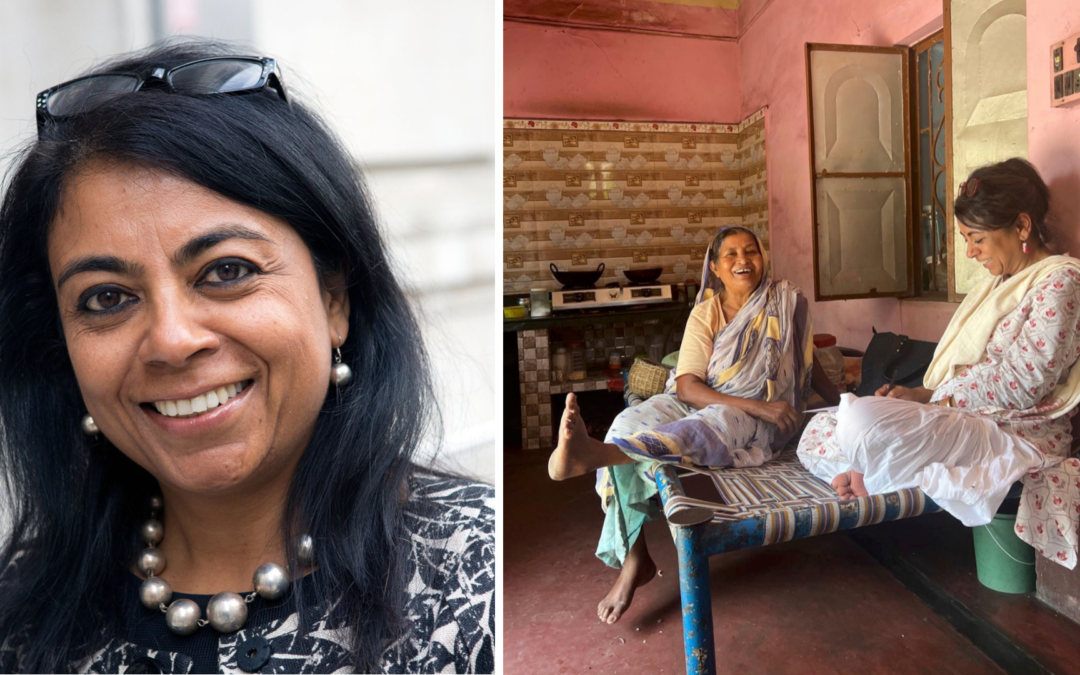
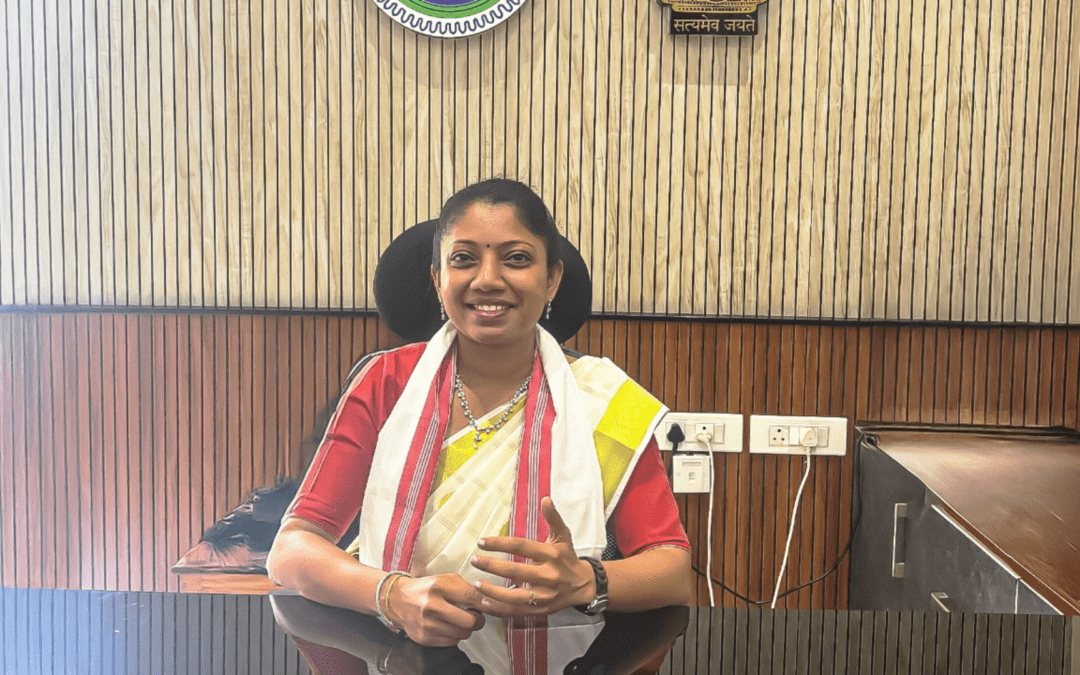
Tresa Abraham, a cultural historian of colonial South Asia with a foundation in literary studies, is the Mittal Institute’s newest Raghunathan Family Fellow. Tresa’s research focus is on the use of wild animals in power negotiations in colonial India. Trained in English literary studies, she approaches the colonial past with a literary lens, weaving together histories of animals, humans, and the empire. We spoke with Tresa about her research, and what she hopes to focus on during her fellowship at Harvard.

Climate Extremes and Maternal Well-Being: Lessons from Tamil Nadu, South India

Climate Extremes and Maternal Well-Being: Lessons from Tamil Nadu, South India

As heatwaves intensify and rainfall patterns shift, the effects of climate change in South Asia are no longer confined to the environment; they’re reshaping lives in deeply personal ways. A new India Development Review article, “In Tamil Nadu, Climate Extremes Are Reshaping Maternal Well-being,” by Mittal Institute Associate Dr. Saravanan Thangarajan explores how these environmental stresses are affecting maternal mental health across India. The research, supported by the Mittal Institute and building upon collaborations from Harvard Medical School and the Harvard T.H. Chan School of Public Health, offers powerful insights into the intersection of climate, health, and gender. Dr. Thangarajan, a Visiting Scientist at the Harvard T.H. Chan School of Public Health and Ariadne Labs, Brigham and Women’s Hospital, gave us an introduction to his article and shared some images from his fieldwork in Tamil Nadu. 

Reflections on Workplace Mental Health: A Formal and Informal Workforce Perspective

Reflections on Workplace Mental Health: A Formal and Informal Workforce Perspective

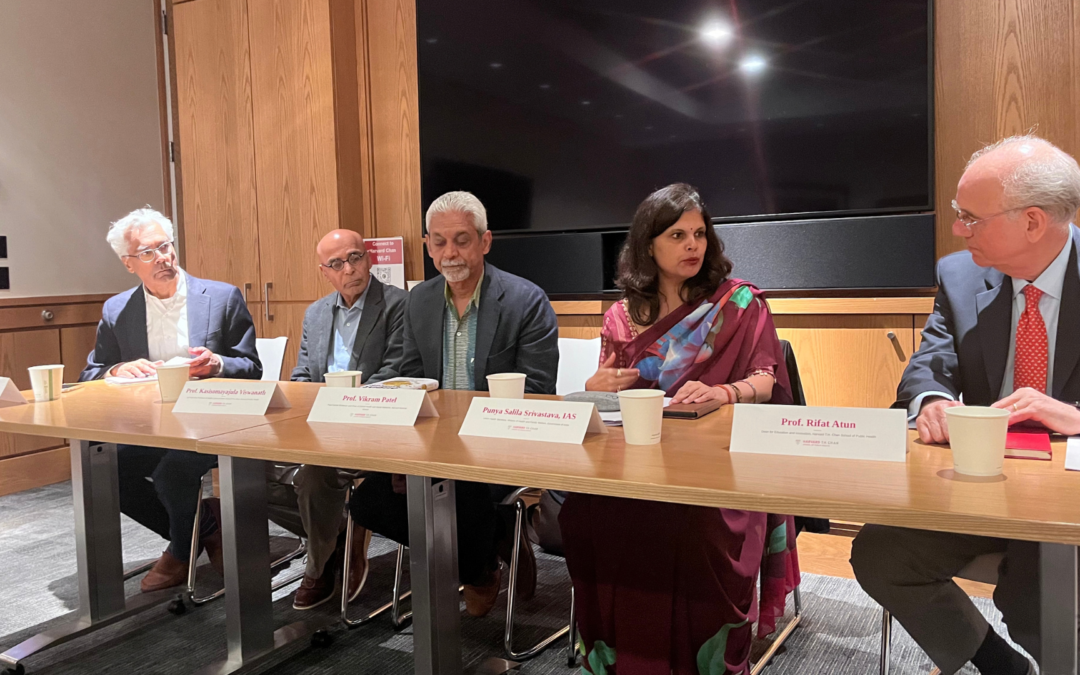
The webinar, “Reflections on Workplace Mental Health: A Formal and Informal Workforce Perspective,” convened prominent voices from academia, policy, and worker organizations to discuss the critical importance of mental health in both formal and informal work settings. The discussion highlighted how different workplace contexts influence well-being and what steps are needed to build more supportive environments for workers.

Designing for Heat Resilience: Ultra-Low Cost Solutions for Overheating and Sleep Disruption in South Asian Homes

Designing for Heat Resilience: Ultra-Low Cost Solutions for Overheating and Sleep Disruption in South Asian Homes

Rising temperatures are pushing Indian cities to the limits of human comfort, with residents in rooftop rooms particularly affected by extreme heat trapped under concrete roofs. To address these challenges, the project “Ultra-Low Cost Solutions for Overheating and Sleep
Disruption in South Asian Homes” was initiated with support from a Mittal Institute Faculty Research grant.

Beyond the Surface: Rinan Shah and Nobonita Rakshit Reframe India’s Water Crisis Through Boundaries, Gender, and Storytelling

Beyond the Surface: Rinan Shah and Nobonita Rakshit Reframe India’s Water Crisis Through Boundaries, Gender, and Storytelling

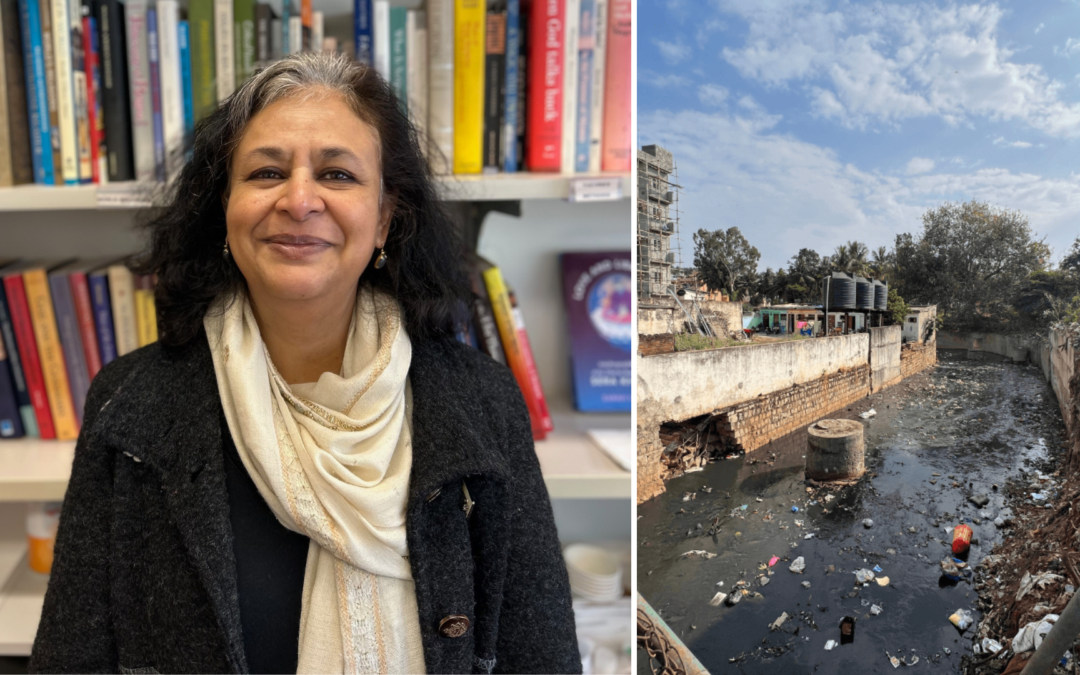
Two India Fellows, Rinan and Nobonita, at the Mittal Institute, explore water through the lenses of governance, gender, and narrative has opened new ways of understanding this crisis. Instead of starting with scarcity as a number, their works ask us to see water as lived experience: shaped by boundaries, by politics, and by stories.

Informal Enterprises in India: Bridging Data, Policy, and Action for Inclusive Growth

Informal Enterprises in India: Bridging Data, Policy, and Action for Inclusive Growth

To better understand the significance, characteristics and performance of informal enterprises, particularly those operated by women, a project entitled “Enterprises in India” was launched with support from a Mittal Institute Faculty Research grant. The project is by Martha (Marty) Chen, Associate of the Mittal South Asia Institute at Harvard University and former professor at Harvard Kennedy School and the Harvard Graduate School of Design, and Renana Jhabvala, President of SEWA Bharat, who have worked together for over 40 years – bridging activism, statistics, research and policy – to support livelihoods and enterprises in the informal economy, both in India and around the world.

From Boston to Ahmedabad: Experts Share Strategies on Heat, Work, and Resilience

From Boston to Ahmedabad: Experts Share Strategies on Heat, Work, and Resilience

A multi-country session, titled ‘Protecting Workers in Heat Action Plans’ hosted by The Lakshmi Mittal and Family South Asia Institute at Harvard, The Harvard Center for African Studies’ Africa Office, and The Center for Labor and a Just Economy at Harvard Law School brought together experts from India, South Africa, and the United States to address the urgent intersections of labor, climate, and resilience. 

From Classroom to Culture: John Weaver ’26 Explores Sanskrit in Pune

From Classroom to Culture:  John Weaver ’26 Explores Sanskrit in Pune

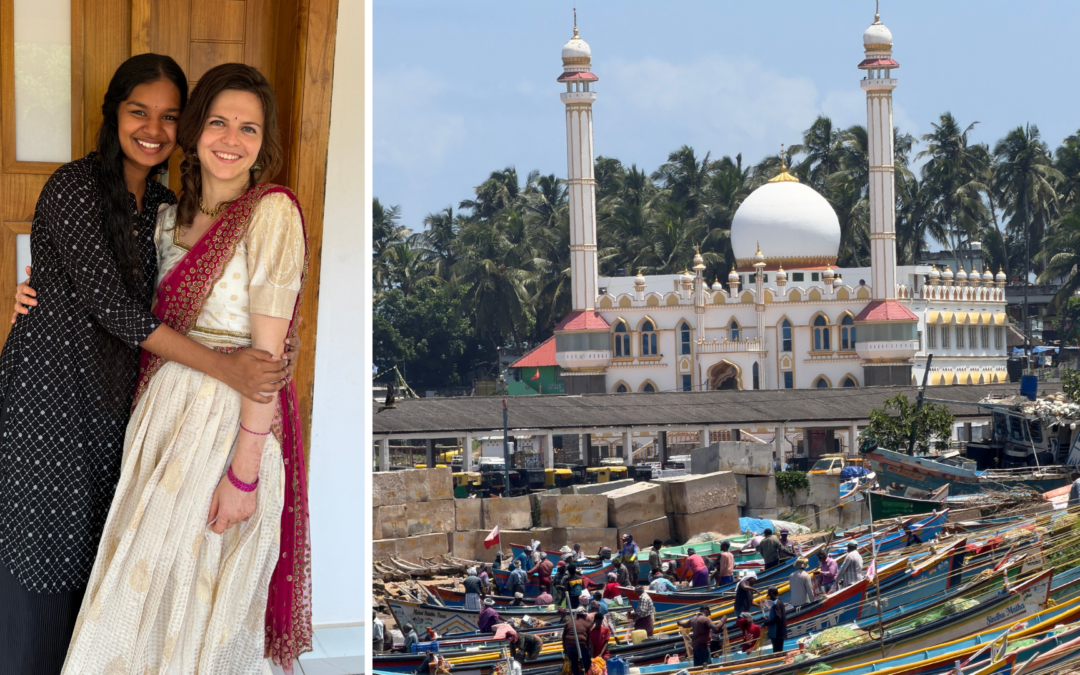
John Weaver ‘26, a triple concentrator in History of Art and Architecture, South Asian Studies, and English, spent his summer in Pune, India, at the American Institute of Indian Studies Summer Sanskrit Language Program. This 8-week program consisted of Sanskrit courses and occasional cultural immersion outings. John shared more about his summer with us in the interview below.

Prof. Karthik Muralidharan: Charting India’s Path to Better Governance

Prof. Karthik Muralidharan: Charting India’s Path to Better Governance

In Nepal’s Koshi Province, climate change is worsening floods, droughts, and other threats to smallholder farmers. A new research project, “Documenting Women’s Leadership in Climate Resilience Building in Koshi Province, Nepal,” funded through the Mittal Institute’s inaugural faculty climate research grant program, seeks to capture how women-led organizations are driving grassroots adaptation efforts. Led by Vincenzo Bollettino, Director, Program on Resilient Communities at the Harvard Humanitarian Initiative; Director, National NGO Program on Humanitarian Leadership and Patrick Vinck, Research Director, Harvard Humanitarian Initiative; Assistant Professor, Harvard Medical School and Harvard T.H. Chan School of Public Health, the study uses interviews and focus groups to examine how women’s networks build resilience, the barriers they face, and their influence on local decision-making.

Redefining Tradition: Inside the Upcoming Indian Classical Dance Conference

Redefining Tradition: Inside the Upcoming Indian Classical Dance Conference

Intersections Conference 2025: Traditions and Innovations in Indian Classical Dance is a September 27-28 conference at MIT and Harvard spotlighting U.S.-based Indian classical artists as innovators in movement, research, and pedagogy. Sessions will be centered on dialogue, debate, and professional development. The event, co-sponsored by the Mittal Institute, is organized by Prof. Haribabu Arthanari, president of MITHAS, Prof. Shriya Srinivasan, Assistant Professor of Bioengineering in the Harvard Paulson School of Engineering and Applied Sciences and Dr. Joshua George, co-director of the Anubhava Dance Company. We spoke with Prof. Srinivasan, herself a professional dance artist, to learn more about the motivations behind the first-of-its-kind conference.