In The News: Mittal Institute Faculty and Affiliates
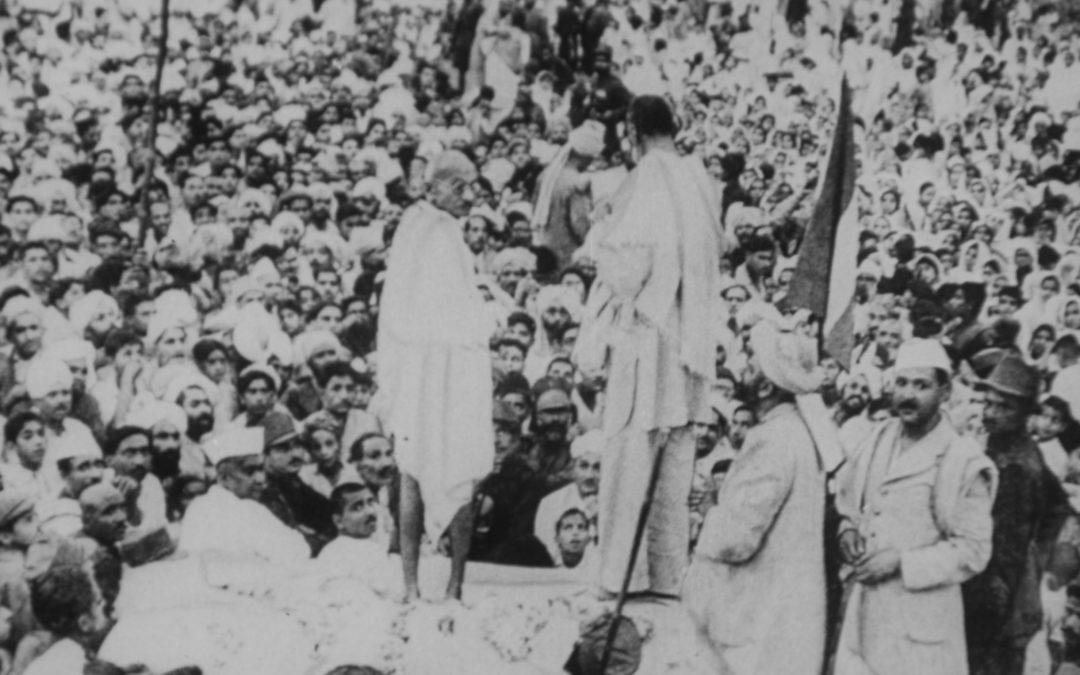
Join us on Wednesday, October 6 at 8:00am EST for “India at 75: The Global Roots of Independence,” moderated by Dinyar Patel, Mittal Institute Research Affiliate and Assistant Professor of History at the S.P. Jain Institute of Management and Research (SPJIMR) in Mumbai. He will join a conversation on “India at 75: The Global Roots of Independence” with panelists Nico Slate, Professor and Department Head, Department of History, Carnegie Mellon University and Carolien Stolte, Senior Lecturer in History at Leiden University, The Netherlands. The Mittal Institute sat down with Dinyar to discuss the event and his new paper, which he will share at the talk.
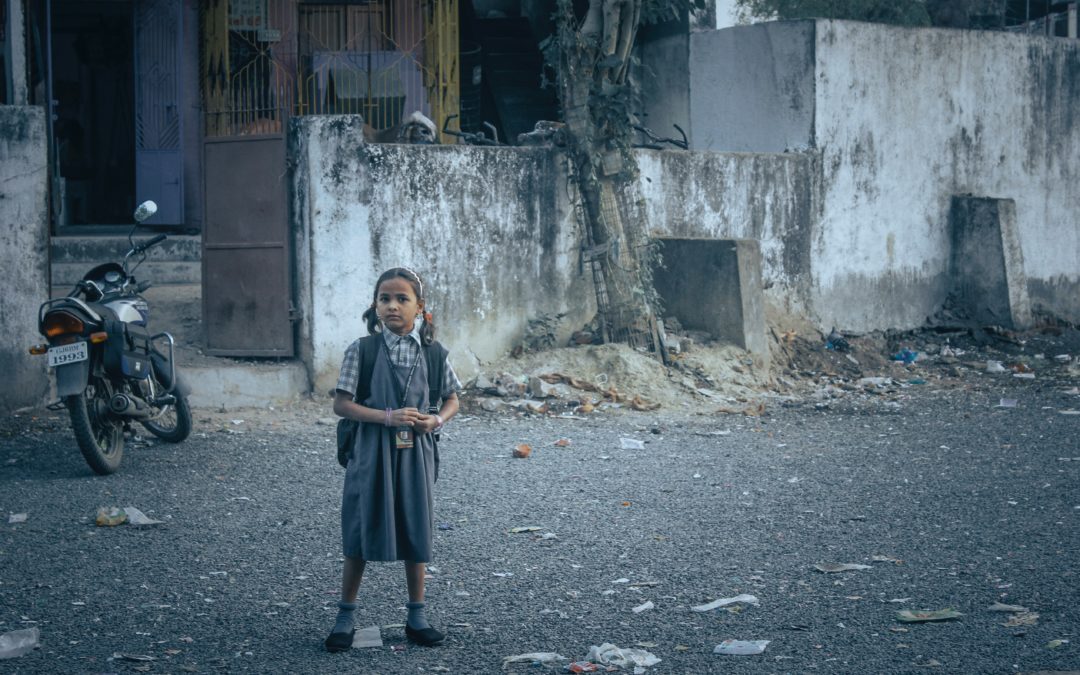
Akshay Mangla, Mittal Institute Research Associate and Associate Professor in International Business at the University of Oxford, recently authored the new publication, “Social conflict on the front lines of reform: Institutional activism and girls’ education in rural India,” in Public Administration and Development. The study analyzes how institutional activists (frontline workers) within the Indian state negotiate social conflicts as they seek to integrate disadvantaged girls into the school system by mobilizing village women’s groups and encouraging deliberation with target households. The Mittal Institute sat down with Akshay to explore his recent work, and expertise in the comparative political economy of developing countries.
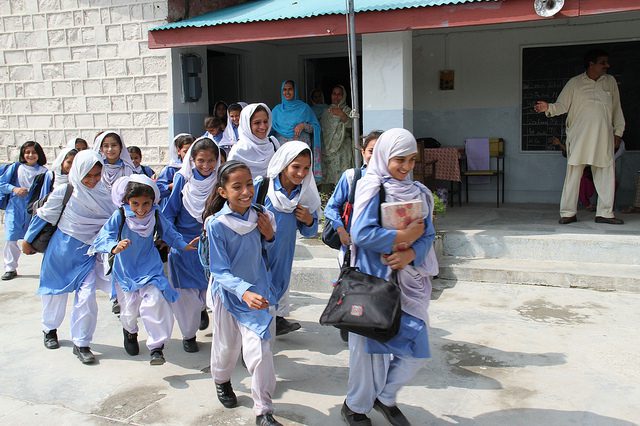
Cultural anthropologist Abdul Razaque Channa, Ph.D. shares his research on the COVID-19 pandemic and its impacts on learning among Pakistan’s school age children. Professor Channa is a Research Affiliate at the Mittal Institute and an Assistant Professor at the Department of Anthropology and Archaeology, University of Sindh – Jamshoro.
The Mittal Institute’s April 7 talk, “The History of British Diplomacy in Pakistan,” is headlined by Ian Talbot, Mittal Institute Research Affiliate and Professor in History and Director of the Centre for Imperial and Post-Colonial Studies, University of Southampton. Ian has written extensively on the themes of the colonial Punjab, the Partition of India, and the political history of Pakistan, and is the author of a 2021 book, The History of British Diplomacy in Pakistan. The Mittal Institute caught up with Ian to discuss his early education, research motivations, and his new publication.
The Biden Administration Must Democratize International Education. This article, by Mittal Institute Research Affiliate Dinyar Patel, originally appeared in Foreign Affairs.
Ronak Desai, Research Associate at the Mittal Institute, recently moderated a discussion between Ambassador Nirupama Rao, Former Foreign Secretary of India, and Vipin Narang, Associate Professor of Political Science at MIT, as they explored how the potential outcomes of the US presidential election may impact the region of South Asia.
This time of the year, we would normally be welcoming the new Mittal Institute Raghunathan Family Fellow to Harvard’s campus in Cambridge. But, due to the ongoing COVID-19 pandemic, the fellowship has been adjusted to meet the needs of our newly selected Fellow. Vidya Subramanian, an interdisciplinary scholar whose research interests lie at the intersection of technologies and societies, joined us virtually this fall as a Mittal Institute Research Affiliate. She will defer her in-person fellowship term to a time when she can join the team on campus to make the most of Harvard’s intellectual resources and student and faculty interactions.
Earlier this week, Ronak Desai, Research Associate at the Mittal Institute, moderated a discussion between Ambassador Nirupama Rao, Former Foreign Secretary of India, and Vipin Narang, Associate Professor of Political Science at MIT, as they explored how the potential outcomes of the US presidential election may impact the region of South Asia.
We spoke with Raile Rocky Ziipao, a multidisciplinary researcher, development practitioner, and former Raghunathan Family Fellow at the Mittal Institute. He is currently tenured at the Central University of Punjab, and has recently published a book entitled “Infrastructure of Injustice: State and Politics in Manipur and Northeast India.” Raile’s research delves into the dynamics of infrastructural development in northeast India, especially in his home state of Manipur, from a socio-anthropological perspective.
By Raile Rocky Ziipao. In the light of the Indo-China face-off in Ladakh that led to the deaths of 20 Indian soldiers along the Line of Actual Control (LAC) at Galwan Valley, there is now an acute urgency to focus on border infrastructure. From a policy perspective, India needs an infrastructural revolution at its borders for national security, to fortify against external threats, to bring connectivity to unconnected territory, and to maintain peace and prosperity.
Veronica Vargas, PhD, is an economist who focuses on health economics, global health, and health policy. As a research affiliate with the Mittal Institute and visiting scholar at Harvard University for the past three years, she has explored the research and development (R&D) of novel vaccines and drugs in both South Asia and Latin America. More than ever, this expertise has become essential in the understanding of global needs for R&D in the face of a pandemic and additional neglected diseases around the world.