
The Mittal Institute India office welcomes two new India Fellows, including Robert Lunkhopao Haokip, a postdoctoral scholar whose work explores how global events such as World War II were experienced at the empire’s margin. Focusing on the British Assam-Burma borderlands, his study looks at the ways in which local societies encountered and responded to the war. Under the mentorship of Sugata Bose, Gardiner Professor of Oceanic History and Affairs, Department of History, Harvard University, Robert’s work will investigate the local contacts, connections, and negotiations that emerged during the war period and examines the representation and memories of war experiences of not just military officials, soldiers, intermediaries and porters but also by drawing upon oral forms such as songs and stories of societies in the imperial frontier.
In the interview below, Robert shares insights into his research, his aspirations for the fellowship, and the broader significance of his work.
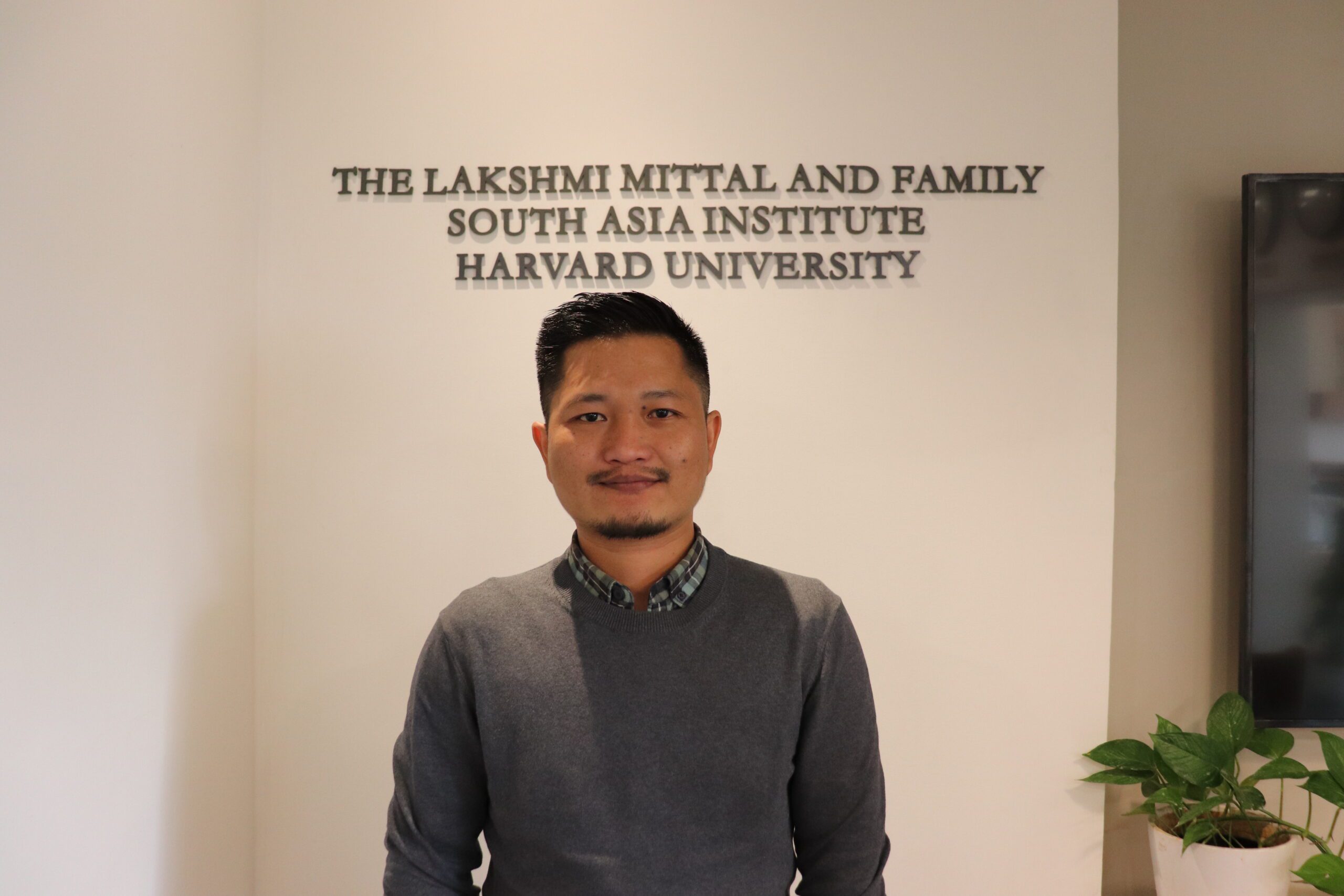
Mittal Institute: Welcome to your fellowship at the Mittal Institute, Robert. Could you describe the central focus of your project on the North-East frontier during World War II and what drew you to this topic?
Robert L. Haokip: Thank you to everyone here at the Mittal Institute for the warm welcome and support.
The basic thrust and the broad contours of my research revolve in and around the idea and understanding of wars, experiences and violence at the margins. It takes the history of the Second World War as a liminal moment to examine the nature, significance, and the complex ways in which societies in the imperial margins experienced the war. Studying and examining the nature of the war from below is a less studied field and it has largely remained an unattended and under-researched area in South Asia.
Tracing back to what drew me into this topic was my childhood connection to my native village, Wayang, that lie close to the borders between India and Burma, in the administrative unit of Khengjoi sub-division, Chandel district in the Indian federal state of Manipur. Every winter I would visit my grandparents in the village hills. Apart from the sundry activities we did, we would also get to hear bedtime stories about wars locally known as Saap Gal, the First World War and Japan Gal, the Second World War, from my grandparents and other elders in the village, who themselves have witnessed the wars and participated in different forms. It was related to the wonders they first felt; seeing an aircraft, the sound of gunshots, the story of the Indian National Army led by Netaji Subash Chandra Bose, the advent and retreat of the Japanese troops, etc. The stories remained mere stories however, the traces of it remained alive and it regained my academic attention and interest only after coming to Jawaharlal Nehru University, New Delhi.
Mittal Institute: Your research examines how the Second World War was experienced at the margins of the British Empire. How do local oral histories and cultural expressions—such as songs and stories—reshape our understanding of that history?
Robert L. Haokip: I believe memory shares strong impressions of history and memory is the bridge that I intend to build on to create this history. Apart from archival research, a significant aspect of my research is to tap into the various unexplored local sources by exploring the memories of people through memoirs, oral history, objects and artifacts, etc. These oral forms of recording provide important medium in which war experiences and memories are embedded in the social and cultural memories. The project will not only seek to document them and create a written history, but also investigate on what it meant to inhabit a region that remained at the margins of colonial state and continues to remain so. In doing so, the study hopefully will bring in new and innovative approach in studying the Second World War and in the process bring interesting insights and understanding on the experiences of the global war by local societies at the margins of the Empire.
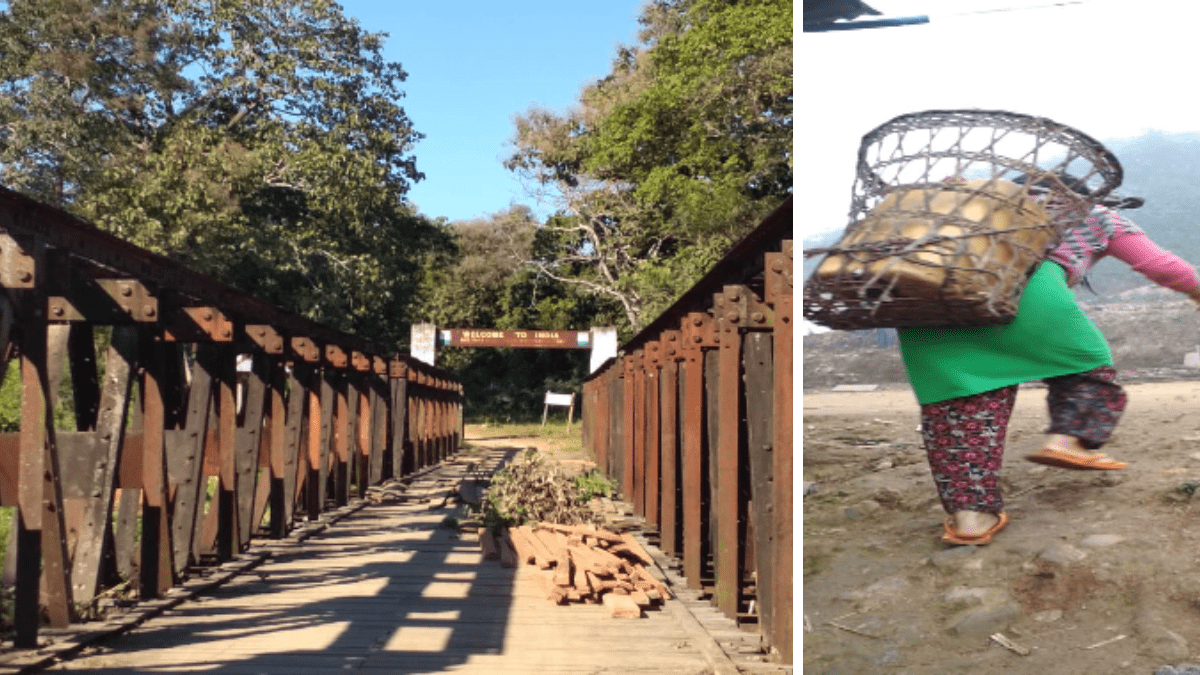
(left) A bridge constructed during the Second World War on the Twikuodung river along the India-Buma borderlands. The signboard reads, ‘Welcome to India.”; (right) A woman in Manipur fetching potable water in the morning.
Mittal Institute: Could you walk us through your academic and professional journey leading up to this fellowship and how your earlier work prepared you for this project?
Robert L. Haokip: Due to lack of basic facilities such as roads, electricity, healthcare and education, my family moved from Wayang to the nearest town where I attended school at St. Joseph’s School, Sugnu. Aspiring for a better future after securing a scholarship, I came to Tata Institute of Social Sciences to pursue a Bachelors in Social Work in Maharashtra, a region completely distinct from Northeast in terms of language, food and culture. It was difficult but exciting. I went on to complete my Masters from the same Institute and later got placed in Kudumbashree – Kerela State Poverty Eradication Mission, an organisation working at the level of local self-governance under the Government of Kerela. While this gave me an opportunity to acquire new skills in terms of formulation and implementation of government policies and schemes, I wished to use my experience to undertake research in the region I come from. It was with this aspiration that I took admission at the Special Centre for the Study of North East India, Jawaharlal Nehru University, New Delhi. The above journey helped and prepared me for the Mittal Institute India Fellowship.
Mittal Institute: In what ways do you hope this fellowship will enable you to expand your research, and what resources or collaborations at Harvard are you looking forward to accessing?
Robert L. Haokip: I am hopeful that the fellowship will help me further develop my research project by undertaking crucial research and contribute in the existing literature, especially pertaining to the Second World War in Northeast India and South Asia. I am extremely grateful to Professor Sugata Bose for giving me the opportunity to work with him. I am sure that the fellowship will provide a wonderful opportunity as well as academically gain much from working with renowned scholars like Prof. Bose and others from the Harvard community. As of now, I am exploring the university’s vast academic resources and I came across some interesting documents related to my research. I look forward to more collaborations as we move on.
Mittal Institute: As your project unfolds, what broader insights about frontier societies, war experiences, or memory do you hope will emerge from your work that could resonate beyond academic circles?
Robert L. Haokip: The project hopefully will frame a new insight and help contribute to the existing literature in understanding of wars and experiences during the colonial period and how one can relate these experiences and memories to the contemporary times. I hope it would also make interesting interventions on how to conceive frontiers and borderlands in a long term historical perspective, wherein along with the history of the state, the people’s history too should find a meaningful place within and beyond academic circles.
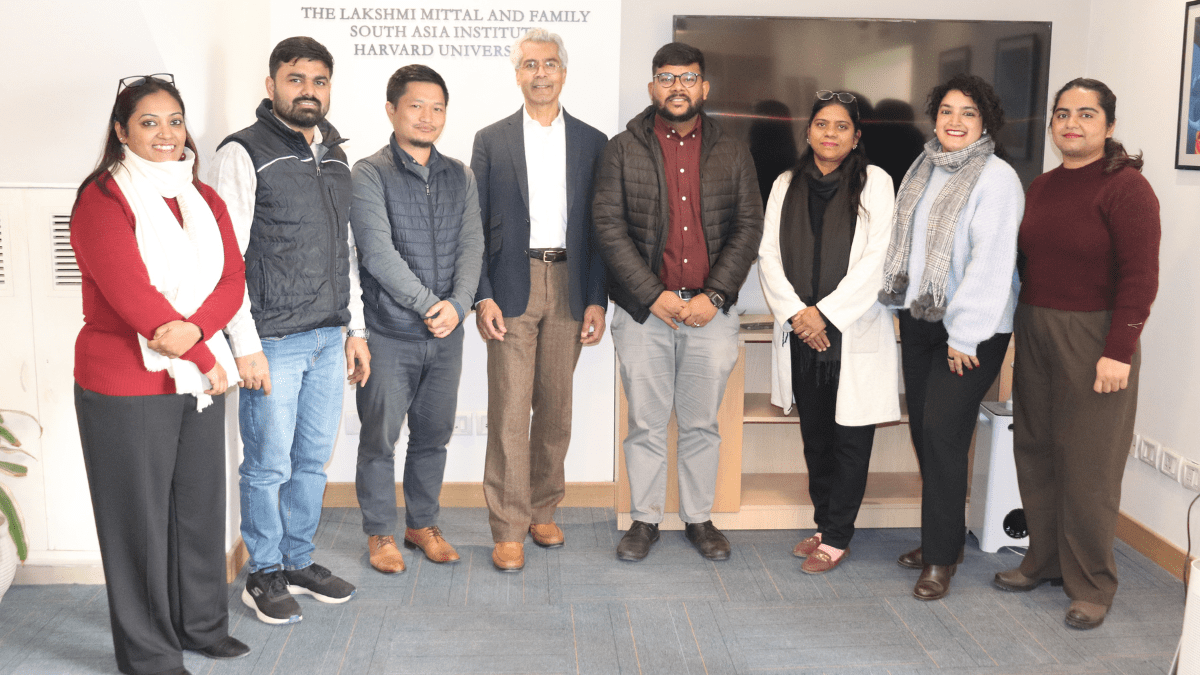
Robert Haokip (third from left) at the Mittal Institute India office.
☆ The views represented herein are those of the interviewee and do not necessarily reflect the views of the Mittal Institute, its staff, or its steering committee.