
Focused on innovation and entrepreneurship, the Mittal Institute’s annual Seed for Change (SFC) competition awards funding to bold, creative ideas developed by Harvard students with the potential to drive meaningful impact in India. Meet this year’s grand prize winner and two runners up.
2026 Seed for Change Grand Prize Winner ($30,000)
Seed to Scale: Decentralized Agroforestry Processing to Unlock Himalayan Smallholder Value Chains
Reyan Eda Upadhyaya, Master’s in Business Administration ’26, Harvard Business School

Project Proposal: Agroforestry systems are widely recognized as critical to climate resilience, biodiversity conservation, and rural livelihood diversification. However, ecological productivity does not automatically translate into economic integration. The World Development Report on Agriculture emphasizes that agricultural growth reduces poverty most effectively when smallholders are connected to higher value markets through infrastructure and institutions (World Bank, 2008). More recent work on agrifood systems transformation underscores that rural industrialization, value addition, and market integration are central to structural transformation (Barrett et al., 2022; World Bank, 2021). FAO (2019) similarly notes that agroforestry systems remain under commercialized when post harvest processing and aggregation systems are weak. The Eastern Himalayan belt, including Kalimpong District in Northern West Bengal, Sikkim, Assam, and Arunachal Pradesh in India, as well as neighboring Nepal, forms a continuous agroecological corridor defined by similar elevation ranges and climatic conditions. This region contains biodiverse mid-hill agroforestry systems managed by smallholders.
The Eastern Himalayan mid hills produce significant quantities of tree based fruits. Government agricultural statistics document more than 450,000 Lapsi trees across the himalayan mid-hill systems in the broader region (MoALD, 2021). Yet a substantial share of this production is unharvested, spoiled, or sold informally at low prices. The primary constraint is not ecological viability or farmer willingness; it is the absence of decentralized aggregation, stabilization, and quality systems. Without immediate processing, highly perishable fruit cannot meet food safety, traceability, and export standards required for formal markets.
This project will explore if modular, decentralized fruit processing units reduce post-harvest loss and generate export-grade stabilized pulp at economically viable unit costs in Himalayan agroforestry systems. This project will deploy one modular processing unit, referred to as an Action Node, in a high production district. The unit will include mechanical pulping equipment, controlled thermal stabilization, optional dehydration capacity, and basic quality monitoring tools such as pH and moisture meters. Stabilized pulp will be transported to a central facility for advanced testing including water activity, microbial screening for Salmonella, E. coli, and Listeria, and heavy metal analysis. HACCP aligned protocols will be developed to ensure compliance with international food safety standards. This two tier system reduces spoilage at source while enabling export grade compliance. The infrastructure is designed to be species agnostic and replicable across districts.
Reducing post harvest loss increases farmer income without requiring additional land or inputs. Over the long term, the objective is not only incremental price improvement but integration of Himalayan agroforestry products into premium export value chains. By stabilizing fruit at source and meeting international food safety and traceability standards, the project creates the conditions for exporting high value finished or semi processed products rather than raw, low margin commodities. This shifts value capture upstream toward producing regions. Localized processing also generates rural employment, increases value retention within mountain economies, and supports structural transformation in lagging regions (Barrett et al., 2022; World Bank, 2019).
2026 Seed for Change Runners Up ($5,000 each)
Turning Risk Hours into Growth Hours Through Safe After-School Spaces for Migrant Children
Piyush Borse, Master’s in Education ’26, Harvard Graduate School of Education
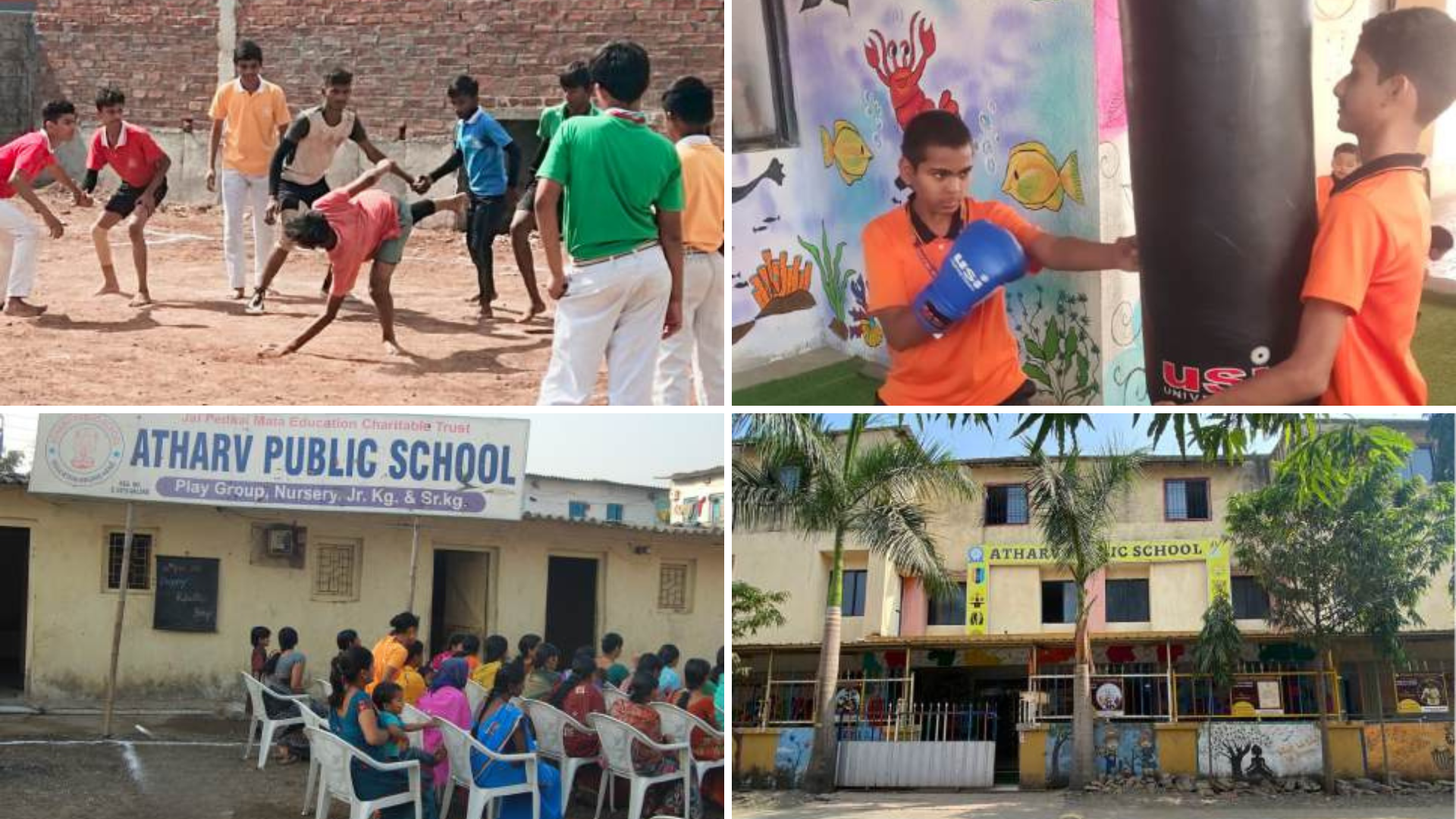
Project Proposal: Children in low-income urban communities across India spend most of their developmental lives outside school. On average, students attend school for roughly 220 days a year, eight hours a day, meaning nearly 80% of their waking hours unfold beyond the classroom. Yet education reform has focused primarily on improving what happens inside school walls, paying far less attention to the hours before and after school, the ones that shape habits, peer networks, emotional health, and long-term development of children. In Vapi, Gujarat, an industrial town in western India, this gap is especially visible. Vapi draws migrant workers from across India to its chemical and manufacturing plants. Many parents work long shifts as daily-wage laborers. After school, children often return to overcrowded homes (5-7 people in one small room) and neighborhoods with unsafe environments with no recreational spaces and supervision. Structured, affordable after-school programs are extremely rare. Safe public youth infrastructure is scarce. The hours between 3 PM and 8 PM become a developmental blind spot that is high in vulnerability and low in structured opportunity.
This proposal seeks to transform these “risk hours” into structured “growth hours” by building a community-based, sports-led after-school academy anchored in a trusted local school. By reclaiming the 80% beyond the classroom, we aim to create a space that fosters physical health, emotional regulation, psychological maturity, and community belonging.
ExploreYou
Vinay Shukla, Master’s in Public Administration ’26, Harvard Kennedy School

Project Proposal: In India’s hyper-competitive education system, early career exploration is not a luxury-it is a strict survival mechanism for all students. With over 250 million school-going youth vying for limited university seats and jobs, students who do not figure out their aptitudes and options early are inevitably left behind. By age 14-16 (Class 10), this lack of early exploration collides with a brutal bottleneck: Indian teenagers are forced to make life-shaping choices by selecting academic “streams” (Science, Commerce, Humanities) that rigidly define and lock in their futures. Forced into a pipeline before they even know what they are running toward, students spend their most formative years optimizing for predictable exams rather than developing practical, workplace-ready skills.
ExploreYou replaces guessing with experience. Our game-like, interactive audio-video simulations drop students into a realistic 5-15 minute “week in the life” of a profession. Like a flight simulator, it is safe, fast, and accessible anywhere-crucially optimized for lowbandwidth mobile networks common in Tier-2 and Tier-3 Indian cities-yet it demands real decisions: prioritizing tasks, communicating under pressure, managing ambiguity, and seeing tradeoffs play out. Built with and benchmarked by working professionals, each simulation reflects real expectations-not glorified stereotypes. After the run, ExploreYou converts behavior into action: an evidence-based assessment of strengths, interests, and fit (aligned with RIASEC and the 21st-century skill frameworks mandated by India’s National Education Policy [NEP] 2020) and a step-by-step pathway from high school through college to first jobs-covering stream selection, entrance exams (CUET, JEE, NEET), college majors, and real-world exposure (shadowing, internships).
☆ The views represented herein are those of the interview subjects and do not necessarily reflect the views of the Mittal Institute, its staff, or its steering committee.