
Kazal Barua ’27, a Harvard Divinity School Master of Theological Studies student, spent his winter conducting research in Bangladesh through a Mittal Institute student grant. His project, “Reimagining the Roles of Buddhist Monastics in Bangladesh: The Case of Shasana Rakkhit Bhikkhu and BCCUL” examined how a Buddhist monk blends spiritual insight with corporate skills to lead a financial organization, drive cross-religious community development, and reimagine the traditional role of monasticism. We spoke with Kazal for more on his project.
Harvard students, apply for summer 2026 funding to explore South Asia. Grants are available to support independent research, internships, and intensive language study. Apply here by February 27.
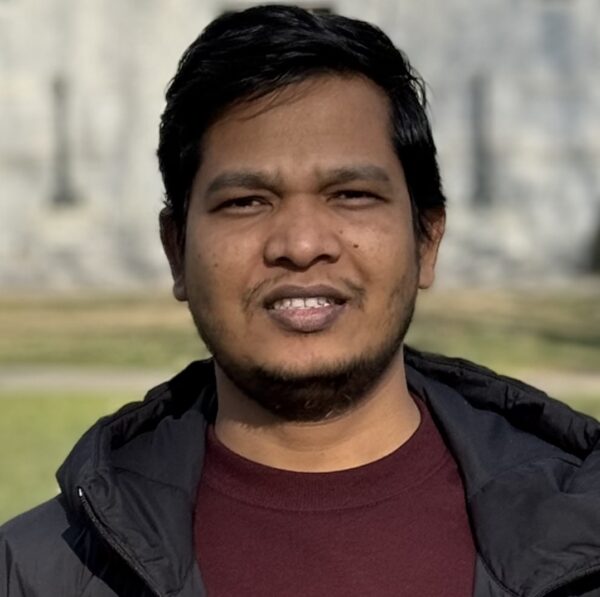
Kazal Barua ’27, a Harvard Divinity School Master of Theological Studies student
Mittal Institute: Kazal, what were your goals with your student grant, and why did you pursue this project/location?
Kazal Barua: I carried out my student grant in Raozan and Rangunia, two upazilas (subdistricts) in the district of Chattogram (Chittagong), Bangladesh. The goal of my student grant was to examine the social welfare and economic initiatives of Shasana Rakkhit Bhikkhu, a Theravāda Buddhist monk in Bangladesh and the founder and chairman of the Buddhist Co-Operative Credit Union Limited (BCCUL). I sought to understand how he integrates Buddhist ethical principles into economic and community development, combining spiritual insight with organizational expertise, and how these principles are applied in practice through financial services and community-building efforts.
Mittal Institute: What was the most impactful part of this research project?
Kazal Barua: The most impactful aspect of my grant experience was visiting the BCCUL General Hospital in Pahartoli, Raozan, Chattogram, particularly because it is the first hospital ever founded by a Bangladeshi Buddhist, let alone by a Buddhist monk. As Shasana Rakkhit Bhikkhu noted, establishing a hospital had long been a dream of Buddhist social and religious organizations, but it did not materialize due to financial constraints and a lack of collective effort. By prioritizing this vision over many years, the BCCUL General Hospital has finally become a reality. The establishment of this hospital therefore reflects his exceptional commitment, perseverance, and long-term vision. He refers to it as a hospital of the Buddhists and by the Buddhists of Bangladesh, as it was built with contributions not only from direct members of BCCUL but also from many other supporters at home and abroad.
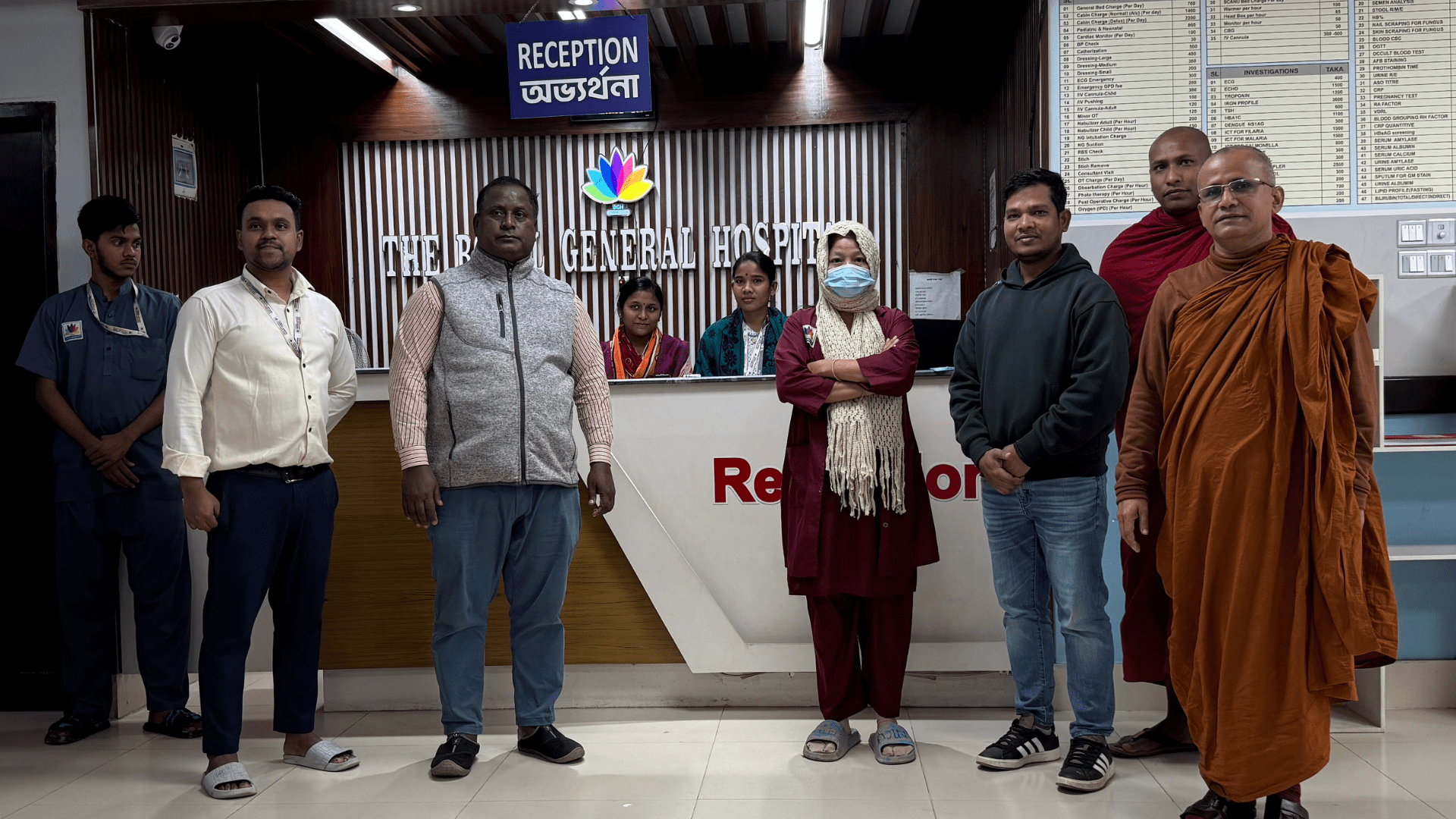
Kazal (third from right) stands in the hospital reception area with the founder, staff, and employees.
Establishing the hospital in a rural area rather than an urban center has had a significant impact. Despite its modest scale, it provides essential healthcare to people who cannot afford or easily access city hospitals, addressing challenges such as high costs, long travel times, and treatment delays. Notably, it is the only hospital outside the city along Kaptai Road to offer dialysis services. The hospital is inclusive and community-oriented, serving patients of all religions and employing a diverse staff. Shasana Rakkhit Bhikkhu expressed particular pride in providing care to the late Saṅgharāja Venerable Dr. Gyanasree Mahāthera during his final days and hopes the hospital will continue to support Buddhist monks who lack adequate care when ill.
Mittal Institute: Bring us into your daily life during your grant – what was it like, and who were you meeting?
Kazal Barua: My grant period was highly rewarding. I visited BCCUL’s main office in Kadalpur, Raozan, and several affiliated initiatives, including the roadside tree plantation, the Hollow Block Factory in Rangunia, and the Urvashi Beauty Care and Academy. At the main office, I met Shasana Rakkhit Bhikkhu, founder and chairman of BCCUL, and discussed the organization’s history, activities, and contributions to community development and communal harmony. Sharing lunch with him and the resident monks, children, and novices was especially meaningful, as it reminded me of my own time there as a novice.
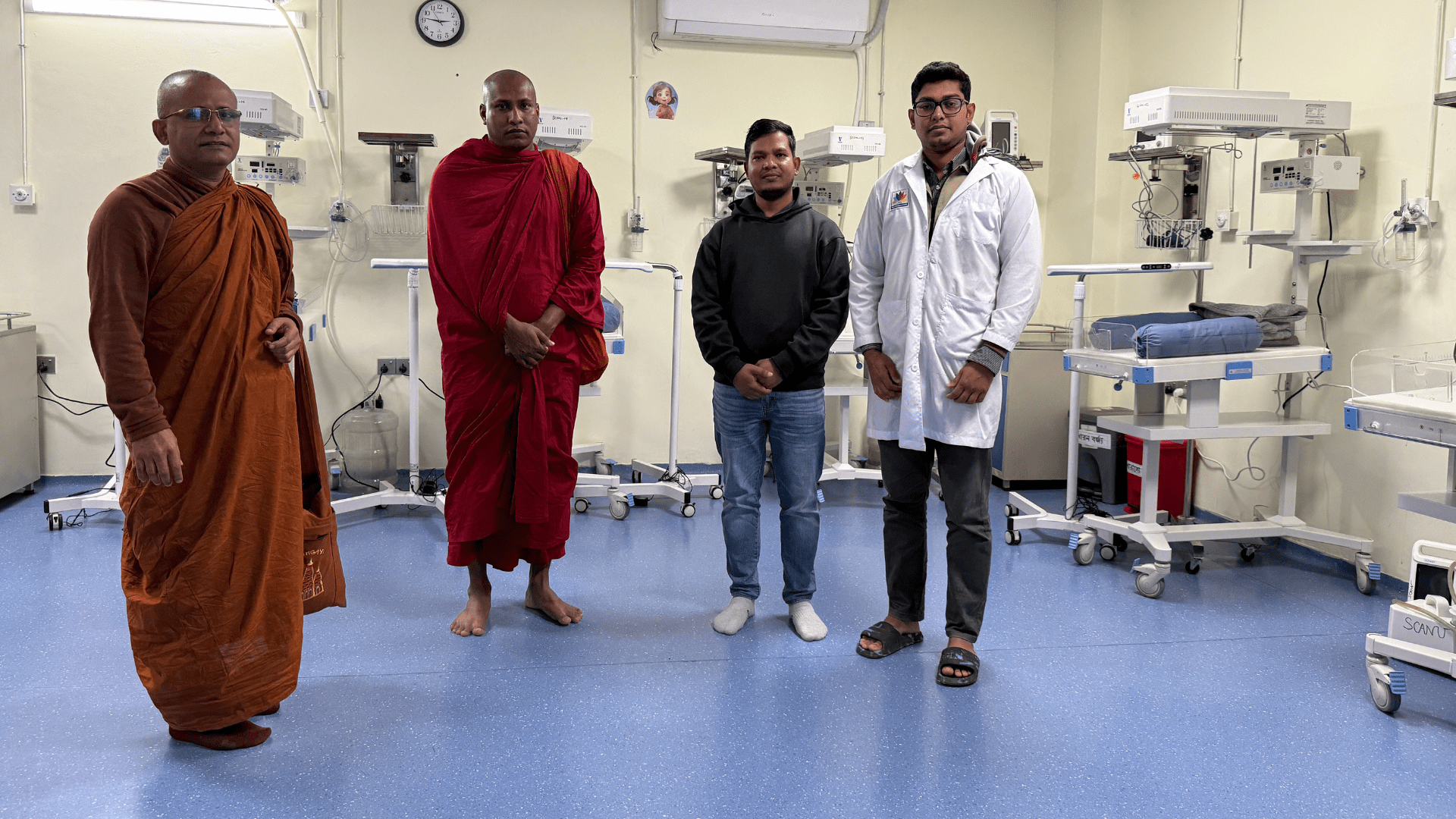
Kazal (second from right) is in the laboratory with a staff member.
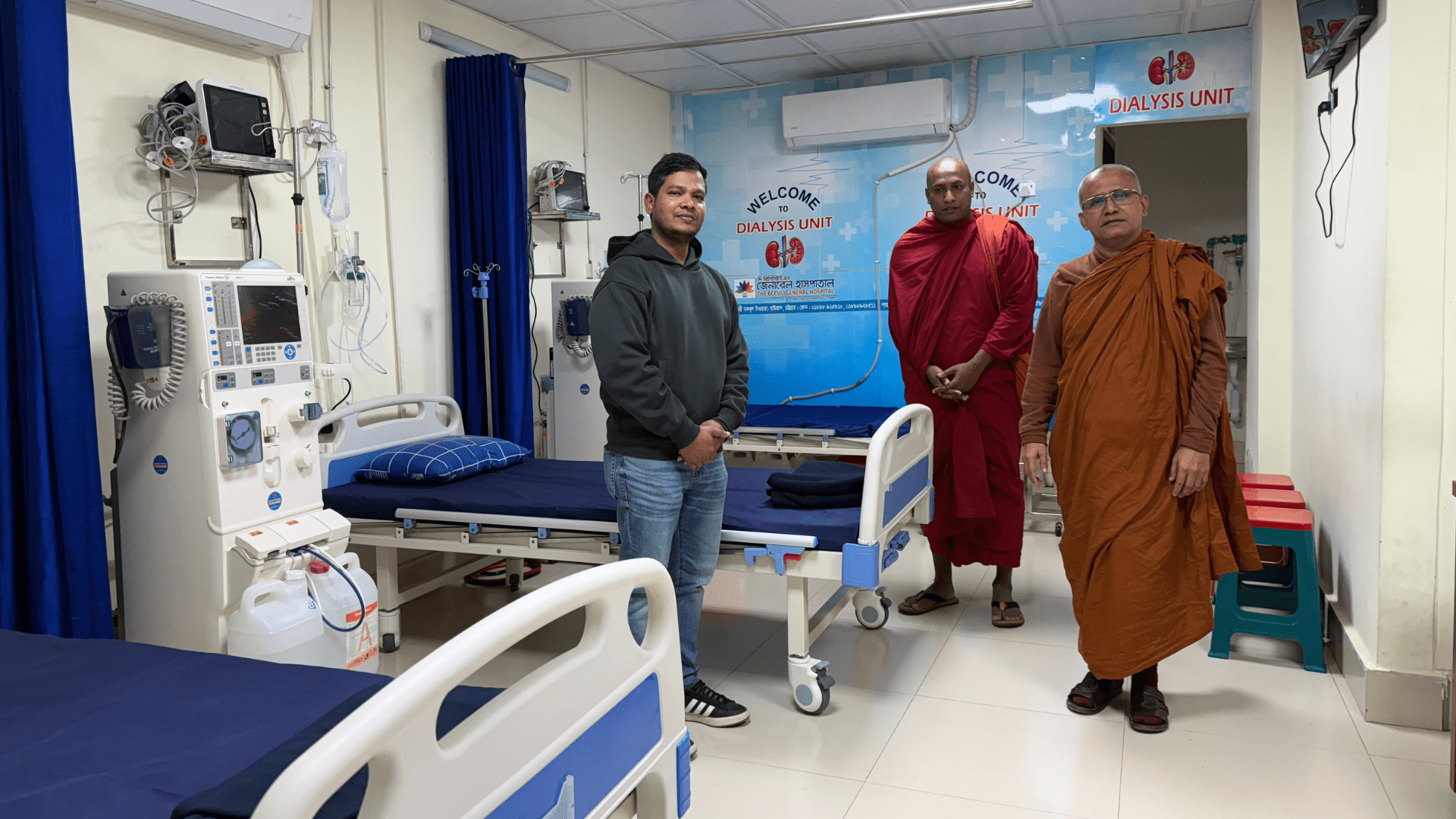
Inside the hospital’s dialysis room.
I observed BCCUL’s significant growth since 1997, from a small office with 20 members to a large organization with multiple offices and nearly 29,000 members. I met several staff members, many of whom are students supported through BCCUL’s education aid scheme, enabling them to work while continuing their studies. The manager described BCCUL as a “family bank,” offering low-interest, flexible loans and continuous service, even during emergencies such as the COVID-19 pandemic.
I also visited BCCUL’s environmental initiatives, including extensive tree plantations and the Hollow Block Factory, which produces eco-friendly construction materials as a sustainable alternative to traditional bricks. Shasana Rakkhit Bhikkhu contrasted traditional brick factories with BCCUL’s hollow block production, noting that conventional brick-making damages hills and farmland, causes deforestation, and generates severe air pollution. Hollow blocks, by contrast, are a sustainable alternative. Made from sand, stone dust, cement, and additives, they are about 40% lighter than traditional bricks, provide thermal insulation, are earthquake-resistant, and cost-effective.
Because hollow blocks do not require firing, they reduce carbon emissions by about 20%, protect fertile agricultural land, and lower construction costs by roughly 30% through faster building and reduced labor and mortar use. Their insulating properties improve energy efficiency, while production relies partly on solar-powered electricity. Overall, hollow blocks offer an eco-friendly and durable solution for sustainable construction.
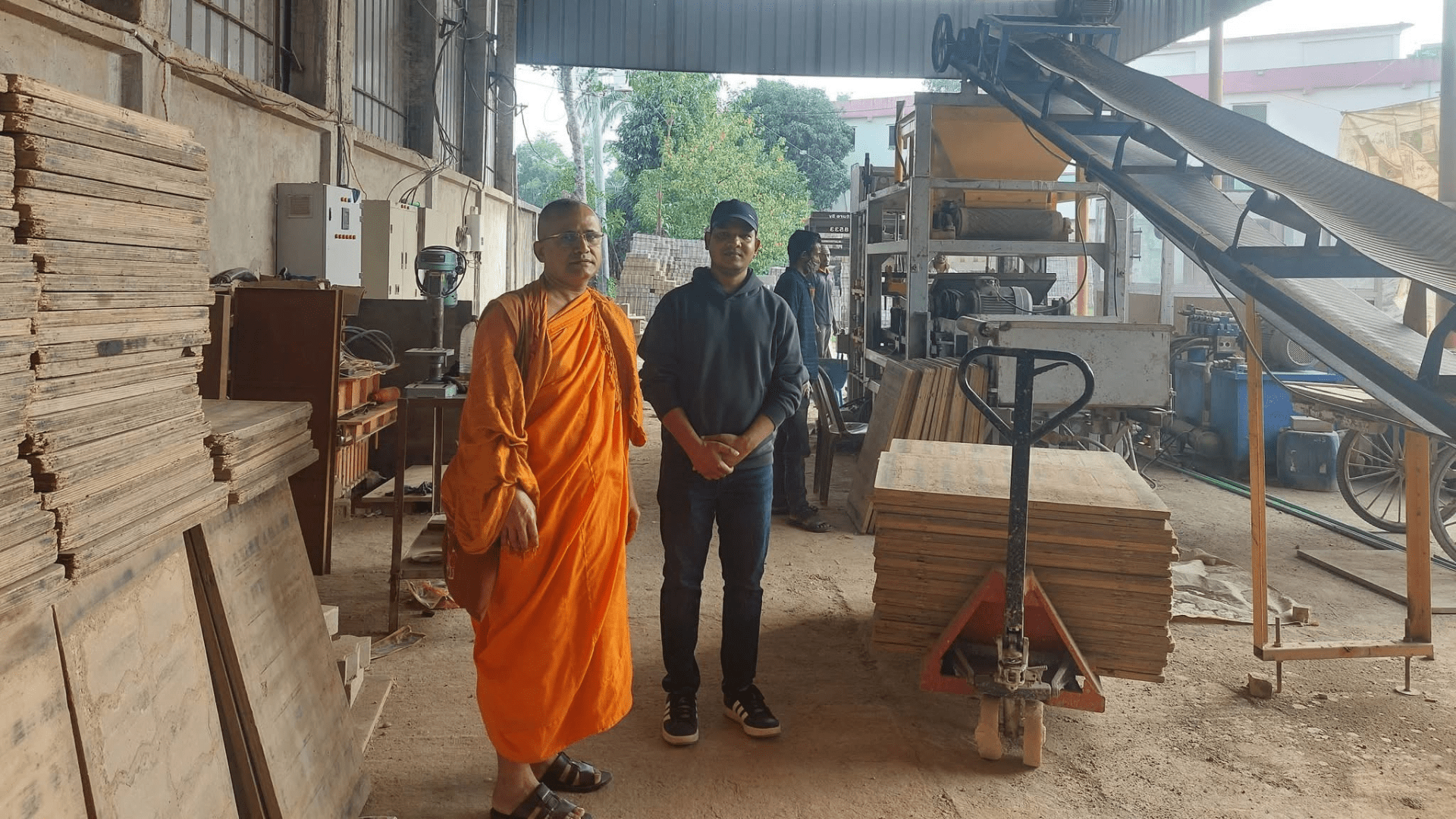
Kazal visits the hollow block factory with Shasana Rakkhit Bhikkhu.
In addition, I visited the Urvashi Beauty Care and Academy and learned about BCCUL’s efforts to promote women’s economic empowerment through vocational training. Visiting the Urvashi Beauty Care and Academy was significant because such an initiative is unusual in a Theravāda Buddhist context. Shasana Rakkhit Bhikkhu explained that the project was inspired by his observations in France and aimed to address the limited economic opportunities and material vulnerability of Bangladeshi Buddhist women. By supporting the academy through institutional structures, he enabled women’s vocational training and financial independence while respecting monastic discipline.
BCCUL also runs the Raktajoba project, a women-led initiative in Kadalpur where participants produce 100% organic food items at home, with BCCUL supporting marketing and sales. The project has gained recognition, including participation in a recent business fair.
Mittal Institute: How will this experience help you to reach your academic goals?
Kazal Barua: Part of my research interest lies in understanding the role of Bangladeshi Buddhist community, particularly the leading Buddhist monks in community development. In a Muslim majority country like Bangladesh, Buddhists have always felt marginalized. Yet, over the decades, Bangladeshi Buddhist monks have long played an active and influential role in social welfare, supporting not only their own communities but also the broader national landscape during pivotal moments in the country’s history.
I have been working on this project for an extended period. This fieldwork contributes directly to my long-term research by allowing me to observe how Shasana Rakkhit Bhikkhu integrates Theravāda monastic leadership with modern financial and community development. As a student of Buddhist Studies, the experience deepened my understanding of Buddhism as a lived, socially engaged tradition rather than only a textual or philosophical one.
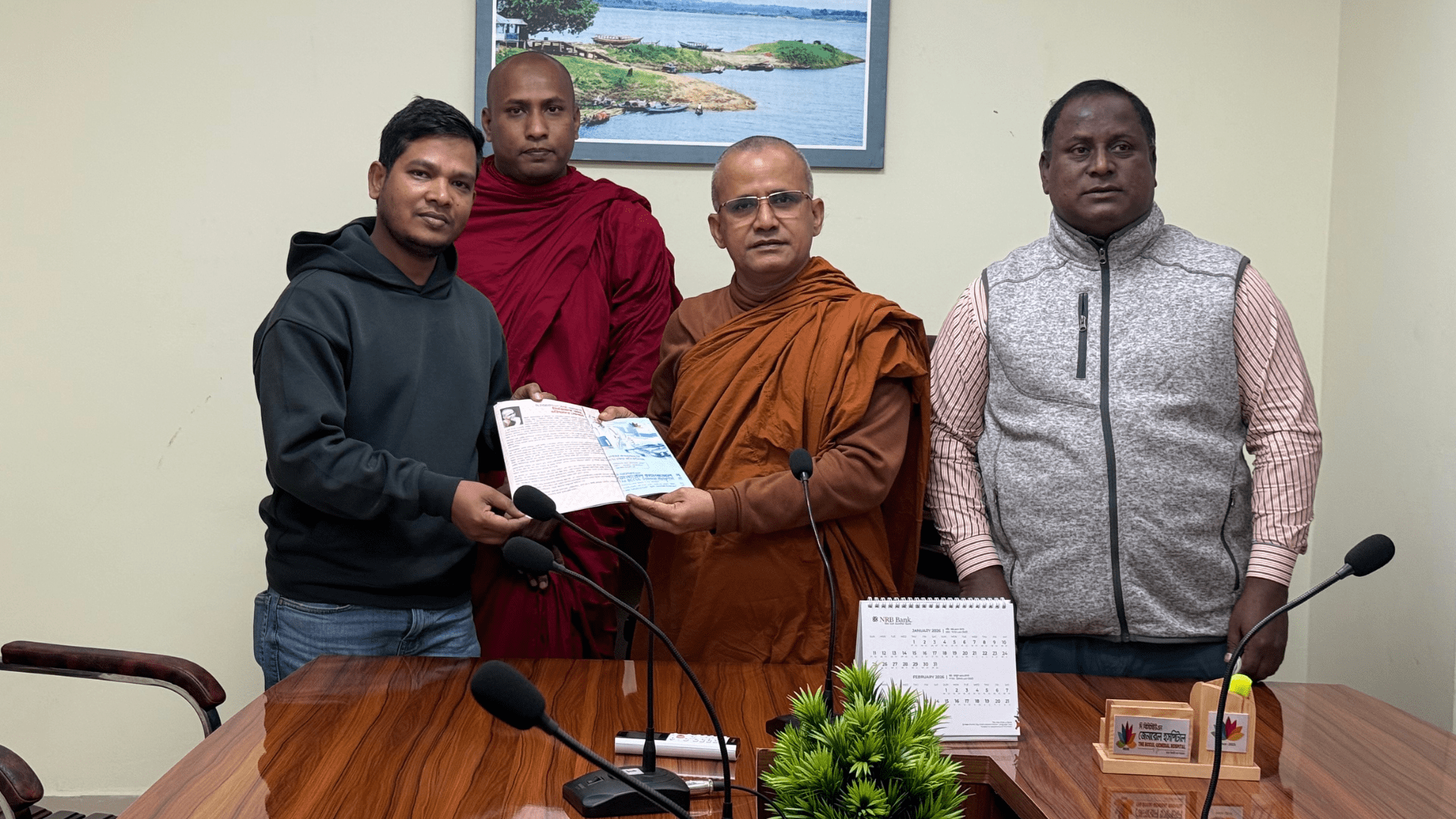
Shasana Rakkhit Bhikkhu presents Kazal with a document describing the hospital.
His influence extends beyond Buddhist communities, as many clients of BCCUL and the hospital are Hindu and Muslim. To address potential misunderstandings and tensions, he helped establish similar credit unions for Muslim and Hindu communities, each managed independently. He also emphasized how shared institutions – such as schools, clinics, hospitals, and credit unions – create regular intercommunal interaction, fostering trust and mutual respect. I observed this firsthand, including Muslim students and families respectfully greeting monks, a change from earlier periods of tension.
In a national context marked by communal violence, Kadalpur stood out: local Muslim youths guarded the temple and related institutions. Reflecting on the 2012 attacks on Buddhist temples, Shasana Rakkhit Bhikkhu stressed that strong relationships with neighboring communities can prevent violence. Accordingly, he prioritizes building inclusive social institutions over exclusively religious spaces, viewing them as shared sites that strengthen intercommunal understanding and long-term harmony.
Mittal Institute: What was the most memorable moment for you?
Kazal Barua: The most memorable moment from my time on the student grant was sharing a meal in the dining hall. As I sat among young boys, novices, and monks during lunch, I was overwhelmed by memories of my own past. The complex includes the Pyarimohon Sumanatissa Dusto Onathalay (an orphanage), a Bhikkhu Training and Meditation Center, and the Compassion Buddhist Institute (CBI), an English-medium Buddhist education center.
I had lived in the orphanage as a child and was later ordained as a novice to participate in meditation training at the Bhikkhu Training and Meditation Center, where I spent three formative years observing monastic discipline, attending retreats, memorizing suttas, and participating in Pali recitation tests and sutta competitions. Those years laid the foundation of my Buddhist education.
What made this moment especially powerful was the realization of how my journey had come full circle. After many years of university study, I had returned to Compassion Buddhist Institute, this time as a teacher, offering courses such as Early Buddhism, Social Dimension of Buddhism, Geographical Expansion of Buddhism, and English.
That single moment in the dining hall, remembering who I once was while witnessing who I had become, crystallized the significance of the student grant experience. It affirmed my academic path in Buddhist studies and strengthened my commitment to engaged, socially relevant Buddhist scholarship, which ultimately led me to pursue advanced studies at the International Buddhist College in Thailand and now at Harvard.
☆ The views represented herein are those of the panelists and do not necessarily reflect the views of the Mittal Institute, its staff, or its steering committee.