The Mittal Institute is pleased to welcome six new members to its Steering Committee. These individuals bring a wide range of expertise, perspectives, and leadership experience that will strengthen the Institute’s mission and strategic direction. We are grateful to our new members — Feyaad Allie, Swayam Bagaria, David Jones, Gautam Nair, Subir Sachdev, and Martha Ann Selby — for their willingness to serve and contribute their time and insight. Read on to learn more about them and their research expertise.
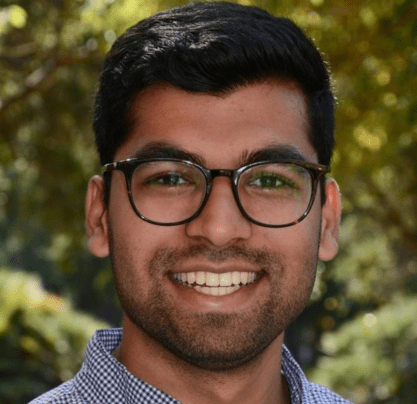 Feyaad Allie
Assistant Professor of Government, Harvard University Department of Government
Feyaad Allie is an Assistant Professor in the Department of Government. His research centers on democracy, identity, and intergroup relations with a regional focus in South Asia, primarily India. Feyaad studies the challenges to creating an inclusive political system in multi-ethnic societies. He is working on a book project based on his doctoral dissertation that examines the causes and consequences of political representation in India. In other work, he focuses on the drivers of majority-minority tensions and political party responses to majoritarianism. Feyaad’s research is mixed-methods in nature, drawing on administrative data, original surveys, and in-depth elite and voter interviews during fieldwork.
He has received several awards for his research, including the Gabriel A. Almond Award (2024) for the best dissertation in comparative politics and the Sage Best Paper Award (2023) from the APSA Comparative Politics section. Feyaad received his Ph.D. in Political Science from Stanford University and a BA in Government from Dartmouth College.
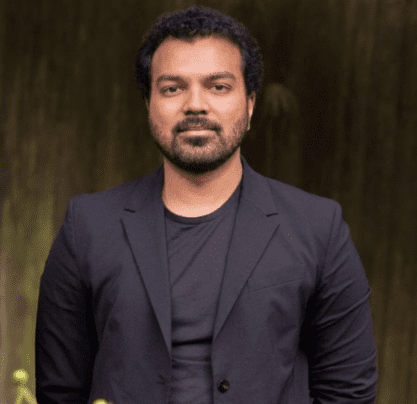 Swayam Bagaria
Assistant Professor of Hindu Studies, Harvard Divinity School
Swayam Bagaria joined Harvard Divinity School in the fall of 2022. Prior to coming to HDS, he was a postdoctoral fellow at the University of Virginia in the College Fellows Program. He received his PhD in anthropology from Johns Hopkins University in 2020.
His research, funded by several external and internal grants and fellowships, explores the dynamics of multidimensional and compositional belief networks, especially spiritual and religious beliefs, in contemporary societies with a focus on India. He pursues his research through four primary avenues: 1) the broad philosophical, cognitive, and cultural dimensions of the stability and revision of such belief systems; 2) the psychosocial ramifications that they have for the design of mental health treatment and general wellbeing and flourishing programs and services; 3) the institutional recognition and regulation of such beliefs for the purpose of public order and pluralism, and a little further afield, 4) a project on the science of altered states of consciousness and its use in practices of cognitive augmentation.
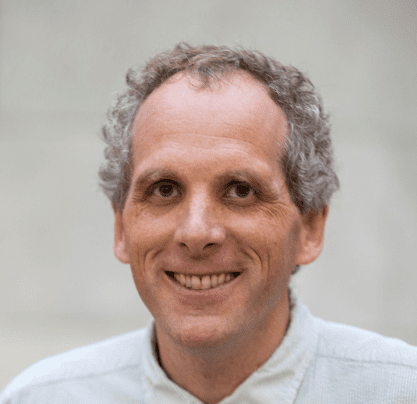 David Jones
A. Bernard Ackerman Professor of Culture of Medicine, Harvard Medical School
David Jones completed his AB degree at Harvard College in 1993 (History and Science), and then pursued a PhD in History of Science at Harvard University and an MD at Harvard Medical School, receiving both in 2001. After an internship in pediatrics at Children’s Hospital and Boston Medical Center, he trained as a psychiatrist at Massachusetts General Hospital and McLean Hospital, and then worked for two years as a staff psychiatrist in the Psychiatric Emergency Service at Cambridge Hospital. He joined the faculty at MIT in 2005 as an assistant professor of the history and culture of science and technology. From 2004 to 2008, Professor Jones directed the Center for the Study of Diversity in Science, Technology, and Medicine at MIT, organizing a successful series of conferences about race, science, and technology. In 2009, he was appointed as a MacVicar Faculty Fellow, MIT’s highest honor for faculty who have made sustained contributions to undergraduate education. He also taught as a lecturer in the Department of Global Health and Social Medicine at Harvard Medical School, where he was awarded the 2010 Donald O’Hara Faculty Prize for Excellence in Teaching. In 2011, he left MIT to join the Harvard faculty full-time as the inaugural A. Bernard Ackerman Professor of the Culture of Medicine, a joint position between the Faculty of Arts and Sciences and the Faculty of Medicine. The Ackerman Program at Harvard University fosters collaborations in the medical humanities and social sciences across the two campuses. At Harvard, he received the 2018 Everett Mendelsohn Excellence in Mentoring Award from the Graduate School of Arts and Sciences; in 2020 he was appointed as a Harvard College Professor, in honor of his undergraduate teaching. He also directs the Arts and Humanities Initiative at Harvard Medical School.
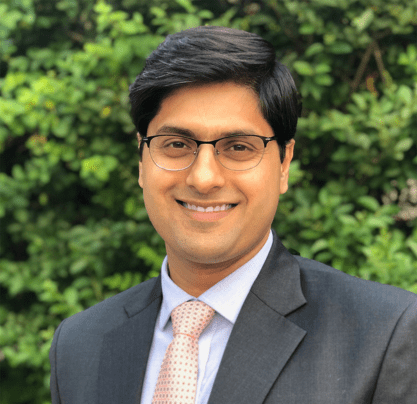 Gautam Nair
Assistant Professor of Public Policy, Harvard Kennedy School
Gautam Nair is Assistant Professor of Public Policy at Harvard University’s John F. Kennedy School of Government. He is a scholar of inequality, distribution, and democracy, with a focus on the politics of social policy, state-business relations, and South Asia. He received his PhD in political science with distinction in from Yale University.
His book manuscript, titled Retail State: The Politics of Consumption Welfare in India and Beyond, develops a new theory of redistribution and social policy. Other ongoing work studies the representation of consumer interests in public policy, the political economy of reparations and group-targeted transfers, the politics of finance, and democracy and development in contemporary India. His papers are published or accepted in the Journal of Politics, International Organization, Comparative Political Studies, and Perspectives on Politics, among other journals. This research has been supported by competitive grants from the National Science Foundation (NSF), Time-Sharing Experiments in the Social Sciences (TESS), and several academic centers at Harvard.
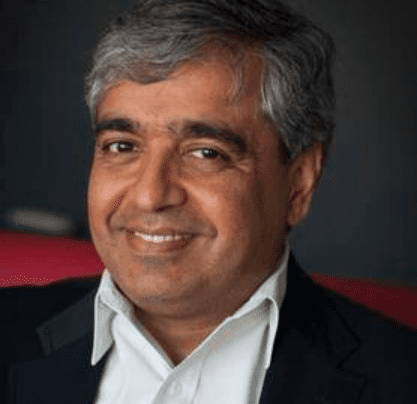 Subir Sachdev
Herchel Smith Professor of Physics, Harvard University Department of Physics
Subir Sachdev studies the consequences of quantum entanglement on the macroscopic properties of natural systems. He has made extensive contributions to the description of the diverse varieties of states of quantum matter, and of their behavior near quantum phase transitions. Many of these contributions have been linked to experiments, especially to the rich phase diagrams of the copper-oxide high temperature superconductors. Sachdev’s research has also exposed remarkable connections between the nature of multi-particle quantum entanglement in certain laboratory materials, and the quantum entanglement in astrophysical black holes, and these connections have led to new insights on the entropy and radiation of black holes.
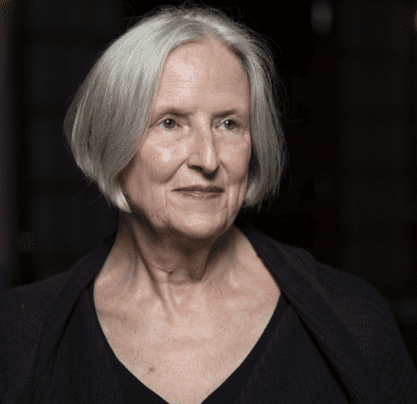 Martha Ann Selby
Sangam Professor of South Asian Studies and Comparative Literature; Chair, Harvard University Department of South Asian Studies
Martha Ann Selby is the Sangam Professor of South Asian Studies. Previously, she was a professor of South Asian Studies in the Department of Asian Studies at the University of Texas at Austin. Her interests include representations of women, birth, and disease in classical Indian medicine, as well as Sanskrit poetry and poetics, Prakrit and Old Tamil poetry, and Sanskrit medical literature. She is the author of Grow Long, Blessed Night: Love Poems from Classical India and co-editor of Tamil Geographies: Cultural Constructions of Space and Place in South India.