
How can information be delivered most persuasively in developing countries? While research shows that religious leaders can strongly influence behavior, it remains unclear how they compare to secular authorities with greater subject expertise. With support from a Mittal Institute student grant, Adil Ahsan, a Ph.D. candidate in Public Policy at Harvard, spent the summer in Lahore, Pakistan studying whether handwashing messages are more effective when delivered by religious leaders or by secular officials, exploring how trust in institutions shapes public health interventions. We spoke with Adil for more on his project.

Adil Ahsan, Ph.D. candidate in Public Policy at Harvard
Mittal Institute: Adil, what were your goals with your student grant, and why did you pursue this location?
Adil Ahsan: Low trust in secular state institutions can limit the effectiveness of informational interventions among religious populations. Utilizing the context of Punjab, Pakistan, I hoped to contrast the effectiveness of messaging by religious vs secular leaders in the context of handwashing. I evaluated the effects on observable hand hygiene (measured by swabbing hands and doing an in-field ATP test), downstream health and labor market outcomes, and allocations in lab-in-the-field games.
Recent work has suggested the potential for religious leaders to be utilized for information dissemination, but research directly comparing the efficacy of religious with secular leaders is lacking. Moreover, what, if any, are the unintended consequences of utilizing religious leaders as frontline agents tasked with achieving state goals?
I chose Lahore because that is where I grew up and it was a context that I was intimately familiar with. But Lahore was used as the study location only for the pilot – the full roll-out will be more generalizable as it will involve religious and health leaders from all across the Punjab.
I chose this topic because it is part of my wider research agenda in which I explore the role of religious leaders and information in developing countries. In another project, I work with the Punjab Auqaf Department to randomize sermon content in 309 mosques and evaluate impacts on mosque-goers’ prosocial beliefs and behavior. But while my previous study found large impacts of information delivered by religious leaders, it left unaddressed the policy counterfactual: namely, how would other secular leaders have fared in delivering the same information especially if it is a domain in which secular leaders are experts and religious leaders are not. Moreover, it didn’t evaluate the mechanisms driving religious leaders’ influence nor did it explore whether there could be any unintended consequences of receiving information from religious leaders (that the literature on separating Church from State warns us about but does not provide empirical evidence for), all of which I hoped to explore with this project on handwashing.
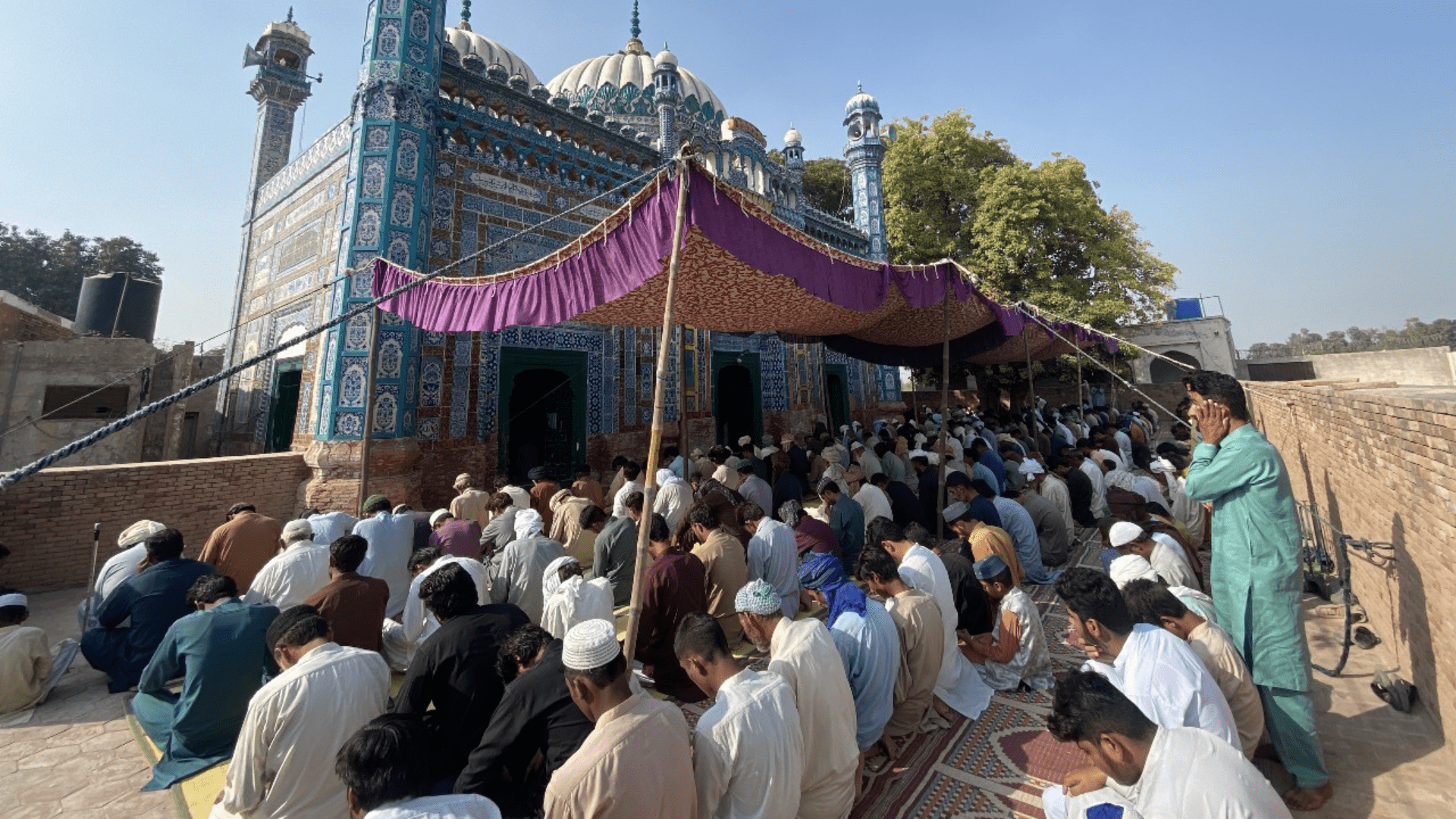
A religious gathering in Lahore | Adil Ahsan.
Mittal Institute: What was the most impactful part of this research project?
Adil Ahsan: What was most impactful were the research insights I gained that will help inform the full roll-out of the RCT, which will be launched in the summer of 2026 and will feature hundreds of imams and health workers from all over Punjab as well as a planned partnership with the Ministry of Health. An RCT (Randomized Control Trial) is the gold standard for causal evidence in the social sciences and allows us to separate out causation from correlation. By randomizing thousands of couples to health information from either their imam or health worker (or no information at all), I can isolate the impact of receiving this information from a given source keeping all other factors fixed. For instance, I learned that imams/health workers, when asked to address couples, will talk primarily to men since men and women self-segregate when in a group setting. To address this, I had the leaders deliver the information twice, once to men and once to women which increased the effectiveness of the treatments for women.
Another goal of this project was to evaluate whether there are any unintended negative consequences from having religious leaders deliver health information. I found that respondents who received information from imams were more likely to prefer imams for secular health information in the future as well, a dimension that I hope to flesh out more fully during the full RCT roll-out.
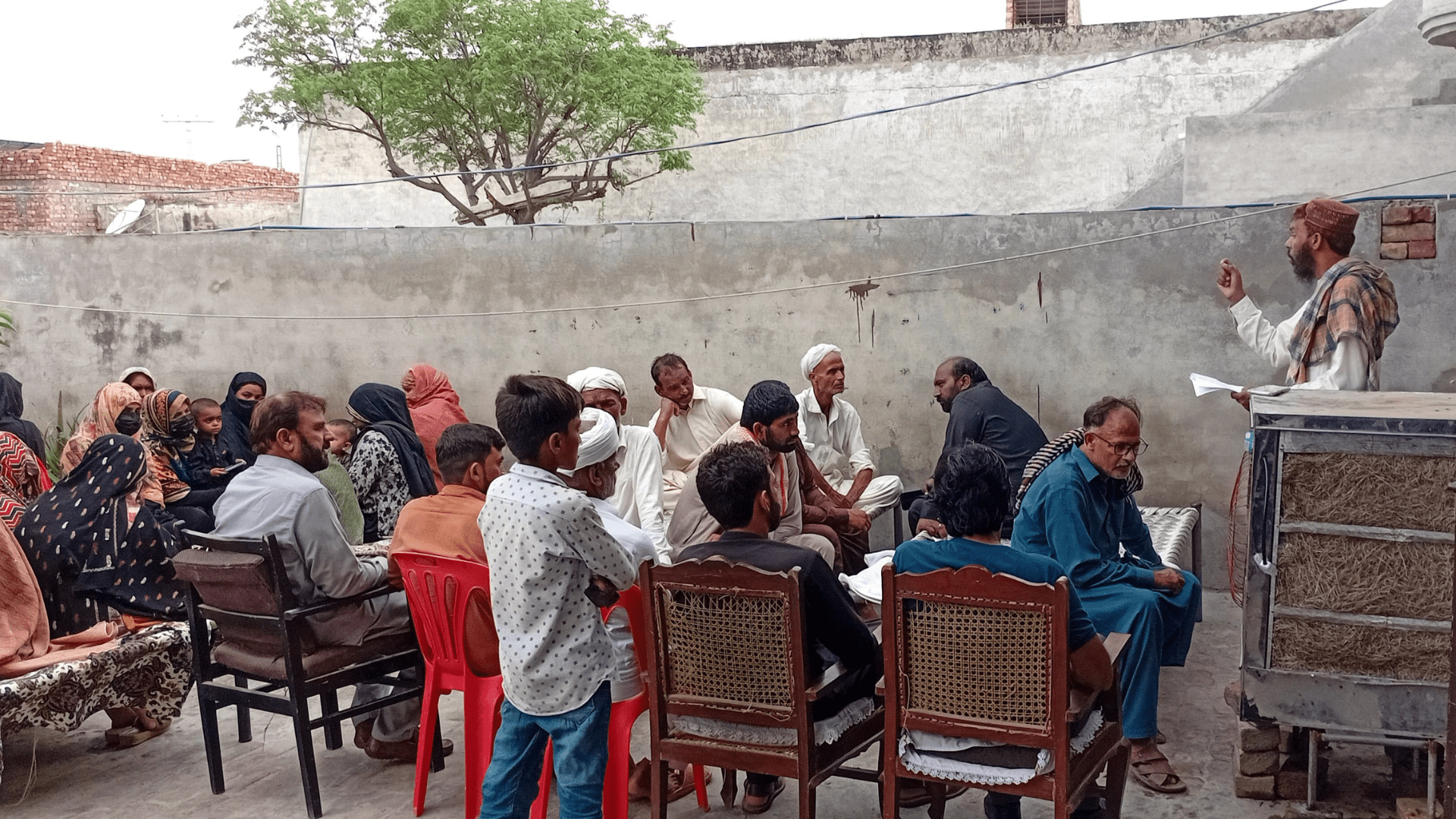
Interventions with couples | Adil Ahsan.
Mittal Institute: Bring us into your daily life during your grant – what was it like, and who were you meeting?
Adil Ahsan: Most of my time was spent designing and improving surveys, tweaking the interventions, training enumerators for fieldwork, and performing high frequency data quality checks to ensure that the data being collected was of high quality.
I trained the enumerators who then were responsible for organizing the meetings and personally sat in on many meetings to see what the leaders were actually saying, who they were talking to, and the ways in which they were going off script. I would then also talk to respondents to see how they were responding to the meetings. Such qualitative on-the-ground work offers insights that are hard to gauge merely by looking at data and often can provide clues as to the mechanisms that may be driving effects.
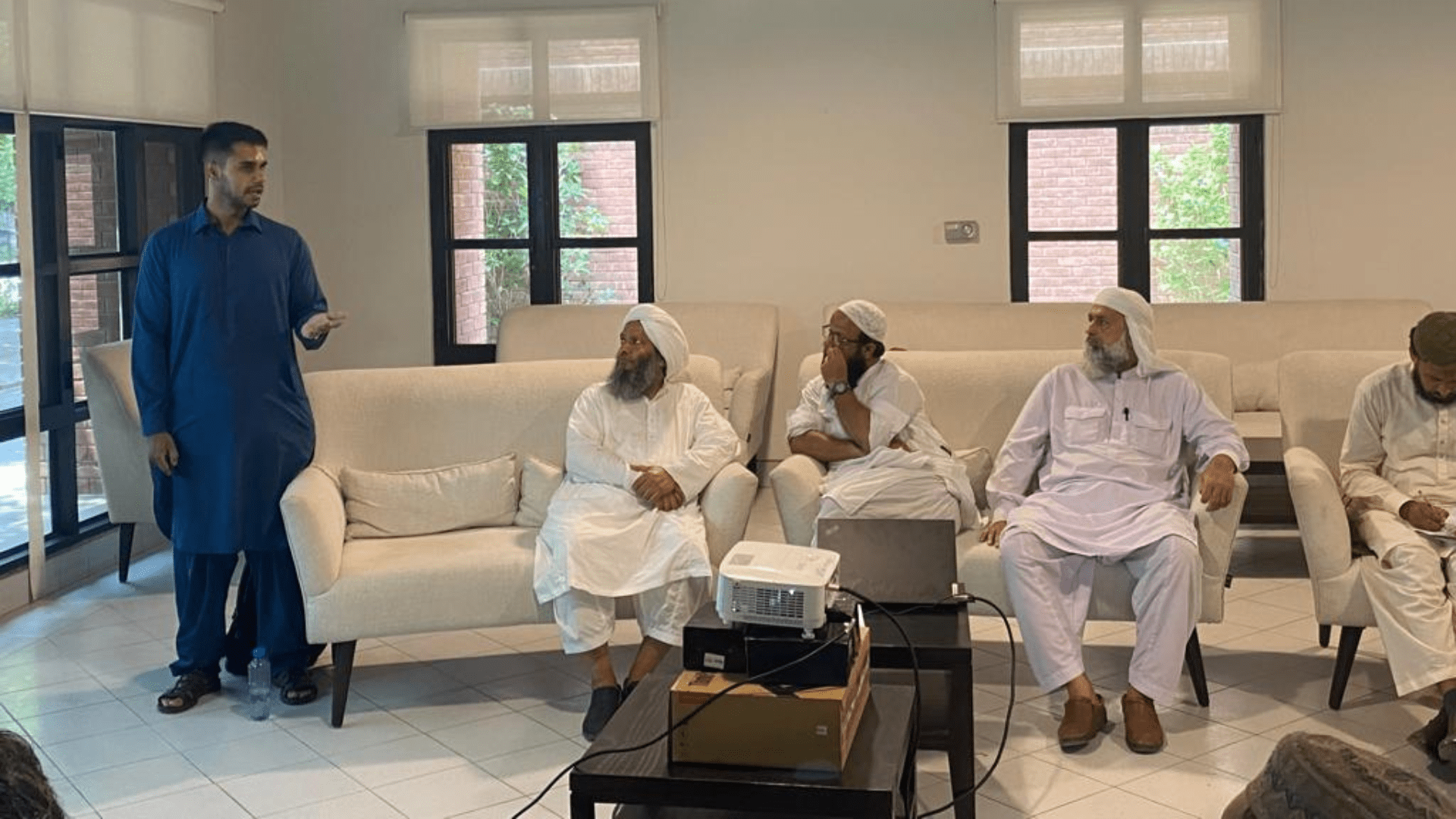
Adil Ahsan (left) trains and explains research goals to study imams.
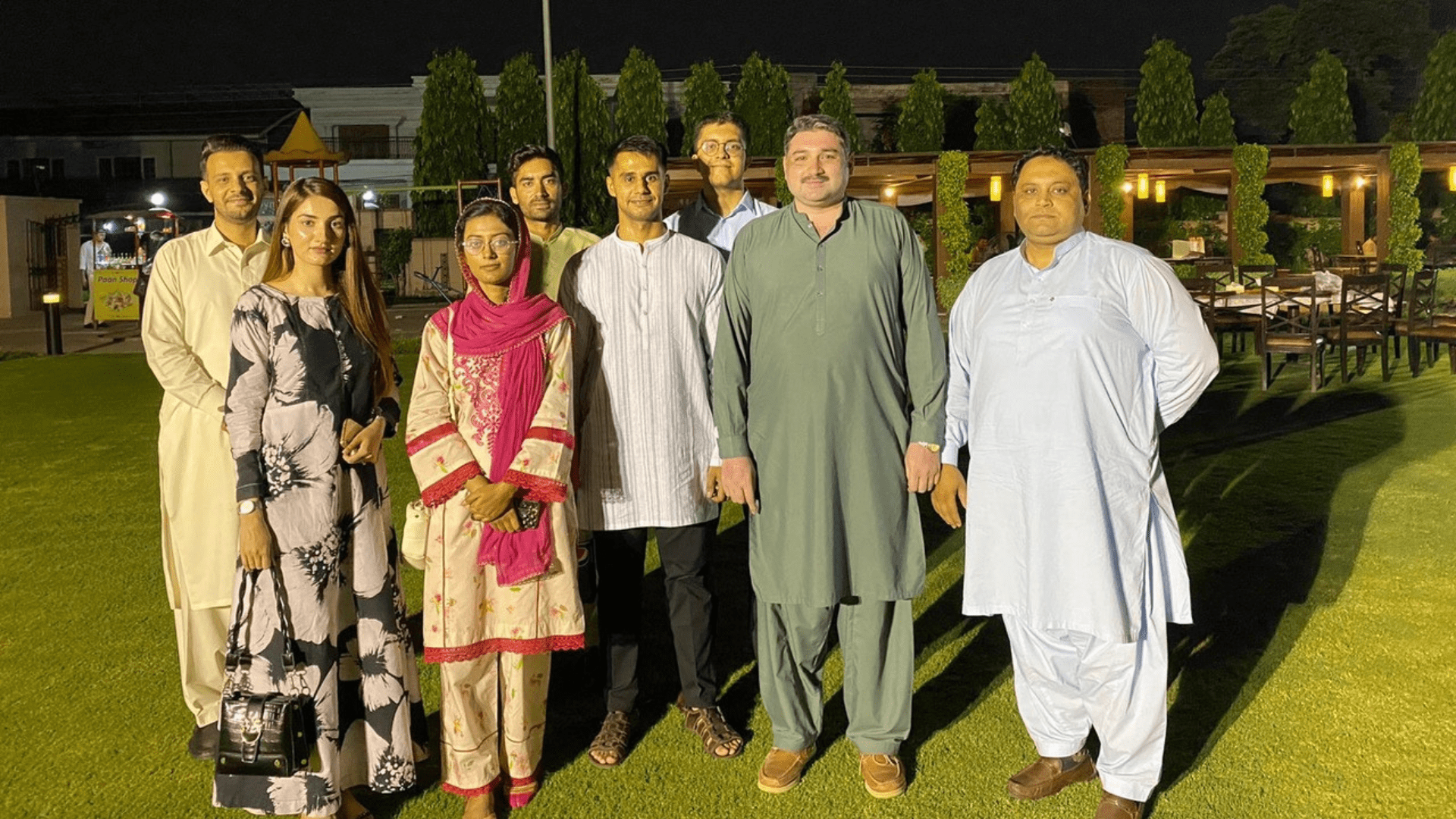
Adil Ahsan (center) after a training with study enumerators.
Mittal Institute: How will this experience help you to reach your academic goals?
Adil Ahsan: The pilot allowed me to improve my surveys and interventions and gave me estimates for variances and intracluster correlations for key variables that are essential for power calculations I need to perform while finalizing the design for the full RCT. Results from the full roll-out will be part of an article in a dissertation that I ultimately hope to publish.
Mittal Institute: What was the most memorable moment for you?
Adil Ahsan: Prior to going in the field, I wrote a theoretical economic model which predicted that exposure to information by a religious leader in the past may make that leader the preferred choice for information in the future, even for secular topics which the religious leader has no expertise in. Finding this prediction borne out in the empirical data was exciting and is a novel contribution to the literature.
The fact that my interventions were also producing very large empirically detectable effects on the hand hygiene of couples was also heartening to see.
☆ The views represented herein are those of the interviewee and do not necessarily reflect the views of the Mittal Institute, its staff, or its steering committee.