
Last month the Mittal Institute hosted the event, Between Comfort and Heat Stress: The Hidden Burden of Everyday Heat, bringing together scholars from building science, urban design, and environmental health to discuss one of climate change’s most pressing yet often overlooked challenges: extreme heat. Moderated by architect and urbanist Rahul Mehrotra, Professor of Urban Design and Planning and the John T. Dunlop Professor in Housing and Urbanization, the event featured a presentation by building science expert Rajan Rawal, Professor at CEPT University and Senior Advisor at the Center for Advanced Research in Building Science and Energy (CARBSE), on how cities, buildings, and policies must evolve to address rising temperatures. Prof. Rawal was joined in conversation by Gary Adamkiewicz, Associate Professor of Environmental Health and Exposure Disparities at Harvard T.H. Chan School of Public Health.
Rawal emphasized that heat is frequently underestimated compared to more visible climate disasters. Yet its effects are deeply felt in everyday life, especially in rapidly urbanizing regions. “Heat is generally not very visible in the media,” he noted, “but it is very much visible in daily life.” The discussion emphasized that heat is now deeply embedded in everyday urban life, affecting work, housing, and health across cities in India and globally.
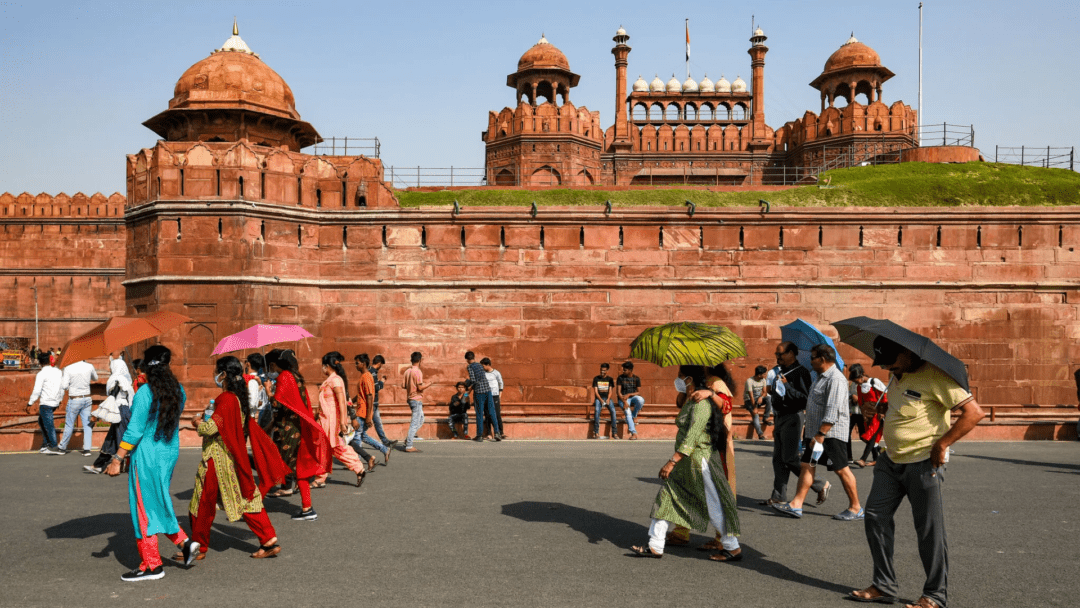
A major theme of the talk was how traditional architecture once responded closely to the erstwhile climate. Historic buildings incorporated passive design strategies to regulate indoor comfort. Simply mimicking past design strategies will not provide a solution to contemporary challenges. However, modern construction has increasingly shifted toward standardized designs that ignore local environmental conditions at the building, neighbourhood, and city scales. This homogenization of the built environment often ignores local climates, and the shift toward standardized buildings and mechanical cooling has increased energy use and urban heat vulnerability.
The conversation also highlighted the limits of relying solely on technological solutions such as air conditioning or “green” certifications. These approaches can create “a false sense of accomplishment” if they fail to address broader environmental conditions such as urban density, vegetation loss, and microclimates.
Another important insight was the distinction between thermal comfort and heat stress. Even when people feel comfortable indoors, humidity and other factors may still create dangerous physiological conditions. Rapid climate shifts are also shrinking seasonal transitions—meaning temperature increases that once unfolded gradually now occur within weeks, placing additional strain on both people and infrastructure.
The discussion concluded by stressing that confronting extreme heat requires integrated solutions across architecture, urban planning, and public policy. As cities continue to warm, designing buildings and neighborhoods that respond to local climates will be essential for protecting health, reducing energy demand, and improving urban resilience. Finally, the discussants explained that we must recognize that the lived experience of communities who face the challenges of extreme heat must guide the development of interventions. We must work in tandem with these communities to address these challenges.
Read the Mittal Institute’s interview with Prof. Rajan Rawal.
☆ The views represented herein are those of the interview subjects and do not necessarily reflect the views of the Mittal Institute, its staff, or its steering committee.