
The Mittal Institute India office welcomes two new India Fellows, including Aditya Kumar Anand, a postdoctoral scholar being mentored by S. V. Subramanian, Professor of Population Health and Geography in the Department of Social and Behavioral Sciences at the Harvard T.H. Chan School of Public Health. Anand’s project titled “Integrated Climate-Responsive Multi-Hazard and Livelihood Resilience Assessment in the Bhilangana River Basin, Garhwal Himalayas,” examines how climate change is reshaping multi-hazard risks and livelihood vulnerability in the Bhilangana River Basin. The study analyzes long-term climate trends and extremes using downscaled CMIP6 models and maps landslides, flash floods, and cascading hazards through geospatial and machine-learning techniques.
In the interview below, Aditya shares insights into his research, his aspirations for the fellowship, and the broader significance of his work.
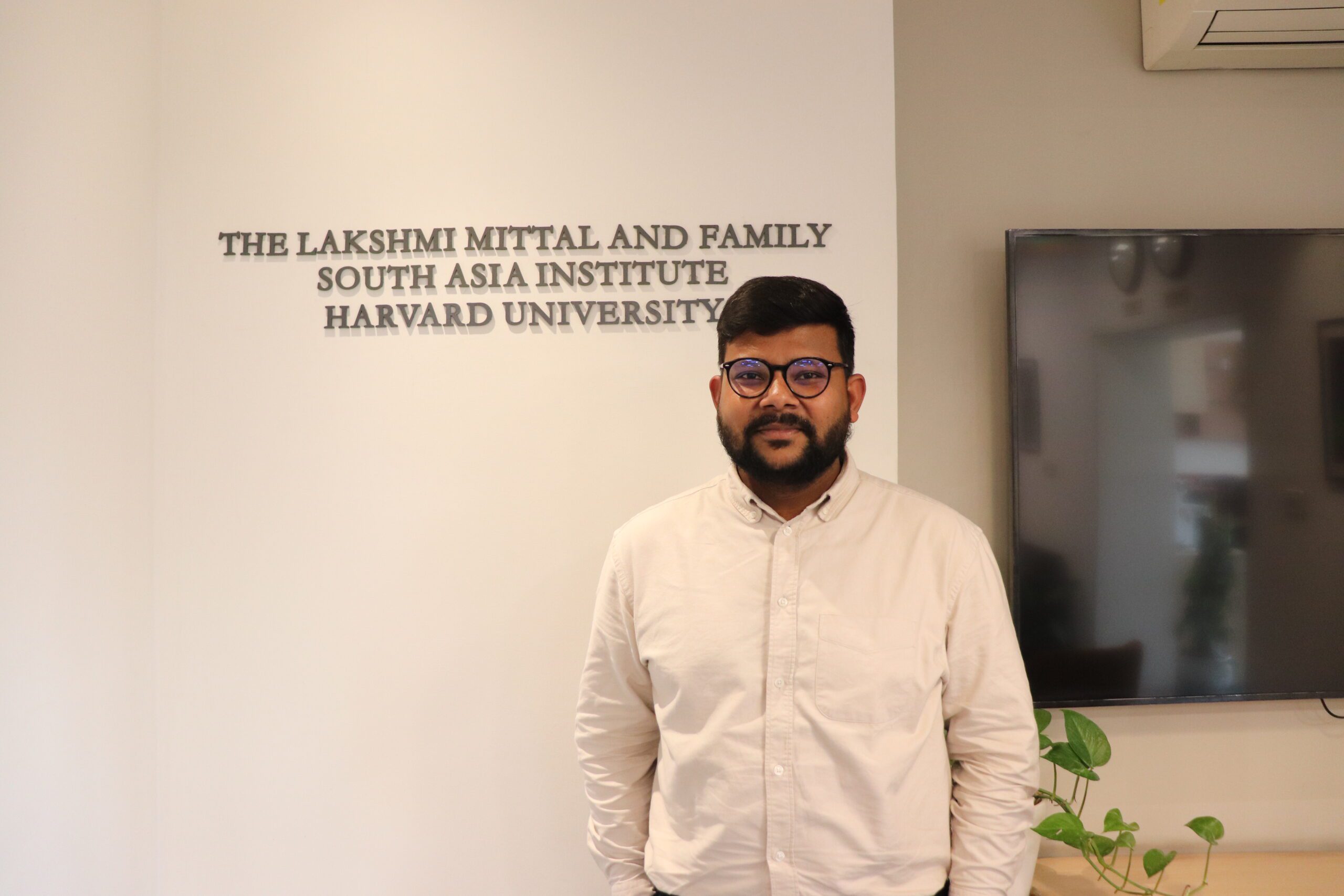
Mittal Institute: Welcome to your fellowship at the Mittal Institute, Aditya. Your project explores multi-hazard risks and livelihood vulnerability in the Bhilangana River Basin. What inspired you to pursue this research, and how has your own journey shaped the questions you are asking?
Aditya K. Anand: My interest in this research grew out of years of working in river basins where environmental hazards are not isolated events but interconnected processes that reshape both landscapes and livelihoods. In the Himalayan region, communities often experience landslides, flash floods, and extreme rainfall as cascading phenomena rather than separate disasters. Yet much of the scientific literature and policy planning continues to treat these hazards independently. The Bhilangana River Basin in the Garhwal Himalayas represents a striking example of this complexity. The region is ecologically fragile and increasingly affected by
climate-driven extremes, but it is also home to communities whose livelihoods are deeply tied to the landscape. This intersection of environmental processes and human vulnerability inspired the central question of my project: how do changing climate patterns reshape hazard dynamics and, in turn, affect livelihood resilience in mountain regions? My academic journey in environmental hazards and river basin studies gradually pushed me toward more integrative approaches. I became interested not only in mapping risks but also in understanding how people adapt to them. That curiosity eventually shaped this project, which attempts to bridge climate change, geospatial modeling, and community-based adaptation strategies.
Mittal Institute: Your work integrates climate trends with geospatial and machine-learning methods to map hazards. How do you see these technical approaches contributing to local adaptation strategies and decision-making at the community level?
Aditya K. Anand: In Himalayan mountain areas, decisions are hindered by disconnected risk information. Although hazard maps, climate projections, and socioeconomic studies are available, they are seldom integrated. My research aims to combine these data layers. Using downscaled CMIP6 climate models, the project analyzes long-term changes in temperature and precipitation extremes under different climate scenarios. These climatic signals are then connected with spatial hazard mapping of landslides, flash floods, and erosion using geospatial analysis and machine-learning techniques. But the technical tools are only one part of the process. What matters equally is how these insights are translated into forms that communities and policymakers can use. By integrating hazard maps with a Livelihood Vulnerability Index and participatory assessments, we can identify areas where environmental risk intersects with social vulnerability. The ultimate aim is to develop a spatial decision-support system and a multi-hazard atlas that can guide local governments and disaster management authorities in planning climate-resilient infrastructure and adaptation strategies.
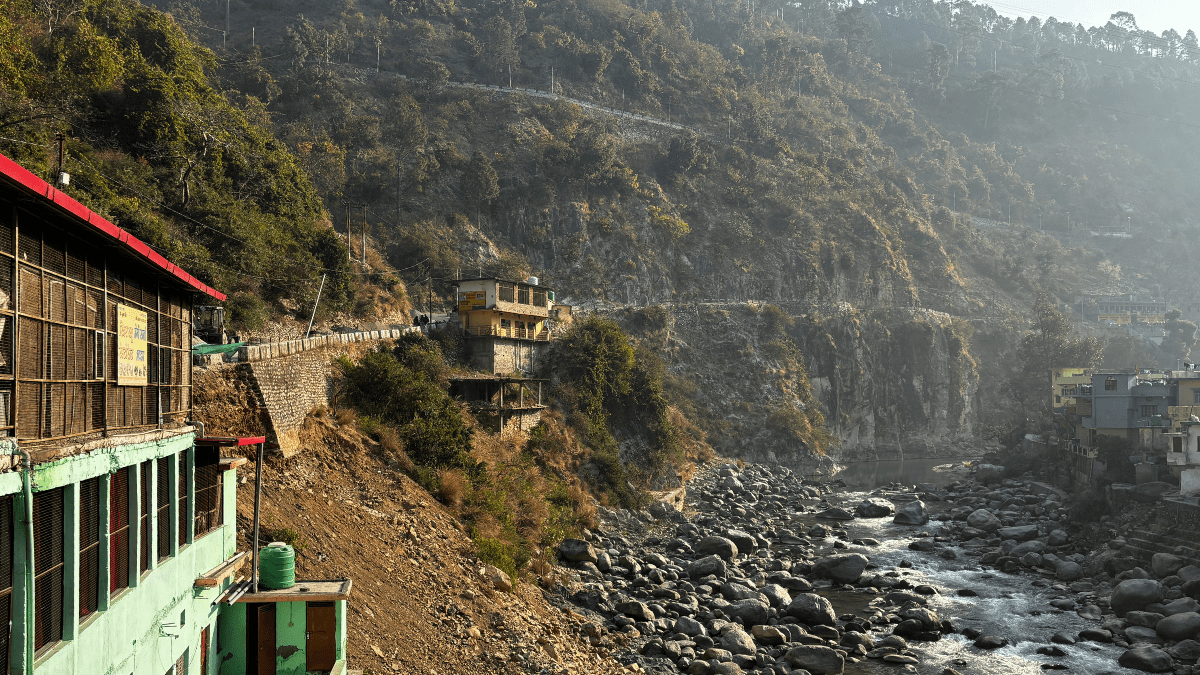
A hillside settlement along a narrow Himalayan river valley. Buildings are constructed close to the slope and riverbank, highlighting the interaction between human settlements and a dynamic mountain river system.
Mittal Institute: Could you walk us through your academic and professional journey leading up to this fellowship and how your earlier work prepared you for this project?
Aditya K. Anand: My academic path began with an interest in understanding how river systems evolve and how environmental change affects communities living along them. During my doctoral research, I focused on river morphodynamics and flood risks in eastern India, where I examined how channel instability and extreme hydrological events shape vulnerability in floodplain environments.
That work introduced me to the broader field of disaster risk and climate adaptation. I began to explore how geospatial technologies, satellite data, and statistical modeling could be used to understand environmental hazards more systematically. Over time, my research expanded toward integrating climate projections with hazard modeling and social vulnerability analysis.This interdisciplinary trajectory eventually led me to develop frameworks that link physical processes with adaptation strategies, including work on the Structure–Issue–Time–Space (SITS) model for cascading adaptation in river basins. The Mittal Institute fellowship represents an important step in continuing this line of inquiry, allowing me to deepen both the scientific and policy dimensions of my work.
Mittal Institute: In what ways do you hope this fellowship will enable you to expand your research, and what resources or collaborations at Harvard are you looking forward to accessing?
Aditya K. Anand: One of the most exciting aspects of this fellowship is the opportunity to work in a truly interdisciplinary research environment. Being mentored by Professor S. V. Subramanian at the Harvard T.H. Chan School of Public Health offers a valuable perspective on how environmental risks intersect with issues of inequality, public health, and social vulnerability.
At Harvard, I hope to engage with scholars across fields such as climate science, geography, environmental policy, and development studies. Access to advanced computational resources and global climate datasets will also strengthen the analytical components of my research, particularly in modeling long-term climate extremes and their spatial implications.
Equally important is the intellectual exchange that institutions like the Mittal Institute facilitate. Conversations with researchers working on climate adaptation, urban resilience, and environmental governance can help refine the Cascading Adaptation Framework developed in this project and situate it within broader global debates on climate resilience.
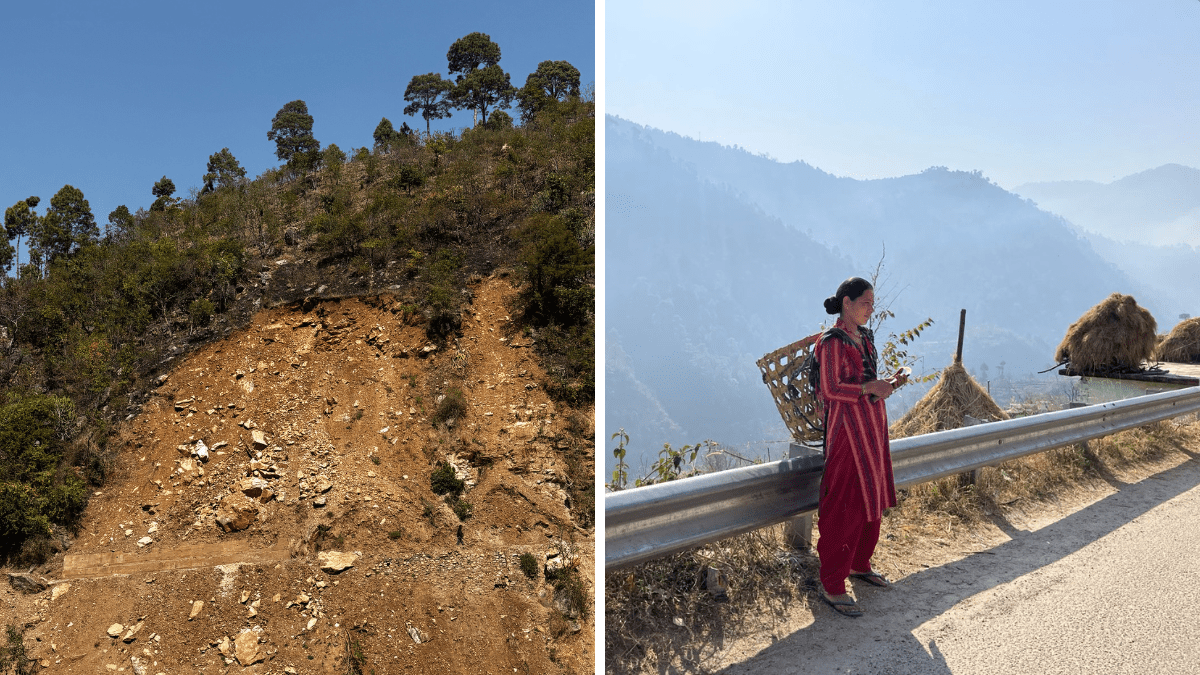
(left) A slope failure site in the Bhilangana River basin, Uttarakhand. The exposed debris and loose rocks indicate active landslide processes. | (right) A local resident carrying a traditional bamboo basket along a roadside in the Bhilangana River basin, Uttarakhand, reflecting everyday rural livelihoods in the Himalayan region.
Mittal Institute: As climate risks intensify across the Himalayan region, what research gaps do you believe must be addressed urgently, and how do you see your work evolving over the next five to ten years to meet those challenges?
Aditya K. Anand: One of the key challenges in Himalayan research is the fragmentation of knowledge across disciplines and scales. Climate scientists, geologists, social scientists, and policymakers often work within separate frameworks, even though the risks communities face are deeply interconnected.
Future research needs to move toward integrated approaches that combine climate projections, hazard dynamics, infrastructure vulnerability, and livelihood systems. Another urgent gap lies in translating scientific knowledge into actionable tools that local governments and communities can use in planning and adaptation.
Over the next decade, I see my work evolving toward building basin-scale frameworks for climate-resilient development in mountain regions. This includes developing decision-support systems, multi-hazard risk atlases, and participatory adaptation models that link scientific insights with community knowledge. Ultimately, the goal is to contribute to a more integrated understanding of how Himalayan landscapes and societies can adapt to a rapidly changing climate.
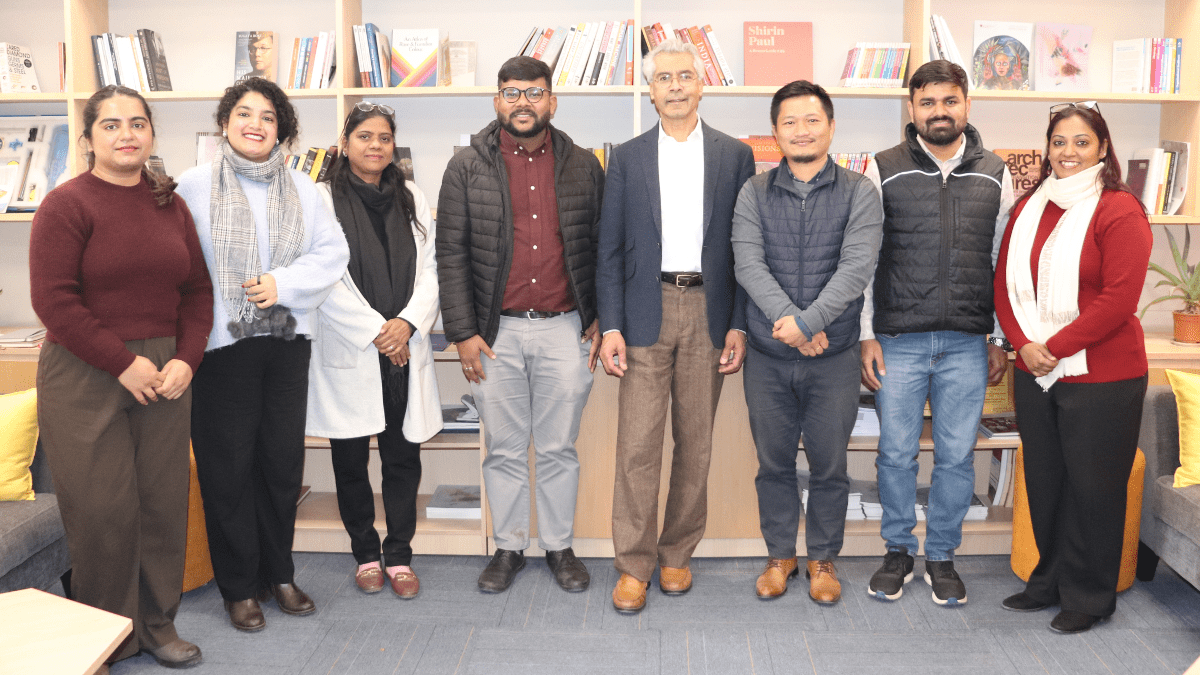
Aditya Anand (fourth from left) at the Mittal Institute India office.
☆ The views represented herein are those of the interviewee and do not necessarily reflect the views of the Mittal Institute, its staff, or its steering committee.