
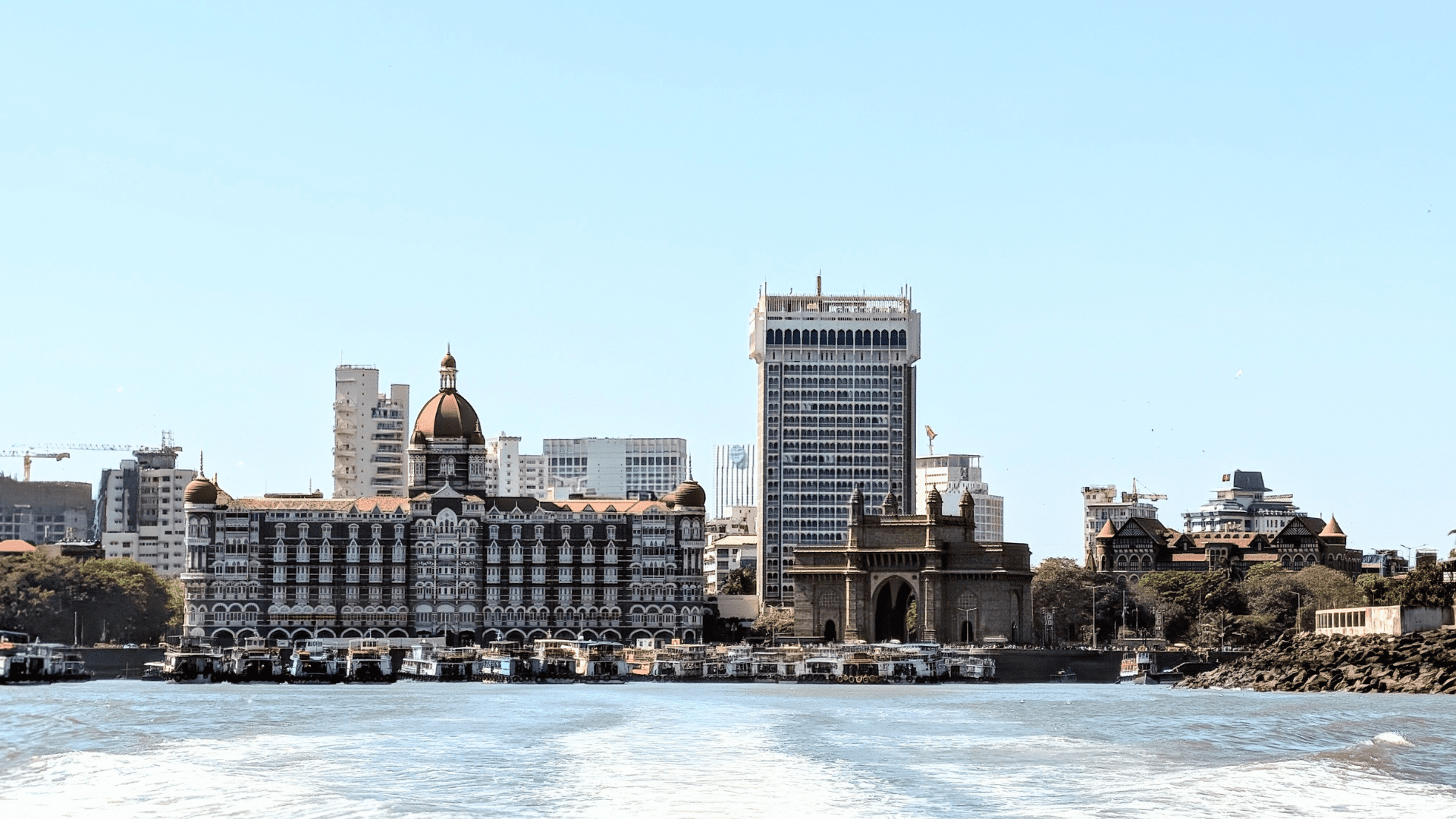
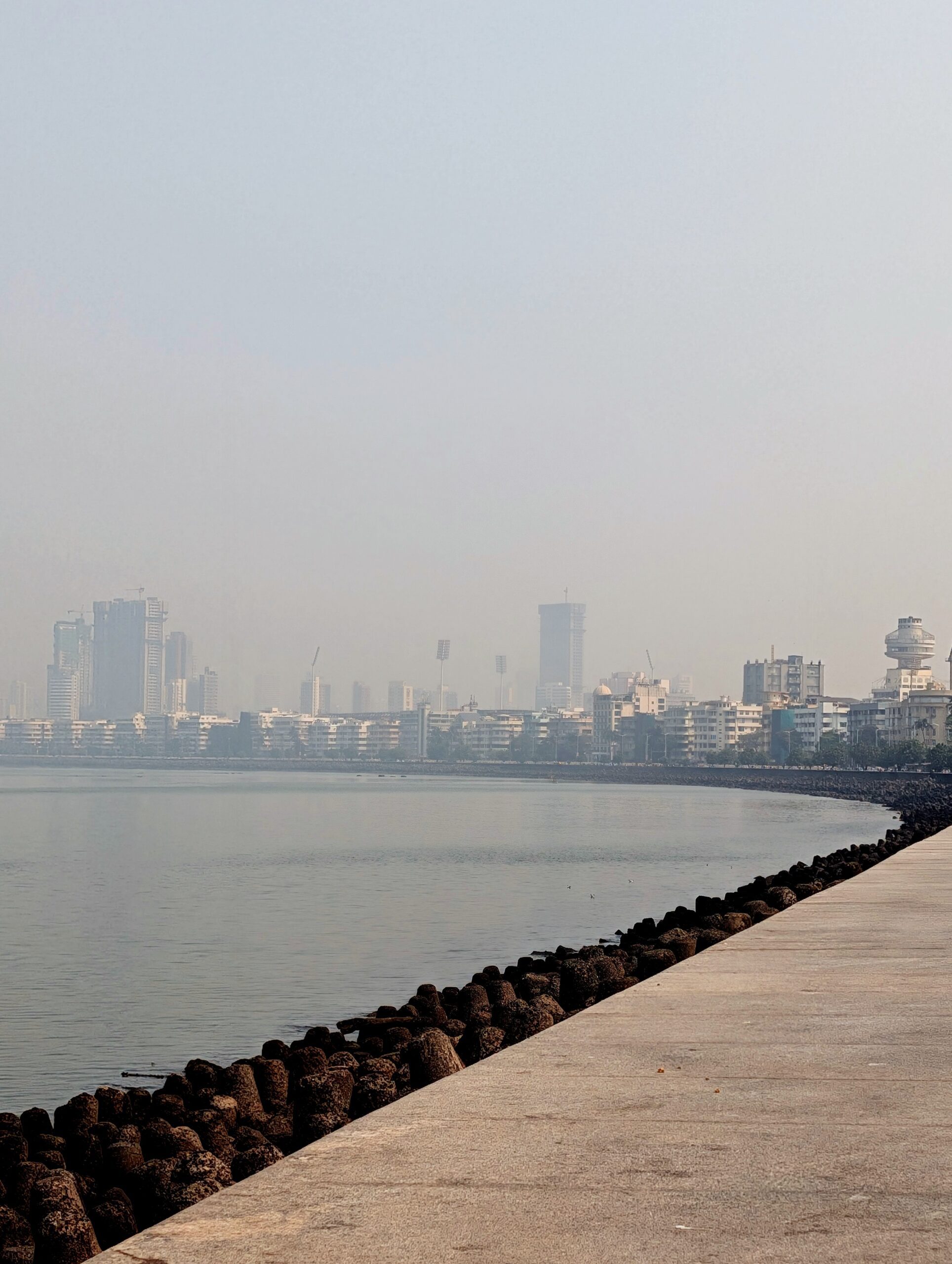
Mumbai waterfront | Photos by Javier Marcano.
By Daniela Morin, Javier Marcano & Lucia Garza
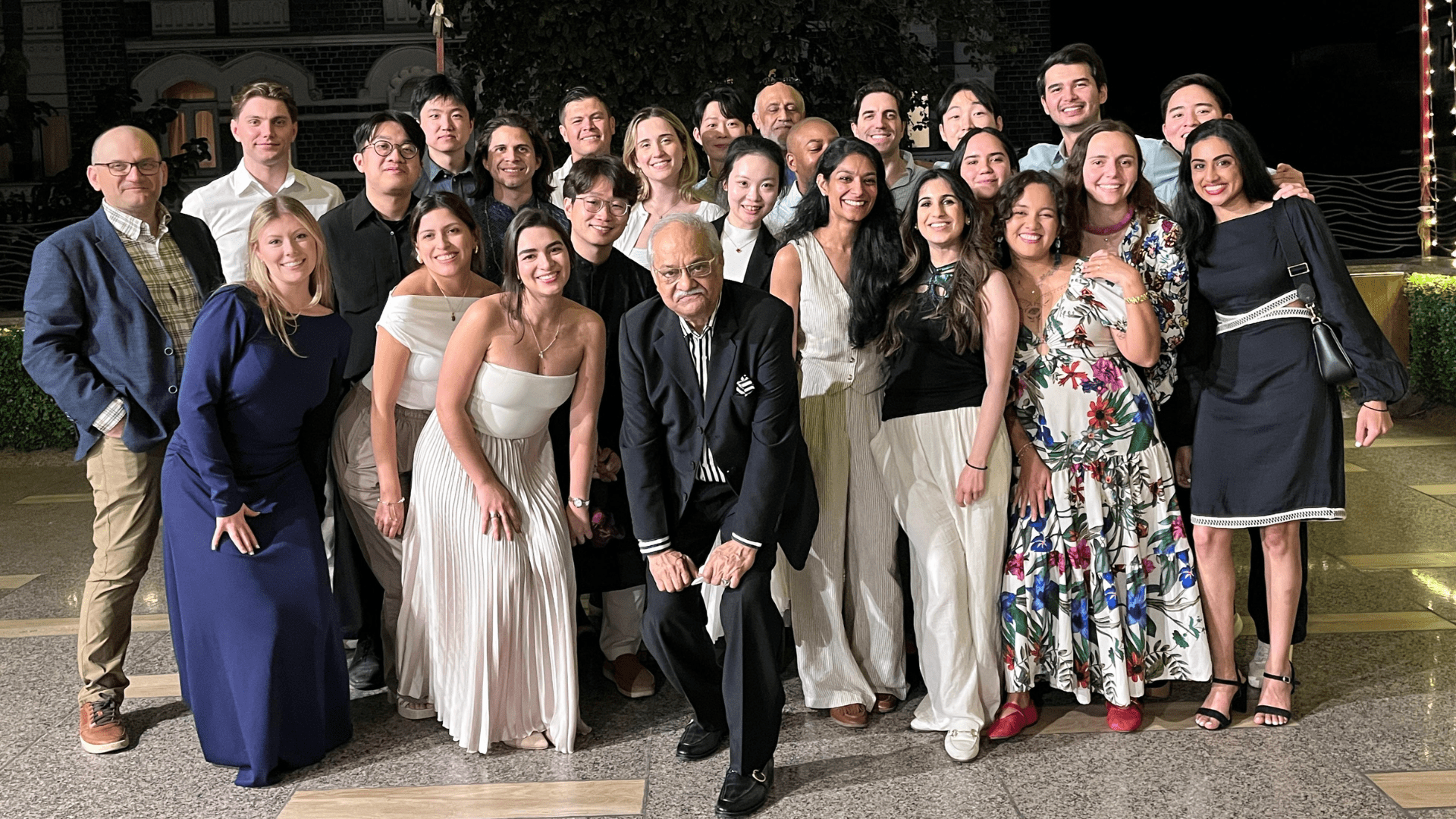
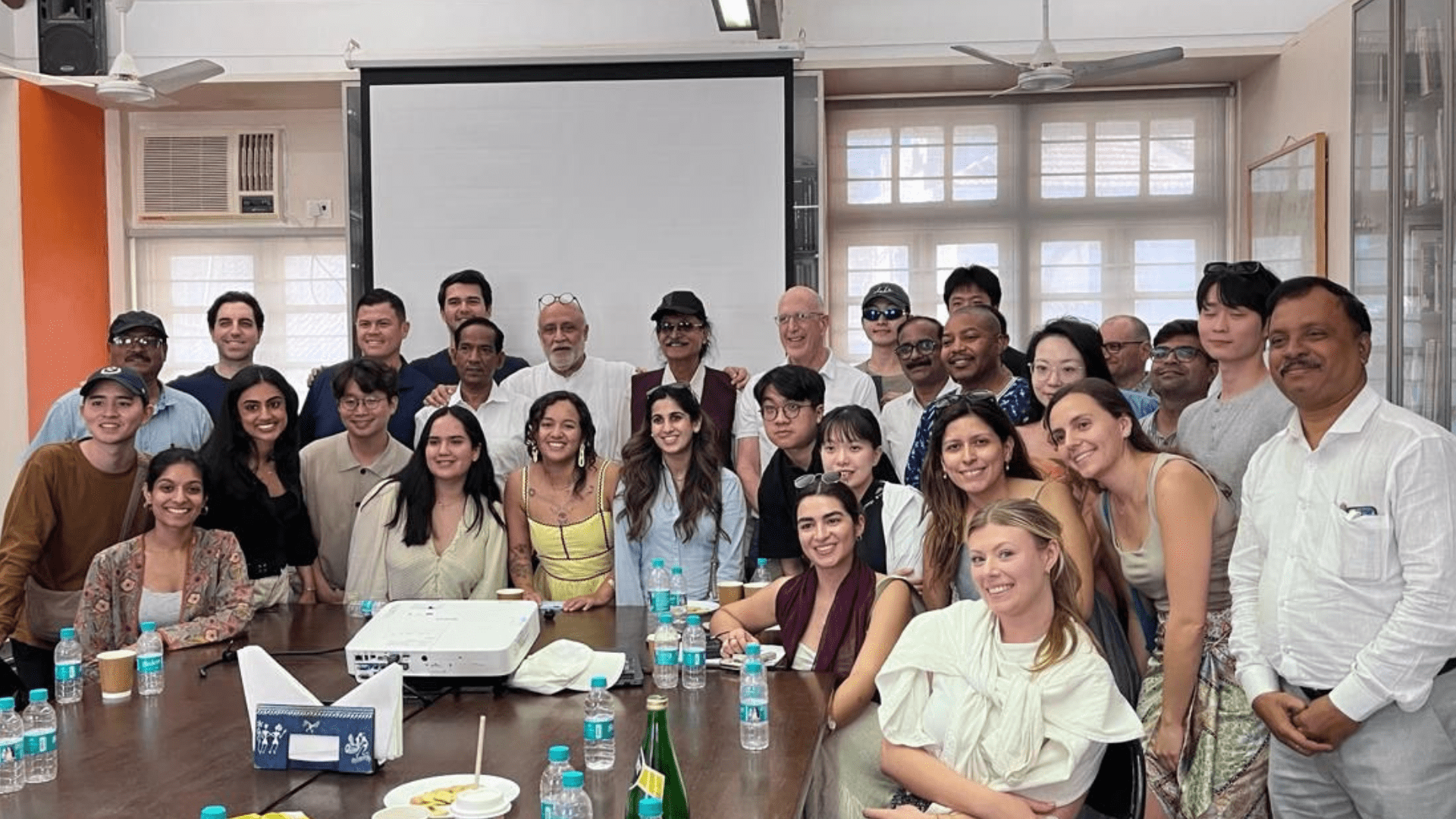
This February, design and real estate students embarked on an academic journey to Mumbai as part of a joint Development Project and Option Travel Studio at the GSD. Led by Professors Rahul Mehrotra, David Hamilton, and Jerold S. Kayden, the field trip allowed students to translate many of the questions that naturally emerged from their research to the site, particularly those regarding the Elphinstone Estate, an old industrial site serving as the studio’s focal point.
Beyond a simple site visit, the trip opened a much broader reading of the city and the forces that thread it together. Exploring Mumbai demanded to observe not just an enclave of the city, but the multiple relationships that sustain it: infrastructure, formal and informal economies, residential tapestries, industrial landscapes, water edges, colonial artifacts, financial towers, voids, many systems reaching capacity as they expand, coexistence difficult to reduce to a single narrative. In this precise shifting of scales — from the urban detail to the territory, from the industrial ruins to metropolitan intensity — the context stopped being the background and became a critical instrument for approaching design thinking.
What follows could never offer a complete explanation of Mumbai, nor is it a unified voice from our trip. These are, more properly, field notes, biased journal entries, written from the direct experiences of three participants, that aim to capture impressions, tensions, findings, and inquiries that emerged during the visit. If they share themes, it is not a closed conclusion but a common sensibility of a city where contrasts are rarely absolutes, where mirrors reflect the fragmented gradient that forces the viewer to observe with acute attention.
Contrasts
By Daniela Morin
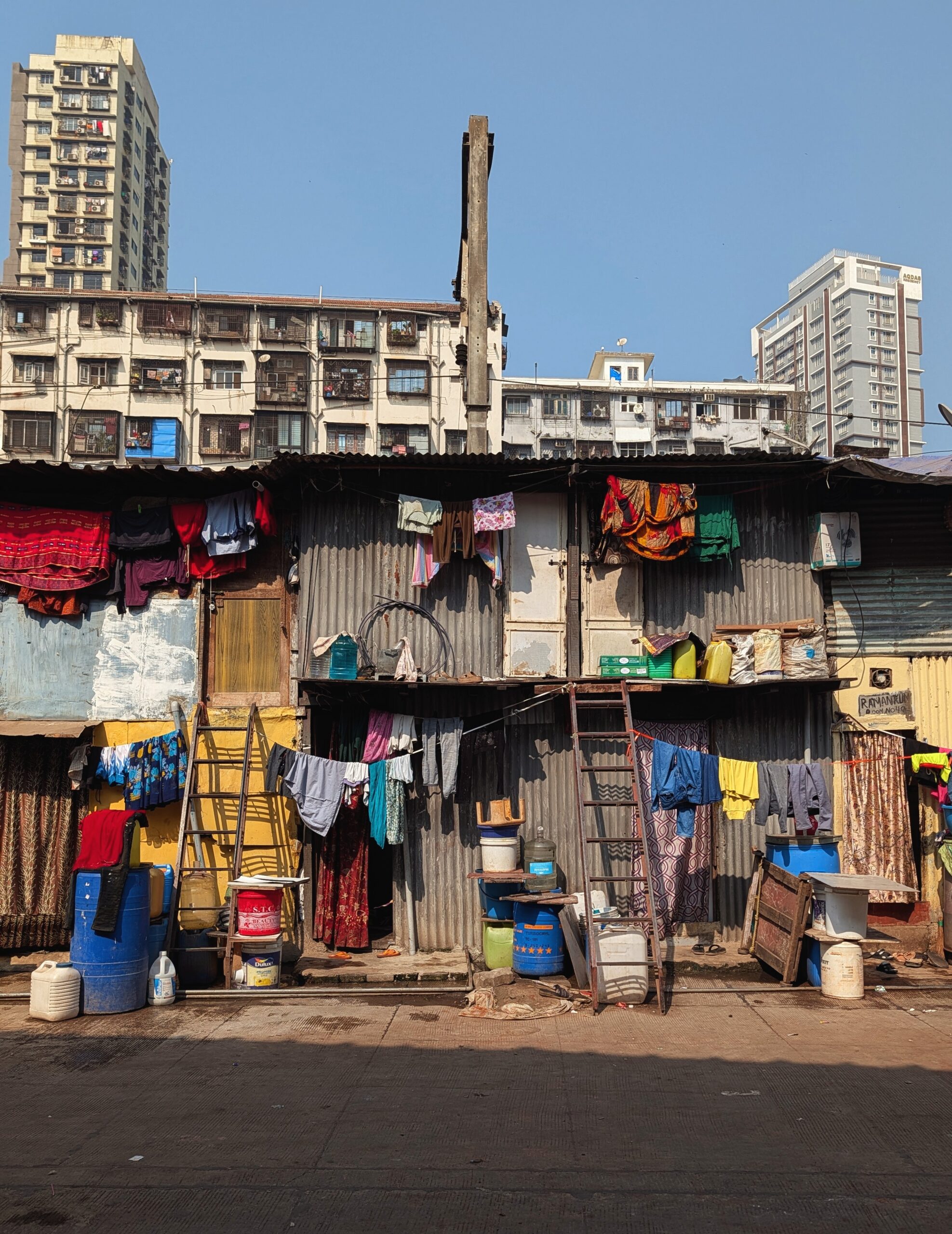
During our trip, the itinerary included visits to diverse and contrasting development projects that showcased a variety of strategies, allowing us to identify which aspects have been successful and which could be improved to make more informed design decisions. While driving through Mumbai on our way to these projects, one thing I couldn’t help but notice, and I’m confident everyone else felt the same, was the striking contrasts that define the city. These were found in everyday moments, such as tradition and modernity, socioeconomic contrasts, but to me, the most striking differences became visible in the city’s urban fabric.
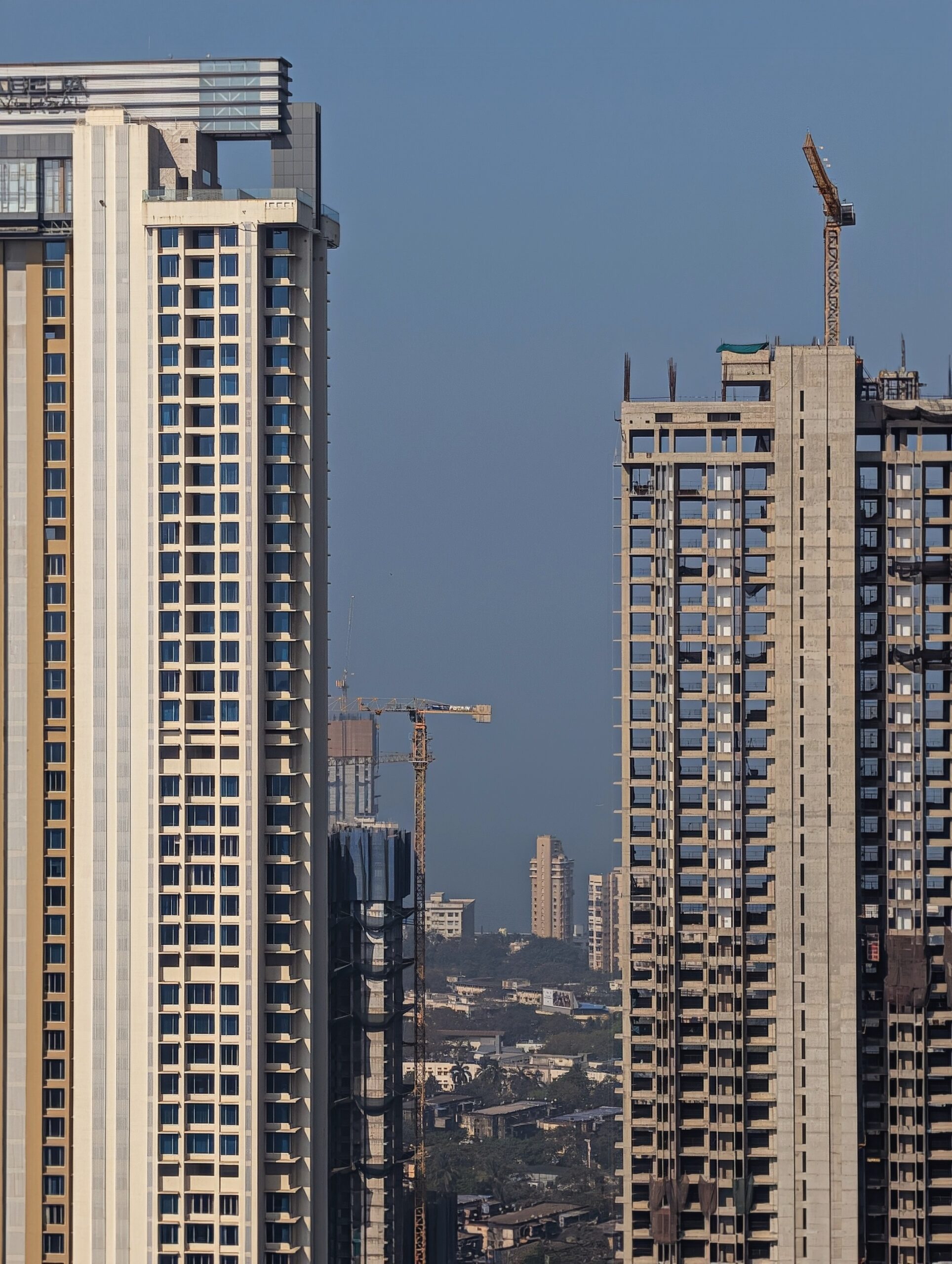
One clear example of these contrasts was during our visit to Lodha World One, a luxury residential development and one of the tallest residential towers in the city. From the main amenities floor, the views of the neighboring buildings highlighted the difference in scale and typology: mid- and low-rise structures stood alongside the tower, reinforcing the sense of separation between different layers of the city’s built environment.
The following day, we visited our site, Elphinstone Estate. The experience was completely different from what we had seen at Lodha World One. Here, there were no tall towers with spacious three-bedroom apartments; instead, the area was composed mainly of low-rise, compact structures, where multiple families often share a single unit of around 200 square feet. This created a very different sense of scale and rhythm in the streets, with a vibrant mix of residential and commercial activities at a human scale. Experiencing these different scales and patterns of urban life highlighted how diverse typologies can coexist and offered lessons on how design can support both community interaction and spatial clarity.
These two sites are just examples of the projects we visited during our trip, each offering a unique perspective on the city’s contrasts. Beyond these individual cases, Mumbai feels like a place where differences can coexist in the same space. There is a sense of resilience and connection that enhances community life. During our site visit, we also observed qualities that could be strengthened to make this coexistence even more successful, such as increasing the availability of public and green spaces, and providing a wider range of housing options to support diverse household needs. By embracing the contrasts that make Mumbai unique, we are exploring ways in which the urban fabric could facilitate smoother transitions between different typologies, ultimately aiming to enhance the quality of life for all residents while celebrating the city’s vibrant diversity.
Mumbai feels like a place where differences can coexist in the same space.
Overall, this trip proved to be an exceptionally enriching and insightful experience, allowing me to develop a deeper understanding of Mumbai as a city of contrasts and to reflect more critically on how diverse urban realities coexist within its complex metropolitan landscape.
Mirrors
By Javier Marcano
For the avid traveler, Mumbai always sounds enticing. A beautiful bay and the financial capital of India – the “city of dreams,” as some call it.
Inevitably, the mind drifts to make comparisons of what is familiar; for me, that was Latin America. I felt my mind was trained to read inequalities in the built environment after visiting several forms of informal housing and settlements across Central and South America. But the rules and social dynamics in place in slums in Latin America are different: Abrupt changes in the landscape, border vacuums, a geography of abandonment, and the fragility of everyday life are delineated by precarity and organized crime. In our cities, inequalities are presented as open wounds that, in many cases, are not only visible but also threatening. Mumbai, instead, forced me to unlearn this reading of the city and embrace a new paradigm.
Not necessarily because there’s less inequality, on the contrary, in Mumbai it reaches extreme heights, and the plurality in ways in which it manifests is nothing short of astonishing. The contrast is not always a clean cut; many times, it unfolds as a gradient. The rich and the poor don’t exactly live a comfortable distance away; they bump, brush against each other, lean on one another, invade and infringe, and they are observed mutually.
There is a physical cohabitation that is radically different from that in many Latin American countries, which tend to be segregated by landscape, infrastructure, fear, and violence. In Mumbai, this doesn’t mean harmony; it means proximity. That proximity produces an intensity that is hard to describe – one cannot simplify Mumbai.
There are moments when the transition from one urban condition to the other is almost imperceptible: an informal market extends next to monumental infrastructure, a street saturated with small businesses leads into a luxury tower, pavement dwellers settle next to retaining walls of abandoned industrial buildings. There is an equal array of conditions in which the gradient collapses completely and abruptly, then you see the tension between polar opposites. The edge stops being a transition and becomes a fracture. The gradual suddenly becomes an absolute division. Only in such a way can one learn about “Private Public Space”, the bizarre idea that there are spaces for leisurely gatherings, but only for those with a luxury key.
As I walked through Mumbai, I thought several times about the book ‘Invisible Cities’ by Italo Calvino – I couldn’t quite put my finger on what it was about the story that resonated so prevalently, after flipping through the book in a small bookshop in Colaba, I was re-encountered with the fictional tale of Moriana: a city with with two faces, one sparkling and dazzling and the other one corroded, one visible and one in the shadows. A city of mirrors that are blindingly beautiful reflections of each other, with a corroded side often in shadows but reflected equally across the city. Truth be told, if Calvino’s cities were depictions of real places, Moriana would only be a neighborhood in Mumbai. Which doesn’t quite have two sides to it, it has hundreds, but it does have that quality at times where you might see an informal settlement reflected on a shiny luxury tower, or a towering mosque reflected off a mirror street vendor. The two conditions don’t cancel each other out, but they coalesce in a way that requires them to negotiate the space so that the promise of modern living is not affected by the systems that support it.
What makes Mumbai such a powerful place is not only the coexistence of the extremes, but the ways in which that coexistence becomes quotidienne; the city is less organized by absolute separation and more by a constant friction between the two. Informality is not just in the peripheries: it appears as a system, as tapestry, as support, as an adaptation mechanism, as proof that the real city always overflows the planned city.
What makes Mumbai such a powerful place is not only the coexistence of the extremes, but the ways in which that coexistence becomes quotidienne; the city is less organized by absolute separation and more by a constant friction between the two.
This is perhaps the most pleasant culture shock of our short visit: Mumbai is not a city that hides its contradictions; it puts them to work. They are visible in architecture, in the infrastructure, in its human rhythms, in the density that lives occupy every centimeter available. Where other cities produce voids and borders as an exclusion, Mumbai produces compression. Where other cities separate to organize, Mumbai mixes them to an extreme that a simple reading becomes impossible.
The city didn’t confirm what I already knew about urban inequalities; it showed me something different, that intense poverty and privilege exist in many degrees of proximity, dependency, and friction; and that at times, precisely in the ambiguous zones, the ecotones of urbanity, is where the city might find its next nexus.
The image of the city remains in me beyond images, and tension comes to mind most quickly. I remember it as a city of contrasts, but also a city where the gradients are never fixed.
Gradients
By Lucia Garza
Coming from Latin America, I thought I had some idea of what Mumbai might feel like. I expected density, colors, flavors, and a kind of urban chaos that, in some ways, felt familiar. But once I arrived, I realized those comparisons only went so far. Mumbai was harder to pin down than I expected. What stayed with me most was not one image of the city, but the constant shift between very different conditions. More than a city of variations, it felt like a city of gradients.
What stayed with me most was not one image of the city, but the constant shift between very different conditions. More than a city of variations, it felt like a city of gradients.
As part of the studio, we visited different housing typologies, and that helped us understand Mumbai in a more layered way. Each typology felt like a different version of the city, with its own pace, social structure, and relationship to open space and nature. In some places, community life was very visible in shared circulation and daily routines; in others, the connection between built form and landscape felt completely different. What became clear was that Mumbai cannot be read as one thing. It is made up of many urban conditions existing at once.
That became especially important when thinking about Elphinstone Estate. After seeing so many parts of the city, I kept coming back to the same question: how do we approach a site like this without being too invasive? How do we propose change without erasing what already gives the place its character? I did not leave with an answer, but I came away more aware that urban design here requires careful observation before intervention. The challenge is not only what to add, but what to protect, what to learn from, and what should remain.
Some of the most memorable moments of the trip happened on the bus, moving across the city from south to north and west to east. Those long rides made it possible to see Mumbai as a sequence rather than a fixed whole. The mangroves near Navi Mumbai and the fishing communities along the way were some of the most beautiful parts of that experience. They revealed another side of the city, where ecology, livelihood, and urban growth meet in ways that feel both fragile and deeply rooted.
On the last day, outside of the itinerary, I decided to visit Banganga. After experiencing Mumbai mostly through the lens of the studio, Banganga gave me a different way of understanding the city. It was quieter, slower, and more intimate, but still deeply connected to the larger urban fabric. By that point, I had stopped trying to define Mumbai through one dominant image or idea. What the trip gave me instead was a better understanding of how the city operates through shifts in scale, density, exposure, and ways of living. That is what gradients came to mean to me: not only variation across the city, but a way of reading it more carefully.
☆ The views represented herein are those of the interview subjects and do not necessarily reflect the views of the Mittal Institute, its staff, or its steering committee.