
On April 17, the Mittal Institute held its Annual Symposium at the Harvard Faculty Club, convening scholars, practitioners, and community members for the launch of Living with Rivers, a new interdisciplinary initiative exploring how South Asia is living with its rivers. Bringing together perspectives across ecology, climate science, public health, design, and the humanities, the symposium examined the complex interdependence between people and river systems in a rapidly changing world.
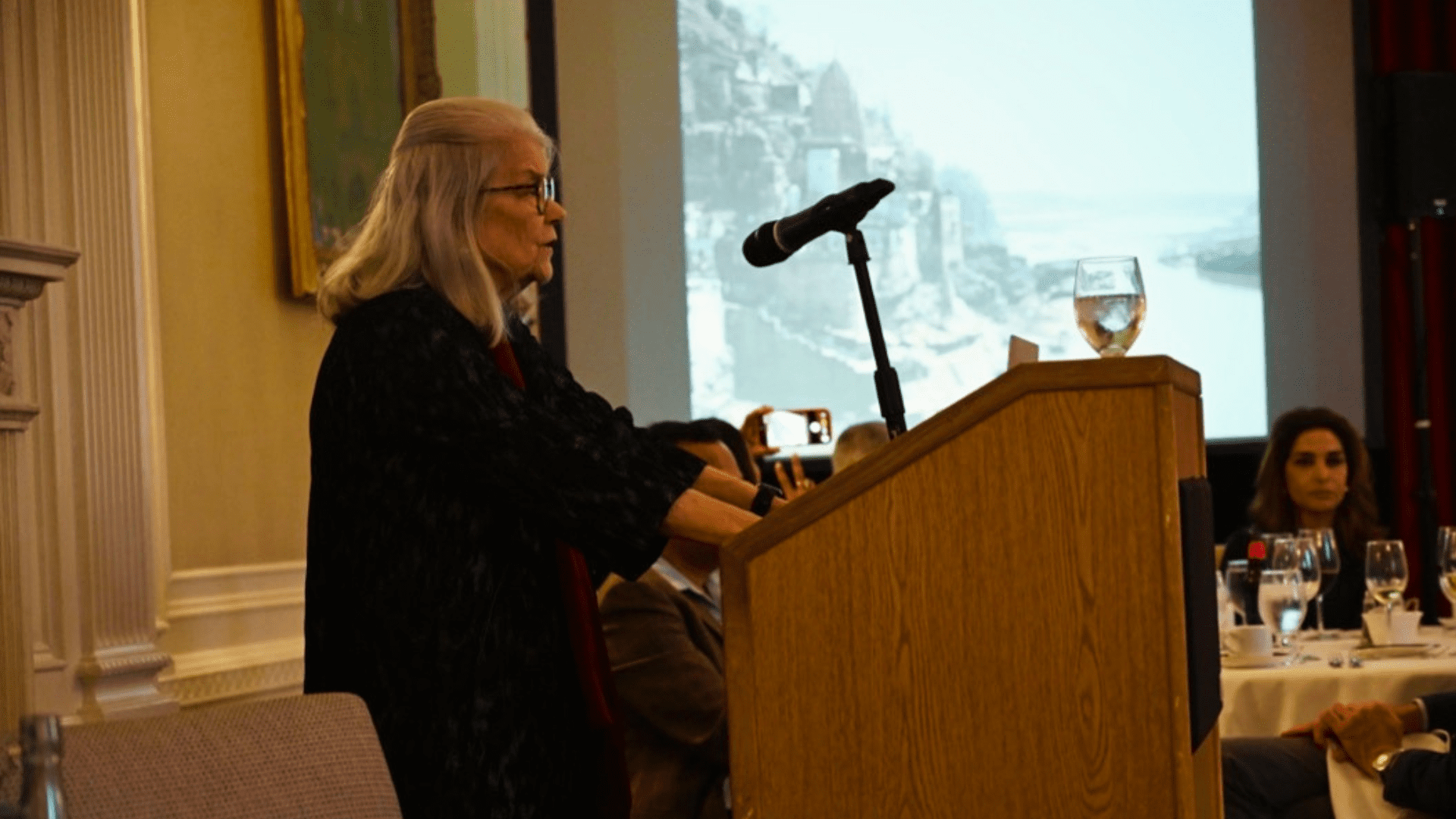
Diana Eck, Mittal Institute Director, Professor of Comparative Religion and Indian Studies, Emerita; Frederic Wertham Research Professor of Law and Psychiatry in Society.
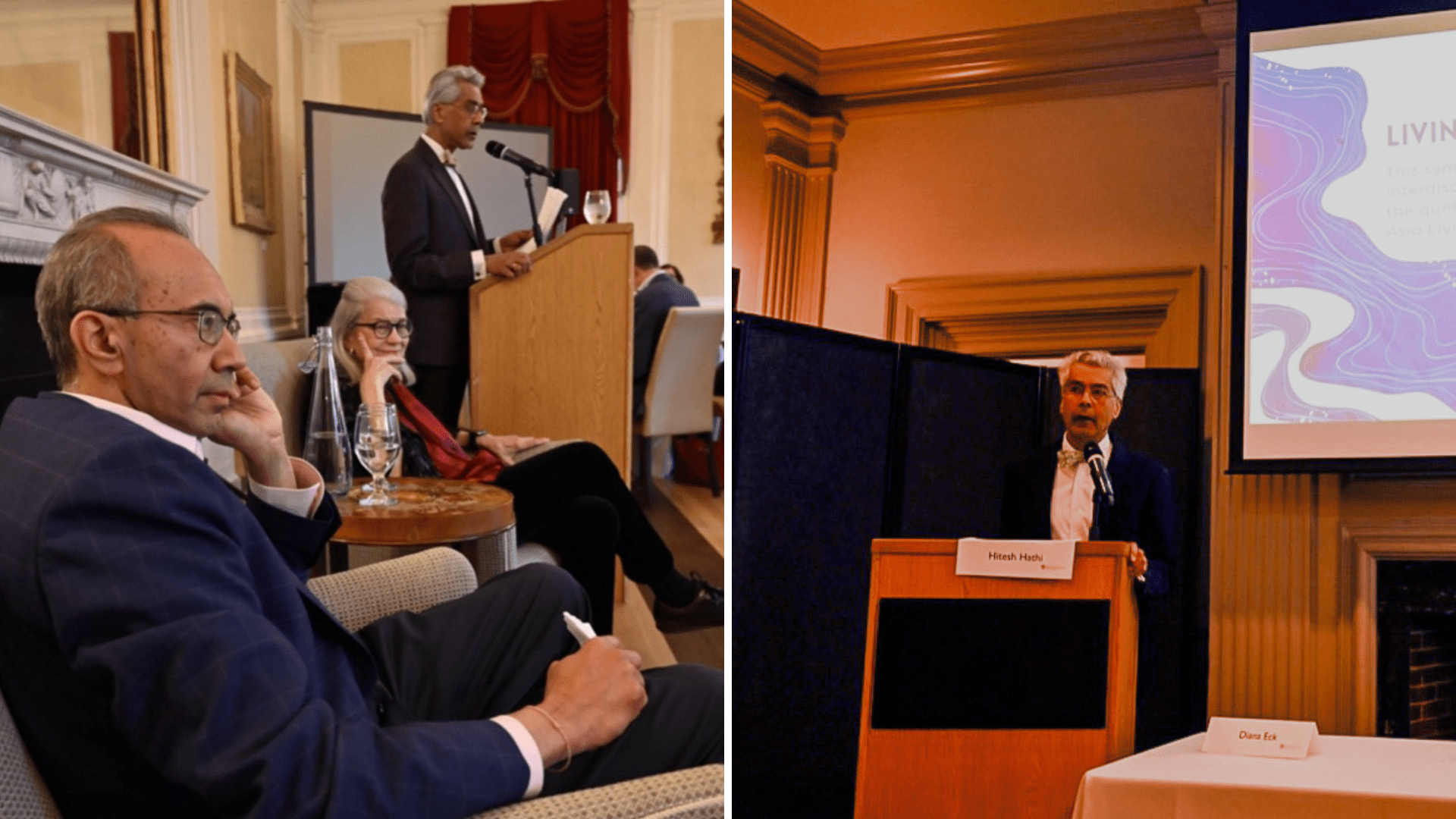
Left image: Diana Eck and Tarun Khanna, former Director of the Mittal Institute and the Jorge Paulo Lemann Professor at the Harvard Business School; Right image: Hitesh Hathi, Executive Director, Mittal Institute.
The day opened with reflections from Executive Director Hitesh Hathi and Faculty Director Diana Eck, who framed the initiative around the reciprocal relationship between people and rivers. As Eck noted, rivers are not only physical systems but also deeply embedded in cultural and spiritual life—“the great cathedrals of India,” central to everyday practices, ritual, and meaning.
The first panel, From Thinking and Feeling to Doing in a Climate-Changed South Asia, brought together scholars working across engineering, anthropology, and policy to examine how knowledge about rivers can translate into meaningful action. Speakers emphasized that rivers in South Asia are not abstract systems but lived realities, shaped by climate change, population pressures, and governance challenges. As Shafiqul Islam noted, “living with rivers is not a metaphor, it is real,” underscoring the urgency of bridging technical knowledge with lived experience and policy implementation.
Nagaraja Rao Harshadeep emphasized the interconnected nature of river systems, noting that “everything is linked with everything else,” and highlighting the need for integrated approaches to water governance. Building on this, Maira Hayat and Naveeda Khan raised critical questions about how rivers are understood and governed, asking whose knowledge counts and for whom solutions are designed.
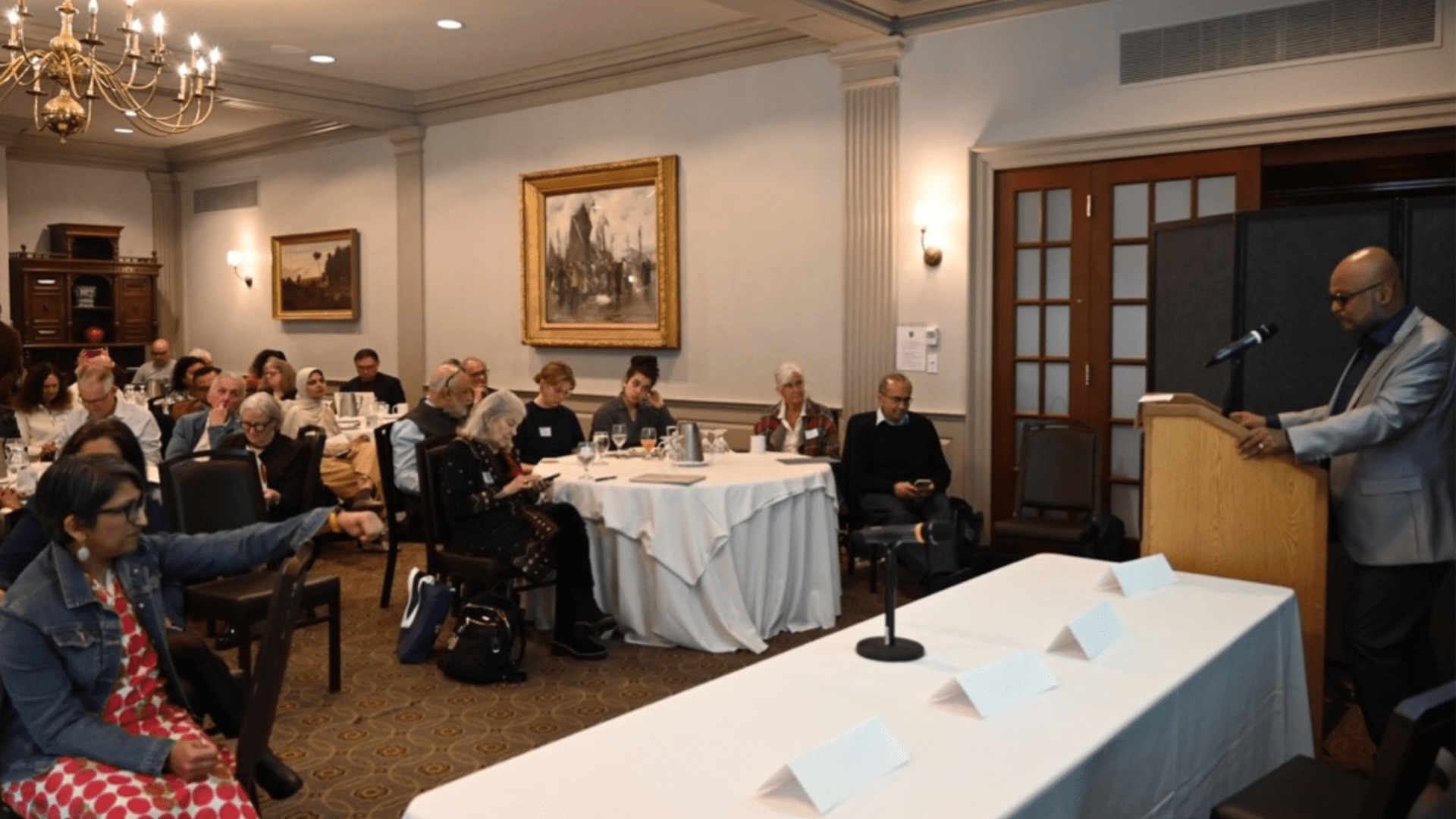
Shafiqul Islam, Professor of Civil and Environmental engineering, Fletcher School of Law and Diplomacy, Tufts University speaks to the audience.
Panelist Tulasi Srinivas, Professor of Anthropology, Religion and Transnational Studies at the Marlboro Institute for Interdisciplinary Studies, Emerson College, participates in the discussion
The second panel, Building on Water, explored the relationship between rivers, design, and urban development. Speakers examined how contemporary waterfront projects often reshape rivers into sites of leisure and real estate, displacing older forms of ecological and cultural engagement. Rahul Mehrotra highlighted the need to rethink these approaches, emphasizing that design must engage with the river’s dynamism rather than attempt to fix it in place. As he suggested, successful interventions must recognize that rivers are shaped by flux and seasonal variability, not permanence.
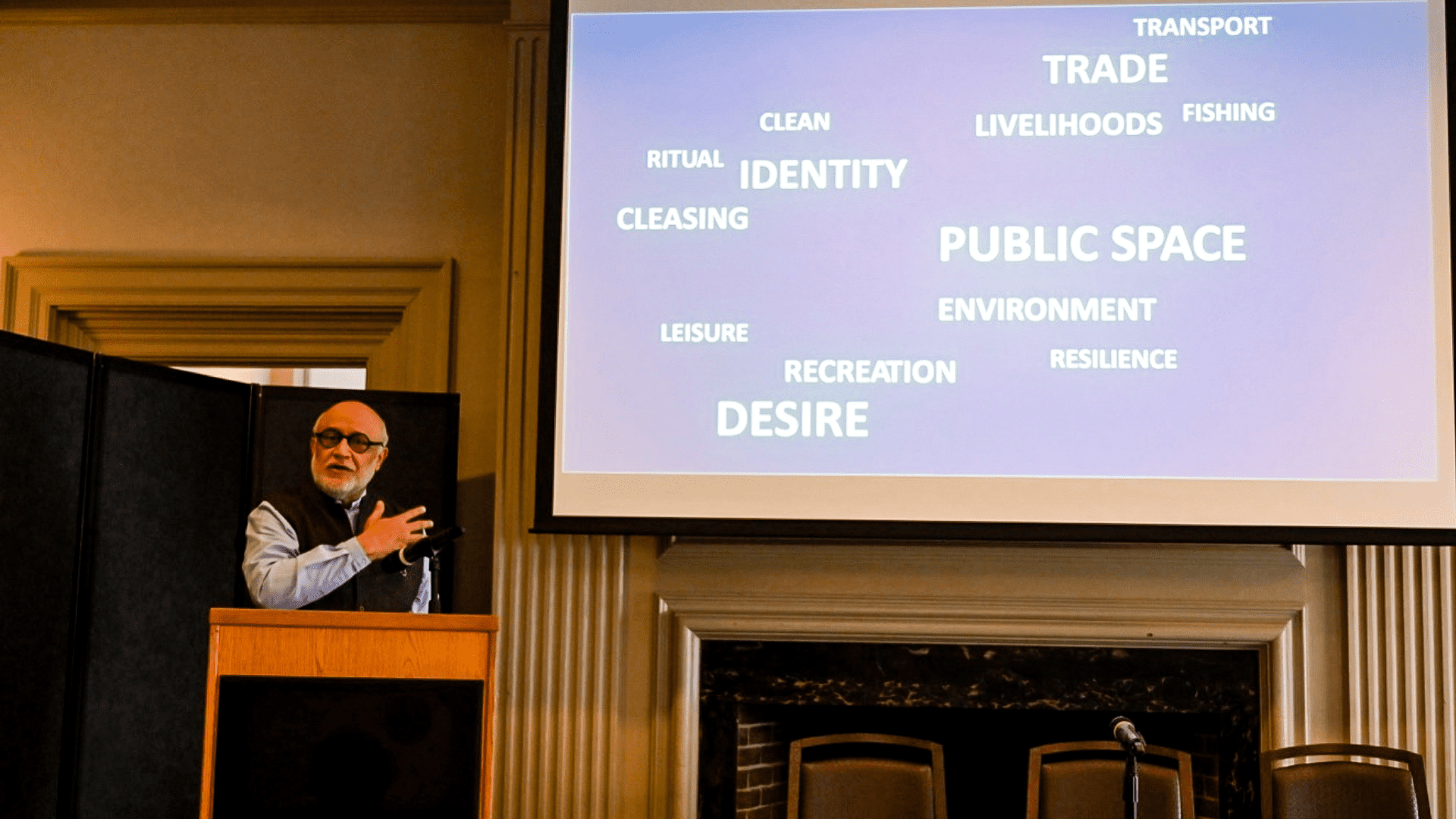
Rahul Mehrotra, John T. Dunlop Professor in Housing and Urbanization, Harvard Graduate School of Design.
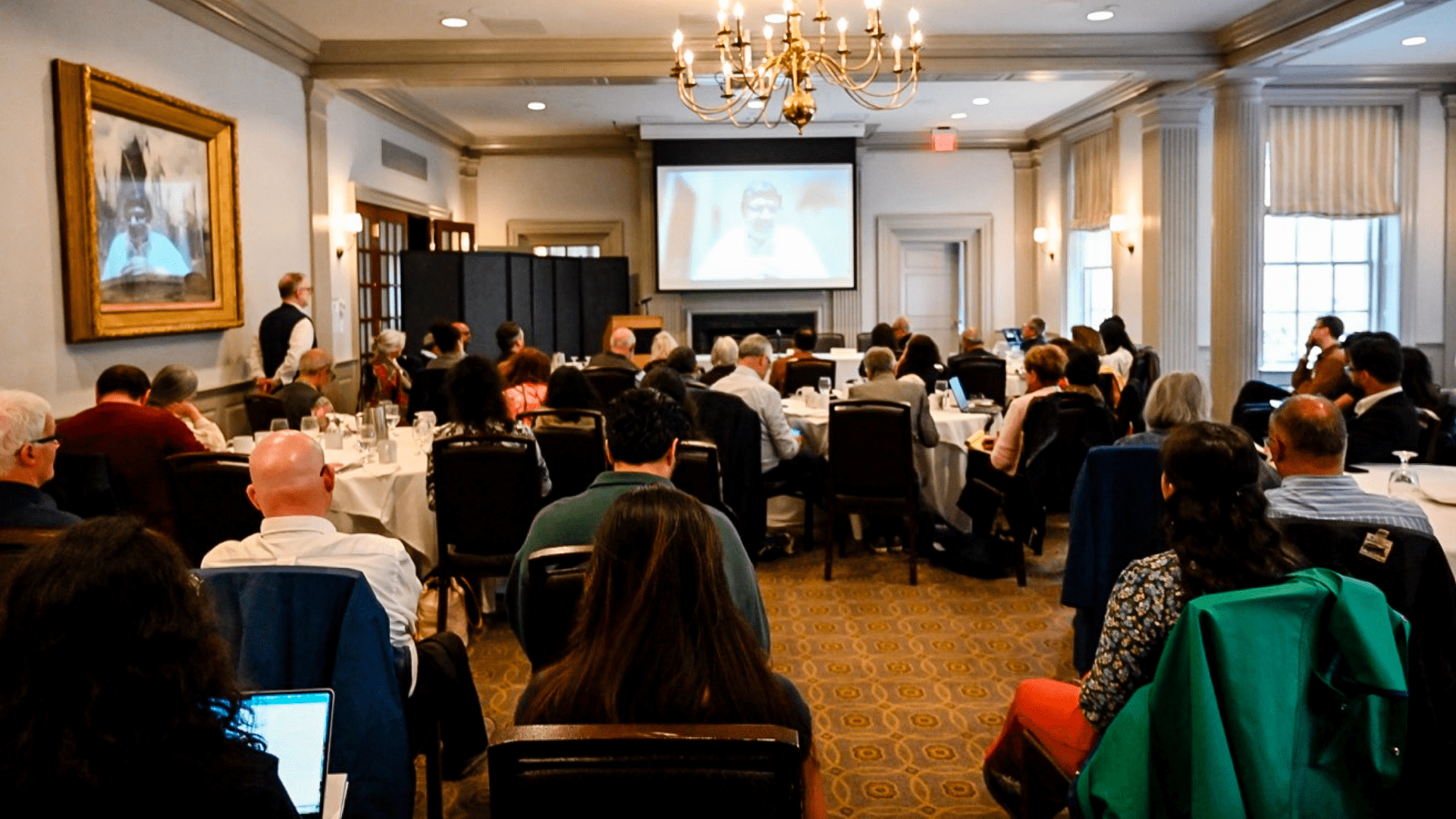
The “Building on Water” panel.
A brief archival presentation by Jennifer Leaning offered a historical perspective, tracing how colonial interventions—from canal systems to embankments—transformed riverine ecologies across the subcontinent, leaving long-term environmental and social impacts.
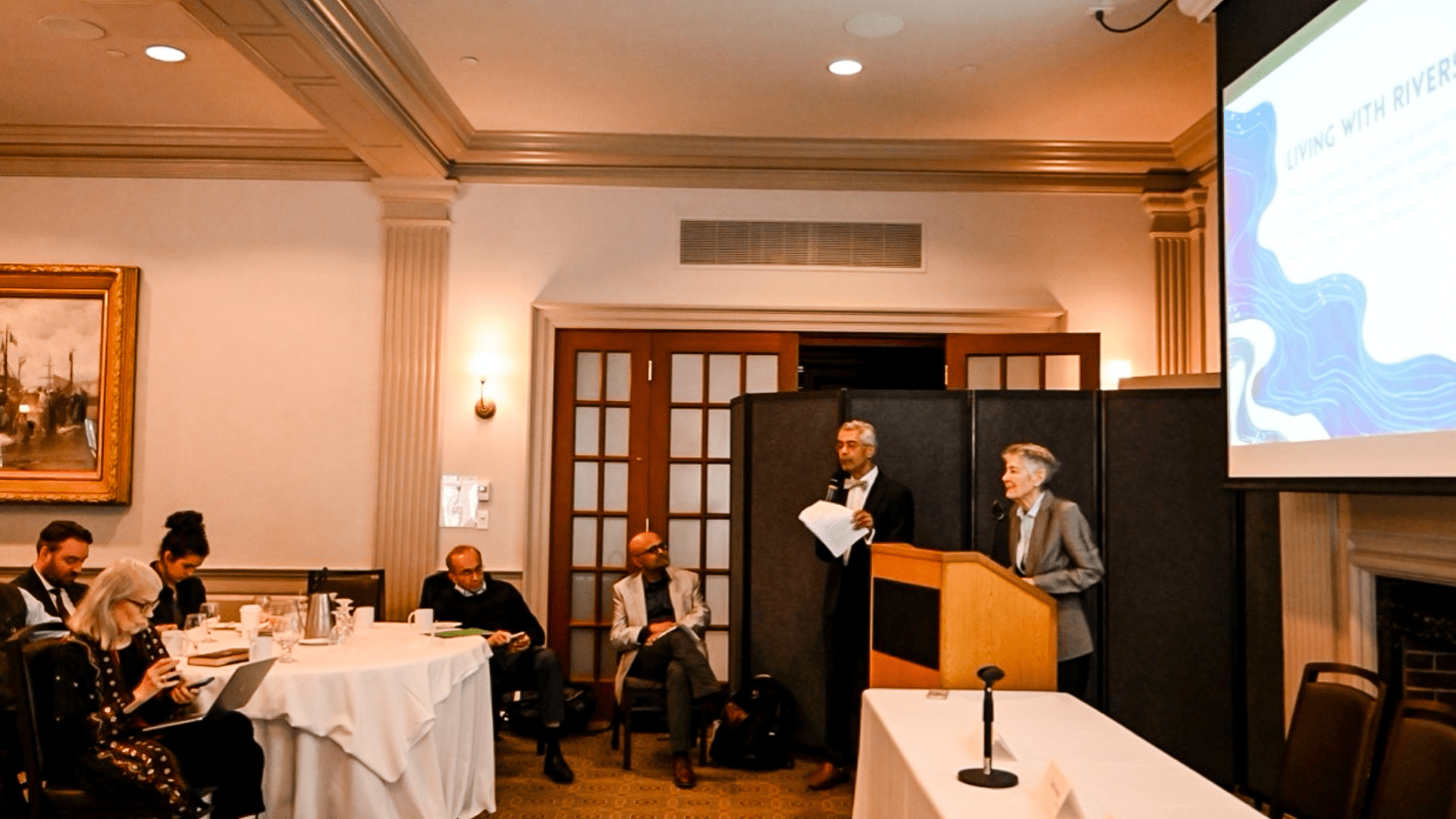
Hitesh Hathi introduces Jennifer Leaning, a senior fellow at the Harvard FXB Center and Professor of the Practice of Health and Human Rights at the Harvard T.H. Chan School of Public Health.
The symposium’s plenary featured Victor Mallet, who spoke about his book River of Life, River of Death: The Ganges and India’s Future. Reflecting on the environmental, political, and cultural significance of the Ganges, Mallet examined the challenges facing one of South Asia’s most iconic rivers. The session also included a lively exchange with the audience, with questions and discussion extending the conversation on the future of river systems in the region.
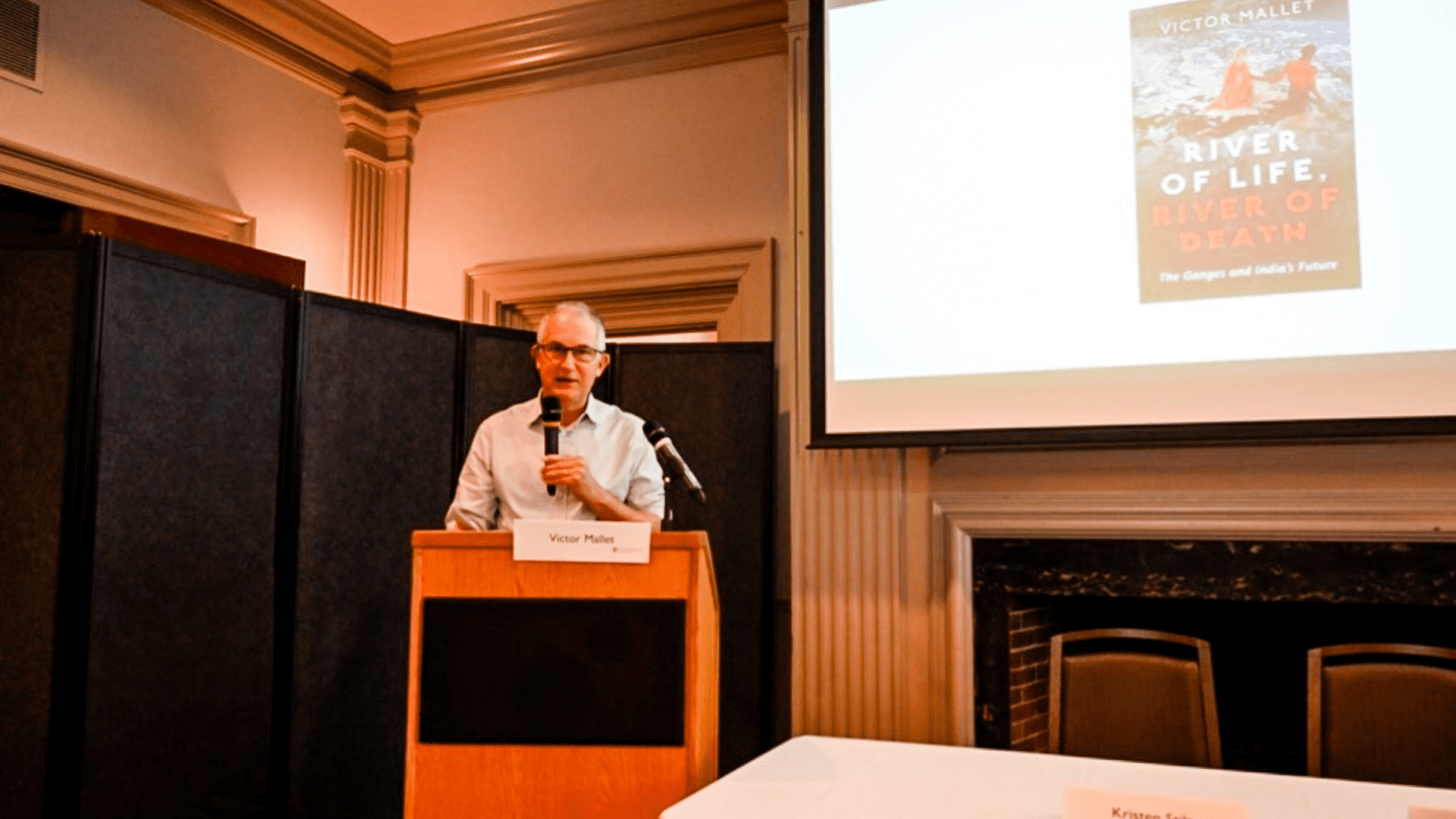
Victor Mallet, Author, River of Life, River of Death: The Ganges and India’s Future and Senior Editor, The Financial Times.
The symposium concluded with a panel on the rights of rivers, further expanding on questions of governance, law, and responsibility. Conversations highlighted the need to rethink rivers not only as resources to be managed, but as systems with ecological, cultural, and even legal significance.
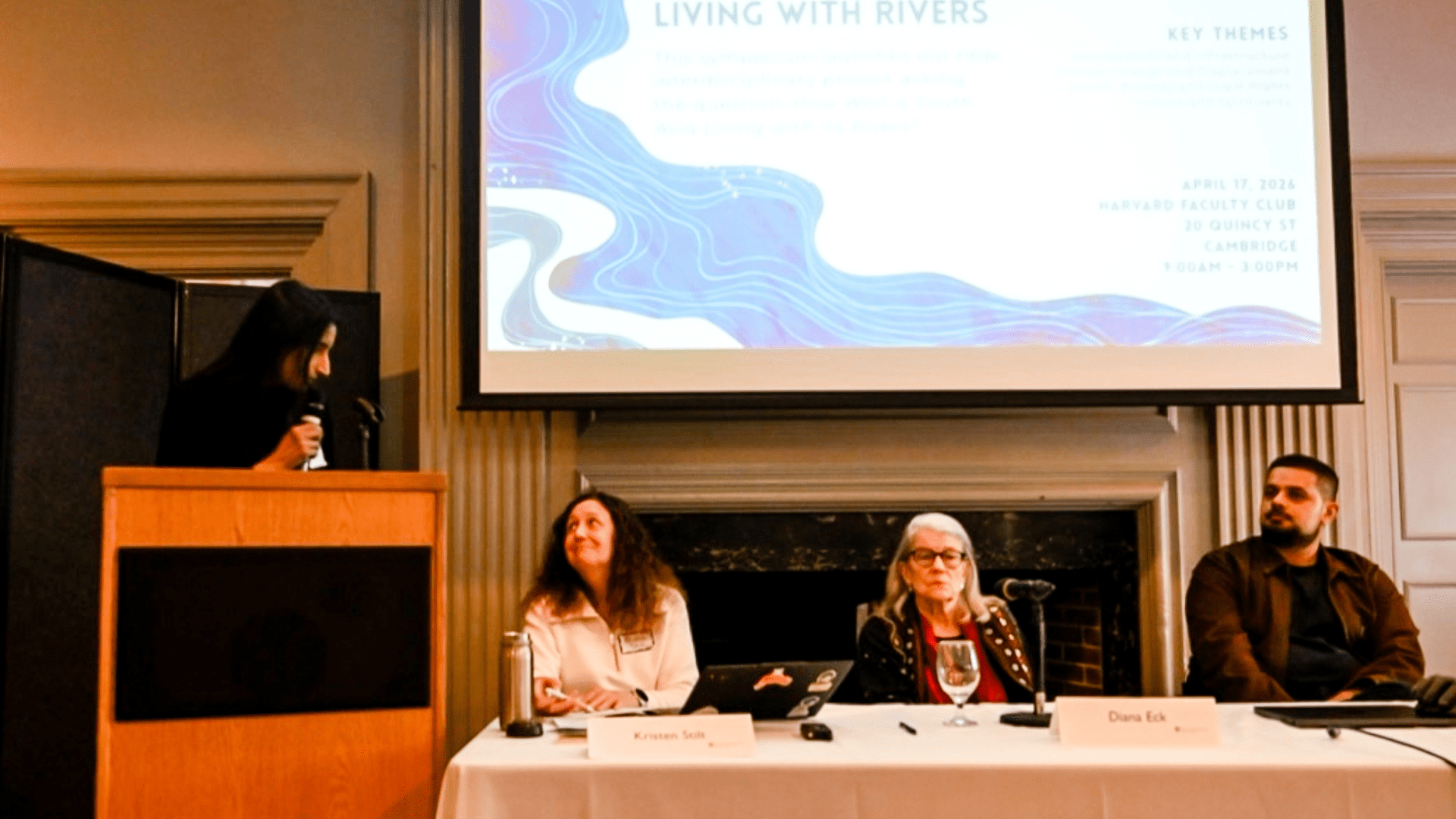
Left to right: Mashail Malik, Assistant Professor, Department of Government, Harvard University; Kristen Stilt, Professor of Law and Faculty Director of the Brooks McCormick Jr. Animal Law & Policy Program, Harvard University; Diana Eck, Faculty Director, Mittal Institute and Professor of Comparative Religion and Indian Studies, Emerita Frederic Wertham Research Professor of Law and Psychiatry in Society; Rijul Kochhar, Assistant Professor of the History of Science, Harvard University.
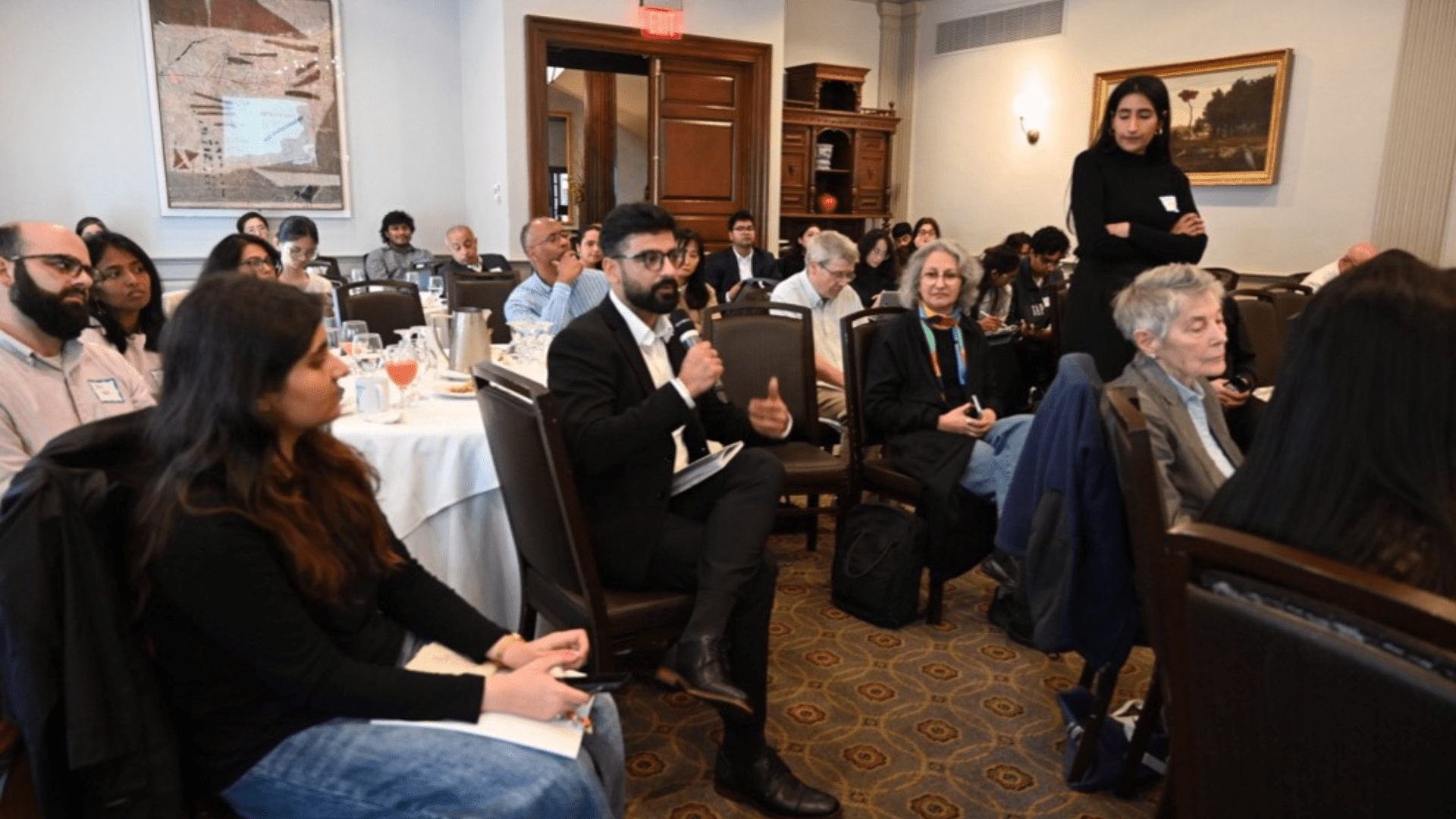
Across sessions, a central theme emerged: the tension between attempts to control rivers and the need to live with their inherent unpredictability. From data-driven approaches and technological innovation to cultural and historical perspectives, speakers emphasized that addressing the challenges facing South Asia’s rivers requires interdisciplinary collaboration and new ways of thinking.
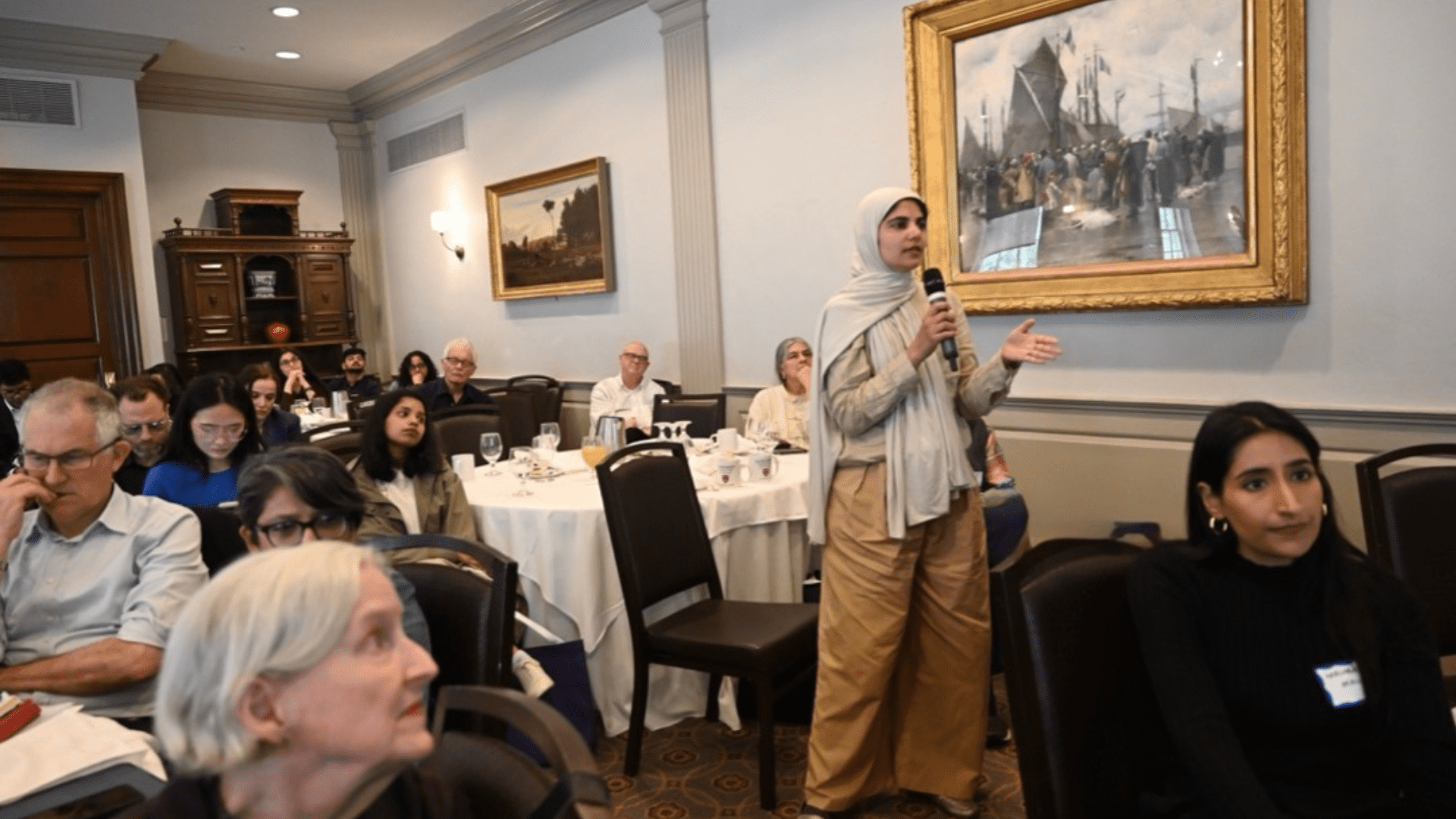
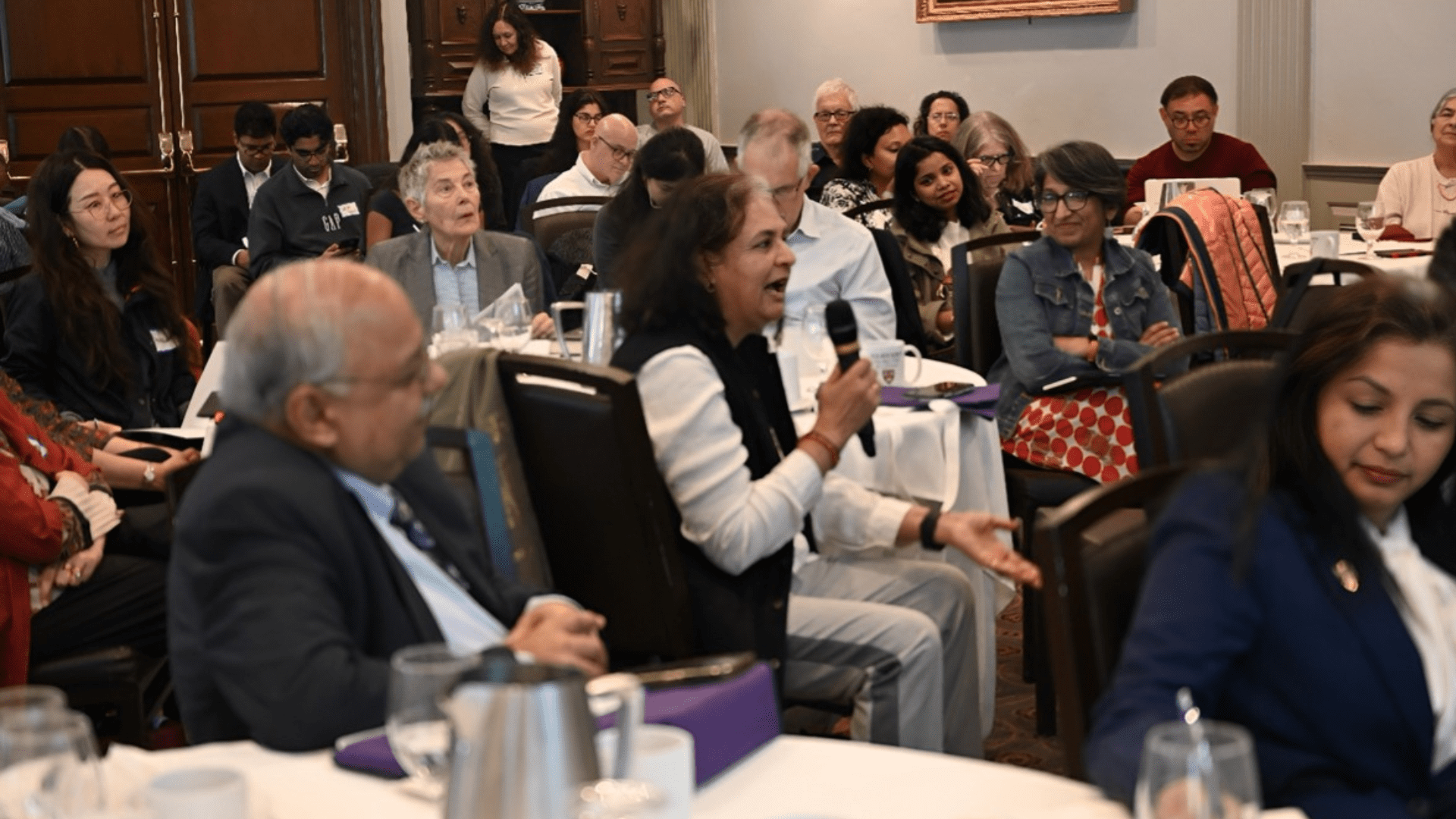
Audience questions.
As the inaugural event of the Living with Rivers initiative, the symposium marked an important step in building a platform for sustained research, dialogue, and engagement.