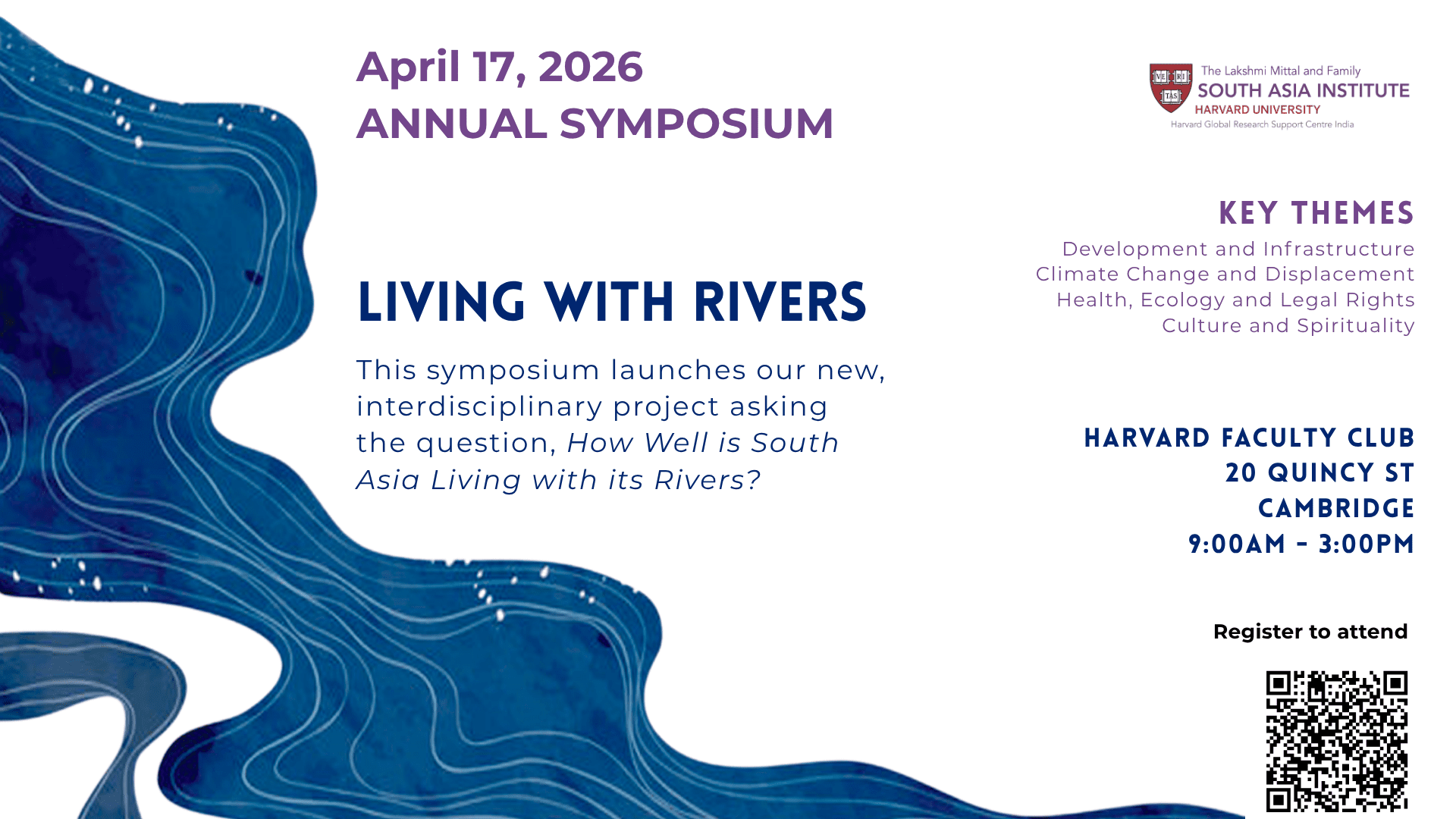
The Mittal Institute’s Annual Symposium: Living with Rivers on April 17 marks the launch of Living with Rivers, our new interdisciplinary initiative. Bringing together leading scholars and policy experts, the symposium will explore a central question: How well is South Asia living with its rivers? Among this year’s speakers is Naveeda Khan, Associate Professor of Anthropology and Director of Graduate Studies, Johns Hopkins University.
We spoke with Naveeda about her research in Bangladesh, which explores how people live with, adapt to, and understand water.
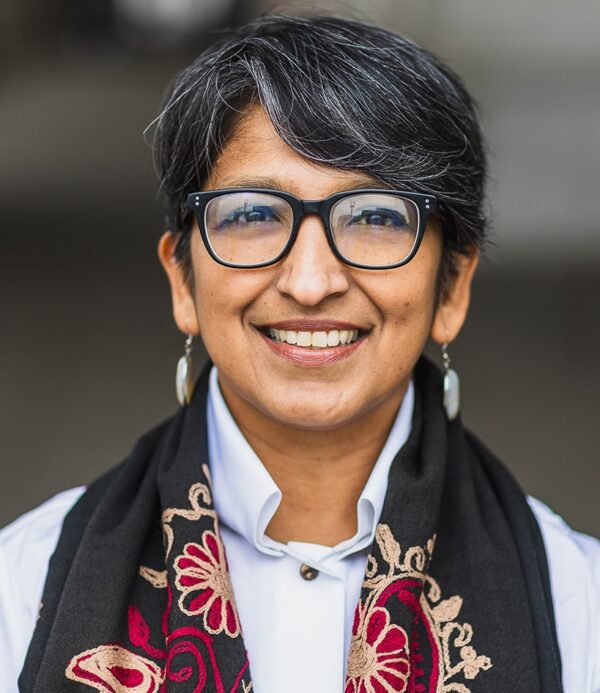
Professor Naveeda Khan
Mittal Institute: Naveeda, you study river life and climate change in Bangladesh, examining how people live with moving land within the Brahmaputra/Jamuna River. How do communities live with and adapt to the unpredictability of water in places like Bangladesh?
Naveeda Khan: In a 2019 legal judgment that gave Bangladesh’s rivers personhood, the count of rivers in the country was around 900. This includes the three major rivers (the Brahmaputra/Jamuna, the Ganges/Padma and the Meghna), as well as many others and their numerous tributaries and distributaries. Even discounting those stagnant or biologically dead, possibly numbering 200, that is quite a number of rivers in a country the size of the state of Wisconsin. And this is not counting ponds and wetlands, which would dramatically bring the number up to over 1 million. Then, of course, there are seasonal and unseasonal floods, the largest of which occurred in 1998 and covered 75% of the country’s land mass. So, we are talking about a landscape that is perpetually soaked in some way or fashion.
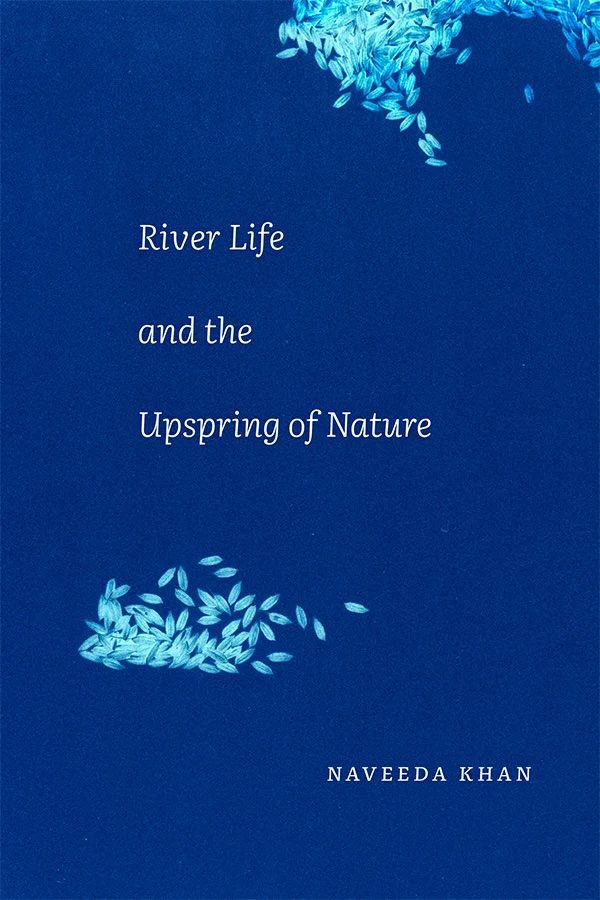
Given that a large part of the effort in my book River Life and the Upspring of Nature (2023) was to show the ways in which rivers effectively teach people how to live alongside them, I believe we have only to follow the water to see the very many ways people have adapted to this watery landscape. Besides practical ways, such as that of building houses that may be broken down quickly in the occasion of river erosion, there are complex societal understandings that show norms, such as those of kinship and religion, to be flexible in accommodating watery disruptions to lives. While such disruptions may heighten inequality, particularly within rural contexts, they may also temporarily flatten hierarchies, disallowing entrenched consolidations of power. At least within the context of the chars in northern Bangladesh, where I carried out fieldwork, this made for a fluid socio-political set up, which could be exploitative of people but also accommodating of punctuated lives.
 Mittal Institute: How does your work push us to see water not just as a resource to manage, but as a system we’re fundamentally part of?
Naveeda Khan: In my work I privilege one particular form that water takes within the context of Bangladesh, which is that of rivers, but as should be clear from my description above, there are very many different water bodies in Bangladesh. It took me a while to grasp certain aspects of water, which had the most profound impact on the way that I look at landscape today, and not just in the Bangladesh context. Water seeks to move, following slopes, cracks and crevices of topography, pulled by the earth’s gravity but also by the gravitational fields of larger water bodies, such as oceans, or forced up by the pressures of evapotranspiration. There is water all around us, in the wood with which our houses and furniture are built or even the utility poles that line the roads. All water is interconnected from a particular point of view and not just because, say, rivers are part of large watersheds or drainage basins. And we are ourselves watery bodies in so far as our bodies are composed of 50-75% water. In other words, we are immersed in a world of water. This perspective has made me feel a kinship with water such that it pains me to see it wasted, polluted, dammed, killed, as is happening in Bangladesh and, particularly, in the countries upstream to which Bangladesh is often beholden being a downstream country. As an aside, there are dams numbering in the 100s just on the Tsang Po-Brahmaputra-Jamuna River alone, and Bangladesh has 58 transboundary rivers.
We are immersed in a world of water. This perspective has made me feel a kinship with water such that it pains me to see it wasted, polluted, dammed, killed, as is happening in Bangladesh.
Mittal Institute: In your opinion, what would it take to fundamentally rethink our relationship to water?
Naveeda Khan: The perspective that I espouse above is already expressed in the world of global environmental policy through the Integrated Water Resource Management (IWRM) framework, first formalized in the 1992 International Conference on Water and the Environment (Dublin) and the 1992 Rio Summit. It has been widely adopted by countries of the world but is of course diversely implemented, if at all, since implementation is voluntary. The major issue with the implementation of such international policies is that they are predominantly mediated through states, which are usually the only internationally recognized sovereign authorities over natural resources within state territories, and have the ultimate say in how these resources are exploited. Very often the IWRM doesn’t sit well alongside state pursuits and is easily put aside, rendering it fairly ineffective. I think we have to think harder about how to give teeth to such policies, to officially recognize that states may not be the wisest custodians of natural resources, as well as to generate ways by which we feel more kinship with the natural environment.
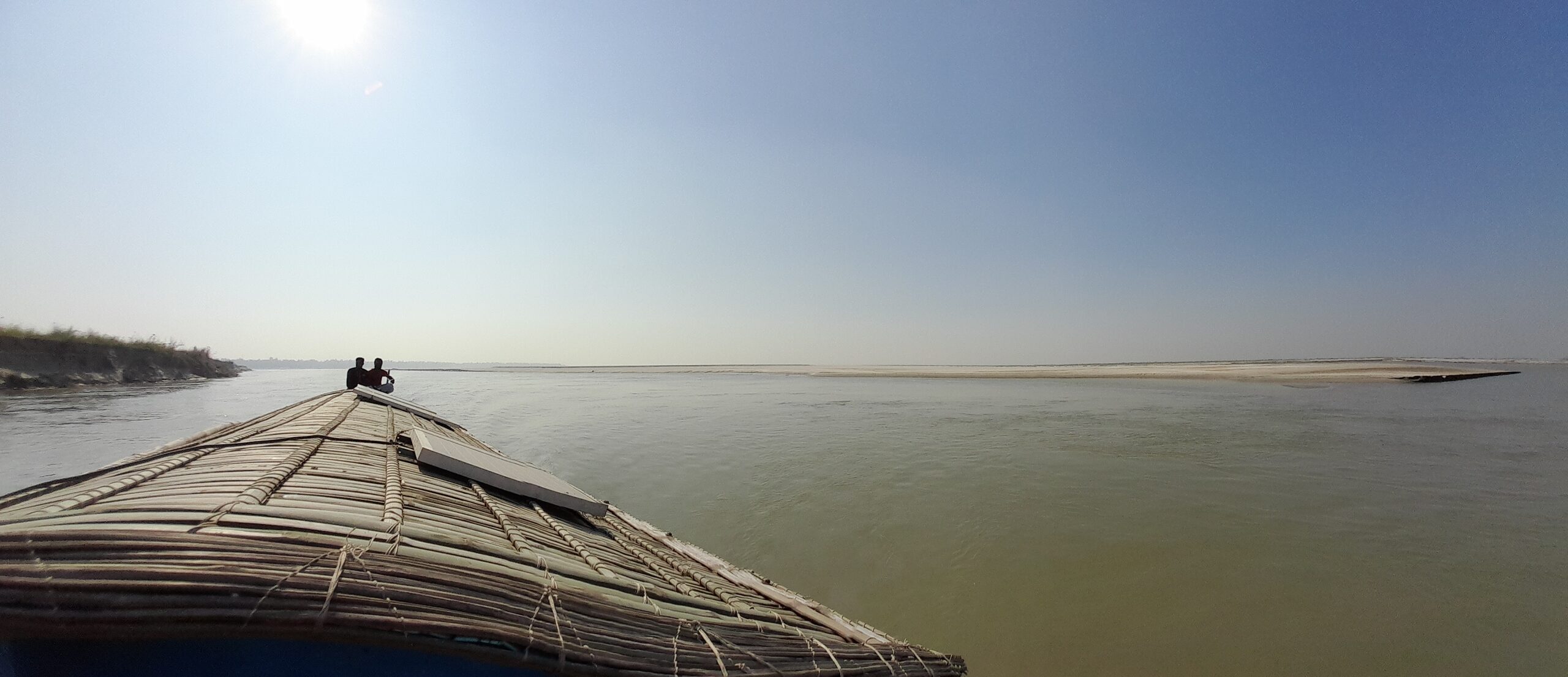
Prof. Khan’s field site in Bangladesh.
There have been moves recently to grant rivers personhood as a way to put into policy this feeling of kinship with natural entities. However, as legal scholars have pointed out, such granting of personhood relies too much for inspiration on the corporate form, the original legal person, and stands to not just further objectify rivers but also make it more legally labile to objectify people as persons. Growing lateral solidarities with non-human entities without needing to grant them personhood seems to be the biggest need of the moment, starting with how we feel and relate to water bodies around us.
 Mittal Institute: What gives you the most hope in this space right now?
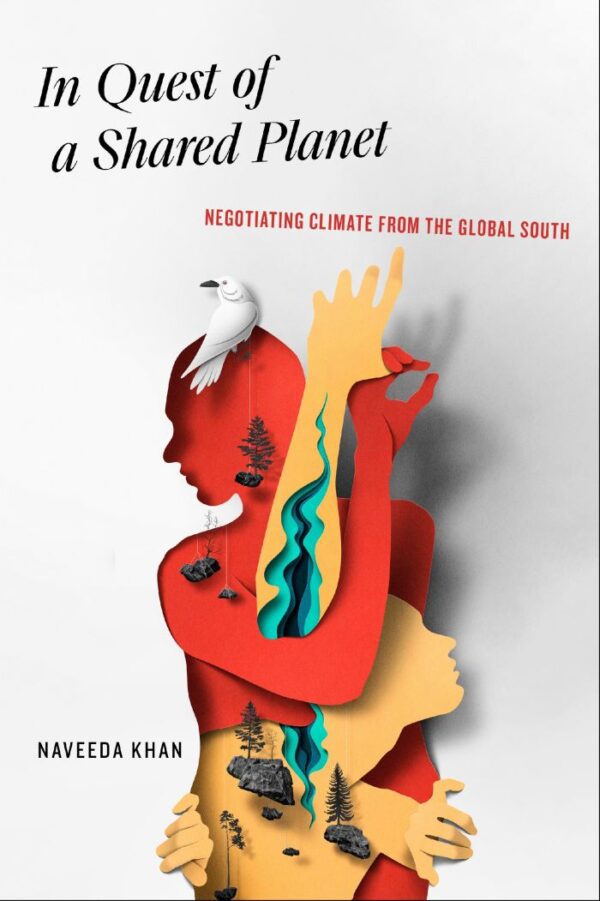
Naveeda Khan: Well, there isn’t much happening in the space of global environmental policy. As my work in In Quest of a Shared Planet: Negotiating Climate from the Global South (2023) has shown, the Global North usually goes into a holding pattern when the U.S. is disengaged from environmental issues, as evidenced not just by the previous Trump era but also the period under George W. Bush. It is the scale of the local/near at hand that gives most hope. I was very cheered by the revival of fish population through the improvement of their habitat by the de-damming of the Klamath River in California. This dam removal project was the outcome of decades of organizing by local communities. These are the efforts to follow and publicize widely, not just for the silver lining that they stand to offer but for a proper understanding of the hard work and know-how it takes to make a difference.
☆ The views represented herein are those of the interview subjects and do not necessarily reflect the views of the Mittal Institute, its staff, or its Steering Committee.