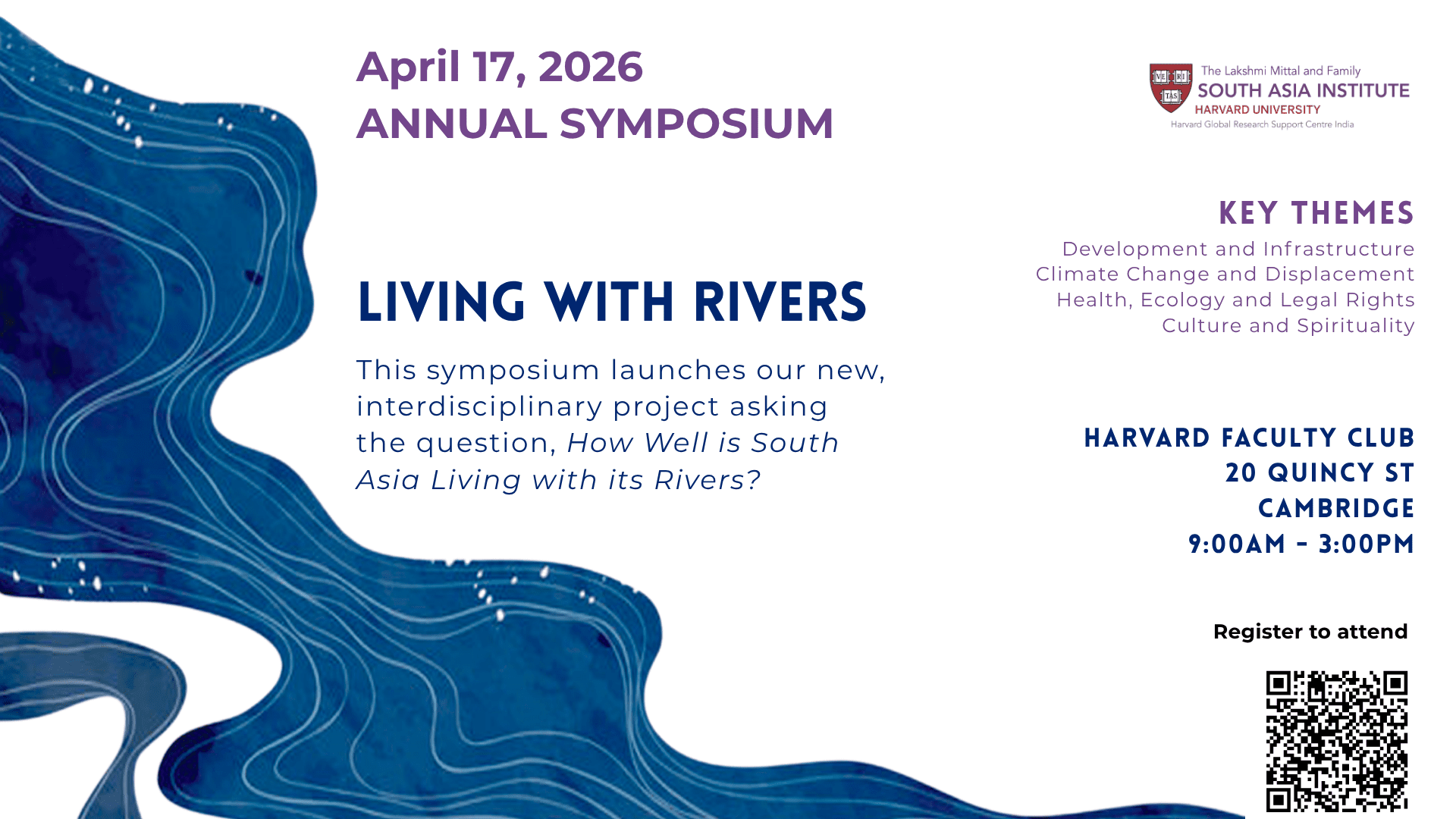
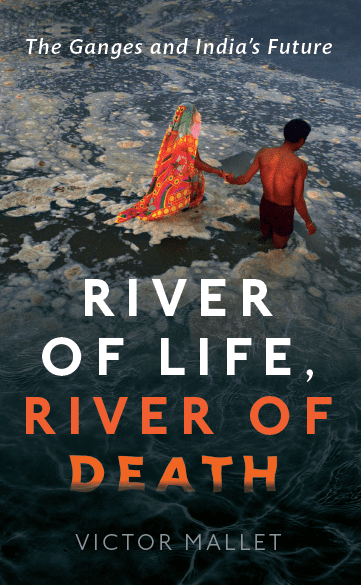
The Mittal Institute’s Annual Symposium: Living with Rivers on April 17 marks the launch of Living with Rivers, our new interdisciplinary initiative. Bringing together leading scholars and policy experts, the symposium will explore a central question: How well is South Asia living with its rivers? This year’s plenary speaker is Victor Mallet, author of River of Life, River of Death: The Ganges and India’s Future and Senior Editor of The Financial Times.
We spoke with Victor about reporting on water as a journalist, and the importance of translating climate complexities into human experience.
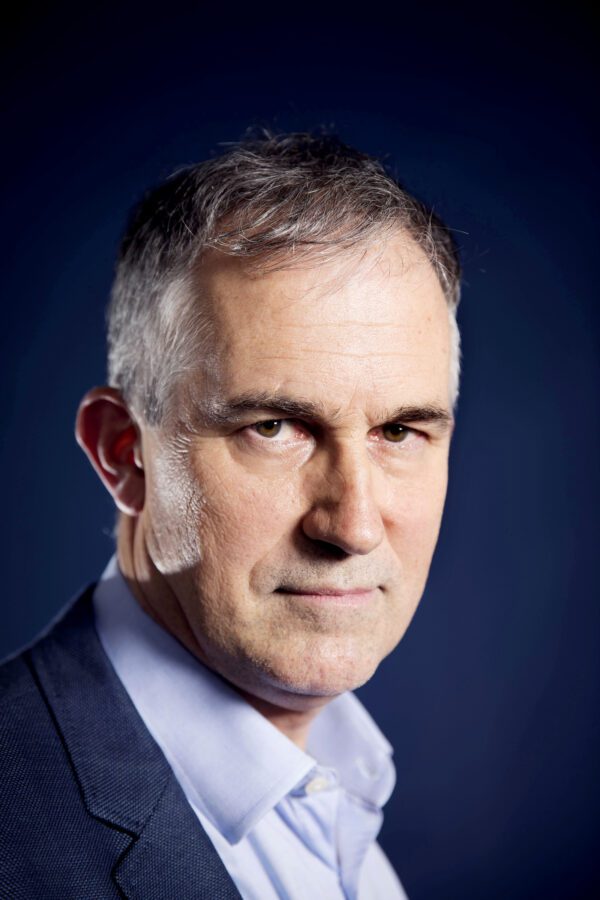
Victor Mallet
Mittal Institute: Victor, as a journalist, how do you translate complex water and climate issues into stories that resonate with broader audiences?
Victor Mallet: On rivers, I’ve tried to interview and listen to as many people as possible among those who live on rivers and depend on them to understand how they are affected and what they themselves are doing, for example to tackle water pollution that damages their livelihoods. The same approach applies to broader climate issues: when I first moved to India back in 2012, I attended a meeting in the foothills of the Himalayas and heard people explain how they were affected by early snowmelts and early flowering of plants as climate change made spring come earlier each year and triggered weather extremes in the form of heat and flooding.
Mittal Institute: How does your work push us to see water not just as a resource to manage, but as a system we’re fundamentally part of?
Victor Mallet: Big river systems such as the Ganges are very good examples of how changes in one place can affect life in other places for humans, other animals and plants and thereby for the ecosystem as a whole. The Ganges in the monsoon season becomes a huge river that thrashes its way across north India – historically the main riverbed can shift by several kilometers in a single season. But in the dry season, especially since the building of dams and the lack of snowmelt from the mountains, it now completely dries up in some parts, which is of course potentially disastrous for the people and wildlife who depend on it.
 Mittal Institute: In your opinion, what would it take to fundamentally rethink our relationship to water?
Victor Mallet: NGOs and environmental activists have tried in vain for decades to save rivers such as the Ganges, and history suggests that it takes determined action by government to make a real difference through legislation and its strict enforcement, and the provision of funds for rehabilitation.
Mittal Institute: What gives you the most hope in this space right now?
Victor Mallet: In River of Life, River of Death, I describe unsparingly the environmental disasters afflicting the Ganges. But I also hold out hope for the future, because I point to the example of other major rivers that were drastically affected by sewage and industrial pollution and have now recovered – including the Thames in England, the Rhine in continental Europe (a rescue that involved international cooperation) and rivers in the U.S midwest.
☆ The views represented herein are those of the interview subjects and do not necessarily reflect the views of the Mittal Institute, its staff, or its Steering Committee.