
This academic year, the Mittal Institute has supported 20 graduate and Ph.D students from across the different schools at Harvard who conduct research focused on South Asia. These Graduate Student Associates (GSAs) engage in monthly working groups to receive feedback from one another and exchange ideas. This spring, three of them presented their research in a Graduate Student Associate Showcase.
Presenting GSAs
- Nitin Ranjan, “Caste Census and Delimitation in India — A Fork in the Road for the Young Republic?”
- Mitul Iyengar, “A Sociotechnical Study of Community Health Worker Systems in India”
- Atiyab Sultan, “Endgame of Empire: Sultan Khan, Asia’s First Grandmaster”
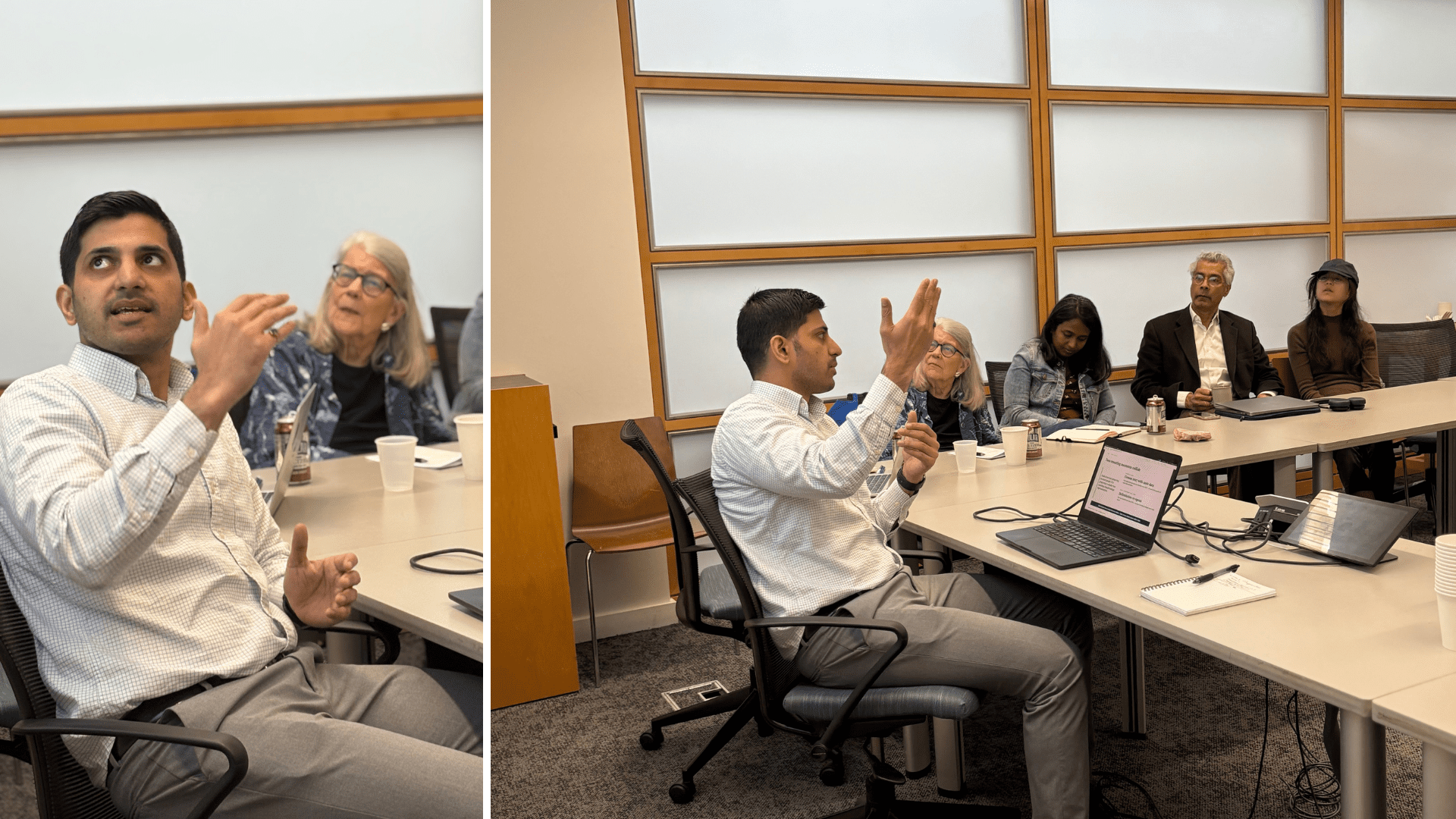
Nitin Ranjan presents his research project, “Caste Census and Delimitation in India — A Fork in the Road for the Young Republic?”
In a talk titled “Caste Census and Delimitation in India — A Fork in the Road for the Young Republic?” Nitin Ranjan explored the significance of India’s upcoming 2027 Census, which will include comprehensive caste data for the first time since 1931. Ranjan, a Master in Public Policy candidate at the Harvard Kennedy School, discussed how the census could reshape political representation in India, highlighting tensions between three core democratic ideas: equal voting power, fairness between states in the federal system, and the need to recognize and address historical inequalities tied to caste. Ranjan argued that the census and future delimitation process could mark a major turning point for India’s democracy.
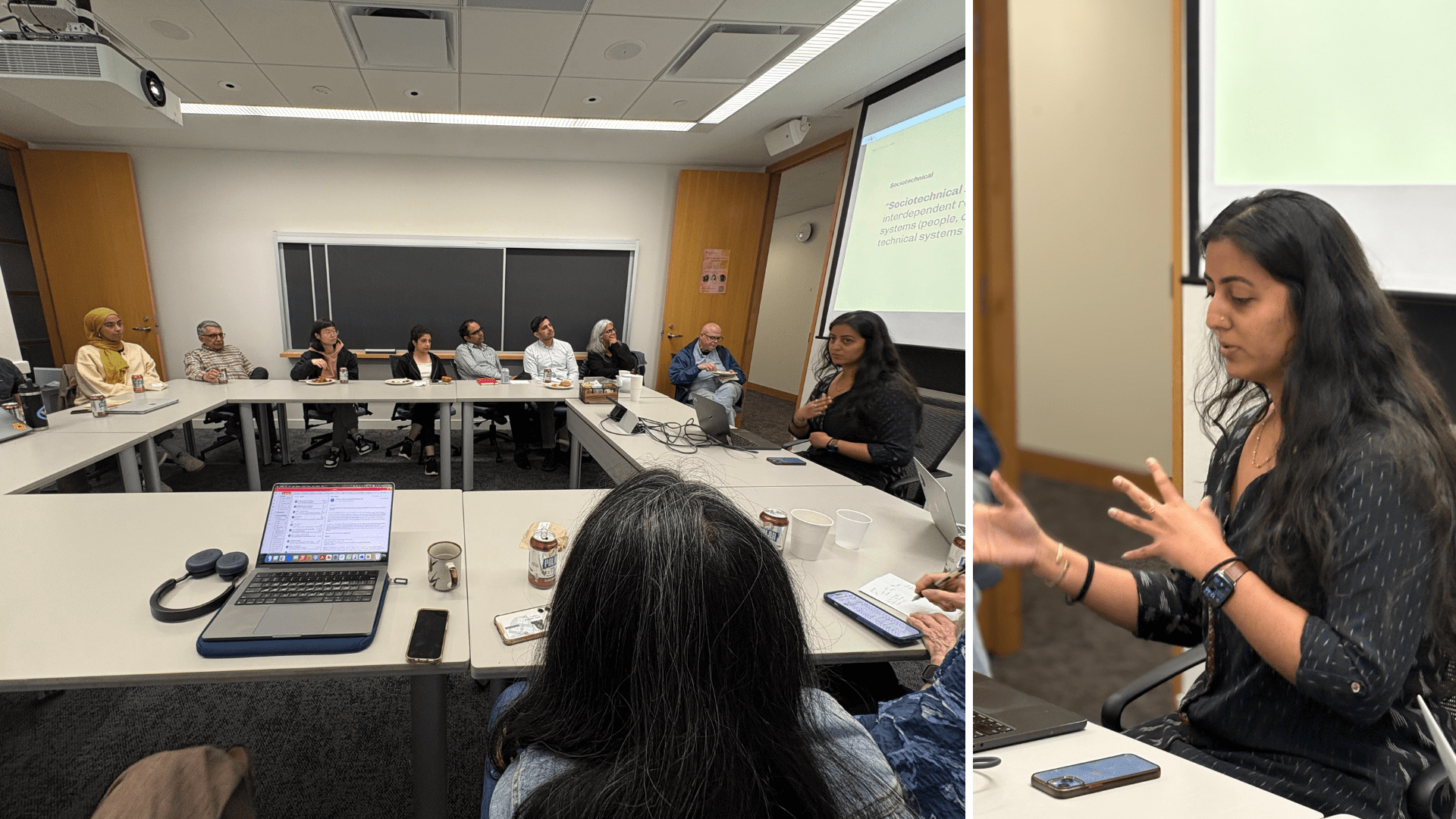
Mitul Iyengar presents her work on “A Sociotechnical Study of Community Health Worker Systems in India” .
In her presentation, “A Sociotechnical Study of Community Health Worker Systems in India,” Mitul Iyengar, a Master’s in Design Engineering candidate, shared research from Project Disha, which examines how women in low-income and migrant communities access reproductive healthcare in India. Working closely with ASHA workers (Accredited Social Health Activists) in Maharashtra, the project uses a participatory design approach to better understand how healthcare information and support move through communities. By exploring the intersection of public health, migration, and technology, the research highlights both the critical role ASHA workers play and the challenges families face in accessing consistent care while frequently on the move.
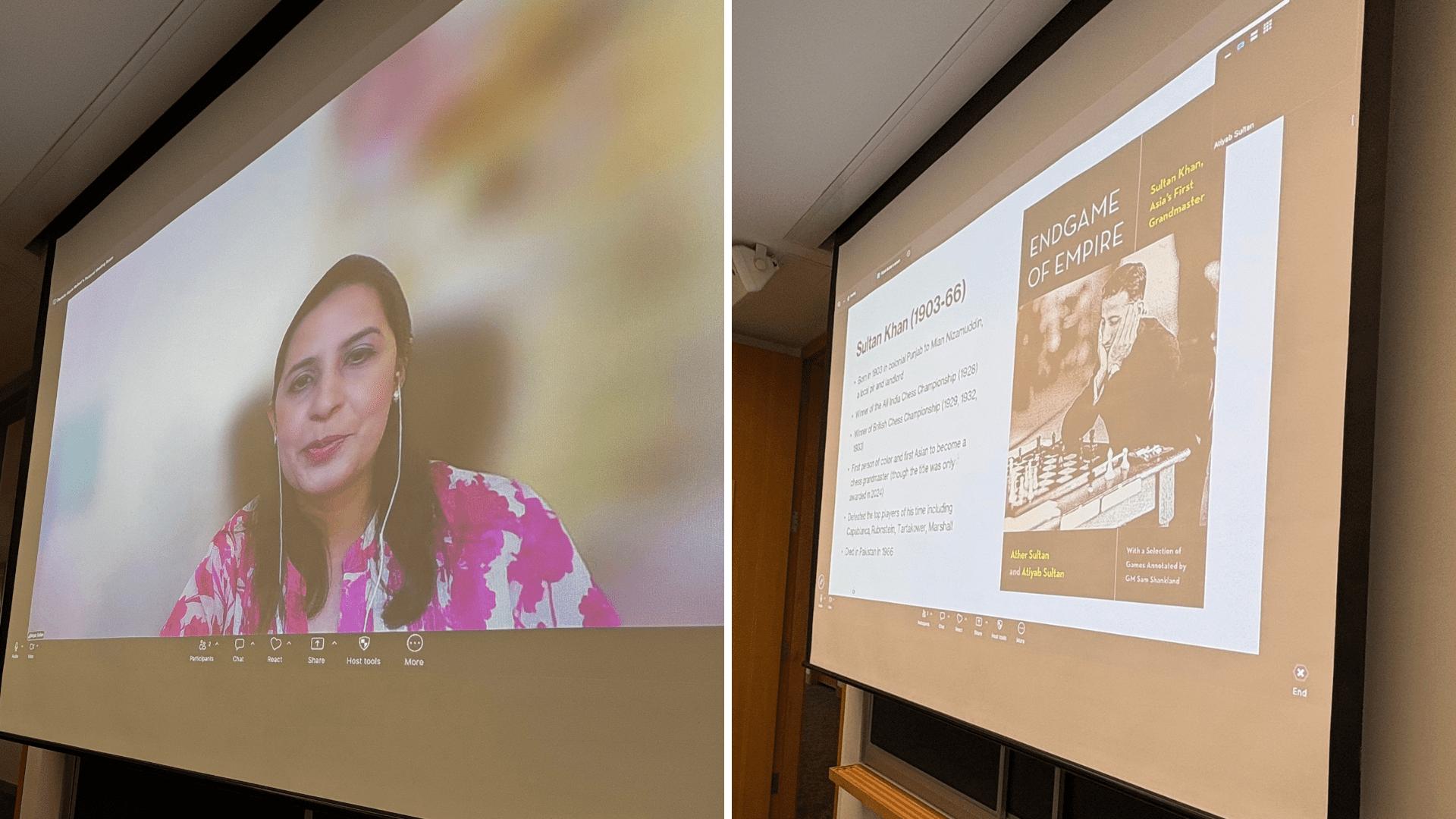
Atiyab Sultan on “Endgame of Empire: Sultan Khan, Asia’s First Grandmaster”.
In a presentation on the forthcoming book Endgame of Empire: Sultan Khan, Asia’s First Grandmaster, Harvard Kennedy School student Atiyab Sultan discussed the remarkable story of her grandfather, Sultan Khan, a pioneering chess player who rose to international fame during the interwar period. Co-authored and set to be released by Fordham University Press in July, the book explores how chess became a lens through which to examine racial tensions, colonial power, and global sport during the final decades of the British Empire.
☆ The views represented herein are those of the interview subjects and do not necessarily reflect the views of the Mittal Institute, its staff, or its steering committee.