
With a background in Public Administration and climate governance, Dr. Md Mafizur Rahman is examining how policies and institutions shape responses to climate change in Bangladesh. As a Mittal Family Climate Fellow at the Mittal Institute, he is working with Prof. Dustin Tingley, Thomas D. Cabot Professor of Public Policy at Harvard Kennedy School and Harvard Government, to explore these questions. Dr. Rahman brings together perspectives from political ecology and environmental justice to better understand how climate policies affect different communities and connect questions of governance to the lived realities of people experiencing environmental change. We spoke with him about his work and his hopes for his Harvard fellowship.

Md Mafizur Rahman
Mittal Institute: Welcome to Harvard, Rahman! With a background in Public Administration, what led you to focus your research on climate governance, particularly issues of freshwater access and community resilience in Bangladesh?
Md Mafizur Rahman: Thank you. It is an honor to be here at Harvard. My journey into climate research was gradual and, in some ways, surprising. Although I was trained in Public Administration, during my student years and early career my interests ranged widely. At different times, I was drawn to journalism, literature, political activism, and even filmmaking. Over time, research became the path through which I could explore questions that concerned me most: how institutions work, how people interact with the state, and why some communities are better able than others to access public resources and opportunities.
An important turning point came when I began my research work with Dr. Syed Giasuddin Ahmed, a leading scholar of Public Administration in Bangladesh. Through this work, including a study of secondary-school dropout in rural Bangladesh, I learned to look beyond statistics and understand the institutional and social realities behind development problems. My subsequent work with Dr. Akhter Hussain of the University of Dhaka, a public intellectual, and through him with the Center for Natural Resource Studies (CNRS), brought me into environmental and community-level issues and broadened my understanding of how governance and development intersect.
These experiences led me to see that many environmental problems are also governance problems. A cyclone, flood, or salinity intrusion may be a physical hazard, but its consequences depend on institutions, resources, participation, and social and political relationships. This perspective became central to my doctoral research at Huazhong University of Science and Technology, where I examined climate adaptation and coastal community resilience in Bangladesh. Since joining Jagannath University, I have continued this research agenda. More recently, freshwater has emerged as a central concern. In southwest coastal Bangladesh, access to freshwater is closely connected to livelihoods, agriculture, health, and everyday well-being. I am therefore increasingly interested in how governance shapes who can access freshwater, under what conditions, and with what consequences.
Mittal Institute: What led you to apply for the Mittal Family Climate Fellowship, and what do you hope your time at Harvard will make possible for your research?
Md Mafizur Rahman: I was drawn to the Mittal Family Climate Fellowship because it offers an opportunity to deepen a line of research developed through many years of academic, professional, and field experience in Bangladesh. There is also a deeply personal dimension to being here. My father, a freedom fighter with a deep love for nature, influenced my sense of responsibility toward society and the environment from an early age. My mother always hoped that I would have the opportunity to pursue higher studies at an institution of this stature. My siblings, of course, have been an important part of my journey. Being at Harvard therefore carries a meaning for me that goes beyond the fellowship itself. I am especially happy to be here now with my wife and daughter.
The fellowship is also meaningful intellectually because my research increasingly brings me to questions that cannot be fully understood through a single discipline. Climate adaptation involves environmental change, but it is also about institutions, political economy, livelihoods, social relations, and justice. Coming from Public Administration, I hope to contribute a governance perspective to broader conversations on climate change while learning from scholarship in political ecology and environmental studies. At Harvard, I want to sharpen the theoretical and analytical dimensions of my research on freshwater governance in coastal Bangladesh, develop intellectual collaborations, and strengthen the connection between scholarship, policy, and locally grounded adaptation practice. I also hope to bring these insights back to my research and teaching at Jagannath University and my wider policy engagement in Bangladesh.
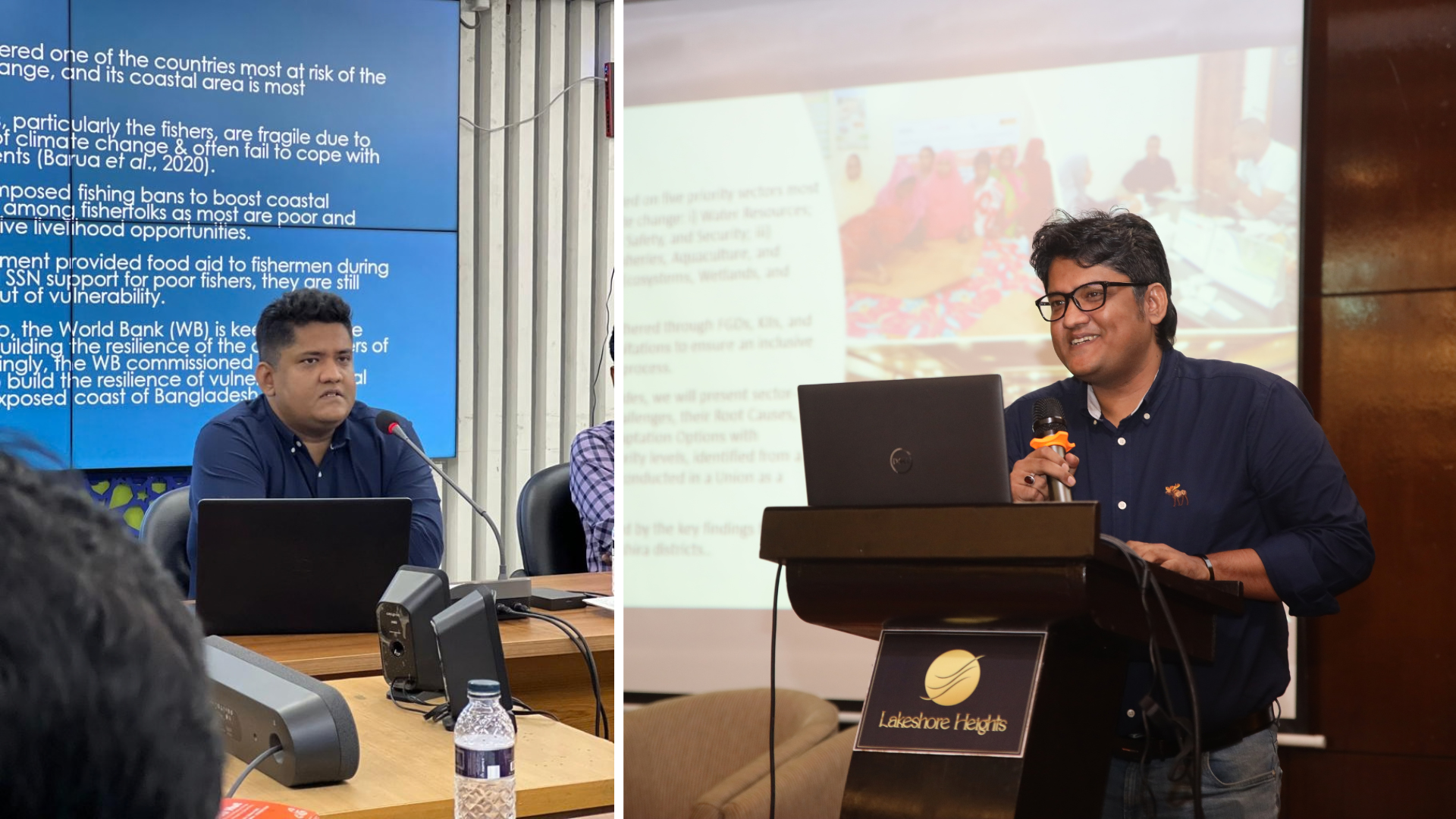
Md Mafizur Rahman.
Mittal Institute: Bangladesh is highly vulnerable to climate change. From your perspective, what aspects of climate adaptation and governance deserve greater attention?
Md Mafizur Rahman: It’s true. But Bangladesh has made important progress over the past two decades in recognizing climate change as a national development and governance priority. During this period, particularly under successive Awami League-led governments, the country developed and strengthened an important policy and institutional architecture for climate adaptation, including the Bangladesh Delta Plan 2100, the Mujib Climate Prosperity Plan 2022-2041, and the National Adaptation Plan 2023–2050. The renaming of the Ministry of Environment and Forests as the Ministry of Environment, Forest and Climate Change marked an important institutional recognition of climate change as a national governance and development priority.
However, the challenge now is less about producing new policies and more about translating existing commitments into equitable action on the ground. Climate risks vary across places and social groups, while local knowledge and priorities are often underrepresented in centralized adaptation planning and resource allocation. Greater local decision-making, stronger local government capacity, meaningful community participation, and accountability are therefore essential. Institutional coordination also matters, as adaptation cuts across water, agriculture, health, infrastructure, and environmental management. Finally, adaptation must be viewed as a question of equity as well as risk reduction: who benefits from adaptation investments, who participates in decisions, whose knowledge is recognized, and whose vulnerabilities remain overlooked.
Mittal Institute: You have worked extensively on climate governance, local governance, and community resilience. Is there a particular research project or experience that has been especially meaningful to you? What makes it stand out?
Md Mafizur Rahman: There are several experiences that have been meaningful to me, but my doctoral research was an important turning point. It led me to look beyond whether an intervention works and ask why it works in some contexts, for some people, and not for others. That line of inquiry continued in my subsequent research, including my articles “Governance Constraints in Building Climate Resilience: Evidence from Coastal Bangladesh,” published in GeoJournal (Springer Nature), and “Institutional Dynamics and Climate Adaptation: Unveiling the Challenges and Opportunities in Coastal Bangladesh,” published in SN Social Sciences (Springer Nature). My professional work further allowed me to explore these questions through projects on coastal resilience with the World Bank/CNRS, LoGIC with UNDP/PMID, REECALL-21 with Oxfam/AIRD, and, more recently, Local Adaptation Plans of Action (LAPA) with Concern Worldwide, IRC, and SIDA through CNRS.
Two experiences, in particular, broadened my thinking toward the politics of natural resources. One was my work with IWMI through CNRS on the policy and institutional analysis of sustainable and inclusive food systems. During the fieldwork, I was accompanied by M. Anisul Islam, Director of CNRS, which deepened my understanding of the links among natural resources, livelihoods, institutions, and local interests. The other was my involvement in the Biodiversity for Resilient Livelihoods (B4RL) Project, funded by SIDA and implemented by CNRS, where I led the preparation of the project completion report. Conceived by Dr. M. Mokhlesur Rahman, Executive Director of CNRS, the project connected biodiversity, ecosystems, livelihoods, and resilience in Bangladesh’s modified delta. Together, these experiences led me to a more specific question: how does freshwater become a contested resource in climate-vulnerable coastal communities? This question now sits at the center of my research, building on my earlier work on governance, climate adaptation, and community resilience.
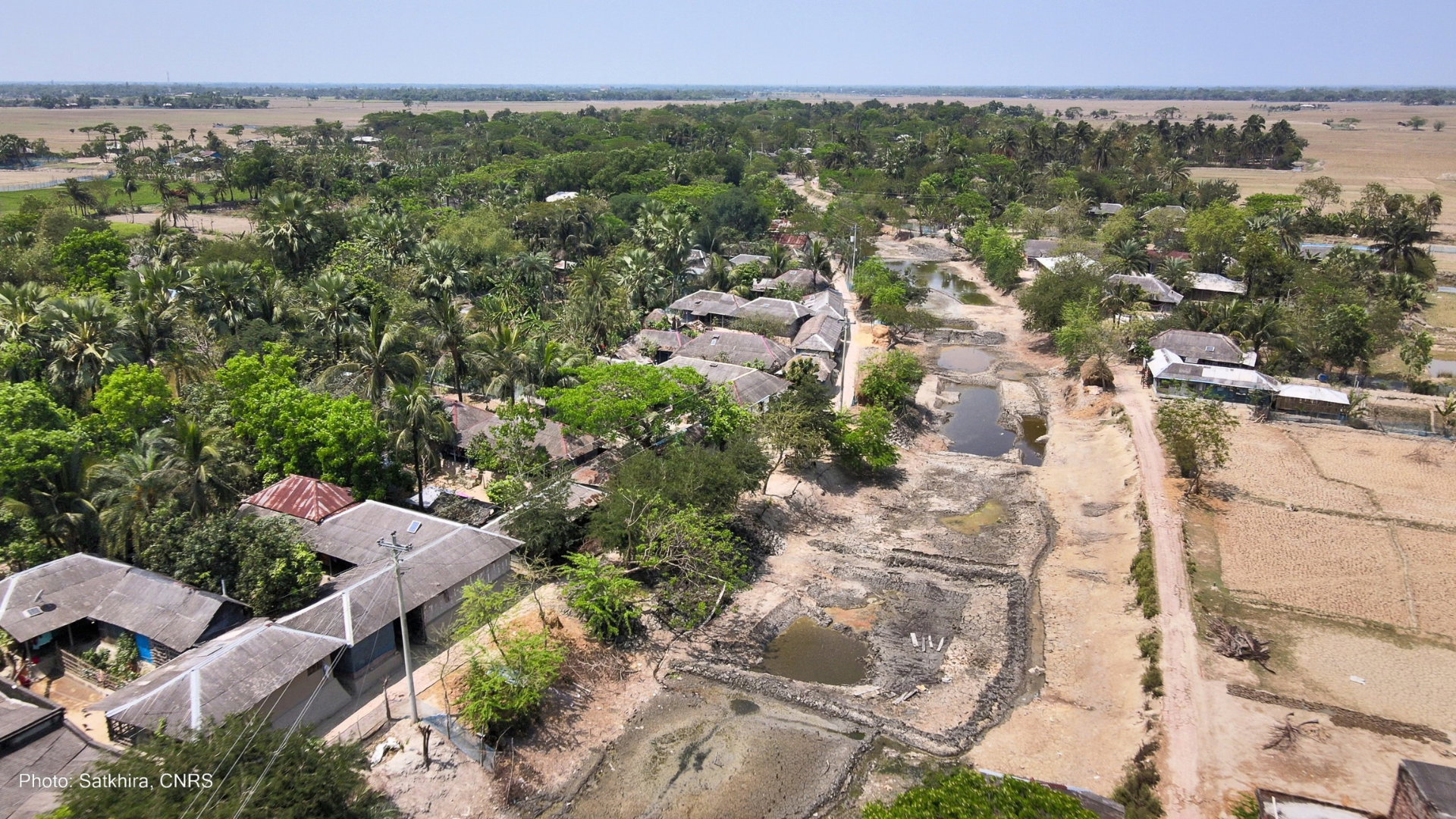
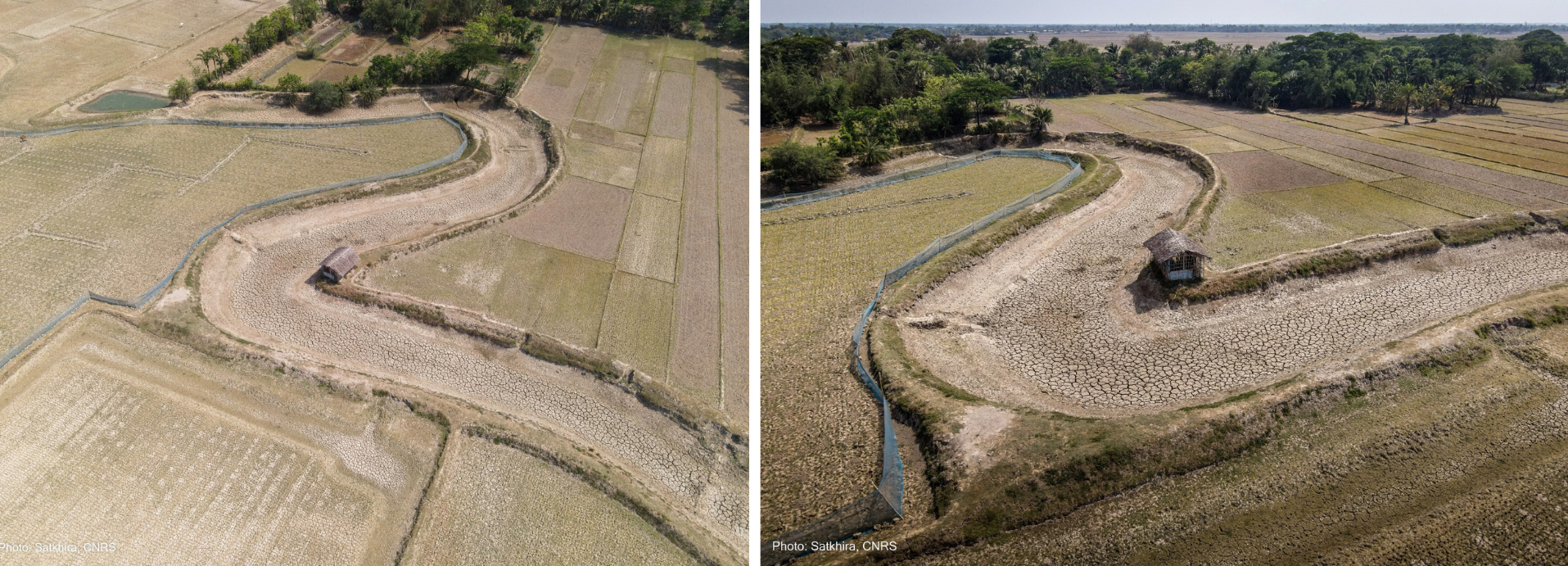
Degraded canals and canal encroachment and conversion. Photos by CNRS, where Dr. Rahman was involved as a consultant.
Mittal Institute: Your recent work has included developing Local Adaptation Plans of Action (LAPA) for climate-vulnerable communities in Bangladesh. What have you learned from working at the local level, and how can locally led adaptation strengthen climate resilience?
Md Mafizur Rahman: My work on LAPA has allowed me to see directly how climate risks are experienced at the local level. My involvement in developing LAPAs in both coastal and Char areas has made one thing clear: there is no single model of climate vulnerability or adaptation. A key lesson is the importance of local knowledge. Communities understand their vulnerabilities through everyday experience and know which coping strategies have worked or failed. They should therefore be recognized not simply as beneficiaries, but as knowledge holders and active participants in decision-making. At the same time, locally led adaptation requires more than participation. Local priorities need responsive institutions, adequate financing, technical support, and coordination. LAPA can help translate national adaptation priorities into plans that reflect local needs while recognizing how challenges are interconnected—for example, freshwater access is linked to agriculture, livelihoods, health, gender, land use, and local government. Ultimately, locally led adaptation is strongest when communities have genuine agency and the institutions and resources to support it. The goal is not simply to make communities resilient to climate change, but to strengthen their capacity to shape the decisions that determine their resilience.
Mittal Institute: What research questions are you most excited to pursue during your time at Harvard, particularly in relation to freshwater access, governance, and climate adaptation in coastal Bangladesh?
Md Mafizur Rahman: Building on this trajectory, my current research focuses on freshwater governance in southwest coastal Bangladesh, where climate change and environmental pressures are making access to freshwater increasingly difficult and contested. I am particularly interested in the fact that freshwater scarcity is not simply a question of physical availability. Salinity intrusion, changing hydrological conditions, and other environmental pressures are important, but access is also shaped by institutions, allocation mechanisms, land, livelihoods, social relations, and power. Different groups can experience the same water scarcity very differently depending on their economic position, resource access, and ability to influence local decisions.
At Harvard, I want to examine how institutional arrangements and power relations shape access to freshwater in climate-vulnerable coastal communities. More specifically, I am interested in who makes decisions about freshwater resources, whose knowledge and interests are recognized, how competing claims are negotiated, and who ultimately benefits from water-related investments and adaptation interventions. I am also interested in how elite control over freshwater resources can become normalized through local institutions, political networks, and development practices. When particular actors have greater influence over infrastructure, land, or resource allocation, they may be better positioned to secure access while others remain marginalized. Understanding these dynamics can help explain why formally inclusive policies do not always produce equitable outcomes.
My broader aim is to connect my background in Public Administration and climate governance with perspectives from political ecology and environmental justice. This will allow me to examine freshwater not simply as an environmental or technical issue, but as a question of governance, equity, and power, while paying particular attention to the experiences and strategies of communities living at the frontline of climate change.
“My broader aim is to connect my background in Public Administration and climate governance with perspectives from political ecology and environmental justice.”
Mittal Institute: How has your research and policy engagement influenced climate adaptation practice in Bangladesh, and what changes do you still hope to see in the way climate adaptation is governed?
Md Mafizur Rahman: I see my research and policy engagement as an effort to connect evidence, institutions, and practice. Through research, evaluations, policy analysis, and advisory work with government agencies and development partners, I have contributed to the design and implementation of climate adaptation initiatives. My work on LAPA has been particularly important, allowing me to bring together community knowledge, local vulnerabilities, institutional responsibilities, and adaptation priorities while identifying gaps between policy commitments and local realities.
These experiences have taught me that good policy does not automatically produce equitable outcomes. Climate adaptation can be constrained by weak institutional coordination, limited local government capacity, financing gaps, and insufficient community participation. The change I would most like to see is a shift from “adaptation for communities” toward “adaptation with communities.” Local people should have a meaningful role not only in identifying vulnerabilities, but also in setting priorities, influencing resource allocation, and monitoring interventions.
I also believe adaptation should be judged not only by whether it reduces climate risk, but by who benefits and who bears the costs. Ultimately, I hope to see a more inclusive and locally responsive approach in which national institutions provide direction and resources, while communities have greater agency in shaping the decisions that determine their resilience. My time at Harvard will allow me to further develop these ideas through interdisciplinary research and bring new perspectives back to my work on climate governance and adaptation in Bangladesh.
☆ The views represented herein are those of the interview subject and do not necessarily reflect the views of the Mittal Institute, its staff, or its steering committee.