
Dr. Animesh Bag, the Mittal Institute’s Raghunathan Family Fellow, is exploring how American print culture shaped perceptions of India and Indian immigrants in the early twentieth century. He is working with Prof. Sugata Bose, Gardiner Professor of Oceanic History and Affairs, Harvard University Department of History. Dr. Bag’s research examines newspapers, magazines, missionary publications, and revolutionary writings to trace how ideas about race, immigration, and belonging were produced and challenged across borders. We spoke with Bag about what brought him to this research, what he is uncovering in the archives, and what these histories can tell us about race, migration, and representation today.

Dr. Animesh Bag, Raghunathan Family Fellow 2026-27
Mittal Institute: What led you to apply for this fellowship, and what are you hoping it will make possible for your research?
Animesh Bag: First of all, I’m truly excited to be here at Harvard. To answer the question, I will revisit my PhD thesis. After completing my doctoral research on the colonial prison system in Bengal (1860-1945), which eventually became a monograph from Palgrave Macmillan (2025), I began tracing the transnational connection of India’s revolutionary movement. This led me to explore Indian revolutionaries’ American connection, especially when Lala Lajpat Rai, Lala Har Dayal, and M.N. Roy, among others, were politically active in the United States. This brought me to early twentieth-century America when the first substantial pool of Indian immigrants arrived in the U.S. I became interested in their experiences of racial discrimination and their constant negotiation of identity, belonging, and political expression in a new social and political environment. Indian intellectuals in the U.S. also became politically engaged; they built associations and produced magazines to counter prevailing representations of Indians. I began to explore how American print culture such as their newspapers, periodicals, and magazines wrote about Indian immigrants, their racial roots, colonial history and presented their conditions in the U.S. In the process, I found a substantial repository of American print archive in Harvard University’s ABCFM records and other collections at the Houghton Library. The possibility of accessing these materials was a major reason, I applied for the Raghunathan Family Fellowship at the Mittal Institute. I was not initially familiar with the fellowship itself but was always aware of Harvard’s robust South Asia Institute. I felt that the Institute’s brilliant academic environment, the opportunity to engage with the faculty members and scholars, and access to the rich archival collections would provide an ideal setting for developing this project and enabling me to pursue questions that would be difficult to address elsewhere. Through this fellowship, I intend to reach to the root of Indo-American racial relationship and immigration issue that often take center stage in today’s political scenario.
Mittal Institute: Your Mittal Institute research project will explore the relationship between American print culture, race, and immigration in the early twentieth century. Can you tell us more about this project?
Animesh Bag: In twentieth-century American print culture, portrayal of India and Indians remained mostly stereotypical—either with the former presented as an impoverished exotic place or the latter seen as an uncivilized, degenerate race. These narratives erased India’s political struggle against colonialism and heavily drew on British Orientalism, reflecting America’s own imperial and capitalist ambitions. Against this backdrop, my project investigates how American print culture between 1904 and 1924 produced racialized knowledge about India and its immigrants, what I term imperial racial epistemology. I argue that these print networks amplified exclusionary narratives of racial hierarchy that influenced public discourse, legitimizing nativist attitudes toward Indians (known as Hindoos/Hindus). American print culture served as part of a polycolonial network that borrowed, applied, and translated British orientalist epistemology. In this cross-imperial network of knowledge dissemination, the print media produced the colonial Indian subject who became the object of the racialization and moral pedagogy of America.
This attitude prompted the U.S. and Britain to jointly monitor and repress India’s anticolonial movements in America. It also led to trial, imprisonment, and expulsion of Indian immigrants, both workers and intellectuals. As the anti-Asian sentiment was gradually intensified, resulting in racial violence like the Bellingham riots in 1907, America formed the Dillingham Commission in 1907, passed the 1917 Immigration Act, and finally the Asian Exclusion Act of 1924 to cease Asian immigration, including Indians. This barred Asian people legally from getting American citizenship. However, historically, America shared a long-standing relationship with India through trade, missionary activity, and engagements with Indian philosophical texts. Thus, 1904 to 1924 becomes crucial when racialized knowledge of missionary Orientalism gave way to surveillance and legislative exclusion.
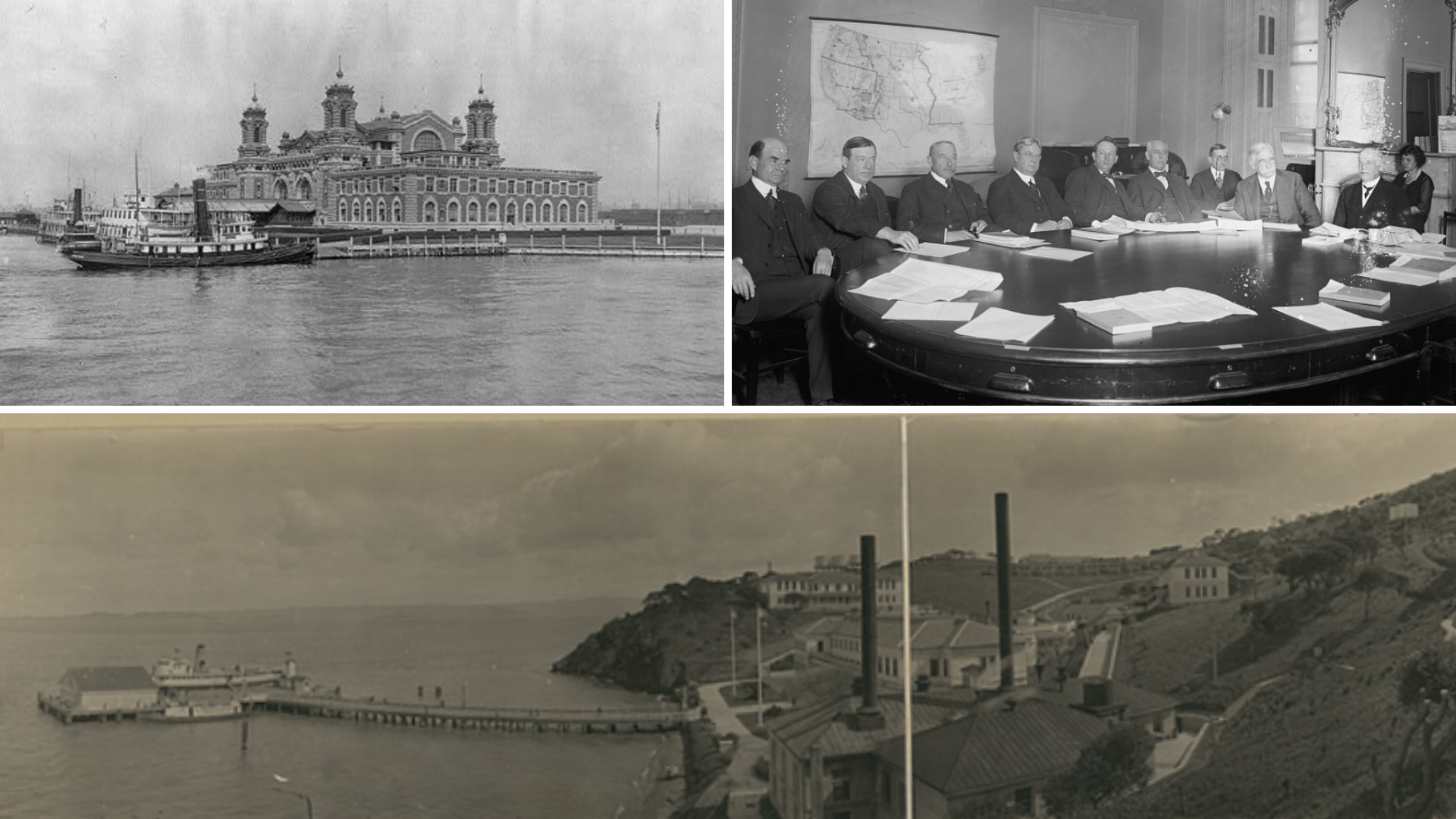
The Asian Exclusion Act of 1924 ceased Asian immigration. Top left: A view of Ellis Island in New York, 1913. Top right: Senate Committee on Immigration, 1920. Bottom: Angel Island Immigration Station in San Francisco Bay.
Mittal Institute: What did American newspapers, magazines, and other publications reveal about the ways India and Indian immigrants were represented and understood during this period?
Animesh Bag: For this project, I would look into Missionary Herald and correspondences of the American Board of Commissioners for Foreign Missions (ABCFM), writings of select nativist societies like the Immigration Restriction League (1894-1921) and the Anti-Asian Exclusion League (1906-10) alongside newspapers and magazines like San Francisco Call, San Francisco Chronicle, The Oregon Daily Journal, The Corvallis Times, Daily Capital Journal, Overland Monthly etc. I have included missionary periodicals as they were the initial channels through which America received information about India. American nativist leagues such as the Immigration Restriction League (IRL) and the Anti-Asian Exclusion League called for legal restrictions on the immigration influx. Their campaigns, ranging from conducting public meetings to writing pamphlets and newspaper articles, framed Asians immigrants, including Indians, as aliens, external threats, and injurious to the national character. Similarly, the national and regional newspapers and magazines, widely circulated in the West Coast of America, published repetitive story of ‘Hindoo menace’ that directly fed the American public sphere about India.
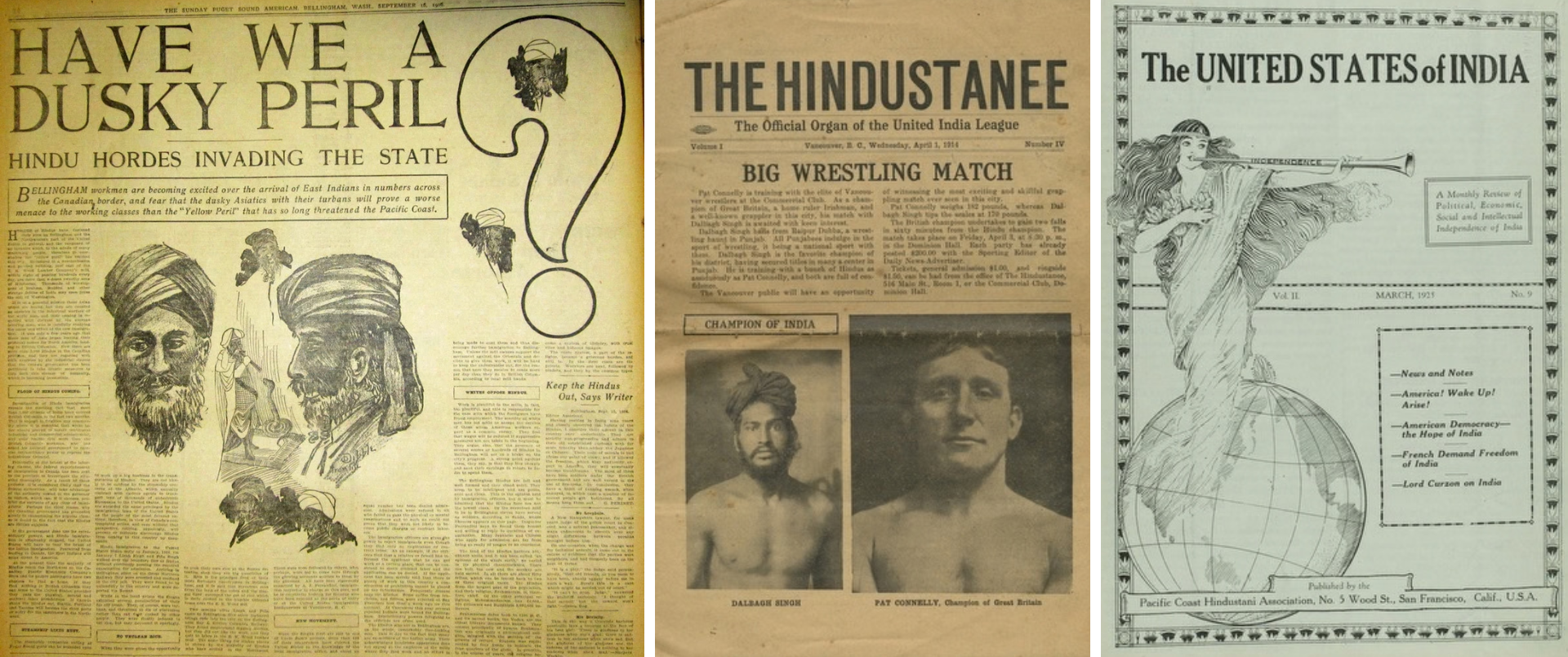
Newspaper articles in the early 1900s framed Indians “as aliens, external threats, and injurious to the national character.”
Mittal Institute: In your research, you also examine how Indian intellectuals responded to and challenged these narratives. Were there particular writers, publications, or moments of resistance that stood out to you?
Animesh Bag: I would examine the periodicals and writings produced by Indian revolutionary networks in the United States, particularly, the Ghadar Party’s Hindustan Ghadar, alongside Free Hindustan, a revolutionary newspaper associated with Tarak Nath Das, as well as the writings of the Friends of Freedom for India, a group closely associated with the Ghadar movement. I would pay particular attention to the writings of figures such as Tarak Nath Das, Lala Har Dayal, Girindra Mukherjee, , and Bhagat Singh Thind , who were important voices within the broader transnational revolutionary and intellectual network.
Through editorials, political commentary, reports, and polemical writings, these revolutionary intellectuals challenged representations of Indians as racially inferior, politically incapable, or unfit for citizenship. I am especially interested in how they appropriated the language of liberty, equality, and self-determination circulating in American political discourse and deployed it against both racial discrimination in the United States and British imperial rule in India. In this sense, their print activism became an important site of counter-discourse and political resistance. They sought not only to expose the racial assumptions underlying immigration restrictions and exclusionary policies, but also to construct alternative representations of Indians as politically conscious, intellectually capable, and entitled to freedom and self-determination. Reading these revolutionary publications alongside mainstream American print culture will therefore allow me to examine both how racial knowledge about India was produced and how Indian intellectuals actively contested, negotiated, and disrupted that knowledge through transnational print activism.
“Reading these revolutionary publications alongside mainstream American print culture will therefore allow me to examine both how racial knowledge about India was produced and how Indian intellectuals actively contested, negotiated, and disrupted that knowledge through transnational print activism.”
Mittal Institute: Beyond this project, your work also explores history of the colonial prison in Bengal, its experiences, and subsequent resistance. How do these issues connect with your broader research interests?
Animesh Bag: I have always been fascinated by the politics of imperial governance and its history. However, my fundamental interest lies in understanding how people experience and deal with law, policy, and governmentality. In broad, how colonized populations encounter imperial bureaucracy, live through it’s structures, and ultimately, resisted imperial imposition. These experiences, on the other hand, are shaped by racial, gender, class, and caste identities.
In my previous work, I explored these questions through the colonial prison system in colonial Bengal from 1860 to 1945. What I am now interested in tracing the empire’s transnational trajectory. I found it quite fascinating that despite India was never under American colonial rule, they borrowed Orientalist racial logic and applied on the Indian immigrant. This narrative gradually translated into the U.S. immigration policy and law in the twentieth century.
So, my postdoctoral project takes a transition from my previous project not simply through changing its geographical location but in terms of methodological expansion. I intend to read American archive to locate how India and its people were represented, how those representations circulated, and how they acquired political and legal consequences. At the same time, I want to recover the responses of Indian intellectuals and migrants to these representations. In doing so, I keep investigating how imperial power operates through its system of knowledge production and how it produces experiential impacts on Indian subjects. Thus, I connect the question of race, imperial transnational networks, and immigration debates in this project.
Mittal Institute: Looking ahead, what impact do you hope this postdoctoral research project will have on the way we understand race, migration, and the role of narratives in shaping how communities are perceived?
Animesh Bag: I hope this project will contribute to a more historically grounded understanding of how race and migration are shaped not only by laws and institutions, but also by the narratives through which a particular nation is represented and understood. By examining American print culture alongside the responses of Indian intellectuals and revolutionaries, I want to demonstrate how ideas about race were produced, circulated, and legitimized through seemingly ordinary forms of journalism, political commentary, and popular writing, and how those representations could have material consequences for migration, citizenship, and belonging.
More importantly, I hope the project will move beyond viewing Indian migrants simply as subjects of racialization and instead foreground their agency as producers of counter-narratives. The print activism of Tarak Nath Das, Lala Har Dayal, Bhagat Singh Thind , and others reveal that racial discourse was not a one-way process; it was a contested field in which migrants themselves participated in producing alternative understandings of identity, political capacity, and belonging.
Ultimately, I hope the project will help us understand racialization as a dynamic and contested process—one in which narratives can create exclusion, but can also become instruments of resistance. Although my study is historically focused on the early twentieth century, I think this has broader relevance for understanding how media and political narratives continue to shape perceptions of migrant and minority communities today. In that sense, I hope the project will connect the history of Indian migration and anti-colonialism to larger conversations about race, mobility, citizenship, and the politics of representation.
☆ The views represented herein are those of the interview subject and do not necessarily reflect the views of the Mittal Institute, its staff, or its steering committee.