The South Asian Music Association (SAMA) is bringing the rich traditions of Indian classical and South Asian music to life at Harvard. Through student performances, cross-cultural collaborations, and visits from renowned artists, the organization creates opportunities for the Harvard community to experience and engage with these musical traditions. We spoke with Kavi Kapoor, President, about SAMA’s role on campus and the importance of sharing South Asian music with new audiences.
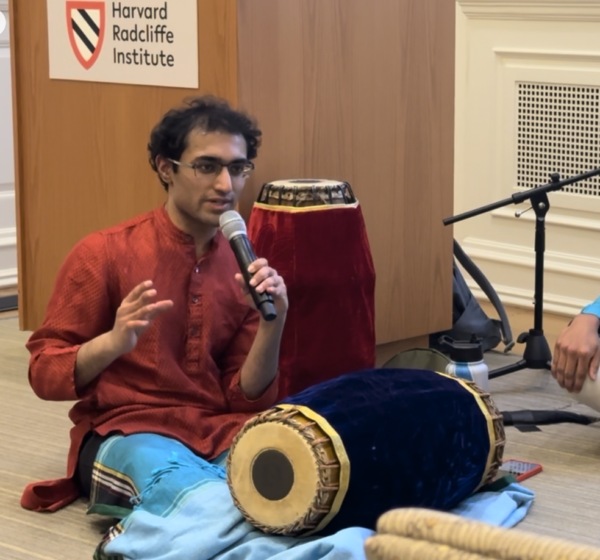
Kavi Kapoor, president of SAMA, talks carnatic rhythm.
Mittal Institute: Can you give us a little background on yourself – what year are you, where are you from, and what is your concentration?
Kavi Kapoor: I’m a rising senior (on leave) at Harvard. I’m concentrating in music and math, and I’m also in the dual degree program with Berklee College of Music. I’m originally from New York. I grew up in a musical family, and have been studying Carnatic and Hindustani music since my toddler years. I am the current president of Harvard South Asian Music Association (SAMA).
Mittal Institute: What is the South Asian Music Association, and what role does it play in the Harvard community?
Kavi Kapoor: SAMA is Harvard’s undergraduate organization for Indian classical and South Asian music. It plays three roles. First, it’s a home for student musicians, giving aspiring artists space to practice and perform. Second, it gives this music a real presence on campus through collaborations with other student ensembles and performances at major Harvard events. And third, it acts as a bridge to India, bringing major artists and creatives from India to campus so the whole community can experience the tradition at its highest level. Together, that gives Indian classical music a living presence at Harvard.
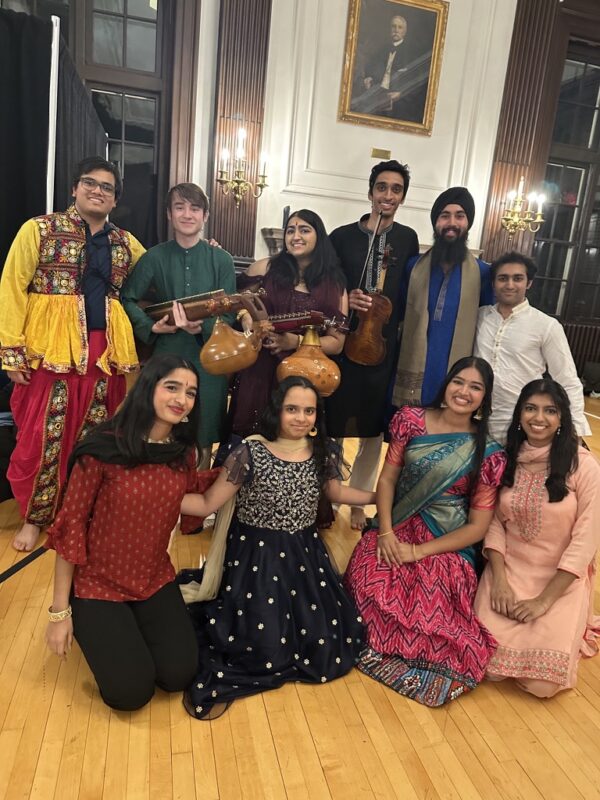
A photo of SAMA group members.
Mittal Institute: What makes South Asian classical and traditional music particularly meaningful in a university setting?
Kavi Kapoor: Universities value diversity, and that gives South Asian classical music something it has always needed: new listeners and new collaborators. I’ve dedicated my life to collaborating with other musicians, and I know how powerful it is when different traditions meet. At Harvard, we get to do that constantly. We host performances and workshops on classical music across campus and in the Houses, open to the whole university. We collaborate with musicians from very different backgrounds – the jazz band, orchestra, the Caribbean Students Association, Harvard-Berklee students – and we keep finding common ground: the improvisation in jazz, for example, speaks naturally to the way a raga unfolds. Most importantly, we see students with no South Asian background take a genuine interest in Indian music, which gives me real hope that the tradition will stay fresh. This music has always been passed from person to person, and that makes Harvard a place where it can be experienced, shared, and carried forward.
Mittal Institute: What do you think someone unfamiliar with South Asian classical music can discover by experiencing it live?
Kavi Kapoor: Over centuries, Indian musicians have developed remarkably precise ways of moving a listener. Each raga uses particular note patterns to create a distinct atmosphere: the heaviness of the monsoon, an ascetic lost in meditation, a lover waiting for her beloved in the woods. The melodies glide and bend between notes in ways that echo the human voice itself, like a cry or a gasp of excitement. And our rhythms manipulate tension through intricate mathematical calculations before resolving at exactly the right moment. Scholars have described these effects for centuries, but that means little until you experience it in real time. I’ve especially been eager to use my time in the music and applied math departments to investigate these effects more deeply, most recently while working to design algorithms that correlate nuanced musical data with biometric feedback in listeners. My belief is that as we continue to interrogate these traditional practices we’ll seek to preserve them not as museum pieces, but as vital tools for emotional change and human growth.
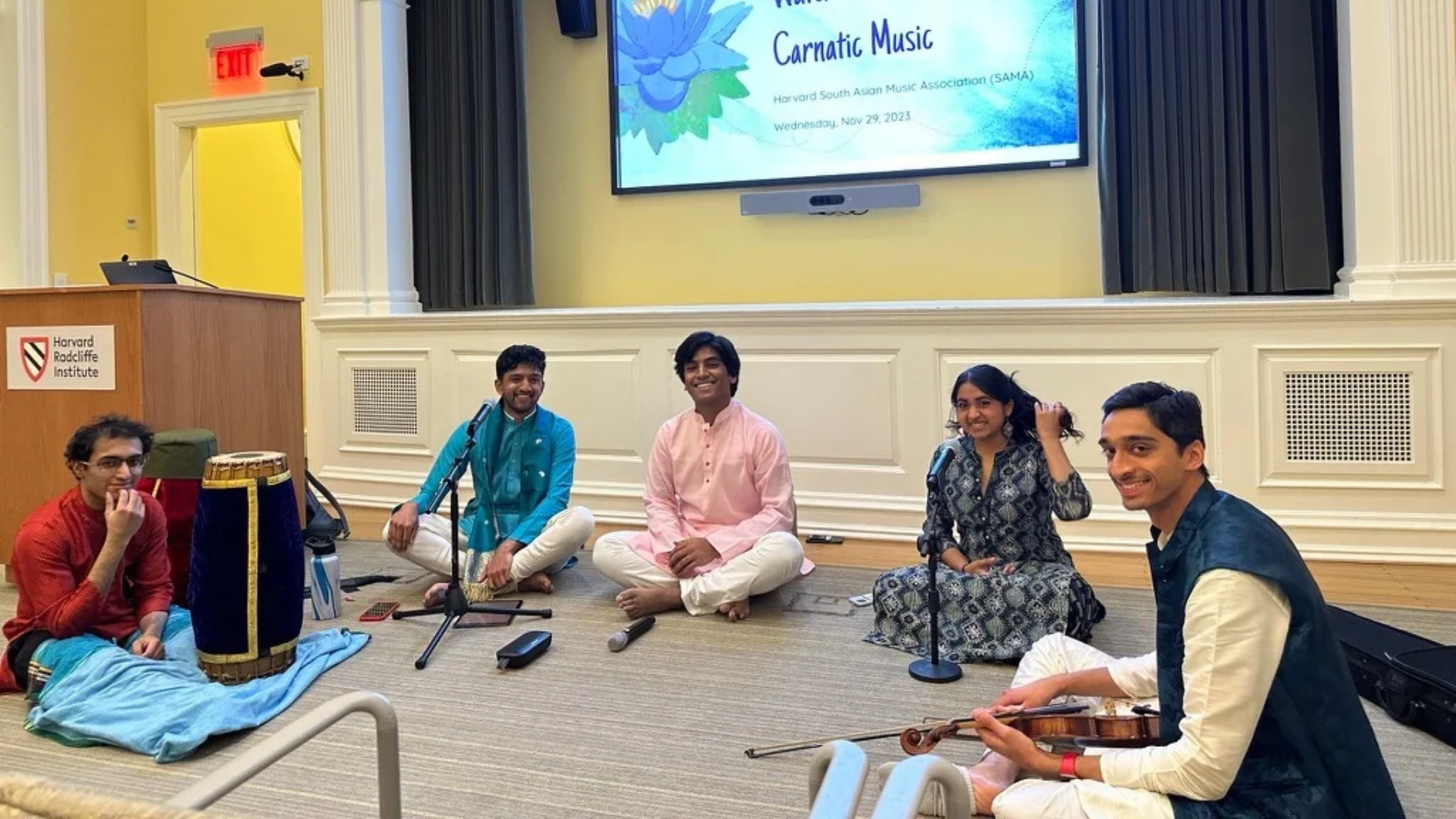
SAMA performers at the Water Stories in Carnatic Music event at Radcliffe in 2023.
Mittal Institute: Are there particular instruments, styles, or musical traditions that students have been especially excited to explore?
Kavi Kapoor: SAMA is grounded in Indian classical music, both Hindustani and Carnatic, but what students seem most excited about is taking that tradition somewhere new. This past year, percussion was a big draw. Instruments like the tabla and mridangam are rhythmically complex and immediately exciting to hear, but they usually accompany other musicians, so students rarely get to hear them take center stage. Earlier this year, we brought together South Indian, North Indian, and Western percussionists for the first drum act at Ghungroo, Harvard’s largest South Asian festival. There’s also a lot of excitement around fusion. We’ve performed with the Harvard-Radcliffe Orchestra and the classical dance troupe Deepam, and we’ve worked with Berklee students on original fusion compositions, one of which was recently featured at Andaz, the South Asian students’ annual fashion show. I’m really excited to see students in SAMA now seeking out these collaborations on their own.
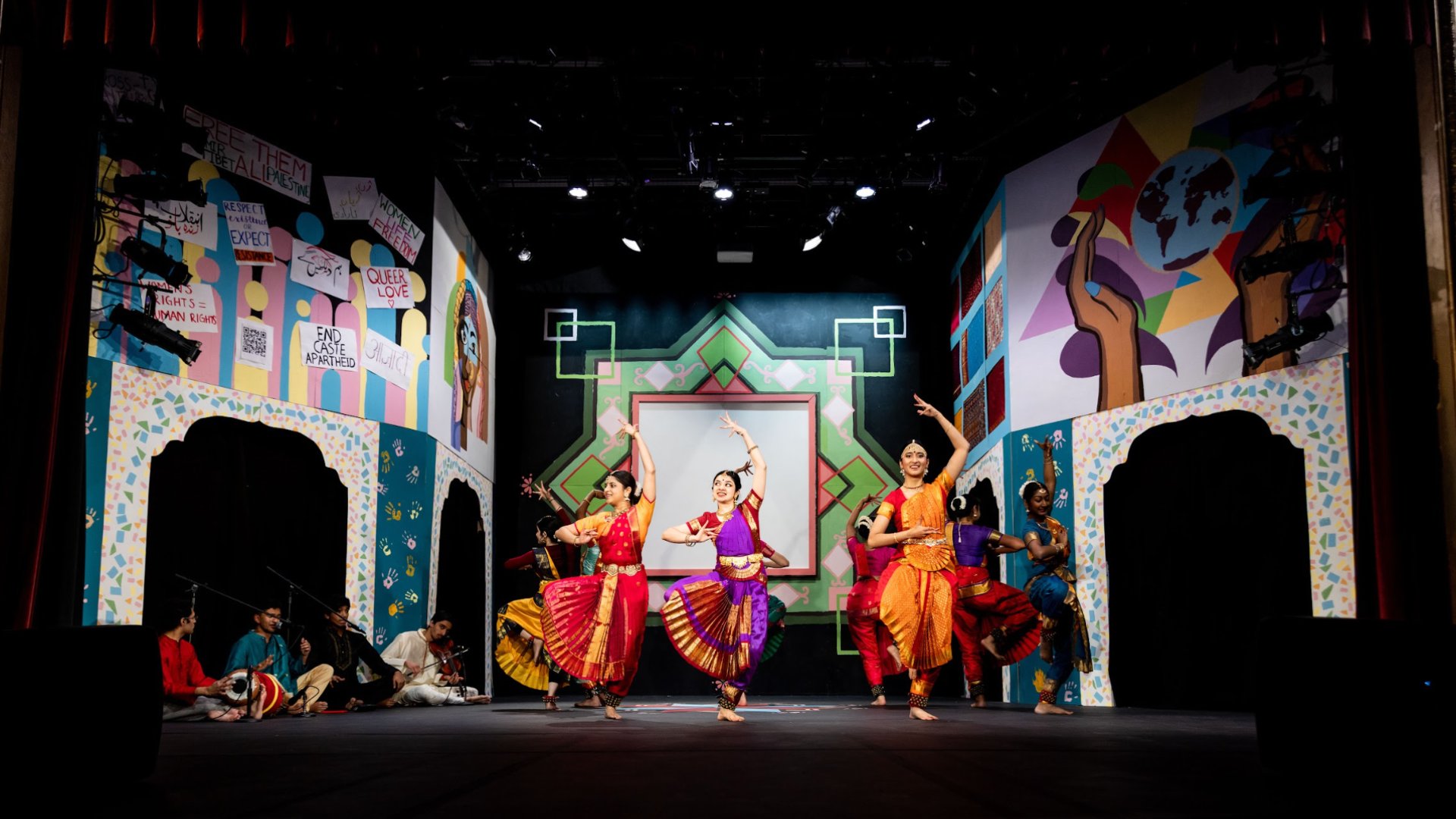
SAMA performs at Ghungroo.
Mittal Institute: How does music create a sense of community among South Asian students at Harvard?
Kavi Kapoor: South Asia includes a huge range of languages, religions, and cultures, and at Harvard, music is one of the things that brings all of us together. It’s slightly paradoxical because at one level music does indeed remind each of us of our own background; a Telugu student will relate to a Tyagaraja kriti in a way that an Urdu speaker who grew up with ghazals won’t. At the same time, music lets us connect across those differences, because you don’t need to understand the words to feel what the music is doing. And on a simpler level, it gives us a reason to gather. Performances, rehearsals, and informal get-togethers bring people into the same room who might otherwise never have met, and we’ve all experienced how some of the most meaningful friendships start there.
South Asia includes a huge range of languages, religions, and cultures, and at Harvard, music is one of the things that brings all of us together.
Mittal Institute: What does music mean to you personally?
Kavi Kapoor: Music has always been my way of connecting with people. It started with my grandmother, who came from a remarkable musical lineage. Learning from her was how I got to know her and where I come from. I’ve always looked at artistic collaborations the same way: as a chance to get to know the person behind the art and learn from that. That’s been my main motivating factor whether working with jazz musicians at Lincoln Center, producers in the industry, or students here at Harvard. What I remember most is rarely the final concert. It’s the rehearsals, watching people from completely different worlds find a way to connect through the music. That feeling of connection is what keeps me coming back.
Mittal Institute: What is your favorite SAMA memory?
Kavi Kapoor: One night I was stuck on a problem set in Cabot Library, clearly miserable, when my friend Vishnu walked up and said, “You look like you could use a break.” We snuck down to the Hindu prayer space and started practicing until past midnight. Somewhere in there, we got into an argument about whether music fundamentally came from a place of genuine love or unresolved pain, which I don’t think we ever settled. I definitely lost some points on that problem set. But Vishnu and I became close friends, and a couple years later co-presidents of SAMA. In a lot of ways, it started that night.
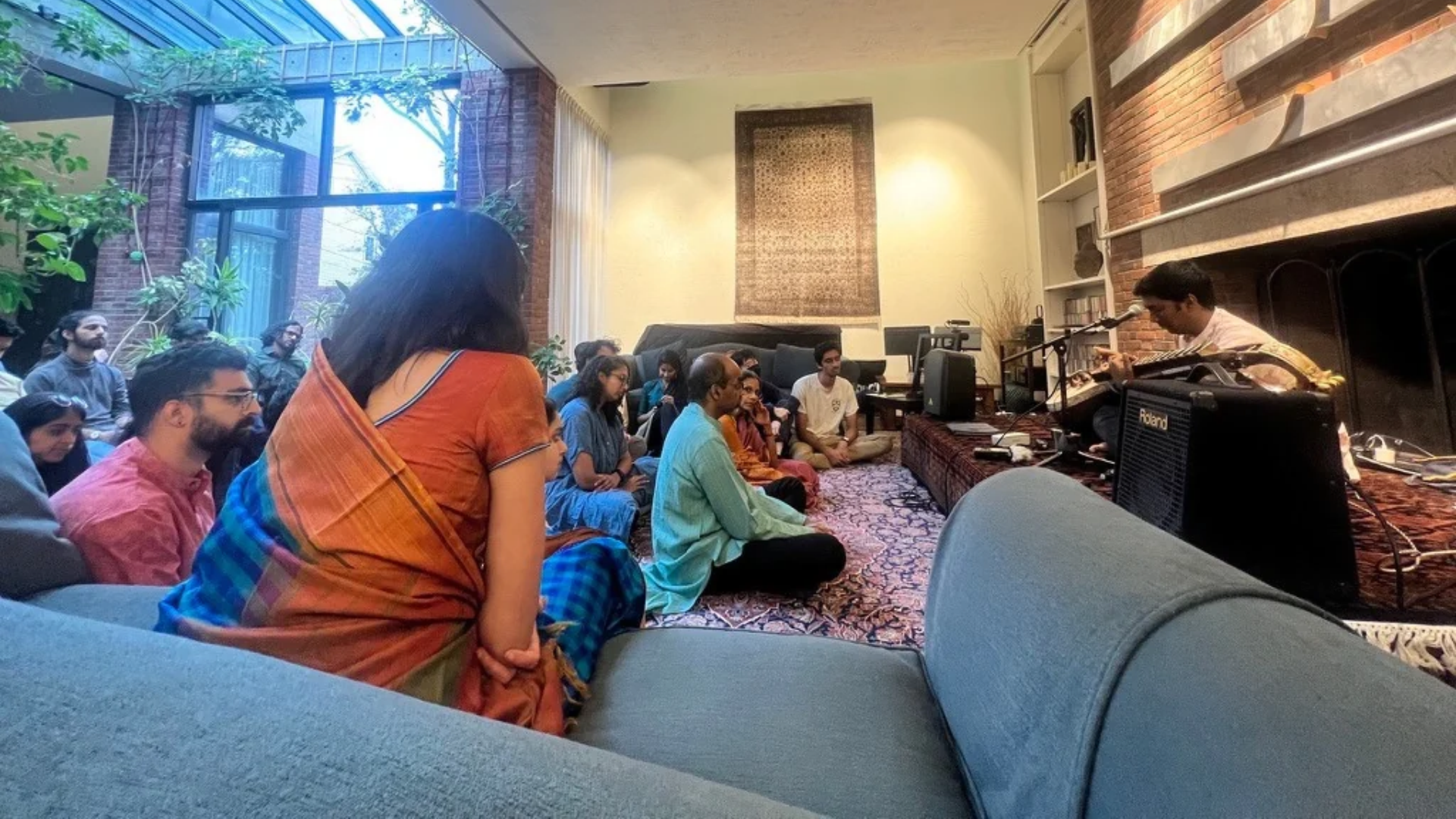
SAMA event with Visiting Artist Ramana Balachandran.
Mittal Institute: As we look ahead in the academic year, are there any upcoming events or initiatives that you’re most looking forward to?
Kavi Kapoor: We’re continuing to find new ways to bring South Asian music to the Harvard community and show that these traditions aren’t frozen in the past. We’ll be back at Ghungroo and Arts First with new takes on Carnatic and Hindustani music. After how students responded to our percussion act last year, we want to keep giving the instruments and traditions that usually stay in the background a chance to take center stage. We’re also in discussion with several artists about performances and workshops on campus, so students can experience this music at its highest level and try it for themselves.
Mittal Institute: How can people learn more about SAMA?
Kavi Kapoor: The easiest way is to follow us on Instagram at @southasianmusicassociation, where we post all our upcoming events. You can also catch us performing around campus, especially at Ghungroo and Arts First. But honestly, the best way to learn about SAMA is to come to one of our events and meet us. You don’t need any background in Indian music, just curiosity. We’d love to have you.
☆ The views represented herein are those of the interview subject and do not necessarily reflect the views of the Mittal Institute, its staff, or its steering committee.