
What can life in an Indian village teach us about democracy? In the upcoming Oct 14 talk, “Why Democracy Needs Cultivation: Lessons from an Indian Village”, Professor Mukulika Banerjee of the London School of Economics and Political Science draws on more than 20 years of ethnographic research to explore the connections between democracy, citizenship, farming, and everyday village life.
Professor Banerjee’s research focuses on democracy, elections, citizenship, and political life in South Asia. She is the author of Cultivating Democracy: Politics and Citizenship in Agrarian India and Why India Votes?, and her work offers a close look at how democratic practices take shape in the everyday lives of citizens. We spoke with her about her research ahead of the talk, which is co-sponsored by the Mittal Institute and the Asia Center at Harvard University.
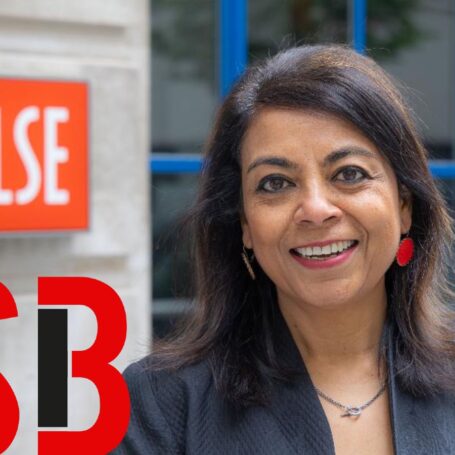
Mukulika Banerjee
Mittal Institute: You talk about democracy as something that needs to be “cultivated.” What does that look like in everyday life?
Mukulika Banerjee: Democracy is not just an idea, a collection of buildings or even just elections. It is a way of living together, as Tocqueville described it, during his travels to observe democracy at work in America. It is how we treat each other, how we disagree, how we accommodate difference, how we hold elected officials to account. It is expressed through voting at elections, but also continues in between them. To live together democratically requires both self-cultivation to become a certain kind of citizen, an active citizen who is industrious, vigilant, patient and hopeful. It requires one to remain well informed, learn to separate evidence from false claims, to be unafraid to ask questions of those in power, to treat others with respect and to practice this tirelessly.
Mittal Institute: You spent more than 20 years studying the same rural community*. What did that long-term perspective allow you to see about democracy that you might not have seen from a shorter study?
Mukulika Banerjee: The long-term immersion allowed me to become thoroughly familiar with all aspects of village life and see how they connect to each other, as they do in people’s lives. One could observe festivals, harvests, weddings, deaths and elections multiple times to see patterns of thought and expression. Politics is intrinsically tied to all aspects of social life, so one had to observe this holism first-hand. As a result, one sees how ideas about power, competition, cooperation and deliberation are created not just in explicitly political spaces, but in other non-politcal spaces too. It allows us to expand our understanding of what constitutes ‘the political’ to not just competition and violence, but cooperation and solidarity too.
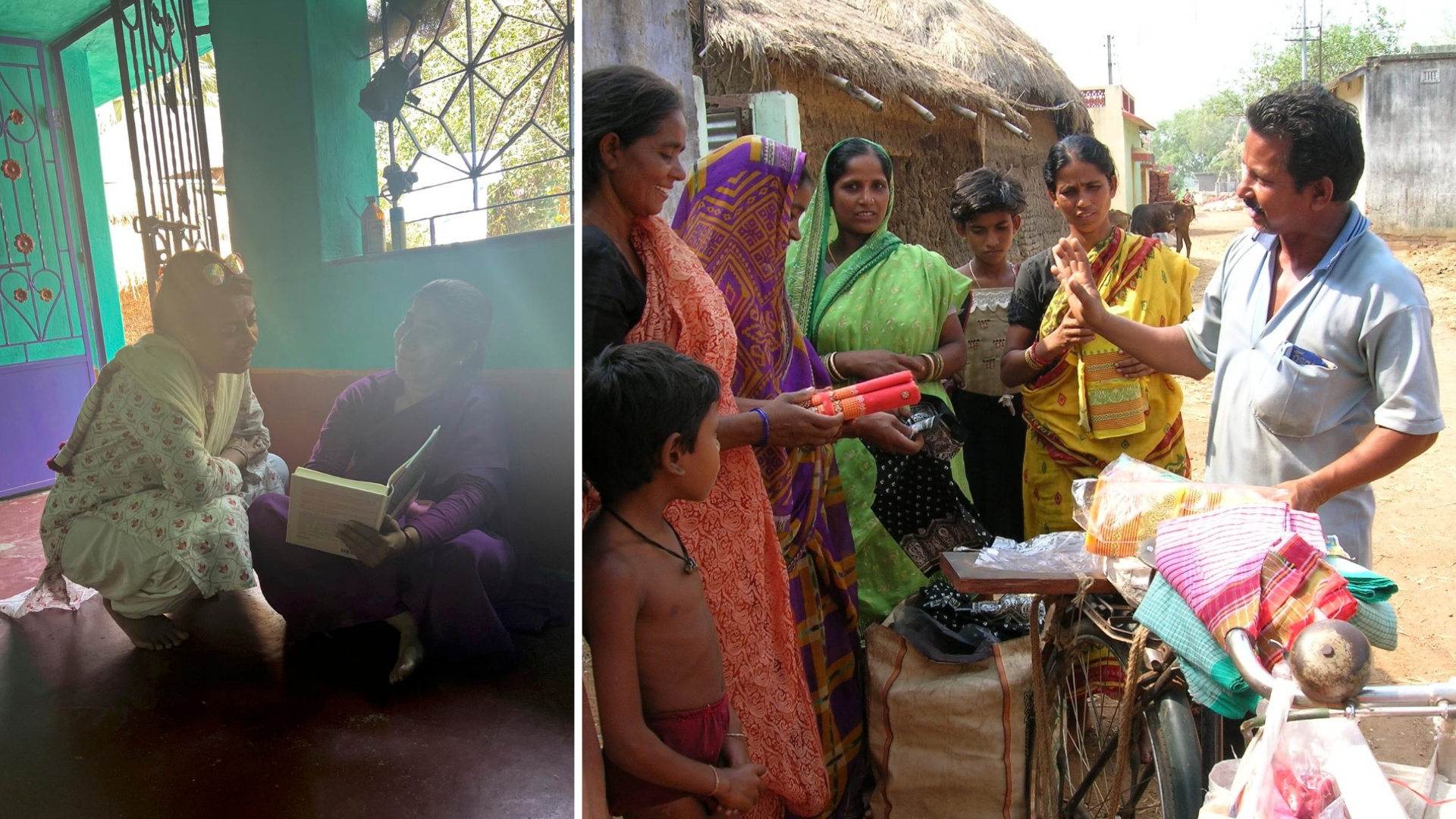
Left: Mukulika Banerjee shares a copy of Cultivating Democracy with a young woman, Gainda, in 2024 in Chisthi. Prof. Banerjee met her 20 years ago when she was part of a homework club Prof. Banerjee ran for the children in the village, and they have stayed in touch since. Right: Women buying saris, photo courtesy of Mukulika Banerjee.
Mittal Institute: A lot of discussions about democracy focus on elections. What do we miss when we don’t pay as much attention to what happens between elections?
Mukulika Banerjee: The voter is also a farmer, a mother, a pious observer of fasts, a miser and so on. There are so many influences drawn from economic, religious and community life that shape a voter’s political subjectivity. If you don’t understand those influences, you don’t see how they create social imaginaries or values that shape popular engagements with democratic institutions. In turn, one understands the value that ordinary citizens, especially those drawn from disadvantaged social backgrounds, gain from experiencing political equality at the moment of voting, of realizing for real what ‘one person one vote’ is about. This in turn contributes to their sense of citizenship and entitlement, long after elections are over. Democracy is constituted by both institutions and democratic culture i.e. elections and the time in between them.
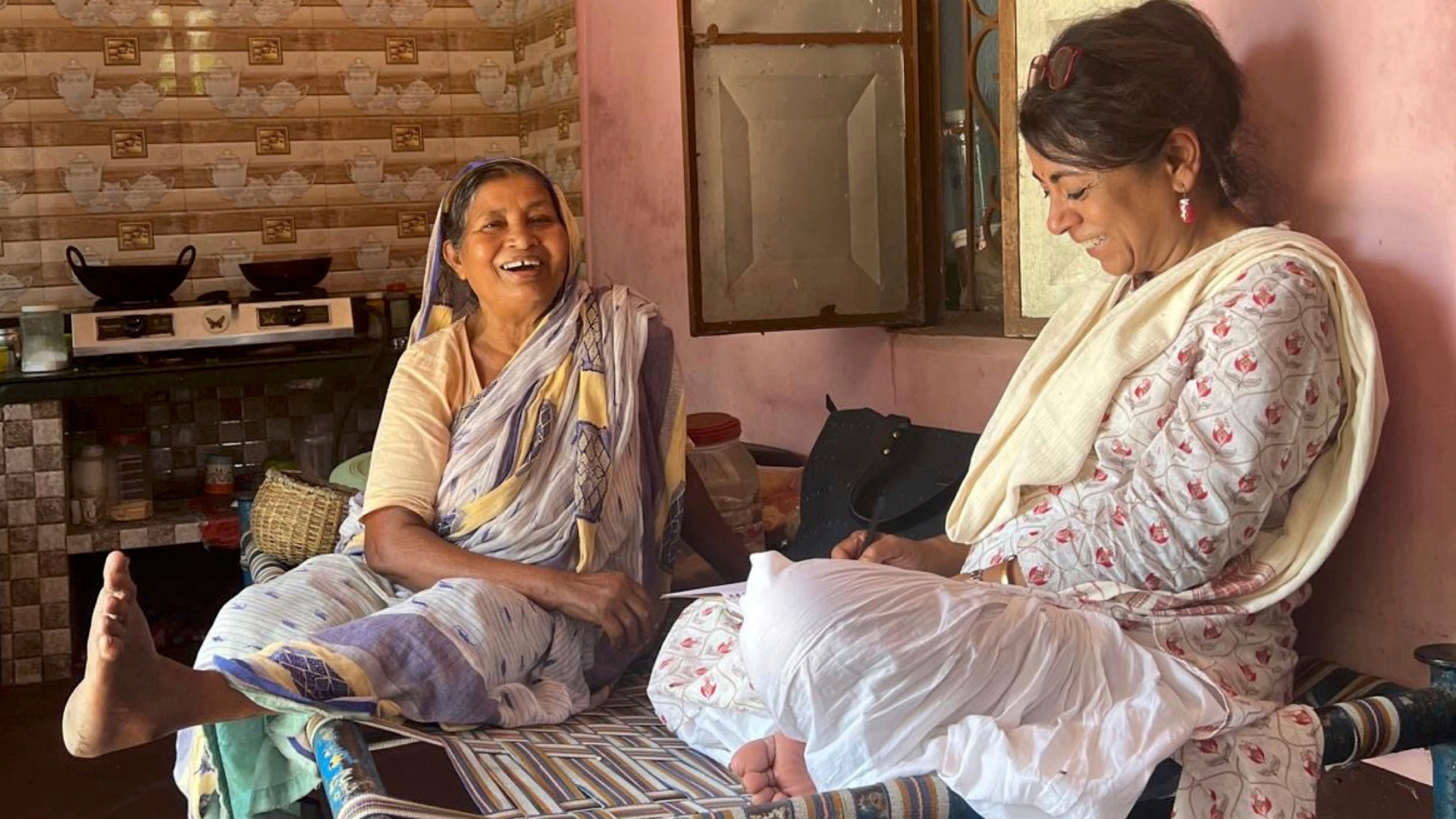
Prof. Banerjee with one of her closest friends, Mehr, in Madanpur.
Mittal Institute: You draw connections between farming and democracy. What can farming teach us about how democracy works?
Mukulika Banerjee: I see the village as an important locus of theory making, to expand how we conceptualize democracy. The practical activity of farming teaches us something about cultivation as practice, without which democracy does not survive. A farmer does not plant seeds in the soil and come back 6 months later expecting a crop. She is there every single day making sure the crop is healthy, there are no pests, it is getting sufficient water and nutrients and so on. We need to treat democracy like that crop. If there is democratic back sliding in the world today, the reason is complacency. It is because we thought it would grow without us tending to it. We need to learn from what farmers do!
Mittal Institute: Were there particular moments or experiences in the village that changed the way you thought about democracy?
Mukulika Banerjee: One small example. Because of my friendships with the women in the village, and having celebrated special occasions with them, I knew that every woman saved a ‘best’ sari to wear to these events. So, I knew their ‘best’ saris. When I arrived on an Election Day and saw women dressed in their best saris at the polling booth, I realized that elections were festive occasions for them, and they approached them with the same commitment and excitement. That led to my breakthrough paper ‘Sacred Elections’ in 2007 and then to testing the ‘Sacred Elections’ thesis across India that resulted in the book Why India Votes?
Mittal Institute: After spending so much time studying democracy at the village level, what do you think people who study democracy mainly through elections and political institutions tend to overlook?
Mukulika Banerjee: They need to read my work and think again! I am not just ‘studying democracy at the village level’ I am conceptualizing democracy from the village. People living in villages also vote in elections, encounter democratic institutions of the state and so on but immersing oneself in a single community allows the scholar to understand what elections mean to them, and how democratic values express themselves long after elections are over. Democracy needs to be understand in a holistic way.
* Location of research: Two villages Madanpur and Chishti (pseudonyms) in Birbhum district of West Bengal, India.
☆ The views represented herein are those of the interview subject and do not necessarily reflect the views of the Mittal Institute, its staff, or its steering committee.