
Growing up in Jalgaon, Maharashtra, India, Ritesh Deokar never imagined he would one day study at Harvard. After building a career in public service and development, he came to Harvard Kennedy School to deepen his understanding of public policy, graduating this past spring with a Master in Public Policy (MPP) degree. In this Q&A, he reflects on his journey from India to Harvard and how the experience has shaped his approach to policymaking and his hopes for India’s future.
Mittal Institute: Growing up Jalgaon, India, what did you understand about institutions like Harvard at the time, and how has that perception changed? What encouraged you to apply to Harvard in the first place?
Ritesh Deokar: Growing up in Jalgaon, a city in Maharashtra, an institution like Harvard felt incredibly distant. The first time I remember hearing about Harvard wasn’t through an academic setting, but through movies like The Social Network. It symbolized excellence and innovation, but it also seemed like a place on the other part of the world (felt unreachable). I did not know anyone who had studied there, nor did I know anyone who personally knew a Harvard graduate. For someone from my background, it wasn’t the kind of dream people around me naturally spoke about.
My world at that time was shaped much more by my surroundings than by global institutions. I grew up in a region that has experienced both droughts and floods, and I was always curious about how the same geography could struggle with two completely opposite problems. That curiosity gradually led me into public service. Over the years, I had the opportunity to work with local communities, at the state and national level and voluntary work with civil society organizations. Each role exposed me to a different layer of policymaking and implementation.
One experience that particularly stayed with me was visiting my village in Jalgaon. People often didn’t know my exact designation, but they knew I was working on development issues. They would simply come up to me and start talking about the problems they faced, whether it was water scarcity, roads, healthcare, education or livelihoods. Those conversations made me realize that public service is ultimately about trust. People were not looking for immediate solutions from me; they were looking for someone who would genuinely listen and carry their concerns forward. It gave me a deep sense of responsibility and reinforced my desire to equip myself better to serve them.
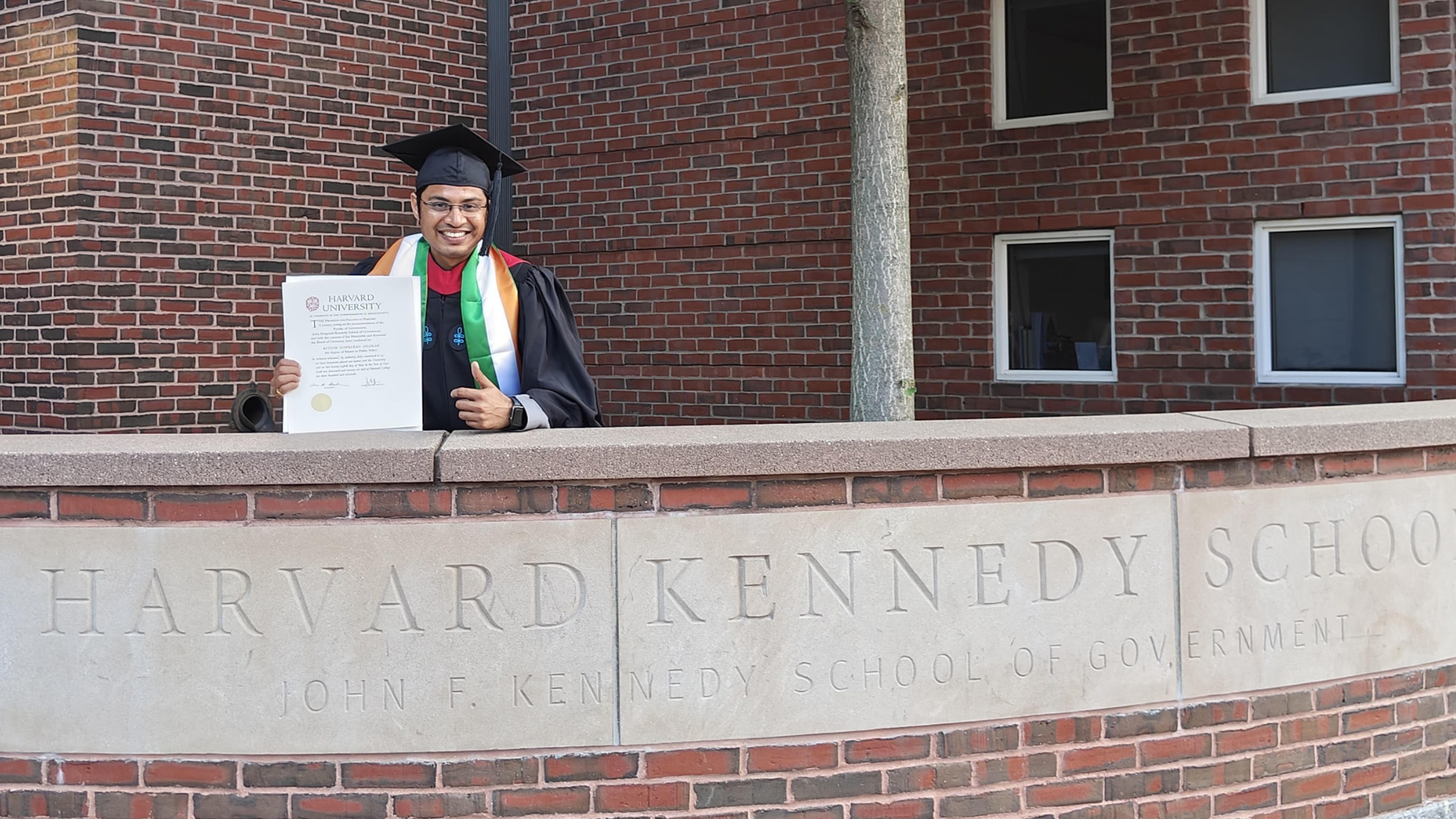
Ritesh Deokar, Harvard Kennedy School Master in Public Policy ’26 graduate.
As I progressed in my career, I found myself becoming increasingly interested in the technical side of policymaking. Every project I worked on raised new questions. Why did a policy succeed in one state but fail elsewhere? Why were some governments able to implement reforms effectively while others struggled? I started reading research papers, academic literature and global case studies, trying to understand how ideas from around the world could be adapted to local contexts in India. Some of my seniors noticed this curiosity and encouraged me to explore graduate programs in public policy abroad.
Until then, pursuing a master’s overseas had never really crossed my mind. I began researching policy schools across the world and eventually applied to eleven universities, including Harvard, Princeton, Columbia SIPA, the University of Chicago, Georgetown, UC Berkeley, Oxford, the London School of Economics, University College London, the National University of Singapore, and the Hertie School. My hope was simply to receive an opportunity from one of them. Receiving admission offers from all eleven was honestly something I had never imagined, and it gave me confidence that aspirations are often limited more by our own perceptions than by our circumstances.
Looking back today, my perception of Harvard has changed completely. Before coming here, I thought Harvard’s greatest strength was its reputation. After spending two years here, I believe its greatest strength is its people and its culture of intellectual curiosity. It is one of the few places where professors, practitioners, students and global leaders engage with one another with remarkable openness. The classrooms are filled with people who have served governments, built companies, led humanitarian missions, commanded military units, or worked in communities across the world. The conversations here challenge your assumptions and reminds you that complex public problems rarely have simple solutions.
Harvard never expects students to think alike. Instead, it encouraged us to question, debate and learn from one another’s experiences. Coming from India, I brought one perspective shaped by my own experiences in development and public policy.
What impressed me most was that Harvard never expects students to think alike. Instead, it encouraged us to question, debate and learn from one another’s experiences. Coming from India, I brought one perspective shaped by my own experiences in development and public policy. My classmates brought equally valuable perspectives from their own countries and professions. Those exchanges made learning much richer than any textbook could.
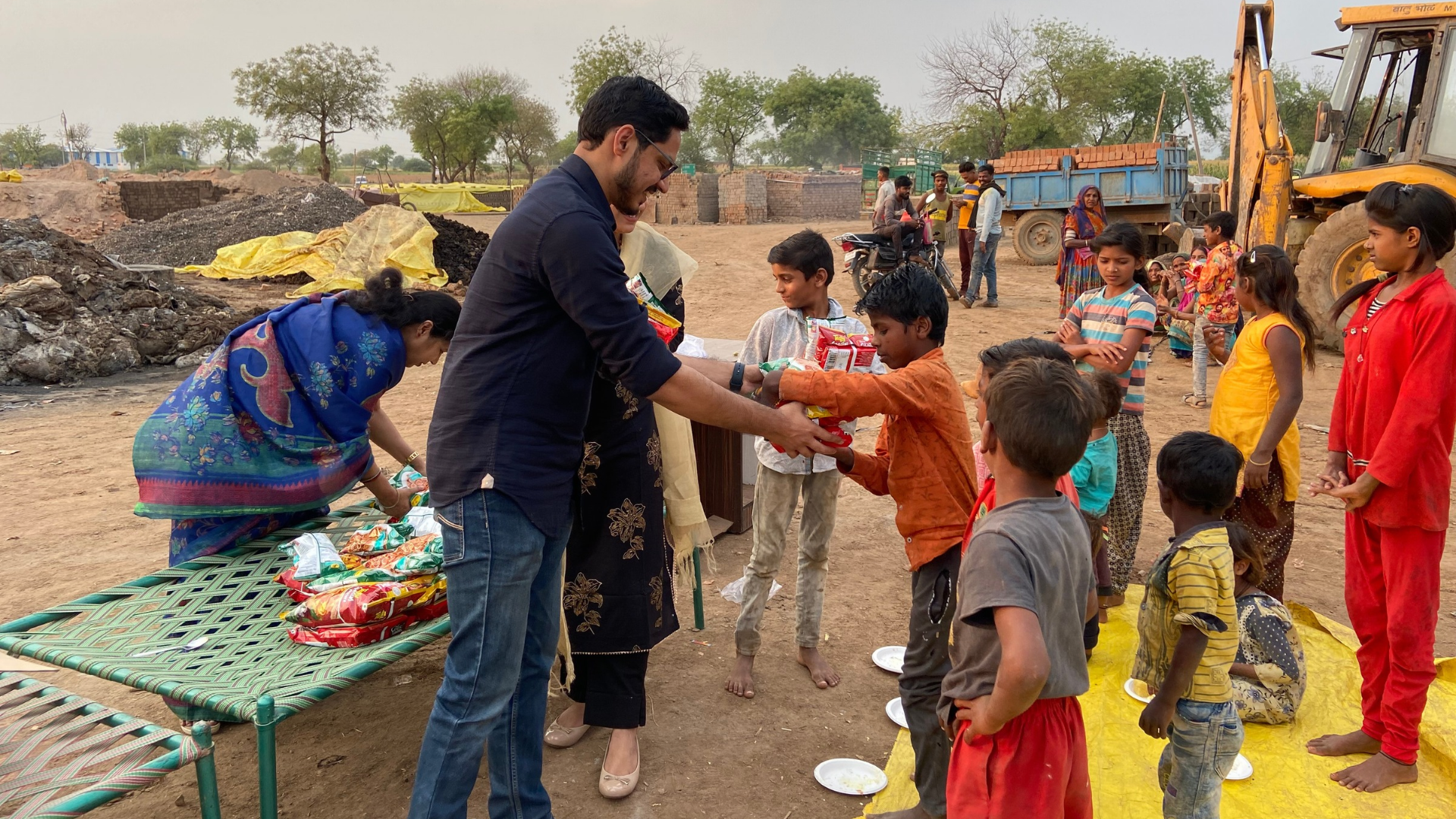
Ritesh helping children in his hometown of Jalgaon.
Mittal Institute: What were the biggest barriers you faced in applying, and how did you navigate them?
Ritesh Deokar: Looking back, I think the biggest challenge wasn’t the application itself, it was not knowing where to begin. Unlike many applicants, I didn’t have seniors from my college or colleagues who had gone through this process before. No one in my immediate circle had studied at Harvard or even at a comparable public policy program abroad. There wasn’t a roadmap I could follow, so almost everything had to be learned from scratch.
The first challenge was understanding what universities were actually looking for. I initially assumed that the application would mainly be about academic scores, work experience and test results. But as I researched further, I realized that graduate admissions were equally about telling a coherent story, explaining not just what you had done, but why you had chosen that path and what connected the different experiences in your life.
Since I didn’t have mentors to guide me, I decided to build my own reference point. I made a list of nearly eighty Indian students and alumni from public policy programs across leading universities and carefully studied their academic backgrounds, professional experiences and publicly available profiles on university websites. It wasn’t about comparing myself with them; it was about understanding that there wasn’t a single template for success. People came from government, engineering, journalism, consulting, medicine, social work and many other backgrounds. That gave me confidence that what mattered most was authenticity rather than trying to fit into a predefined mould.
That exercise also helped me understand the importance of storytelling. As I reflected on my own journey, I realized that one thread connected many of my experiences: growing up in Jalgaon. Interestingly, the word “Jalgaon” literally means “the city of water” in Marathi, yet it has struggled with recurring droughts for decades. I found that irony deeply compelling because it had shaped my curiosity from childhood and eventually led me into water policy, public service and development. Rather than presenting my work experiences as isolated achievements, I centered my application around this larger narrative of how one place had influenced the direction of my life. Looking back, I think that made my application much more genuine.
This process also taught me that seeking help is not a sign of weakness. Throughout the journey, I reached out to people, read extensively, learnt from those who had gone before me and remained open to improving every part of my application. In hindsight, the absence of a ready-made support system became a blessing in disguise because it taught me to be resourceful, persistent and proactive.
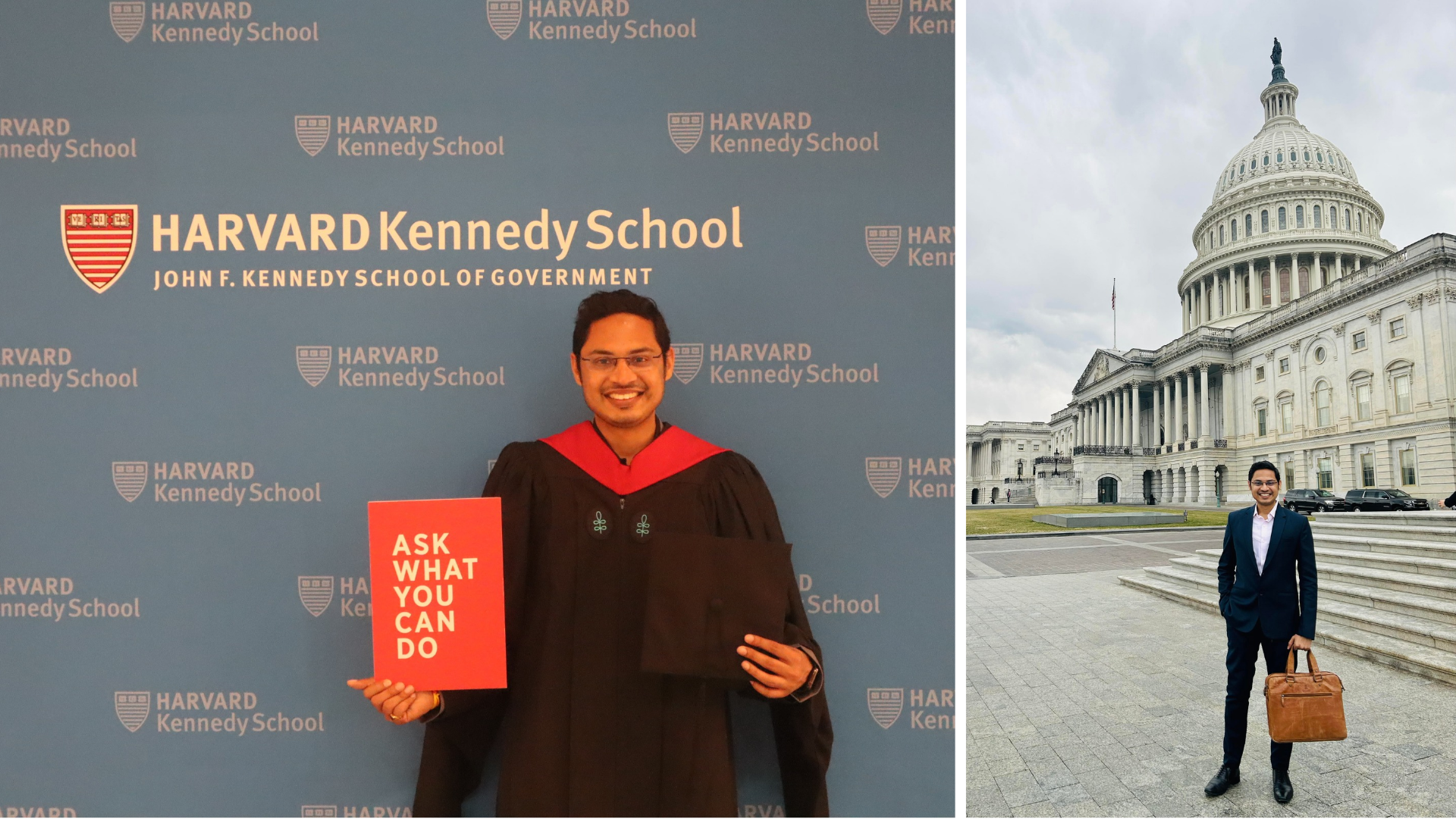
From the halls of Harvard to Washington, D.C., Ritesh worked to understand policy decisions behind public service.
Mittal Institute: Can you share a moment during your time at Harvard that challenged how you think about policy or leadership?
Ritesh Deokar: One experience that comes to mind was our Spring Exercise, where my team worked for the City of Raleigh, North Carolina, on developing recommendations to address its affordable housing crisis. Coming from India, I initially thought I understood housing policy reasonably well. We deal with questions of affordable housing, rapid urbanization and migration in India too, so I assumed many of the principles would be similar. Very quickly, I realized how wrong that assumption was.
When we first started working on the project, I struggled to fully understand the local context. I wasn’t familiar with Raleigh’s political system, zoning regulations, financing mechanisms, voter priorities, or even the historical reasons behind many of the current housing challenges. I realized that before proposing solutions, I first needed to understand the society those solutions were meant to serve.
I spent a lot of time speaking with classmates and friends from the United States, asking what might seem like basic questions, how local governments function, why certain neighborhoods opposed higher-density housing, how affordable housing is perceived politically, and what role employers, developers and city governments each play. Those conversations were just as valuable as reading reports or analyzing data because they helped me understand the lived realities behind the numbers.
Our team then explored innovative housing models from different parts of the world. My responsibility was to lead one of the policy options, which involved leasing public land to employers and private developers under specific affordability conditions. We weren’t simply designing a policy, we were thinking through how it could realistically be implemented in a democratic system with multiple stakeholders, competing interests and finite resources.
Looking back, what challenged me the most wasn’t the technical complexity of the project, but the realization that I instinctively approached many issues from an Indian perspective. In India, if I were thinking about affordable housing, I would naturally emphasize large-scale public programs, stronger government intervention, and rapid expansion of housing stock because our developmental priorities are different. In Raleigh, however, many of the debates centered on local governance, property rights, neighborhood character, financing structures and political consensus. The objectives might have been similar, but the pathways to achieving them were fundamentally different.
That experience reminded me of something the father of Public Administration Woodrow Wilson wrote in his work on comparative public administration, that administrative ideas cannot simply be transplanted from one society to another without filtering through the cultural lens of the society in which they operate.
Through this experience, I realized that good leadership often begins with asking better questions, listening carefully, and acknowledging what you don’t know. I was grateful for the process. It reminded me that the most valuable learning at Harvard often happens when your existing assumptions are challenged, because that is where genuine growth begins.
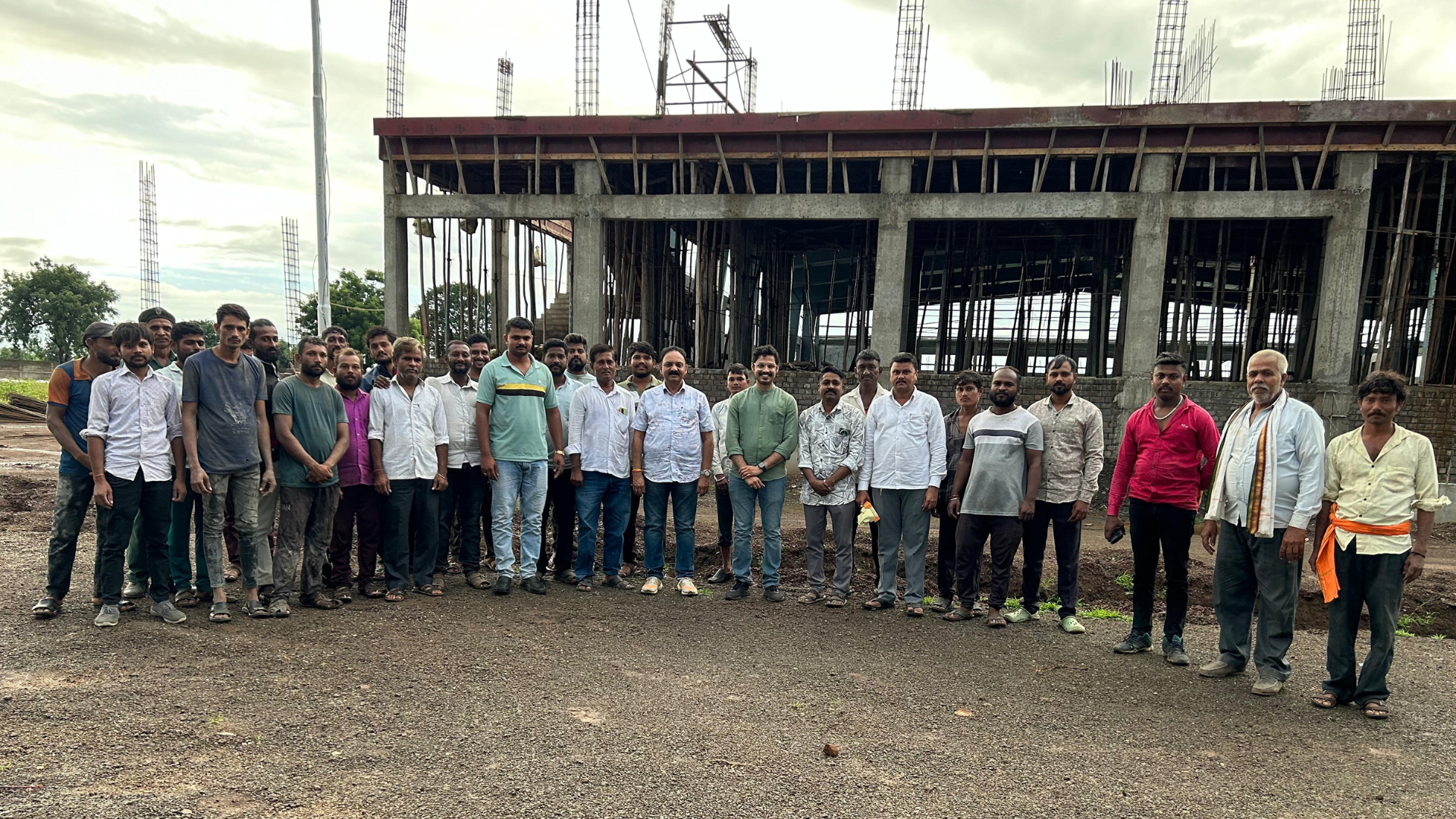
Ritesh worked on a public housing project in Jalgaon.
Mittal Institute: Looking back, how has your time at HKS shaped your understanding of what it means to be a South Asian working in global policy spaces?
Ritesh Deokar: One of the biggest things Harvard taught me was to become more conscious of the perspective I bring into a room. Before coming here, I never really thought of myself as a ‘South Asian policymaker.’ I simply thought of myself as someone working on development issues in India. It was only after spending time with classmates from every part of the world that I began to appreciate how our experiences shape the way we approach public policy.
Most of my professional experience before Harvard was rooted in development challenges, working on water supply, sanitation, rural infrastructure and public service delivery. Naturally, when I thought about the role of government, I viewed it primarily as a provider of essential services. In many developing countries, governments are still expected to build infrastructure, improve access to healthcare and education, reduce poverty and create opportunities for people whose basic needs are yet to be fully met. That becomes the lens through which you begin thinking about public policy.
At Harvard, I found myself surrounded by classmates whose governments often operate under very different circumstances. Many came from countries where basic public services are already well established, so their policy discussions focused more on regulation, innovation, market efficiency, institutional design or long-term competitiveness. It was fascinating because we were often discussing similar topics, but approaching them from completely different starting points.
Those conversations made me reflect on my own assumptions. I realized that I instinctively tend to ask, “How will this improve people’s lives?” before asking, “Is this the most efficient solution?” I don’t think either perspective is inherently right or wrong. They simply reflect different realities. In countries where development challenges remain significant, questions of equity, access and inclusion naturally become central. In more developed contexts, where many of those foundations already exist, discussions often shift towards optimization, innovation and efficiency.
At the same time, Harvard also reminded me that no country has a monopoly on good ideas. Throughout my coursework, interactions and later at the United Nations, I saw valuable lessons emerging from every part of the world. Some came from developed countries, others from developing nations facing similar constraints as India. Rather than thinking in terms of importing or exporting policies, I now think much more about adapting ideas thoughtfully to local contexts.
As someone from South Asia working in global policy spaces, I now see my role not only as learning from the world, but also as contributing experiences from my own region to enrich global conversations. I believe policy becomes stronger when it is shaped by diverse voices, and Harvard showed me just how valuable those exchanges can be.
Mittal Institute: What is next for you? Are there specific communities or problems you feel especially drawn to work on going forward, and what kind of impact do you hope to have in the next 5–10 years?
Ritesh Deokar: In the immediate future, I hope to continue working in the United States for a few years. My motivation is not simply international work experience, but the opportunity to better understand how policies are designed and implemented in a different institutional setting. Over the past two years, I have learnt a great deal inside classrooms, but I would now like to complement that learning by working closely with organizations tackling complex policy, economic and strategic challenges in practice.
The areas that particularly interest me are industrial policy, urban policy and technology policy. These fields are becoming increasingly interconnected. Whether we talk about advanced manufacturing, artificial intelligence, digital public infrastructure, clean energy or resilient cities, governments today are navigating questions that require collaboration across public institutions, private enterprise and civil society. I find that intersection especially exciting because it combines many of the themes that have shaped my own journey, from engineering and public policy to economics, finance and systems thinking.
At the same time, India remains at the centre of my long-term aspirations. Everything I have learnt, whether through my work before Harvard, my experiences here, or my time at the United Nations, has reinforced my desire to contribute to India’s development journey. I don’t see these next few years as moving away from that goal. Rather, I see them as an opportunity to gather experiences, perspectives and practical lessons that I can eventually bring back home.
Exactly what form that contribution takes is something I remain open-minded about. It may be through government, where I can help shape public policy directly. It may be through an international organization working with governments on development challenges. Or it may even be through building an organization or a technology platform that develops analytical tools to support better policymaking and evidence-based decision-making. What matters to me is less the institution and more the opportunity to create meaningful public value.
Looking back, one thread has remained remarkably constant throughout my journey. I have always been drawn to understanding how institutions can improve people’s lives at scale. The problems have changed, the contexts have changed, and my understanding has evolved considerably, but that underlying motivation has remained the same.
If I were to look ten years ahead, I hope people would not necessarily remember the positions I held, but the quality of the work I contributed and the communities I was able to serve. Public policy is ultimately about improving lives, and I hope to continue working on challenges that create opportunities for people and strengthen institutions.
Harvard has been one of the most transformative chapters of that journey, but certainly not the final one. Lastly, I also resonate with our commencement speaker Conan O’Brian when he said ‘Let Harvard be the least important thing people know about you’. I leave with a deep sense of gratitude, for the people I have met, the ideas I have encountered, and the perspective I have gained, and with the hope that wherever my path leads next, I can continue contributing, learning and building bridges between communities, institutions and countries.
☆ The views represented herein are those of the interview subject and do not necessarily reflect the views of the Mittal Institute, its staff, or its steering committee.