
How do you plan for a city that exists for only a few weeks but must support millions of people? That question is at the heart of the Kumbh Mela, one of the world’s largest religious gatherings, and the subject of an interdisciplinary panel organized by the Mittal Institute. Part of Infrastructure in a Time of Flux: Methods, Conditions, and Situations, a November 12-13 symposium curated by Rahul Mehrotra and Dan Borelli at the Harvard Graduate School of Design, the panel brings together scholars – including Mittal Institute faculty – to explore the infrastructure, planning, and social systems that make these temporary sacred cities possible. We spoke with Prof. Mehrotra about the symposium, the ideas behind it, and what attendees can expect.
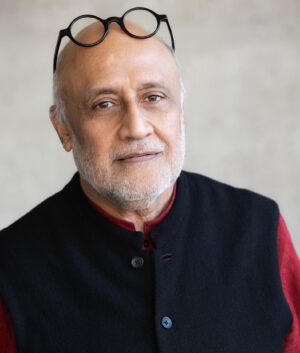
Prof. Rahul Mehrotra
Mittal Institute: What prompted you to organize this Infrastructure in a Time of Flux symposium?
Rahul Mehrotra: The intention behind the conference was to coincide with the exhibition currently on view at the Harvard Graduate School of Design, which explores the same theme. We wanted to build a series of conversations around the exhibition, which has been deliberately designed as what I call a “research pedagogy exhibition.” My hope is that it will generate new insights through the responses and perspectives of its visitors as well as, in the process, expand the scope of the research.
In that spirit, I am also teaching a seminar with 25 students that uses the exhibition as a starting point to explore and challenge the potential of lightweight architectural construction, technologies, and other applications. The aim is to identify ways to improve conditions in settings such as refugee camps, disaster settlements, and informal markets—environments that occupy significant space and provide livelihoods or shelter for large populations around the world.
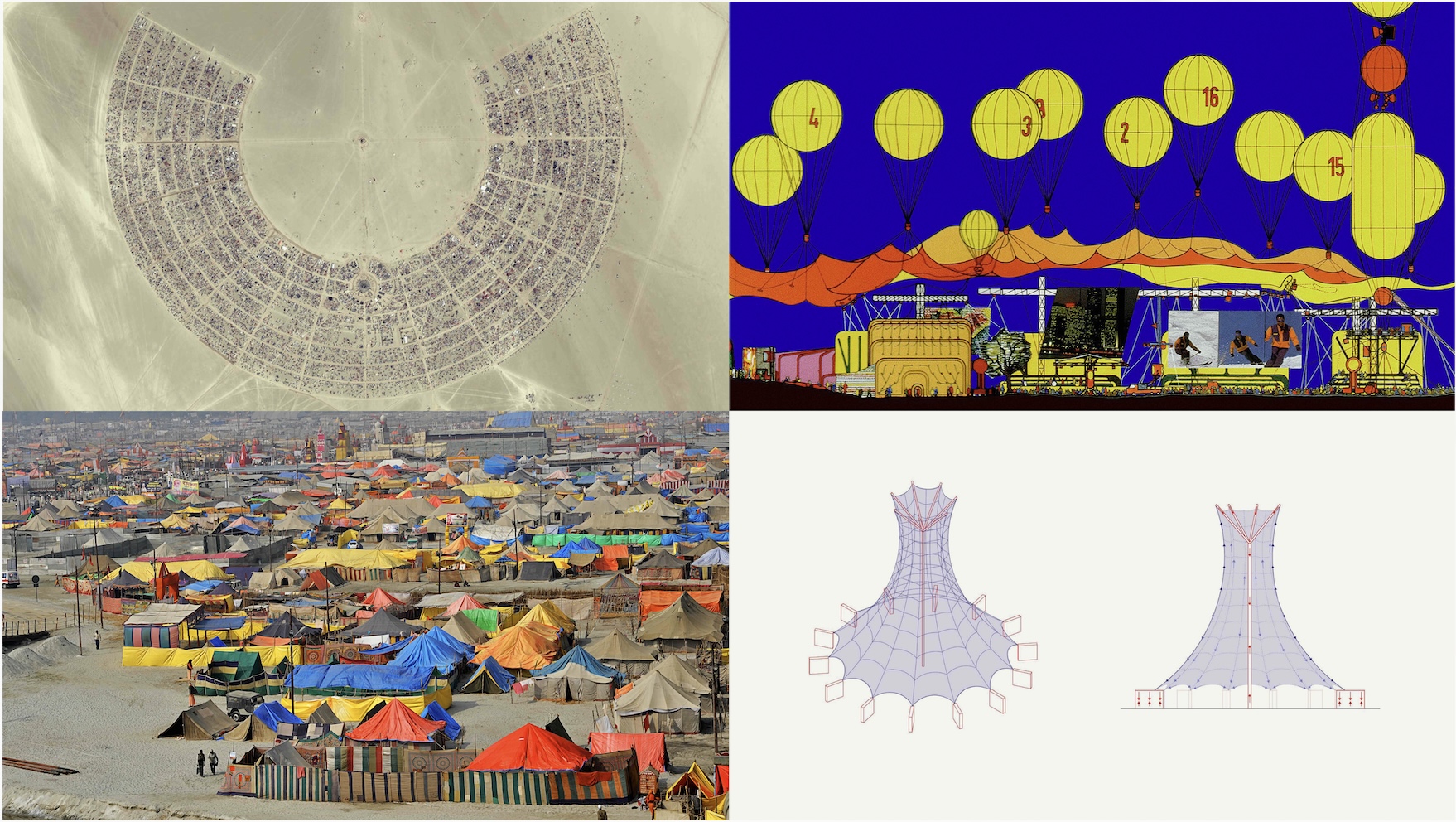
Infrastructure in a Time of Flux symposium graphic.
Mittal Institute: We often think of cities that are built to last, what happens to our understanding of cities when we instead begin with the assumption that it’s temporary?
Rahul Mehrotra: The first parameter to consider is time. We must find ways that we can embed the idea of “time” in our imagination about architecture and cities by extension. Time has an implication in the way we choose materials, their life cycles, but also how we make space within more permanently imagined settlements for these temporary uses.
The implications of this approach are manifold. First, it makes us think about reversibility, material life cycles, and other aspects of design that could make our built environment more sustainable and reduce our footprint on the planet. It also encourages us to think about structures that are nimble and innovative, and that can be deployed and adapted to address the many challenges we face around the world. Reversibility is not simply a technical property of temporary architecture. It is also an ethical and epistemological question. Can what we build be adapted? Can it be moved? Can it be reused? Can it be dismantled? Can it change function? Can it leave something behind—or almost nothing behind? Reversibility introduces humility into design. It recognizes that we cannot predict every future use, environmental change or social transformation. A reversible project does not attempt to control the future completely. It creates conditions under which future users can act. But temporary does not automatically mean responsible. A temporary structure can still be wasteful, extractive or socially destructive. Reversibility requires attention to material cycles, labour, maintenance, reuse and the consequences of dismantling. The question is not simply whether something can be taken apart. It is whether it was conceived with change in mind.
The argument here is not that everything we build, or every urban settlement, should be imagined as temporary, as is the case with the Kumbh Mela. Rather, a central premise of the exhibition is that we must make room in our cities and settlements for more temporary uses, rather than locking all our resources—both spatially and materially—into permanent solutions, where the energy embodied in materials remains committed for much longer periods of time.
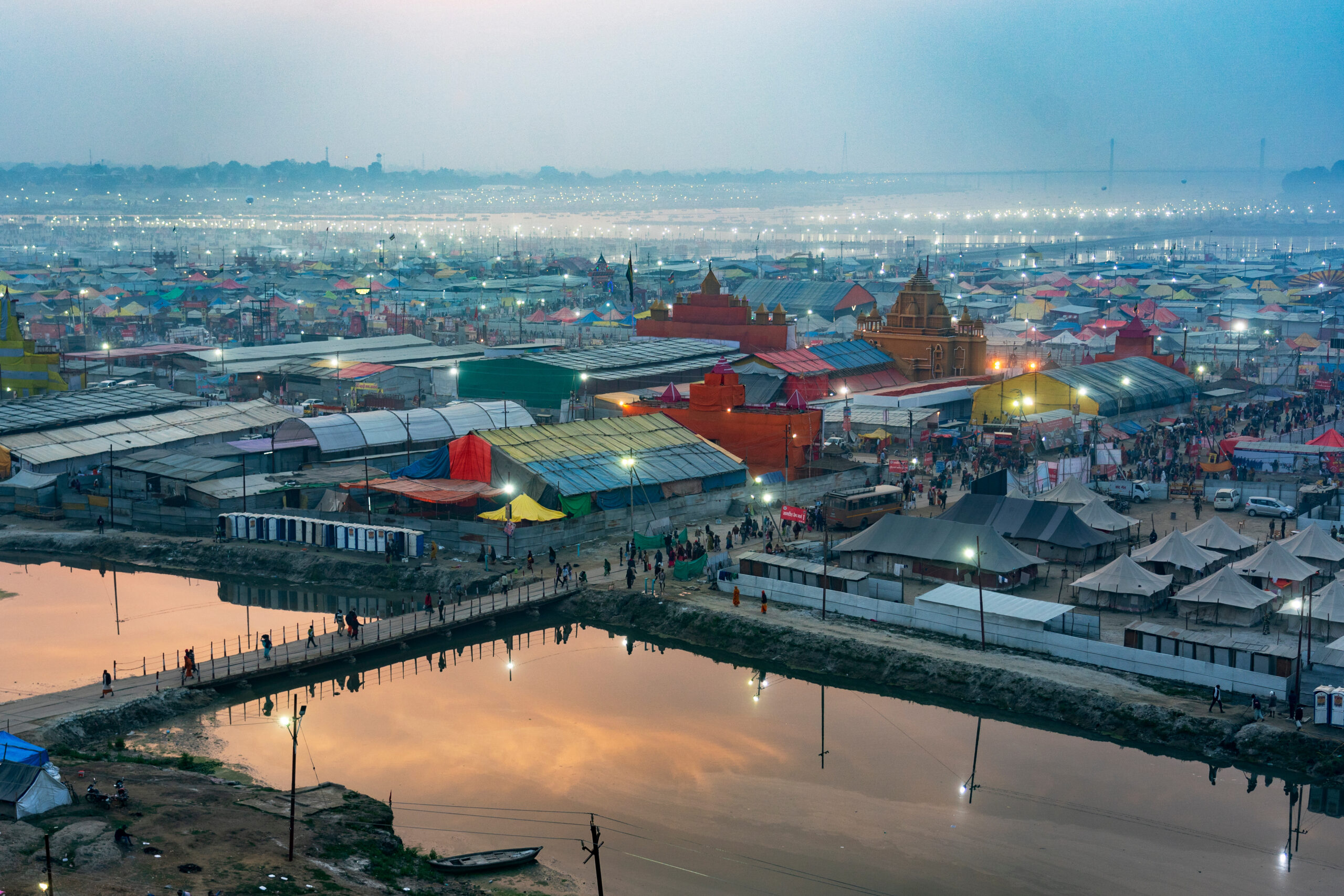
The temporary city for Kumbh Mela is built on the edge of the Ganges and the Yamuna Rivers and stretches for miles | Adobe.
Mittal Institute: One of the symposium panels in which our faculty director, Diana Eck, will participate, uses the Kumbh Mela as a case study for the exploration of temporary urbanism. You emphasized that a pilgrimage is not the same as a market, refugee camp, festival, construction site, military encampment, et cetera, and that each of these has its own logic, duration, and forms of negotiation. What makes the Kumbh Mela distinct as a temporary urban situation?
Rahul Mehrotra: What makes the Kumbh Mela unique is that its raison d’être is religion. It is a temporary city, an ephemeral megacity, where contestations are minimized because the purpose of the city or settlement is singular: in this case, religion and, more particularly, the celebration of Hinduism.
Following our Mittal Institute study of the Kumbh Mela, we expanded our work under a broader rubric called Ephemeral Urbanism. We argued, through the construction of a taxonomy, that each of these situations—whether a military encampment, a festival, a site of celebration, religion, transaction, extraction, nomadism, and so on—must be understood on its own terms. Grouping them under broader categories is not productive. This is one of the problems with the construct of informality.
When we speak about informal settlements or informal markets, the rubric is too broad and does not allow us to get down to the specificities of the local contexts in which these situations occur. Our work, which began with the Kumbh Mela, therefore expanded into the broader field of ephemeral urbanism, within which we developed a taxonomy. This is the material currently on display in the exhibition’s section on situations.
The Kumbh Mela was the foundation for this thinking for a couple of reasons. First, it was a highly successful interdisciplinary project. When we went to study the Kumbh Mela, none of the disciplines represented by the five or seven schools participating in the project had a privileged position from which to understand the conditions we would encounter at the Mela. As a result, each discipline was more open to engaging with and learning from the others, and to transgressing traditional disciplinary boundaries. This interdisciplinarity allowed us to construct a broad theoretical framework under the rubric of Ephemeral Urbanism. It was only afterward, when we interrogated this category, that we recognized the danger of its becoming a universalizing concept, like informality or sustainability. Breaking it down into specific domains, each with its own particularities, would therefore be the only way to advance the research.
This interdisciplinarity allowed us to construct a broad theoretical framework under the rubric of ephemeral urbanism. It was only afterward, when we interrogated this category, that we recognized the danger of its becoming a universalizing concept, like informality or sustainability. Breaking it down into specific domains, each with its own particularities, would therefore be the only way to advance the research.
Mittal Institute: This symposium is very interdisciplinary. Can you share more about that approach?
Rahul Mehrotra: The schools that participated in this project, alongside the centers that supported it, included the Faculty of Arts and Sciences (FAS), Harvard Business School, the Harvard T.H. Chan School of Public Health, the Graduate School of Design, the School of Engineering and Applied Sciences, and, in particular, Harvard Divinity School.
What I found particularly interesting was that we were going to visit what we imagined would be a large settlement created for a religious festival. One might assume that the design school students would take the lead in developing a framework for understanding what we were about to see. Ironically, however, they were the least equipped to do so. I found that the Public Health and Divinity School students had a better understanding of how the rituals associated with the festival might play out spatially. It was, in fact, pleasantly surprising to see how much the design and engineering students had to rely on their colleagues in Divinity and Public Health schools.
Ultimately, the experience taught me that when you encounter an unconventional problem for which no established frameworks or standard approaches exist, it creates fertile ground for interdisciplinary work. No single discipline has the advantage when it comes to establishing a framework for understanding the problem.
This was my greatest takeaway, and it has since informed my own teaching in studios at the Graduate School of Design. The GSD brings together students in landscape architecture, urban planning, urban design, real estate, and architecture. When developing the challenges and problems that we set for our studios, I have drawn considerably on the experience of studying the Kumbh Mela.
Mittal Institute: What does the Kumbh Mela add to the larger conversation about temporary cities and temporary urbanism?
Rahul Mehrotra: The Kumbh Mela, as I often said in jest, was the cleanest and most efficient Indian city I had ever lived in, albeit for only 10 days. It truly is an efficiently constructed framework for a settlement.
Three or four things stood out to me personally as exemplary, offering lessons for other settlements. The first was the governance structure, which operates on a temporal scale. The planning process, which spans about two years, begins with politicians calling the shots and establishing a bureaucracy. A few months later, this hierarchical structure shifts, with bureaucrats taking charge and reporting only minimally to the chief minister of Uttar Pradesh. Six months later, another team is put in place under the supervision of the bureaucrats. This team includes administrative officers who begin engaging with communities and religious groups to determine procurement needs for infrastructure, materials, and so on.
In the final three to six months—and the timing varies—the hierarchy shifts once again. A Kumbh Mela Adhikari is appointed, essentially the equivalent of a mayor. In this case, however, we are not talking about a small city: a settlement of five to seven million people qualifies as a megacity. The Kumbh Mela Adhikari has the authority to operate beyond the constraints of the preceding hierarchies. This gives the position considerable flexibility to contract vendors and bring in subcontractors. At the same time, the Adhikari reports to only three or four key figures in the entire governance structure: the chief minister, the chief secretary, and the commissioner of Allahabad, the neighboring city.
What inspired me about this governance system was that, like the city itself in terms of its materiality, its governance structure is incredibly nimble. Today, as we face disasters that require us to respond within very short time frames because of climate change, there is much we can learn from how governance systems—which often outlast the buildings in our cities—can be made more adaptable and responsive.
The second thing I learned from the Kumbh Mela was how materials were used. The city is built from a kit of parts. We ultimately identified just five materials used to construct the entire above-ground city: string, rope, and wire; eight-foot-long bamboo poles, which establish the basic module; a covering material, which can be textiles or plastic; corrugated sheets, which serve as walls; and nails and screws, which are used to stiffen joined structural members. Regardless of scale, the same five materials are used throughout, from small tents that can accommodate a family to large temples that can hold 1,000 people.
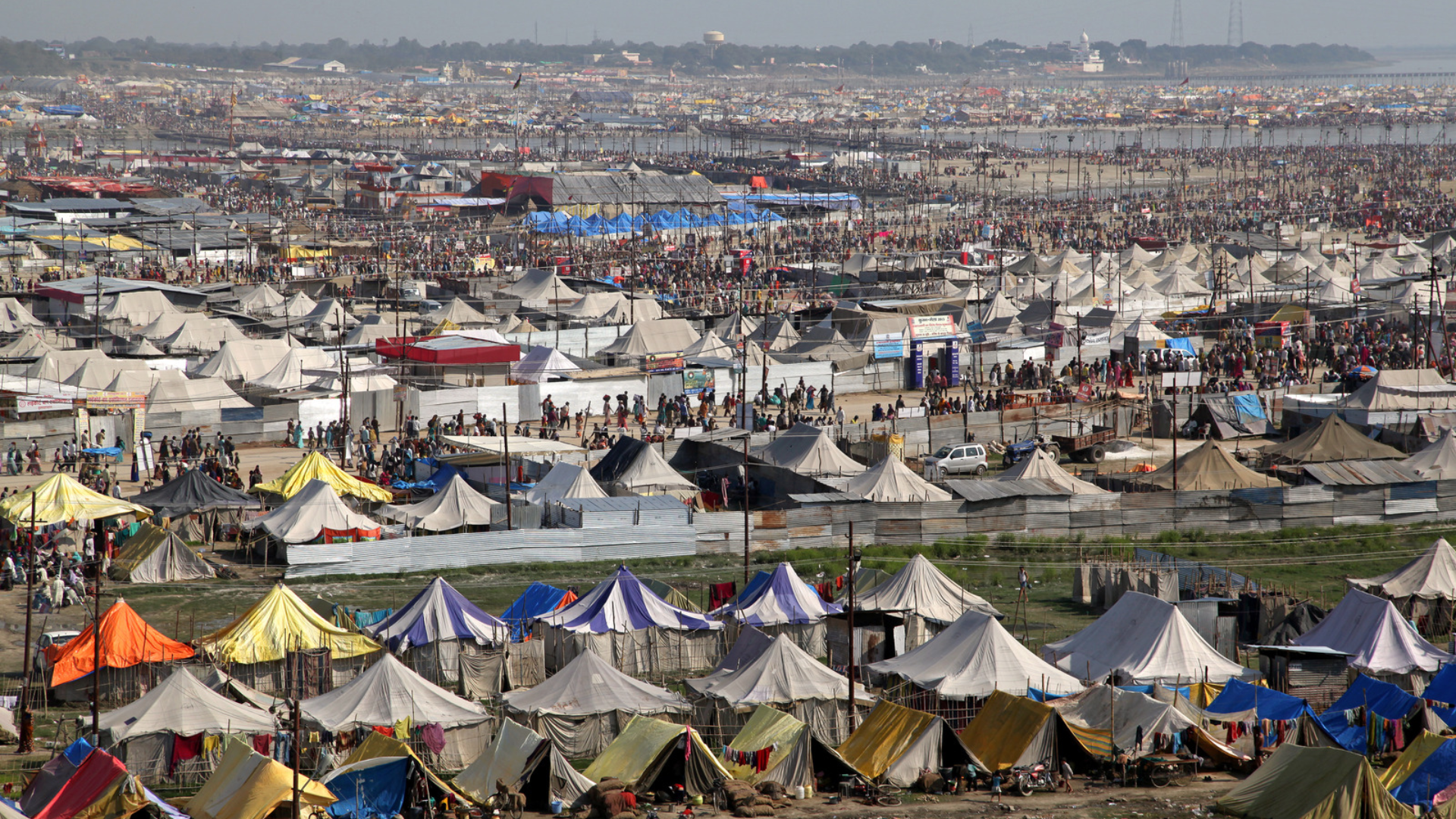
Kumbh Mela tents | Adobe.
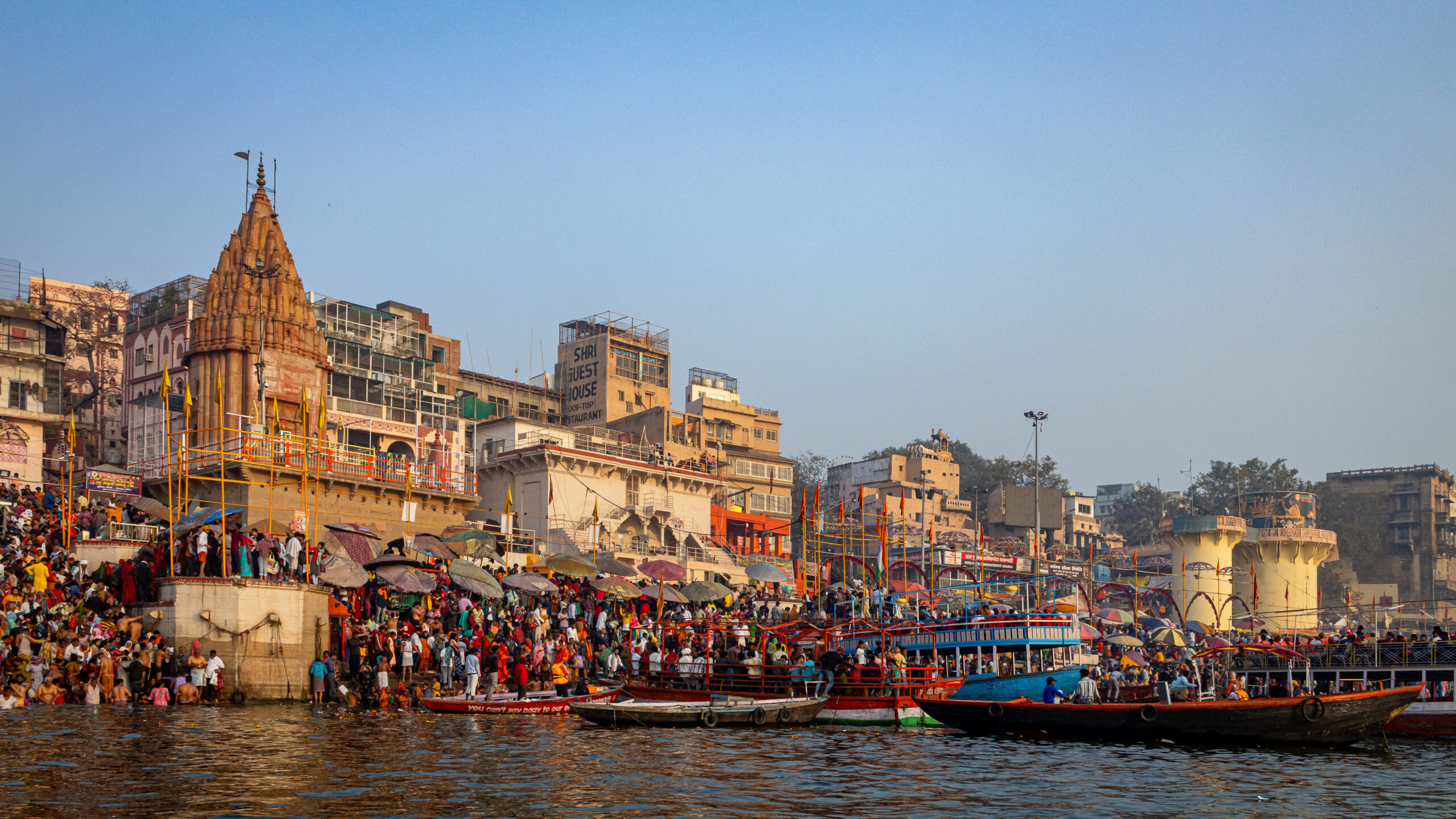
Pilgrims Gather at the ghats at Maha Kumbh Mela, Varanasi, India | Adobe.
No other materials have a significant impact on the structures built above ground. As a result, the city can be assembled very quickly, but it can also be dismantled just as quickly, without generating waste. The materials can then be reabsorbed into the material geography of the hinterland surrounding the Mela. For me, these were two outstanding lessons at opposite ends of the spectrum.
The use of technology was also quite interesting. It was used primarily for security. I believe there were about 1,000 police officers patrolling the Mela, each assigned to a very small section of the settlement. As a result, they came to know the people occupying those areas. If anything unusual occurred, they could quickly upload an image to a central command system, allowing for a rapid decision about whether a response was necessary.
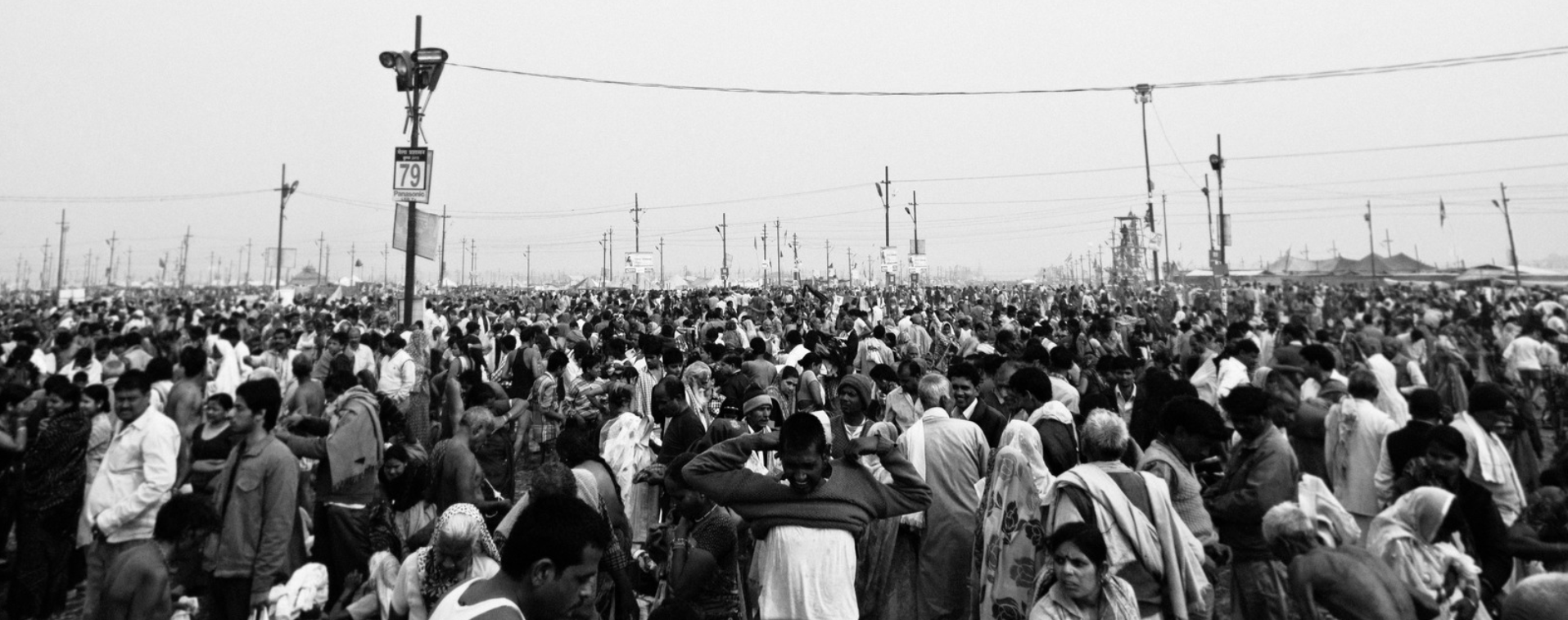
Surveillance at Kumbh Mela in Allahabad | Adobe.
Our Harvard team had a personal experience of this system in action. Our photographer went to photograph substations and generators because we wanted to document the infrastructure. He was approached by someone who asked to see his credentials. The moment he explained that he was part of the Harvard University group, his image and name were uploaded to the central command system. Within 30 seconds, he had clearance to continue his work. It was an incredibly efficient and largely invisible system of monitoring.
Mittal Institute: Have you ever thought of going back to the Kumbh Mela 12 years later to see what changes might have occurred?
Rahul Mehrotra: This thought has crossed my mind very often. Of course, I would now have to wait another 10 or 11 years to return for one of the major gatherings.
What has changed fundamentally between the time the Harvard group conducted its study and the most recent Kumbh Mela, however, is the extent to which technology has become embedded in the functioning of this vast temporary megacity. When we were documenting the Kumbh Mela, drones were prohibited for security reasons. We conducted all our aerial photography by mounting a camera on a large kite, which was a unique project and an undertaking in its own right. At the most recent Kumbh Mela, however, the widespread presence of cell phones among attendees, along with the use of drones, has enabled the government not only to manage visitor movement, particularly on bathing dates, but also to conduct surveillance for security purposes.
If I were to revisit the Kumbh Mela or propose a new initiative to the government, my aspiration would be to introduce renewable energy systems and take the entire settlement off the grid. Achieving that level of integration could have significant implications for other ephemeral landscapes, including refugee camps and settlements established in response to disasters.
There is enormous potential for a new generation of researchers to build on the efficiencies, protocols, and systems already developed at the Kumbh Mela, using them as prototypes and models for other ephemeral landscapes.
Mittal Institute: What can temporary environments teach us about how people can create?
Rahul Mehrotra: The most important lesson temporary environments can teach us is that they are created by people, with human needs at the center of their conception. They are often the result of a formal deployment by the state in response to a particular need. As a result, they are self-organized and grow organically, but, most importantly, they are human-centered.
Mittal Institute: What do you think we miss when we focus on architecture as something permanent, stable and finished?
Rahul Mehrotra: What we often miss is how to accommodate change. Change is the only constant in our lives and on the planet. When we create things that are conceived as fixed and permanent, we leave little room for adaptation, evolution, or the accommodation of change. This approach also often leads to inefficient use of materials because needs change over time.
For example, I believe there are about 2,000 abandoned malls in the United States today. If you look them up online, they resemble archaeological sites. These are large buildings set on five to 10 acres of land, much of it devoted to parking, and have become brownfield sites. Accelerated by the pandemic and the rise of Amazon and other delivery systems, the decline of malls has left many of these spaces redundant. This is an example of how a particular vision of the future failed to accommodate change.
Of course, the argument is much more complex. We could extend it to Olympic stadiums, which often become white elephants in the cities where they are built. Again, if you look online, you will find abandoned Olympic stadiums around the world. The resources invested in their construction, in terms of embodied energy, materials, and so on, are incredibly wasteful, given that the events last only a month or two before the facilities are often abandoned.
Could we learn from lightweight construction instead? At the London Olympics, for example, there was an experiment with a pneumatic structure that could be dismantled and reused. Perhaps the Olympics should operate like a traveling circus. The Olympic Committee could own the stadiums, which could be dismantled using lightweight construction techniques and moved from one location to the next. Cities could then invest in infrastructure rather than buildings. Infrastructure can accommodate change because people can connect to and use it in different ways, depending on their needs.
For this exhibition, we have revisited the history of lightweight construction in architectural practice and the discipline of architecture. Many of these approaches have been forgotten, and I sincerely believe they are more relevant today than they were even when they were first proposed.
Mittal Institute: What do you hope people will think about differently after attending the symposium?
Rahul Mehrotra: My hope is that the symposium will bring a couple of things into people’s awareness. First, there are situations around the world that receive little attention within the disciplinary conversations of architecture, urban planning, urban design, and landscape architecture, but that urgently need it. Hundreds of millions of people live in what we might call temporary settlements, whether in camps or in informal settlements, including slums.
The other thing I hope people will recognize is that the means to address these challenges already exist. The technologies needed to solve these problems are available. How we bring them together is ultimately up to us as a community, both within academia and in society more broadly.
☆ The views represented herein are those of the interview subject and do not necessarily reflect the views of the Mittal Institute, its staff, or its steering committee.