
The South Asian Women’s Collective (SAWC) brings together students at Harvard to celebrate their shared cultures, explore questions of identity, and build a community grounded in connection and support. In this Q&A, juniors Nishi Patel, who immigrated from Gujarat, India, and Mahi Patel, from Ohio, discuss how SAWC creates space for the diverse experiences of South Asian women, the importance of representation and belonging, and the events and collaborations they’re looking forward to this academic year.
Mittal Institute: Can you give us just a little background on yourselves—what year are you, where are you from, and what is your concentration?
Nishi Patel: Hi, I’m Nishi Patel. I was born and raised in a small town in Gujarat, India, and immigrated to Chicago almost four years ago. I’m a junior at Harvard College, double-concentrating in Psychology and Molecular and Cellular Biology.
Mahi Patel: Hi, I’m Mahi Patel! I’m a junior at Harvard from Batavia Ohio. I’m concentrating in Neuroscience with a secondary in Global Health and Health Policy.
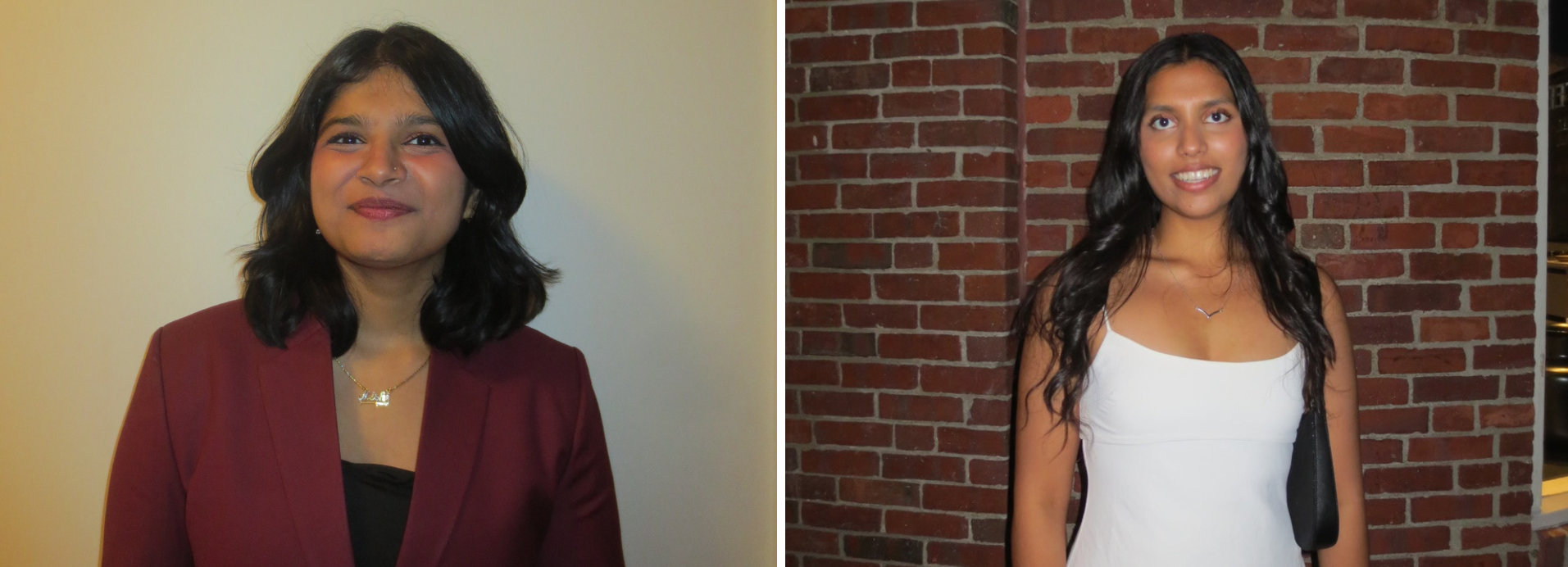
Nishi Patel (left) and Mahi Patel (right) are the co-presidents of Harvard’s South Asian Women’s Collective.
Mittal Institute: What is the South Asian Women’s Collective, and what role does it play in the Harvard community?
Nishi and Mahi: The South Asian Women’s Collective is a community created to provide South Asian women with a sense of belonging on campus. It brings together women from different backgrounds, perspectives, and regions of South Asia, allowing us to connect through shared experiences, cultures, and identities.
Mittal Institute: SAWC was restarted in 2015. When did it first begin, and how has the organization evolved since its restart?
Nishi and Mahi: Since its restart in 2015, SAWC has continued to grow as a welcoming and inclusive community. While the organization has remained centered on supporting South Asian women, it has also expanded its programming, collaborations, and outreach across campus with our Woman of the Year Gala becoming a highlight every year. We are still a growing community, and every year, we become a larger group and really hope to continue that!
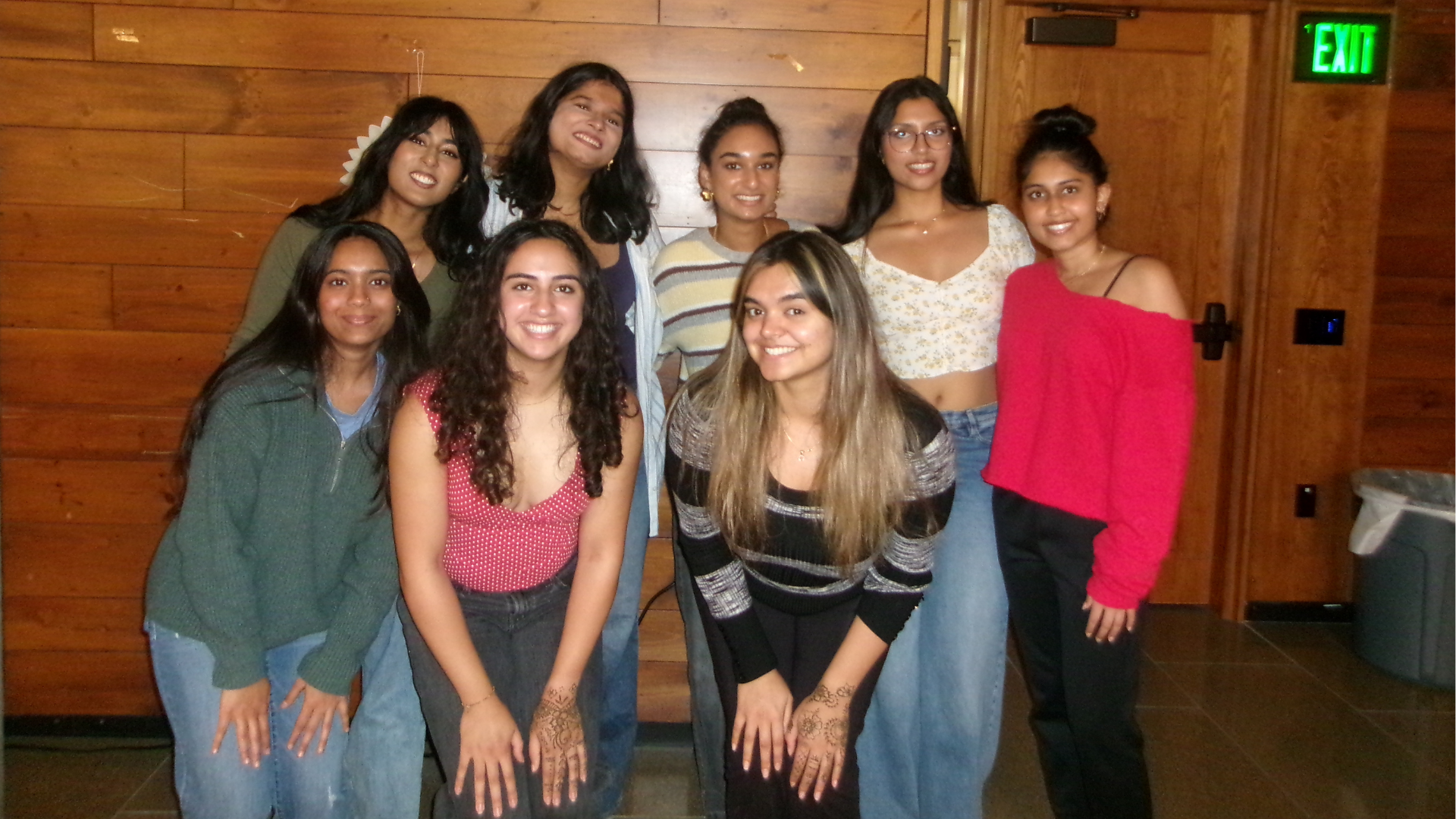
The current SAWC board members.
Mittal Institute: What makes SAWC unique among South Asian and women’s organizations on campus?
Nishi and Mahi: One thing that makes SAWC unique is that it is both a space centered on South Asian women and an inclusive community for anyone who supports and wants to uplift them. We bring together students from different regions, religions, languages, and cultural backgrounds, recognizing that there is no single South Asian experience. Through social and cultural events, conversations, speakers, and collaborations, SAWC gives members the opportunity to celebrate their identities while also discussing topics such as gender expectations, cultural stereotypes, and the experiences of South Asian women today. This year especially, we are making a stronger effort to collaborate with other South Asian organizations on campus. By bringing together more people and perspectives, we hope to create a broader, more connected community where members can find both shared understanding and appreciation for their differences.
“[SAWC] is both a space centered on South Asian women and an inclusive community for anyone who supports and wants to uplift them.”
Mittal Institute: Why is it valuable to have a space specifically for South Asian women, and how does the Collective create space for conversations about what it means to be a South Asian woman today?
Nishi and Mahi: Being a South Asian woman comes with unique experiences, expectations, stereotypes, and challenges. SAWC provides a space where members can openly discuss those experiences, learn from one another, and develop new perspectives on what it means to be a South Asian woman today. It also allows us to recognize that there is no single way to be South Asian or to define womanhood. Having the support of so many wonderful South Asian women in the community definitely helps achieve our goal of providing a space that integrates culture, womanhood, tradition and dialogue.
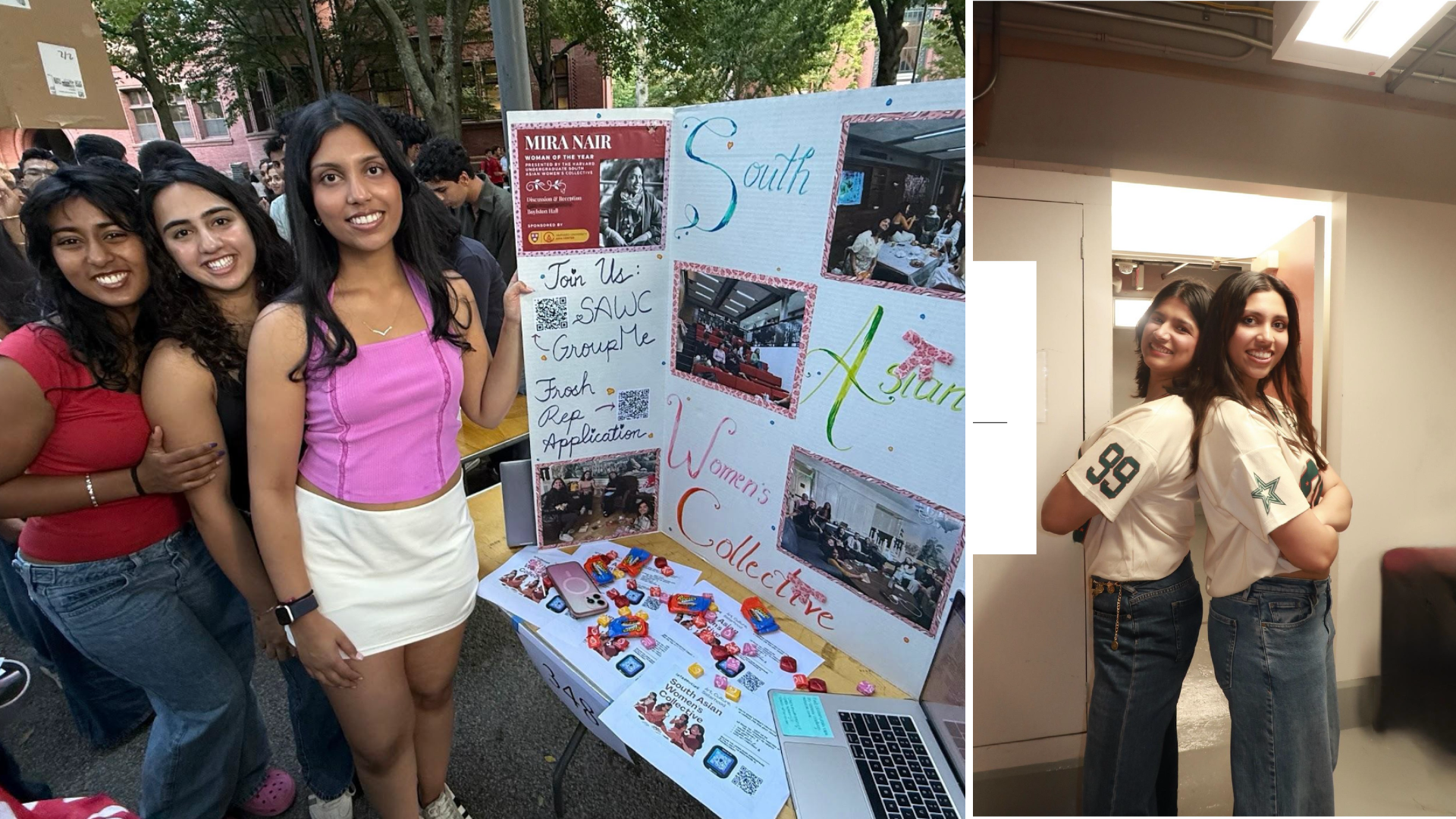
Left: SAWC at the Harvard Student Organization Fair; Right: Nishi and Mahi.
Mittal Institute: What social, cultural, or political issues affecting South Asian women are particularly important to the Collective?
Nishi and Mahi: We care about issues such as representation, gender expectations, cultural stereotypes, colorism, and the ways that South Asian women navigate their identities across different cultures. We also want to create space for conversations about the diversity within the South Asian community, including differences in language, religion, region,caste , and immigration experiences.
Mittal Institute: What has being part of SAWC taught you about your own identity that you might not have explored otherwise?
Nishi and Mahi: SAWC has taught me that we can all have very different experiences and perspectives while still being connected by shared roots. It has helped me appreciate the diversity within the South Asian community and reflect more deeply on the parts of my identity that connect me to others. As an immigrant, I did not easily find other South Asian women who I can trust and talk to, but SAWC makes it easier to have that conversation, especially because all the members are such wonderful, dynamic and thoughtful people.
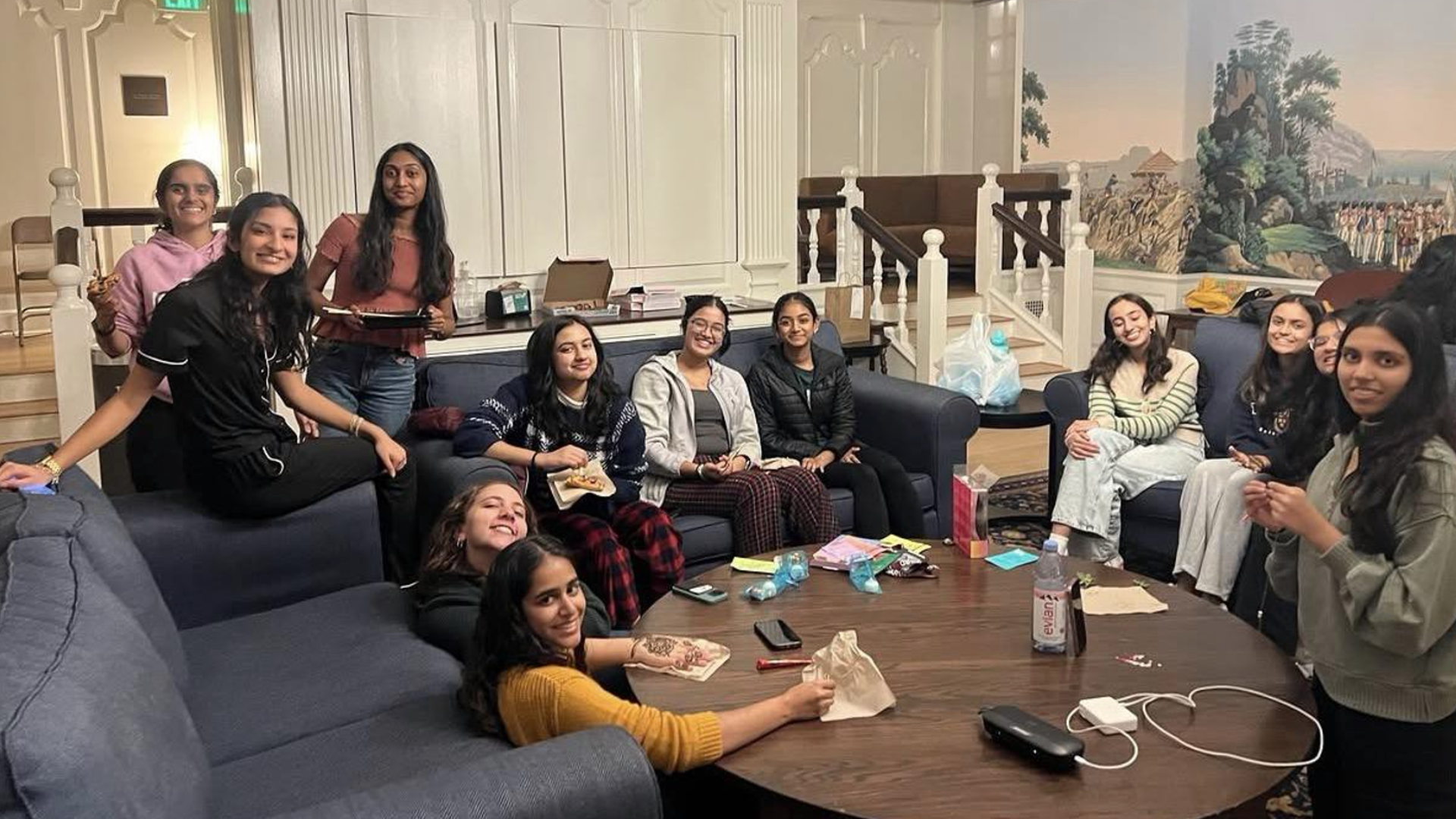
SAWC members at Henna Night.
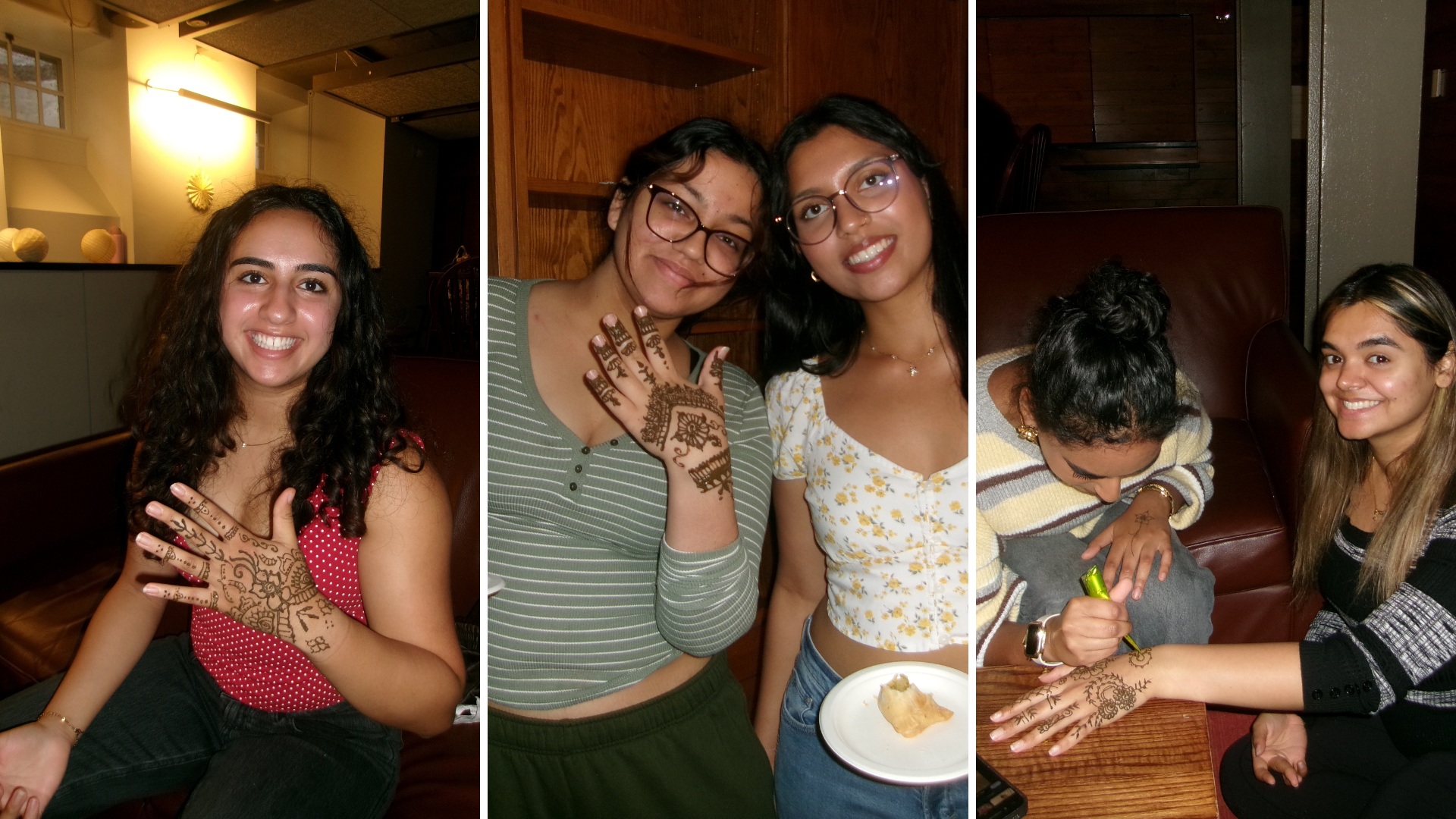
SAWC at Henna Night.
Mittal Institute: What is your favorite SAWC memory?
Nishi and Mahi: One of my favorite SAWC memories was our Spring Formal. I met so many new people and had the opportunity to have meaningful conversations with them. Hosting Mira Nair as our Woman of the Year was also an extraordinary experience and a particularly memorable moment for the organization. It is inspirational to not only host such esteemed South Asian women, but also to look around in the community and see so much potential.
Mittal Institute: As we look ahead to the new academic year, are there any upcoming events or initiatives that you’re most looking forward to?
Nishi and Mahi: Yes! We are excited to collaborate with the Nepali Students Association and the Bengali Students Association, with more collaborations planned throughout the year. We are also looking forward to organizing Woman of the Year, our Spring Formal, henna nights, movie nights, and date nights. In addition, we will be representing SAWC through the Desai Foundation, a nonprofit organization that empowers women and children in rural communities.
Mittal Institute: How can people learn more about SAWC?
Nishi and Mahi: Come to our events or people can follow our new Instagram account, @harvard.sawc, and join our GroupMe. They can also contact our presidents, Mahi and Nishi Patel, at husawc.exec@gmail.com for more information.
☆ The views represented herein are those of the interview subject and do not necessarily reflect the views of the Mittal Institute, its staff, or its steering committee.