
Madeline Tevonian, a Master in Theological Studies student at Harvard Divinity School, spent the summer studying Intermediate Colloquial Tibetan at the Rangjung Yeshe Institute in Kathmandu, Nepal, with support from a Mittal Institute language grant. Beyond the classroom, she immersed herself in local life and Tibetan culture, connecting with her host family, joining an ultimate frisbee team, and exploring temples, monasteries, art galleries, and more. In her student grant reflection, Madeline shares the experiences and discoveries that made her summer in Kathmandu so memorable.
Harvard students, Mittal Institute grants for Summer 2027 are due February 1, 2027. Learn more about researching, interning or studying language in South Asia!
Mittal Institute: What were your goals with your student grant, and why did you pursue language studies in Nepal?
Madeleine Tevonian: My main goal was quite simple: to become better at colloquial Tibetan. I had taken a summer intensive course course at the same school three years prior (in beginning colloquial Tibetan), so I went in with some prior expectations and knew that this school’s summer intensives were rigorous and quite worth my while. Kathmandu is a great place to study Tibetan because of the large exile community there, and I lived near the school in Boudhanath, a Tibetan neighborhood.
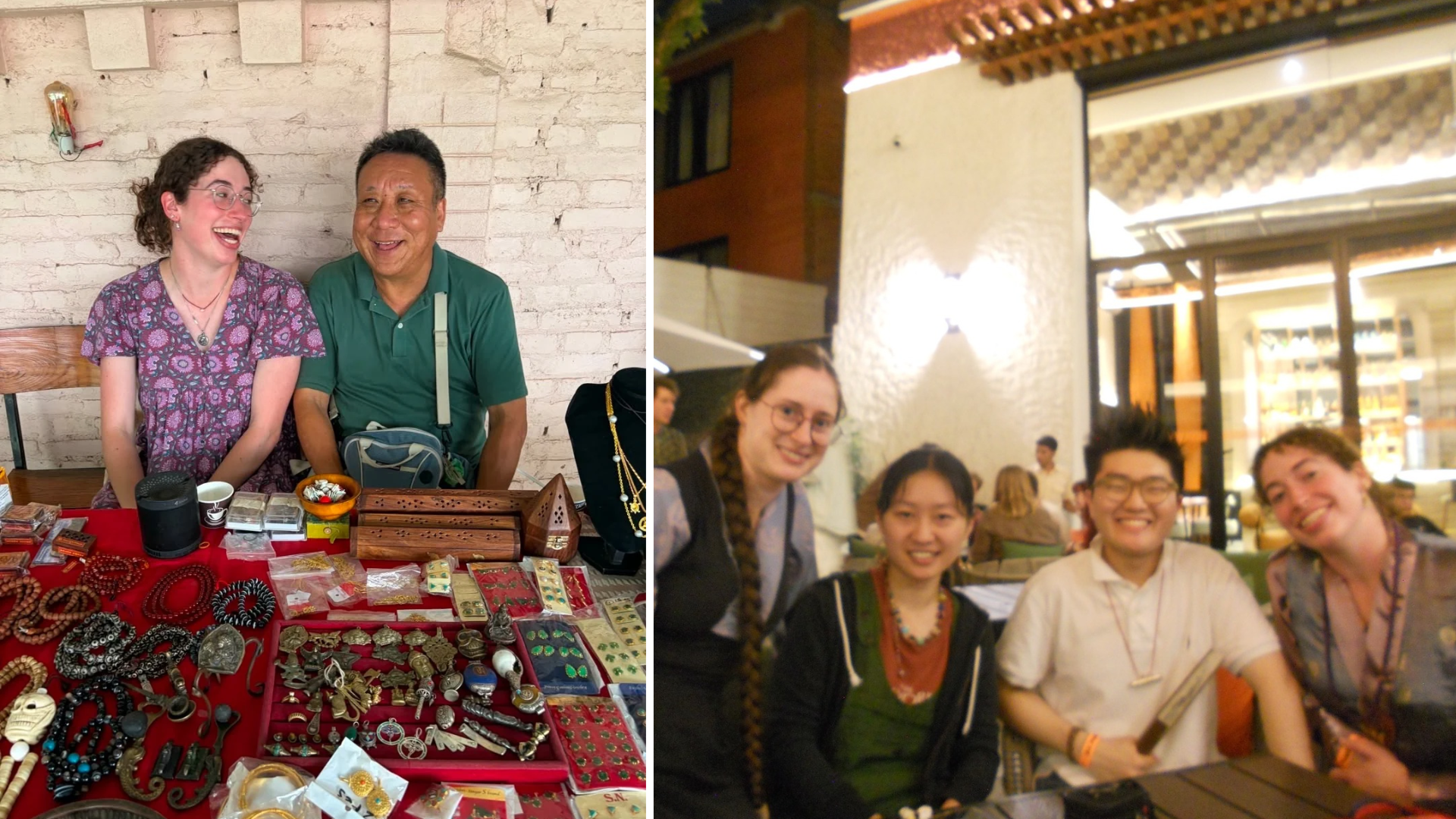
Right: Madeline with her Tibetan host dad; Left: Several other current or former HDS students at the end of program summer party.
Mittal Institute: What was most impactful about this experience?
Madeleine Tevonian: In addition to the obvious achievement of gaining language skill, being able to meet lots of other scholars or practitioners in the fields of Tibetan/Buddhist studies or South Asian studies was immensely valuable. Because the school is known for its good language intensives, and it also has several year-round degree programs in Buddhist fields, scholars come from far beyond Kathmandu to study there. I now have friends all over the world who will hopefully be my future colleagues for the rest of my life, in addition to stronger connections with Tibetan Buddhist communities in Kathmandu and other parts of Nepal.
Mittal Institute: Bring us into your daily life during your grant? What was it like? Who were you meeting? What institutions were you visiting?
Madeleine Tevonian: I lived in a homestay about a ten-minute walk from school, with the same host dad as my first summer there— moving back in at the start of the summer truly felt like going home (I’ve included a picture of him below)! I had two hour-long masterclasses per day, both taught in Tibetan by a native Tibetan speaker. Each class is co-taught, with both teachers fluent in English and Tibetan, though one is a native Tibetan speaker whose English isn’t perfect and one is an English native speaker or close to it. This way, students are taught the Tibetan conceptions of grammar and the proper pronunciation by the Tibetan teacher but are still able to get complicated questions answered or discuss nuances about translating less-common English words with the English teacher. Masterclasses were broken up by two one-on-one practices sessions with native speakers, each also an hour long. We worked with different native speakers for each session, which is important for Tibetan because dialects can vary hugely.
After school, I’d usually run errands in the neighborhood, head to the stupa (the large Buddhist monument at the center of the neighborhood), play ultimate frisbee with the local group I joined (I play for Harvard’s women’s team during the year), or go do homework in a café with one of my friends. Boudha is a pilgrimage neighborhood because of the stupa, so people are always passing through. I ran into old friends who were in town briefly and met pilgrims and other students who were there for varying amounts of time. In our free time, my friends and I practiced our Tibetan with local shop owners, went to lectures, art galleries, and countless temples and monasteries, picked out/got fitted for/ordered Tibetan clothes at the tailoring shops, and went hiking in the hills surrounding Kathmandu valley. The school organized several educational field trips for us as well: we visited the Asa Nepali Manuscript Archives, the Itumbahal Museum, Patan Durbar Square and Patan Museum, Namo Buddha monastery and Swayambu stupa, to just name a few.
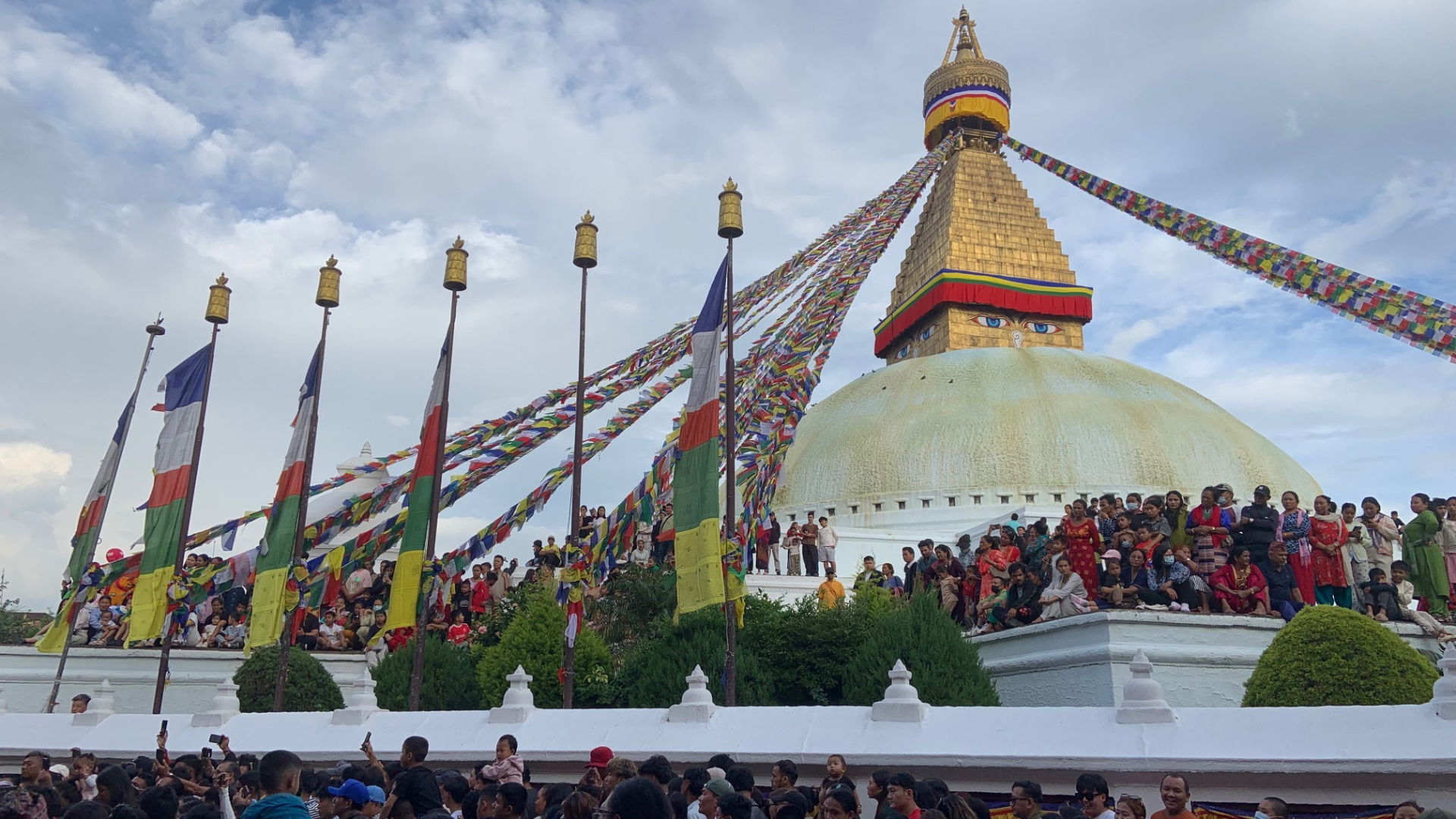
The Buddha stupa during a festival in late summer, where several masked dancers and a band were parading around the stupa with onlookers crowding to watch.
Mittal Institute: How will this experience help you to reach your academic goals?
Madeleine Tevonian: My Tibetan language abilities are much more conversational now, which was my main goal because I hope to do fieldwork during an eventual PhD and will need to be able to talk to the Tibetan communities I hope to work with. Also, the skills I’ve gained over the years of studying Tibetan are now paying off in other ways; I’ve started studying Armenian this term, and am finding that the challenges of Tibetan have taught me determination and the confidence that this new hard language will come with time. I think I would be finding it a lot harder if I hadn’t learned with Tibetan how to learn a language. As previously mentioned, I also met lots of students and scholars who are in my field, and am now more familiar with several European and Nepali institutions and scholars that I may want to work with in the future. At the end of the course, there was a large Tibetan Studies conference that I hoped would cap my summer nicely. It ended up being moved online due to political instability, which was very disappointing, but I still attended online and was able to meet many of the scholars who traveled to Kathmandu nonetheless. Many of them gave me great career and PhD advice that I’m grateful to have received.
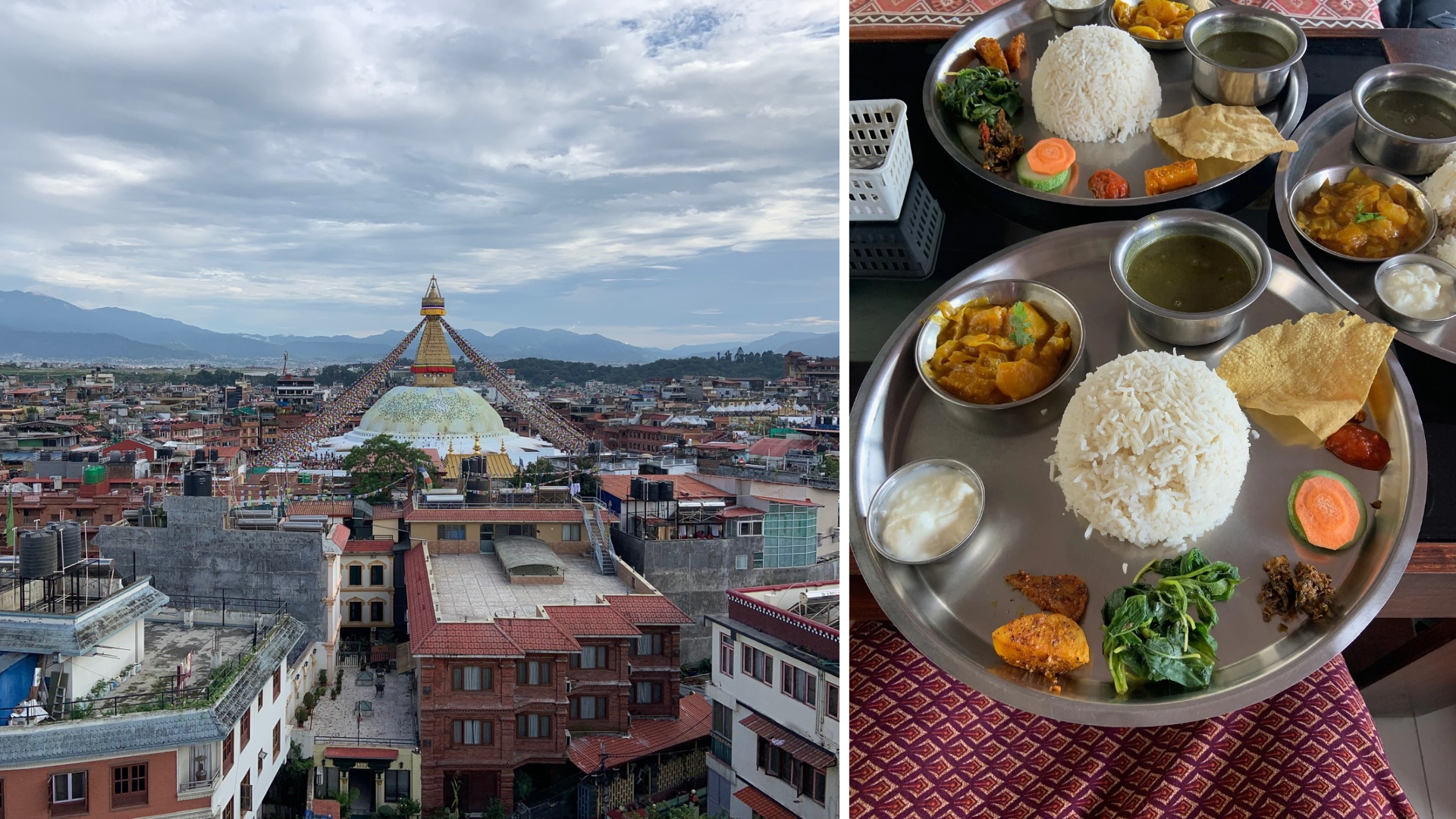
Left: Boudhanath stupa and the surrounding Kathmandu valley; Right: Nepali Thali for dinner, one of Madeline’s favorites dishes in Nepal.
Mittal Institute: What was the most memorable moment from your time on the student grant?
Madeleine Tevonian: At the end of the program, at the last day’s lunch, my classmates and I had organized a little thank you for our teachers. Our classmate who was best at Tibetan wrote a card in Tibetan for our main teacher, and I bought flowers with one classmate after our morning class. We were giggling at lunch as we ate with our teachers, trying to pass on the message to each other of when to give the gifts without our teachers seeing our furtive messages. When we presented the card and flowers to the two of them, our Tibetan teacher read our card and teared up, thanking us from the bottom of her heart and telling us that we were the best class she’s ever taught, and that she’ll remember us forever. We crowded around, bashfully thanking and praising her, and many of us teared up too. The restaurant we ate lunch in every Friday (organized by the school) was run by her and her boyfriend. The next time one of my friends went back, he told me that our card was up on her altar in the room we’d sometimes have class in.
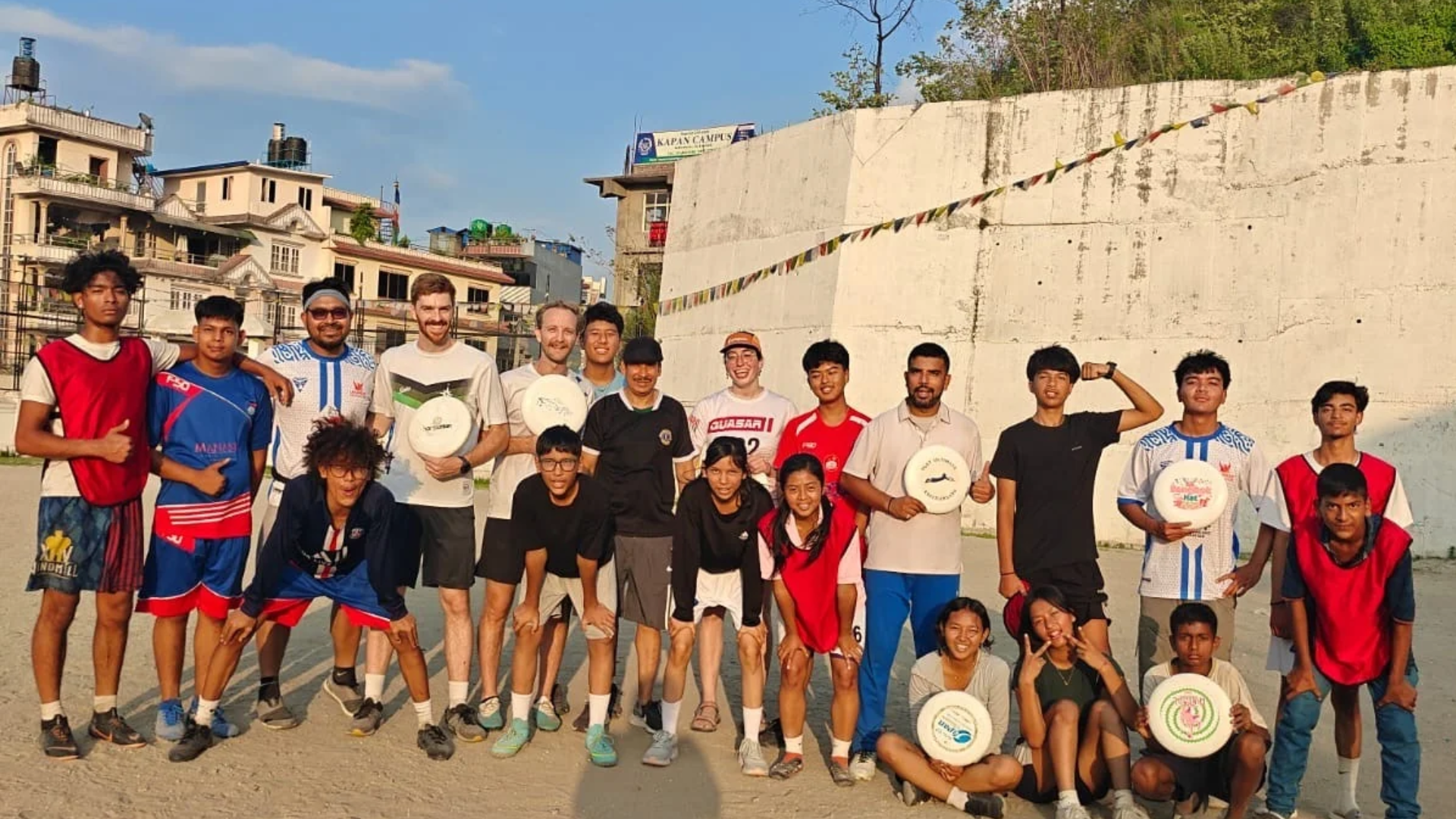
Madeline with the ultimate frisbee pickup team she played with in Kathmandu. At Harvard she is a team manager and player on the Harvard women’s team.
☆ The views represented herein are those of the interview subject and do not necessarily reflect the views of the Mittal Institute, its staff, or its steering committee.